
Jayantha’s Forest
An international effort to save Sri Lanka’s rainforests
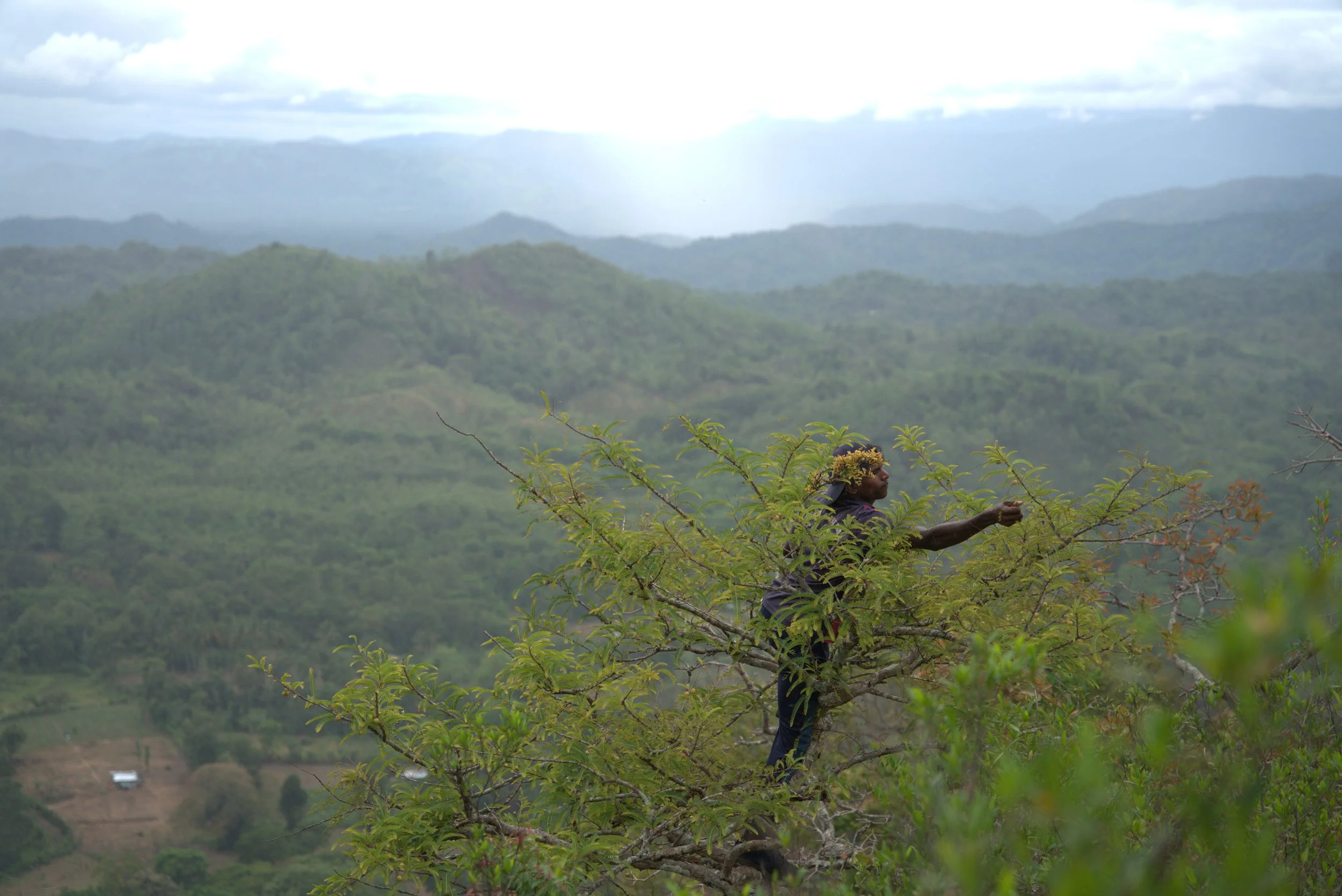
Vassi, one of the young men who work year round at the camp, picks Amla berries from a Malacca Tree. // Photo by Liam Pratt
Story & Photos by Liam Pratt
March 31, 2026
Jayantha Wijesignha’s childhood home of Rajawaka, a small village about 20 minutes from Balangoda, has been turned into a basecamp for a rotating cast of international volunteers. Just behind the camp lies a steep hillside that had been ravaged by fires started by farmers to clear out unwanted vegetation. That was until Wijesignha co-founded the Rainforest Protectors of Sri Lanka in 2011.
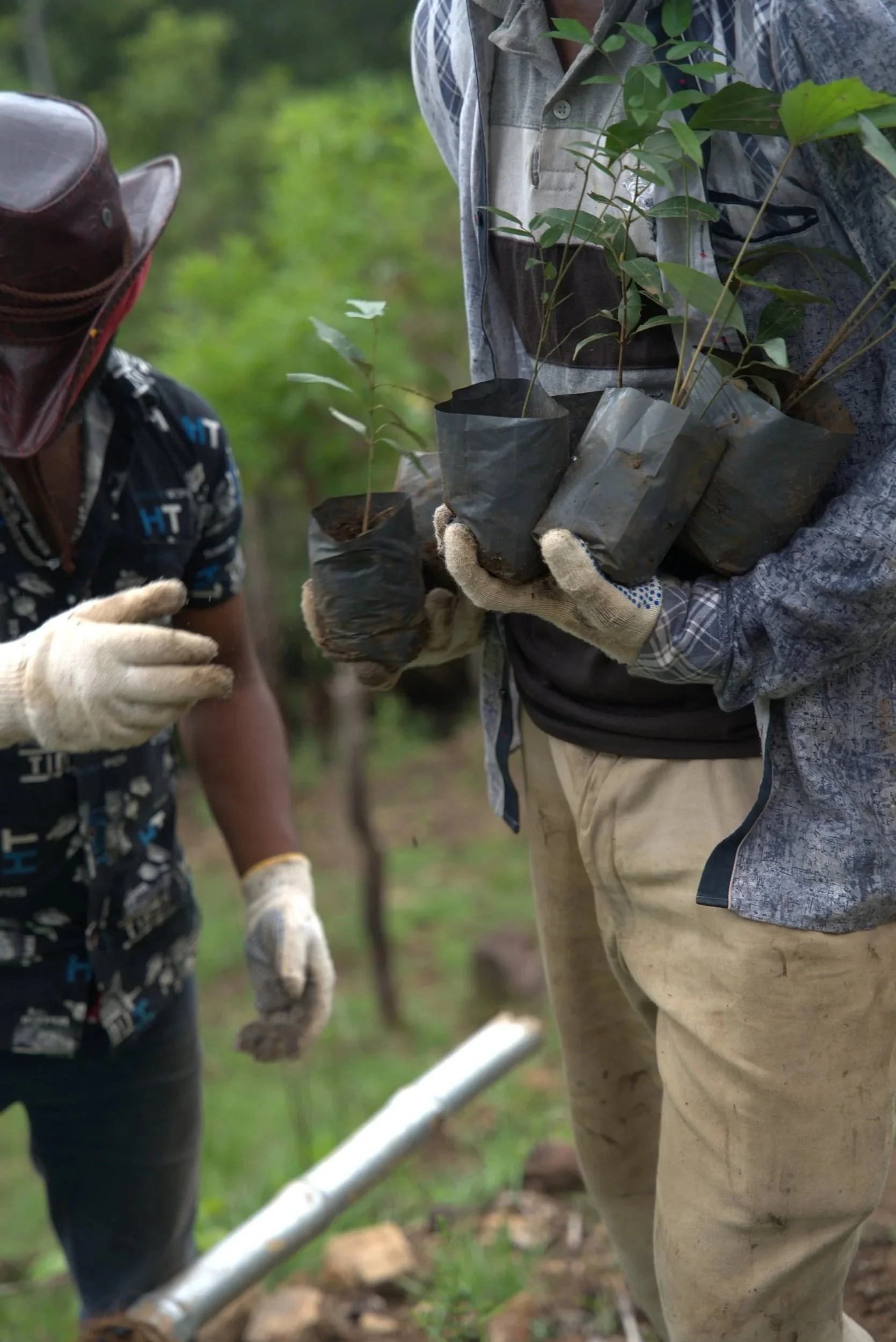
Sanjay and Deshan, who work at the camp year round, pick out the palm tree saplings that the volunteers will plant throughout the day. // Photo courtesy of Hannah Quinton
Formed out of a group of individuals who were designated Climate Champions by the United Nations’ Climate Change programme, the founders of the Rainforest Protectors took the lessons they learned after working in rainforest protection in Borneo, Indonesia, and applied them to the threatened forestlands of their home country.
“I was looking for a lot of opportunities, and I met a lot of like-minded people,” Wijesignha said. “We tried to work with a lot of organizations that already exist, but sometimes [they] don’t really fall in line with your agenda. So, we thought, why not start our own?”
According to the Rainforest Protector's website, the organization is an environmental non-profit dedicated to protecting rainforests and threatened ecosystems in Sri Lanka. Their primary source of support comes from volunteers who travel to the remote site to plant a variety of tree species, as well as remove invasive weeds.
Outside of field work, the organization lobbies and advocates for restoration-focused political action, including the protection of endangered Sri Lankan elephant habitat areas and the responsible development of energy infrastructure. At all levels of their advocacy, the preservation of Sri Lanka’s rainforests remains paramount.
The work began in the Sinharaja Rainforest, a UNESCO World Heritage Site and global hub for biodiversity and natural space, that faces constant threats from various actors.
“Sri Lanka’s land management is very, very weak,” Wijesingha said. “Surrounding Sinharaja, there is so much land owned by different [government] stakeholders. Specifically, from the Land Reform Commission."
The Land Reform Commission is a government agency that currently owns 1.7 million acres of land in Sri Lanka. It is one of several land management agencies, belonging to the larger Ministry of Agriculture, Livestock, Land and Irrigation.
“There are too many institutions that are working on one specific issue in Sri Lanka, which is very ineffective, unproductive and a waste of public funds,” Wijesignha said.
When it comes to the issues the rainforests are facing, none pose as big of a threat as the expansion of tea plantations and the ensuing fire that comes with clearing the land for agriculture. According to the organization Global Forest Watch, Sri Lanka has lost 6% of its tree cover since 2000. The dominant driver behind this loss is defined as “permanent agriculture".
Since 2015, the Ratnapura district has lost an average of 642 hectares of tree cover every year, approximately double the size of Central Park. The government of Sri Lanka has committed to increasing its forest coverage to 32% by 2030, according to the United Nations Framework Convention on Climate Change.
Balancing the commitments to conserving and expanding forest space with the lucrative agricultural export industry is a difficult situation for the Sri Lankan economy to navigate. Despite this, Wijesignha believes it is possible.
“I think [agricultural] lands are used unproductively, so productivity improvement is what we need to do,” Wijesignha said.
In addition to changes to agricultural land management, Wijesignha cites Sri Lanka’s high post-harvest loss rate. According to the National Audit Office, approximately 38% of fruits and vegetables are lost annually.
“It’s not about whether the lands are available or whatever. It’s not about space. It’s about management,” Wijesignha said.
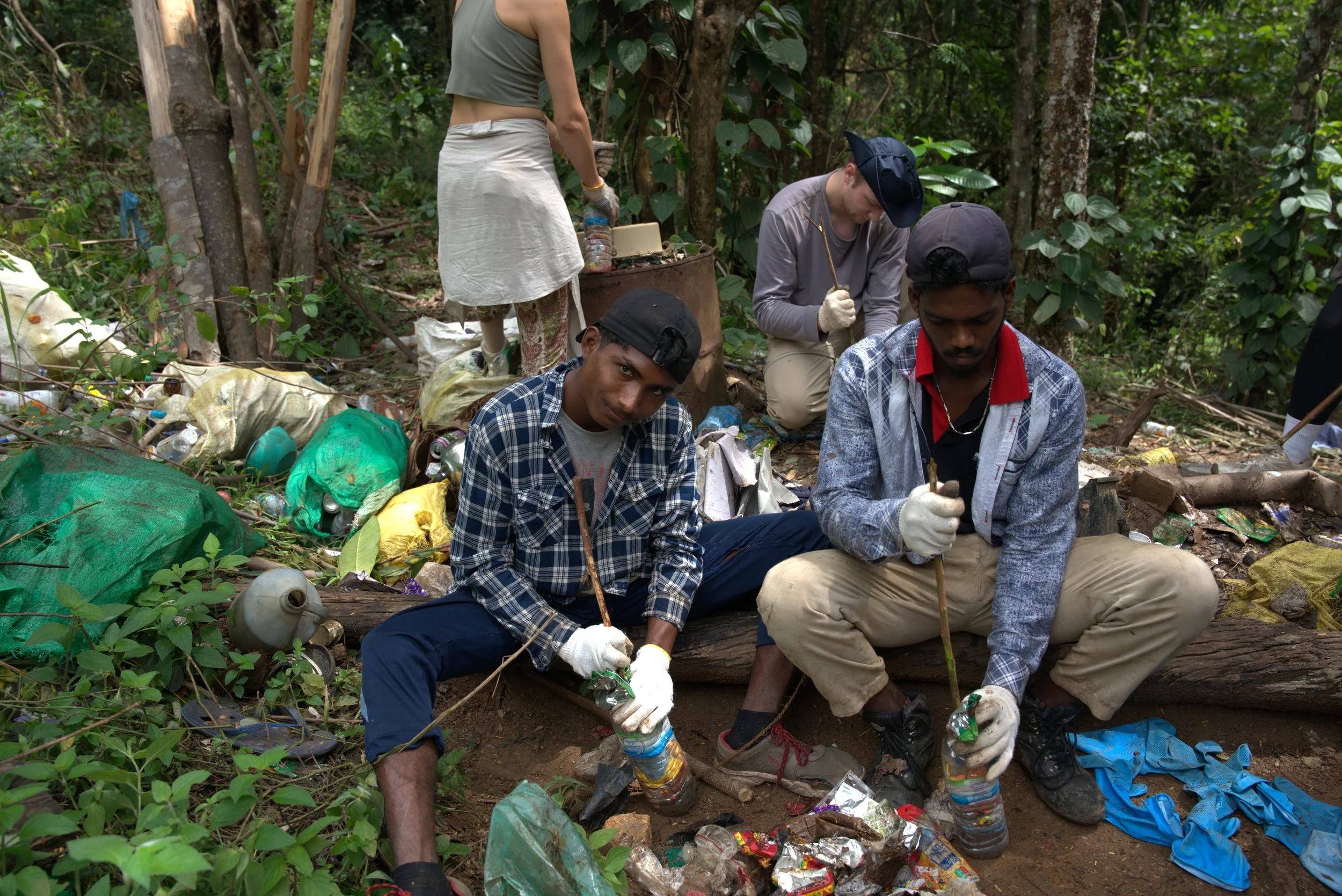
Volunteers use sticks to cram non-recyclable trash generated by the camp into plastic bottles. These will later be used to build retaining walls. // Photo courtesy of Hannah Quinton
The issues that Sri Lanka is facing, both in the forests and on the international climate stage, are not unique. According to the UN, “food loss and waste account for 8-10% of annual global greenhouse gas emissions.” The emissions that Sri Lanka contributes to global greenhouse gas levels are miniscule, yet it highlights the international applicability of the issue.
To tackle such grand issues, like agricultural encroachment, bureaucratic hurdles and international commitments, the Rainforest Protectors of Sri Lanka lean on volunteers from around the world to help achieve their goals.
According to Wijesignha, the decision to bring volunteers onboard was made in 2017 after several years of visits from university students and spontaneous tourists. In 2022, the organization started hosting volunteers for longer periods of time.
For volunteers like U.K.-national Joshua Lowe, the opportunity to be part of a project aimed at achieving the country’s sustainability goals was a significant draw.
“Ultimately we wanted to experience something in Sri Lanka that was unique and local, and we could go away with feeling like we had done something positive in this pretty special country,” Lowe said.
For Lowe and his partner, Molly Whatmore, the project served as an opportunity to gain practical experience with environmental work.
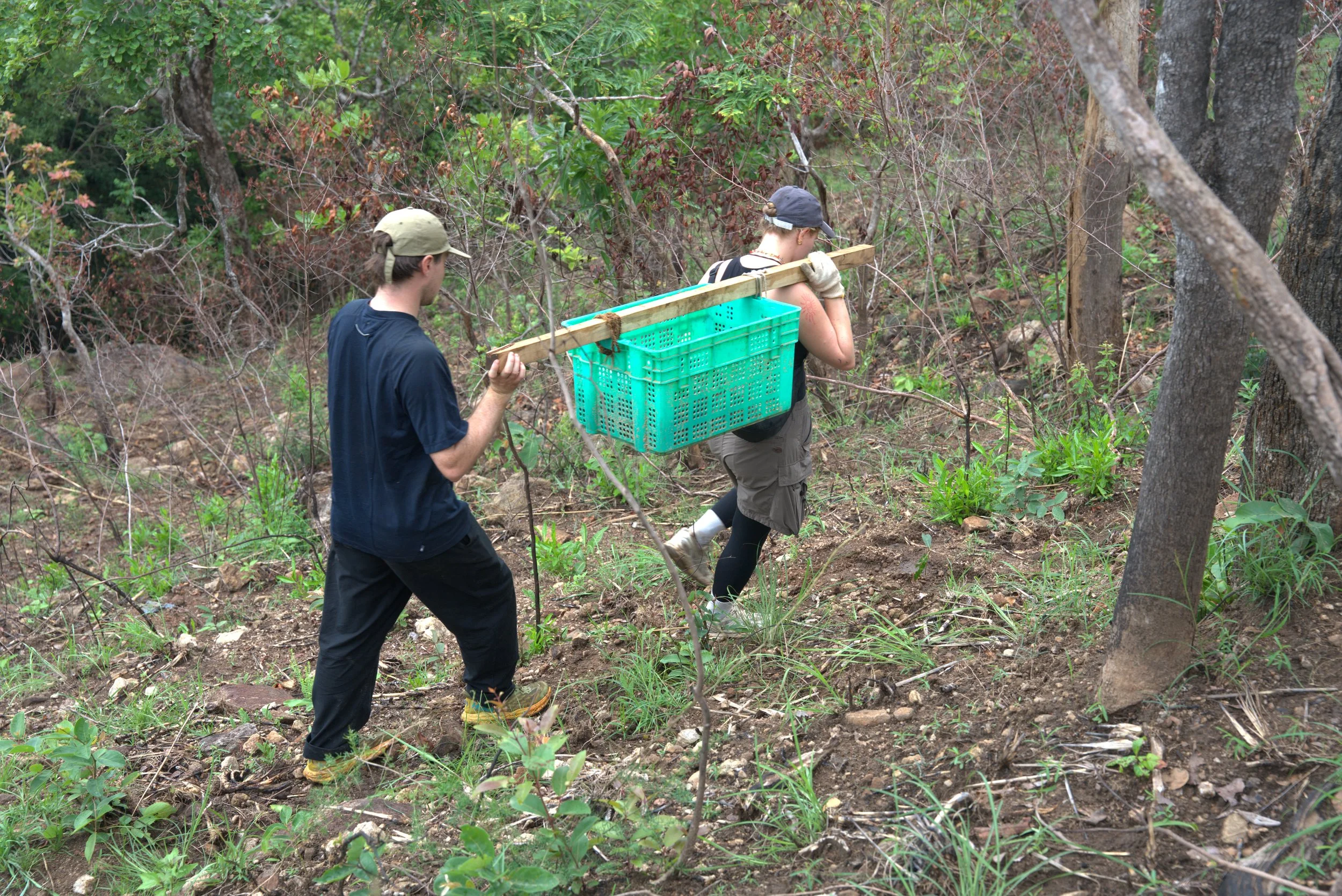
Molly Whatmore (right) and Joshua Lowe (left) carry palm tree saplings through steep terrain. // Photo by Liam Pratt
“We’re very passionate about it,” Whatmore said. “We read up on it, we promote it, we try and shop plastic free back home, but in terms of doing hands-on work, we haven’t done that.”
The couple learned about the Rainforest Protectors through World Wide Opportunities on Organic Farms, or WWOOF, a platform that helps farms and sustainability organizations advertise to international volunteers.
“When you’re here, you feel like you’re part of something that is much bigger than you, and you’re hopefully having a net positive impact on the planet,” Lowe said.
The volunteers are supported by a team of four staff who live onsite year-round. The young men, ages ranging between 17 and 23, all previously worked on tea plantations. For Wijensignha, getting the local community involved is crucial to the success of the project.
“Initially, when we started the project, we had 10 to 15 people working because we needed to get the site going fast,” Wijensingha said. “But right now it’s mostly four people. We also usually have two local interns working with us, and then Akka.”
Wijayanthi, referred to affectionately as Akka (Sinhala for older sister), has been the camp’s steward for the past two years.
She climbs the hill up to the Rainforest Protector’s basecamp two or three times a day to cook for the volunteers and year-round staff. After hours of hard work in unsavory conditions, Wijayanthi’s dhal and, if volunteers are lucky, tilapia, provides a hearty and highly anticipated consolation prize.
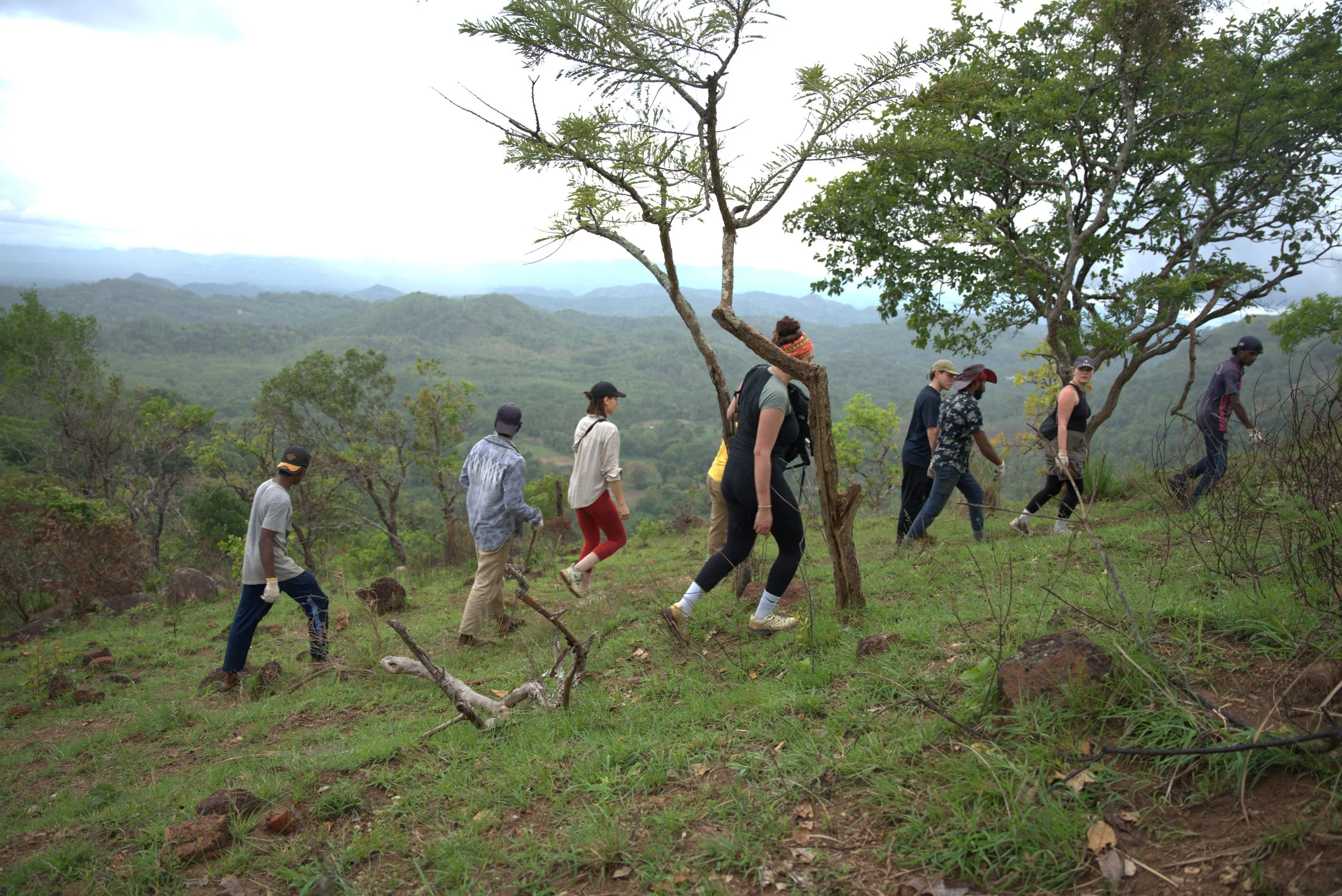
Volunteers and employees with RPSL go on a hike along the neighboring ridgeline to observe agricultural encroachment and pick amla berries. // Photo by Liam Pratt
Having worked on a tea plantation prior to joining the Rainforest Protectors, Wijayanthi started supporting the camp and its volunteers to better her economic status.
Since the Rainforest Protectors established this work site, the neighboring village of Rajawaka has seen benefits such as increased job prospects, less hunting and improved environmental health. According to Wijayanthi, this can be attributed to the organization and its facilitation of international volunteers.
While the Rainforest Protectors are working diligently to combat climate change through reforestation efforts, the specter of the climate crisis looms particularly heavy over Sri Lanka. While emitting relatively little carbon dioxide, Sri Lanka is classified by the UN as “highly vulnerable” to the effects of climate change.
Even still, Wijensingha and his volunteers push onwards, showing resolve and an unwavering conviction in the belief that what they are doing is necessary to preserve our natural environment.
“Planting is my thing. I have planted over 100,000 trees. If you come to my place in Colombo, I’ll always have a plant ready to give somebody,” Wijensingha said. “I want to see this village turned into a complete forest where there are no forest fires, and a wildlife haven is created.”
Liam Pratt graduated from Western Washington University in 2025 with a B.A. in Environmental Policy and a minor in Environmental Justice. Before graduating, he was a reporter for The Planet, covering public land conflict and wildfire.