
The Sky Is Falling; How Does That Feel?
Climate change is creating a new form of grief. Here’s how people are dealing with it
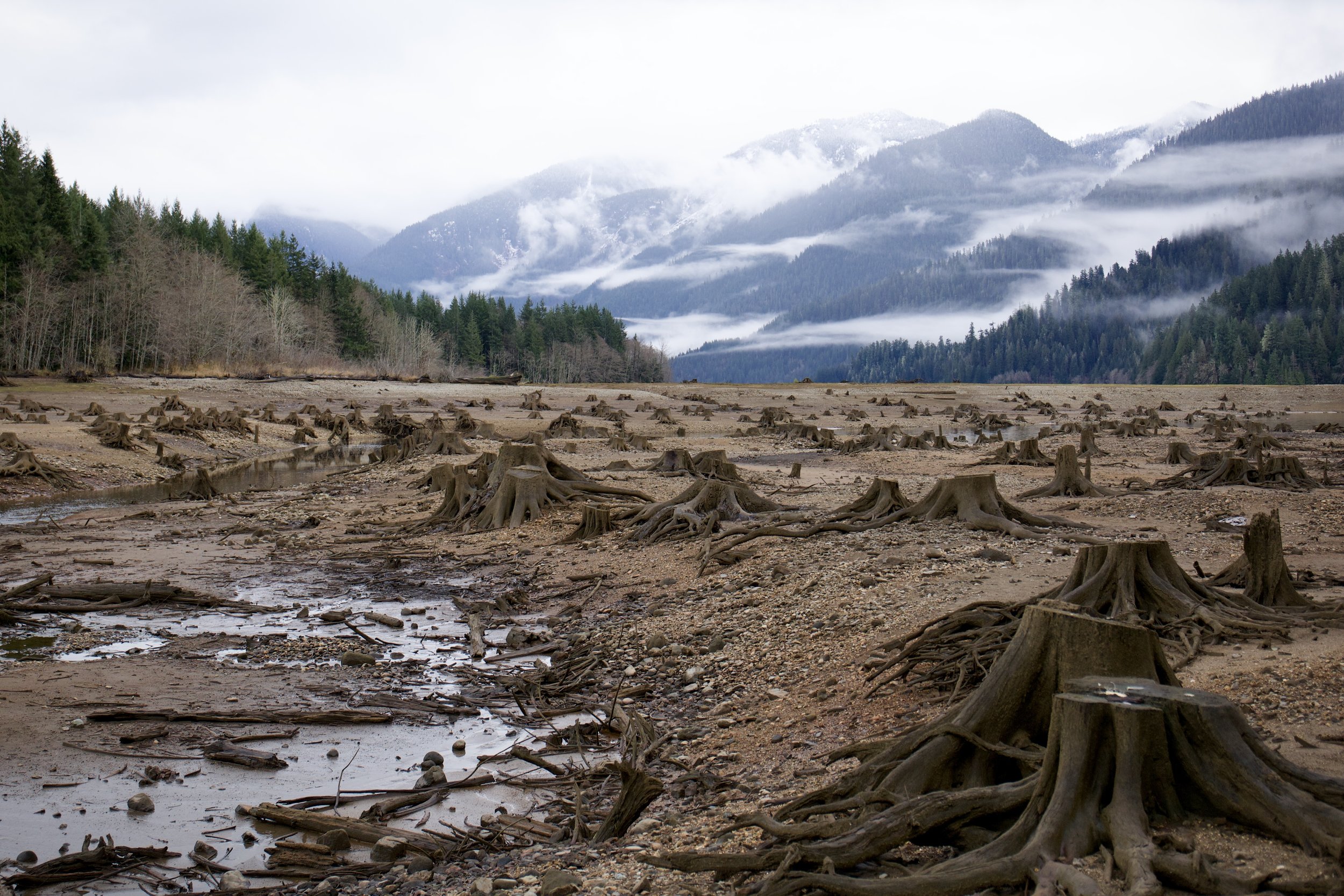
The desolate remains of a clearcut forest on the shores of Baker Lake, Wash., Nov. 26, 2025. // Photo by Matthew Ackerman
Story by Steven Colson // Photos by Lucia Jackson & Matthew Ackerman
December 12, 2025
Beau Jay received a new response to their survey meant to gauge the emotions experienced by victims of the 2025 Los Angeles fires. Excitedly, they opened the letter, and inside were the torn up remnants of their survey.
Jay is a graduate student at Western Washington University researching the emotions experienced by people with animals who suffered through the Los Angeles fires earlier this year. This letter captures just one response to the disaster out of roughly 300 received.
“We know that disasters impact individuals in extreme ways,” Jay said. “It is a very extreme example of climate change.”
It has been 65 years since the publication and discovery of the Keeling Curve, a groundbreaking climate research concept linking human emissions with carbon concentrations in the atmosphere. As a result of these emissions, the oceans have acidified, glaciers have melted and wildfires have become more frequent, indicating an increasingly unstable environment.
Although countries have come together to remedy these threats, and progress has been made, their efforts have not been enough. Annual global emissions have more than doubled since the Keeling Curve’s discovery, and are continuing to grow. The Intergovernmental Panel on Climate Change reports disaster on the horizon.
Entire generations have been raised with knowledge of the planet’s worsening health, and many are suffering from it. A 2023 Pew Research Center survey found that 70% of U.S. adults feel sad about what is happening to the Earth, and 53% are anxious about the future.
These emotions reflect a broader phenomenon known as ecological grief, or eco-grief, the human emotional response to ecological loss. The concept has received increasing attention in recent years. Searching Google Scholar for articles containing "ecological grief" before 2018 yields just 149 results; the same search between 2018 to 2025 yields more than 4,600.
Researchers Ashlee Cunsolo and Neville Ellis published a landmark paper on climate grief in the journal Nature during 2018. It paints a roadmap for future research into the subject and proposes three unique ways eco-grief manifests.
The first of these areas is grief associated with physical ecological losses. The people surveyed by Jay would fall into this category, having lost their homes, communities and pets to the January fires. Ecological disasters often lead to this form of grief, though other environmental issues such as deforestation or the extinction of a species can elicit a similar response.
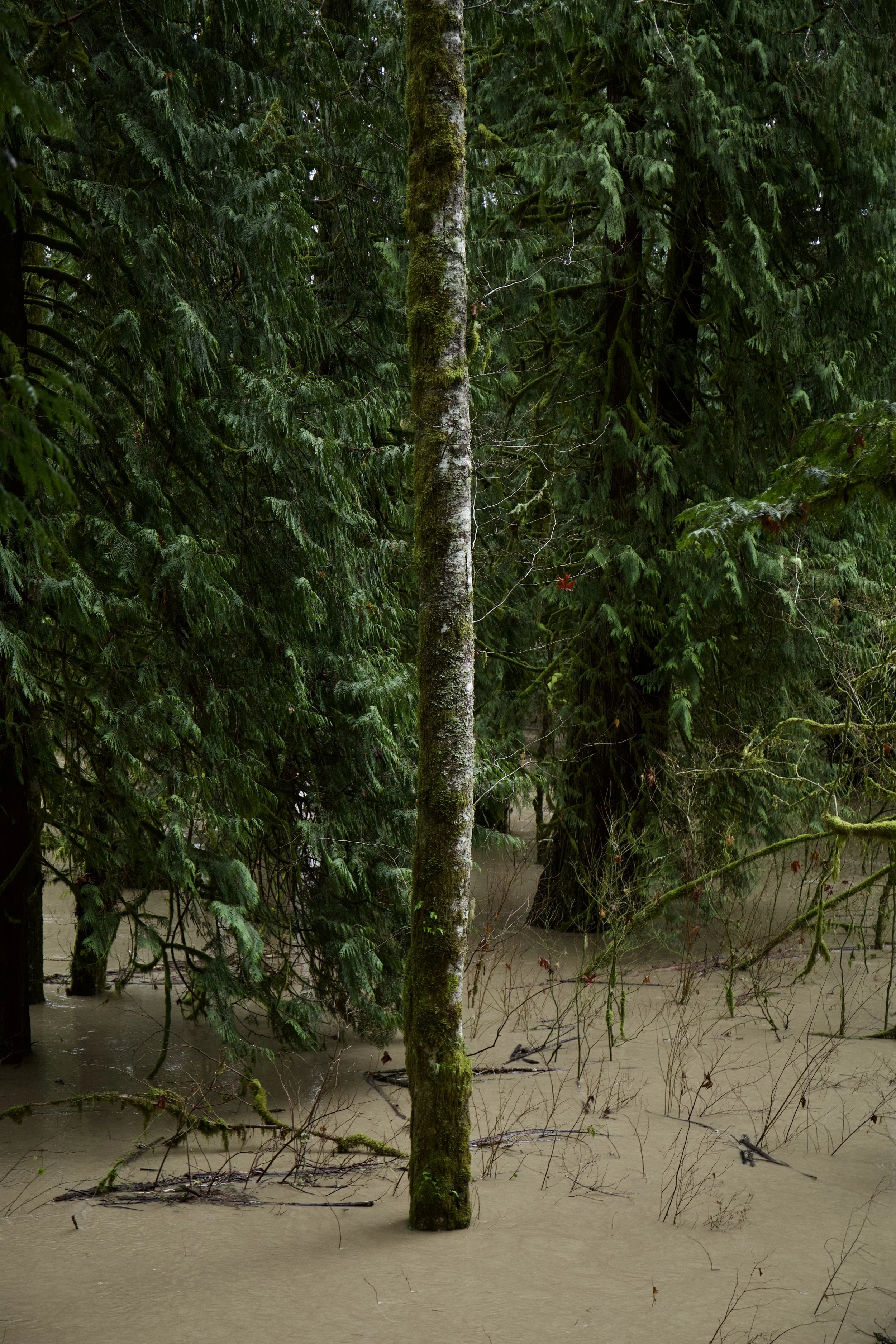
A single alder tree stands in the midst of Washington’s Skagit River, now swollen to include formerly dry land, on Dec. 11, 2025. // Photo by Matthew Ackerman
Second is the loss of environmental knowledge. Climatic shifts can dramatically alter environments, often causing the introduction of invasive species or loss of a keystone species. Individuals or communities with close ties to these ecosystems can then lose grasp on their understanding of their environment, and potentially their identity.
Joshua Porter, the director of Western’s Sustainability Pathways program for the Methow Valley, experienced this as he reflected on his time as a longtime resident of the Valley.
The Valley is a fire-adapted ecosystem, so fires have been a fact of life for Porter. Newer fires, however, expand rapidly and without warning, often in a self-perpetuating way, according to Porter. In the last ten years, he has been evacuated by wildfire four times.
“Something in the psyche shifts around the anticipation of fire season,” Porter said.
The third and most abstract form of eco-grief is grief associated with anticipated losses. In its reports, the Intergovernmental Panel on Climate Change clearly spells out the future we are going to face and the present we are set to lose. Given its immeasurability and unpredictability, this form of eco-grief is particularly difficult to manage.
“I think our anxiety deals with the concrete world very well,” Ruby Casiano, a licensed psychologist and the assistant director and training coordinator at Western’s Counseling and Wellness Center, said. “That’s what we’re meant to be able to deal with, but our world is a lot more theoretical and amorphous.”
The act of grief itself is also theoretical and amorphous.
“When you talk about grief, it’s still this kind of abstract concept. You don’t really know whether you’re feeling it or not, what that process looks like, and there are different processes that can actually happen,” Risa Aria Schnebly, a doctoral student at Arizona State University researching ecological grief, said.
The ways eco-grief is processed vary as widely as the spectrum of human emotions, though two common responses are despair and rage. Contributing to this despair is the overwhelming access to climate information and news we have as individuals.
The problems instigated by climate change can feel insurmountable when news and social media feeds convey feelings of loss at all times, according to Nicole Torres, the advisor to Western’s ecopsychology minor and assistant professor of human studies. Being so exposed to news of loss from all across the world can also lead to compassion fatigue or vicarious trauma, according to Torres.
“I don’t think our nervous systems have the capacity for that constant chronic flow of despair,” Torres said.
This despair is reminiscent of depression, according to Casiano. Feelings like hopelessness, helplessness, disillusionment and disconnection can be depressive symptoms.
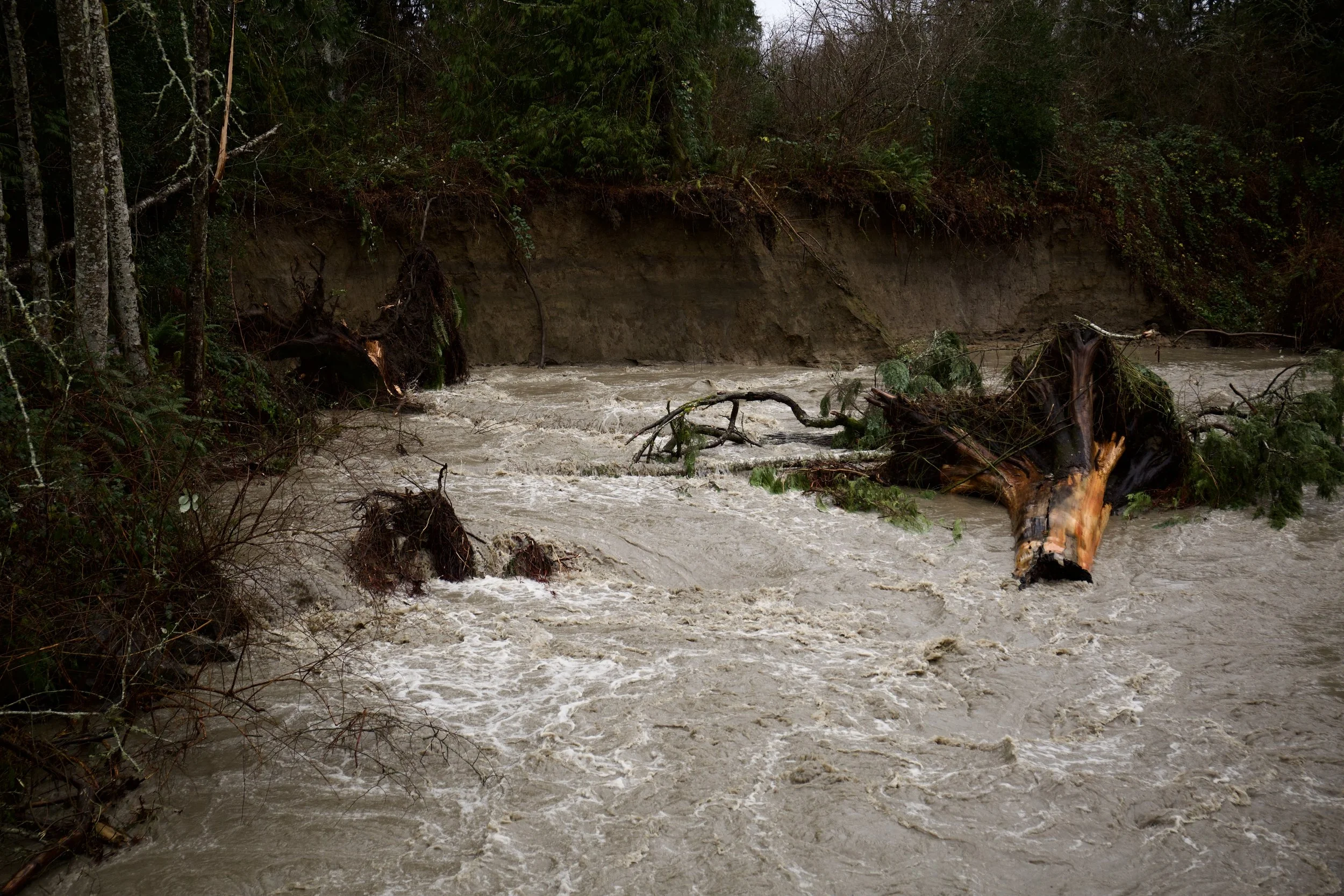
A stream west of Concrete, Wash., swollen with floodwaters and sediment, erodes away at the clay banks on Dec. 11, 2025. // Photo by Matthew Ackerman
Alternatively, ecological loss can trigger what Jay calls an ‘eco-rage.’ This rage can be directed at anything as people often look for something to grab onto, according to Jay.
“These people are so upset with political influence, first responders, disaster management, the defunding of [the Federal Emergency Management Agency],” Jay said of those responding to their survey.
A Pew survey from 2023 shows that 79% of adults in the US feel “frustrated that there is so much political disagreement about climate change.”
Grieving looks different for everyone, and managing eco-grief comes with its own difficulties. The problems can feel too big for a person to feel capable of making meaningful change.
“During COVID I felt a lot of apathy, ‘there’s nothing I can do,’” Jay said. “I lost a lot of hope. I was extremely depressed and at a certain point I was like ‘there’s no point in being sad about this, I just don’t care.’”
Working in the environmental field and starting research on eco-grief has helped give Jay a sense of agency and hope. Porter finds this hope by engaging in action, working with the younger generations and looking to the longer term.
Leaning exclusively into action, however, can be an unstable coping strategy, according to Schnebly. Grief is the process of relearning the world and constructing new meaning. Pouring all of one’s energy into action is bound to cause burnout and could lock someone in a cycle of heightening grief.
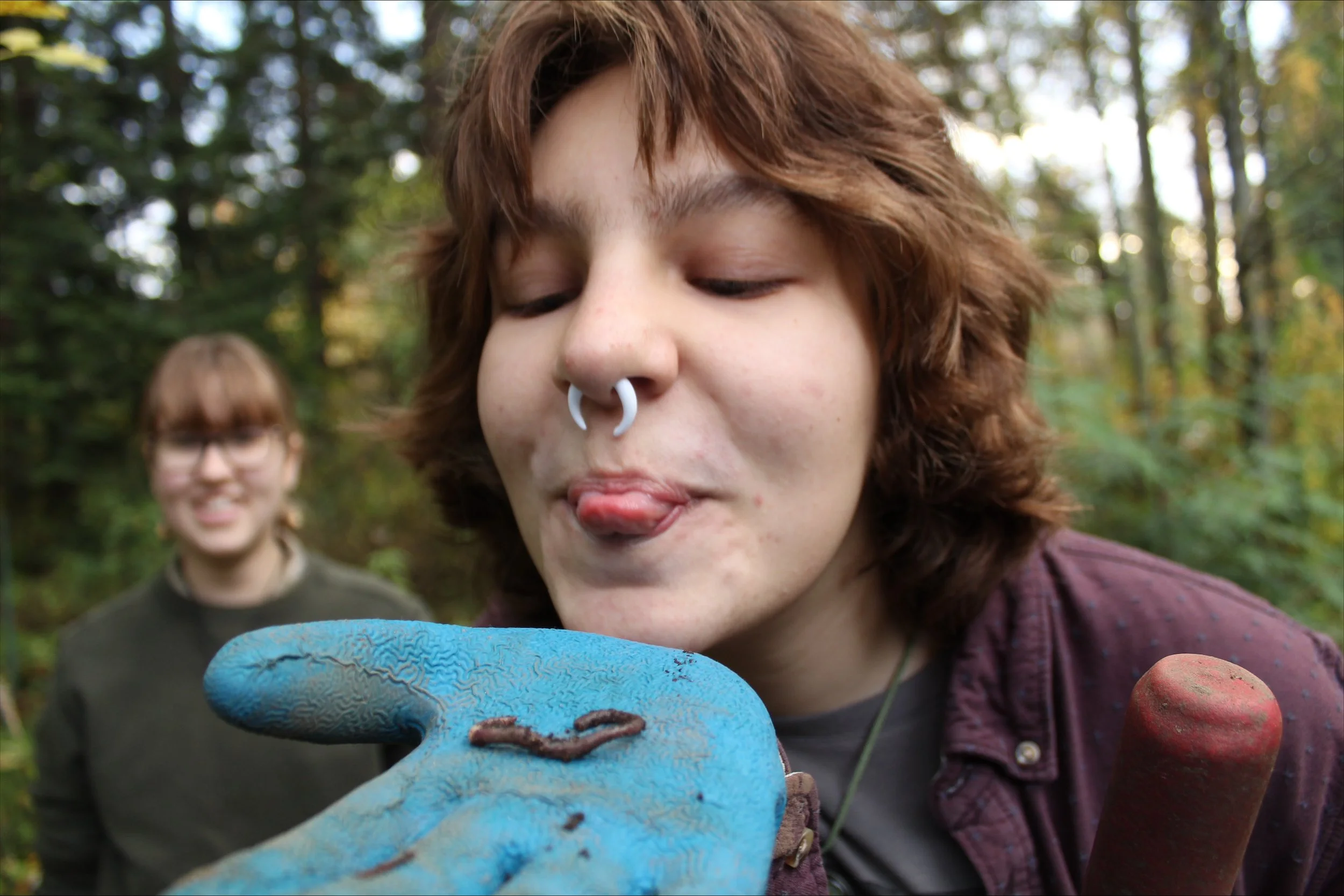
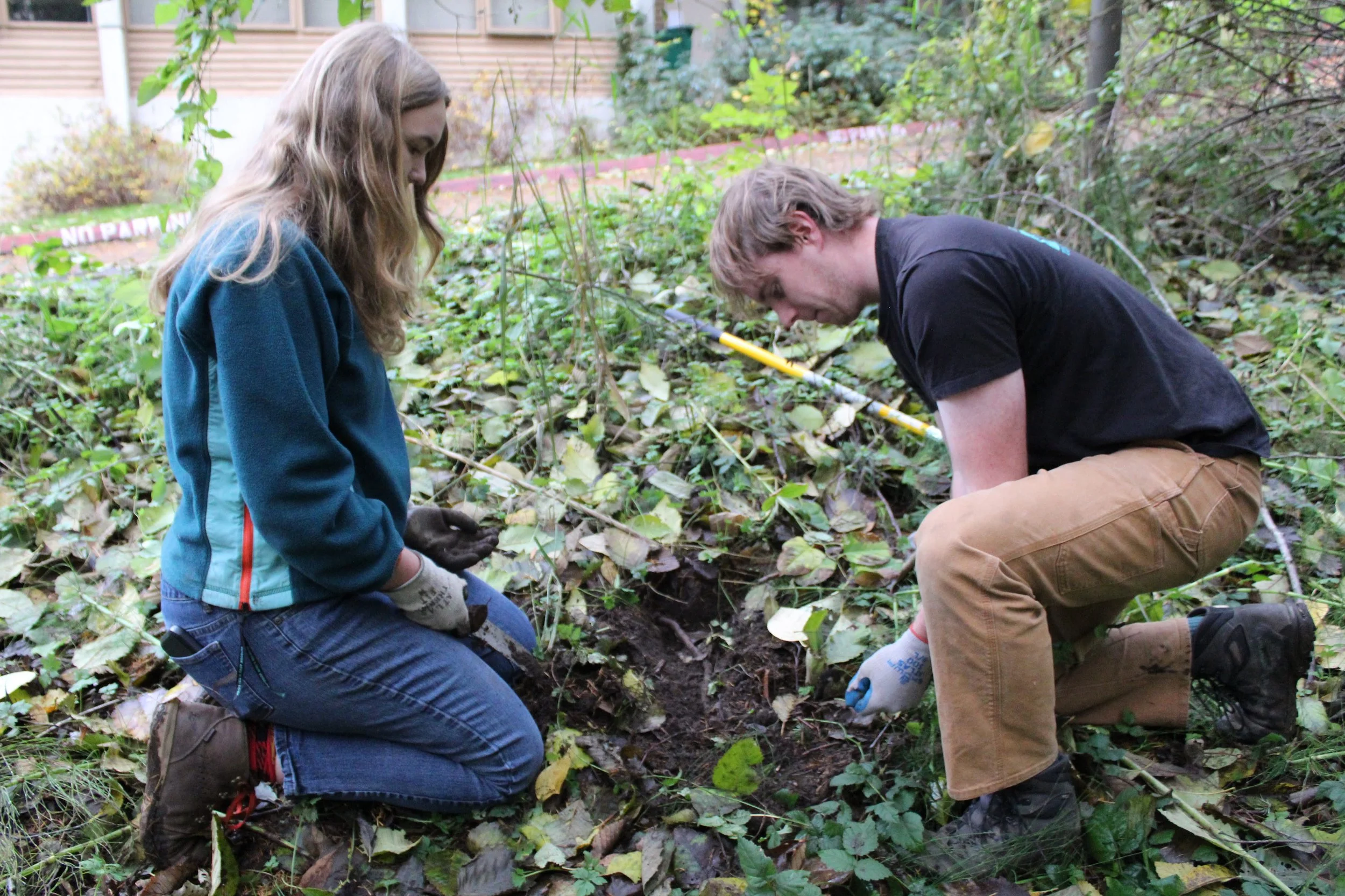
In a collaboration between an Ecological Restoration capstone class and Western's Ecological Restoration Club, students and club members remove multiple invasive species, including Himalayan blackberry, knotweed and buttercup. // Photo by Lucia Jackson
77-year-old retired meteorological scientist Ray Kamada has experienced this burnout firsthand, studying atmospheric physics through his professional career, and spending much of his retirement fighting climate misinformation and promoting action. He did not want to ‘waste’ any more of the life he has left and has taken a step back.
“Six months to a year from now, I’m gonna be having a life, something kind of new for me,” Kamada said.
Casiano advocates for radical acceptance of what is outside of one’s control, shifting focus onto what can be controlled. According to her, doing so can make the feelings easier to handle.
For some people, fighting the good fight is the only option. For others, like Kamada, they’ve done their part.
“I think that we’re gonna be too little too late,” Kamada said. “You know, you’re like 50, 60 years younger than me… I don't wanna be you.”