
Is Falconry Feasible?
A top of the line option to control pest birds exists, but local farms can’t justify the cost
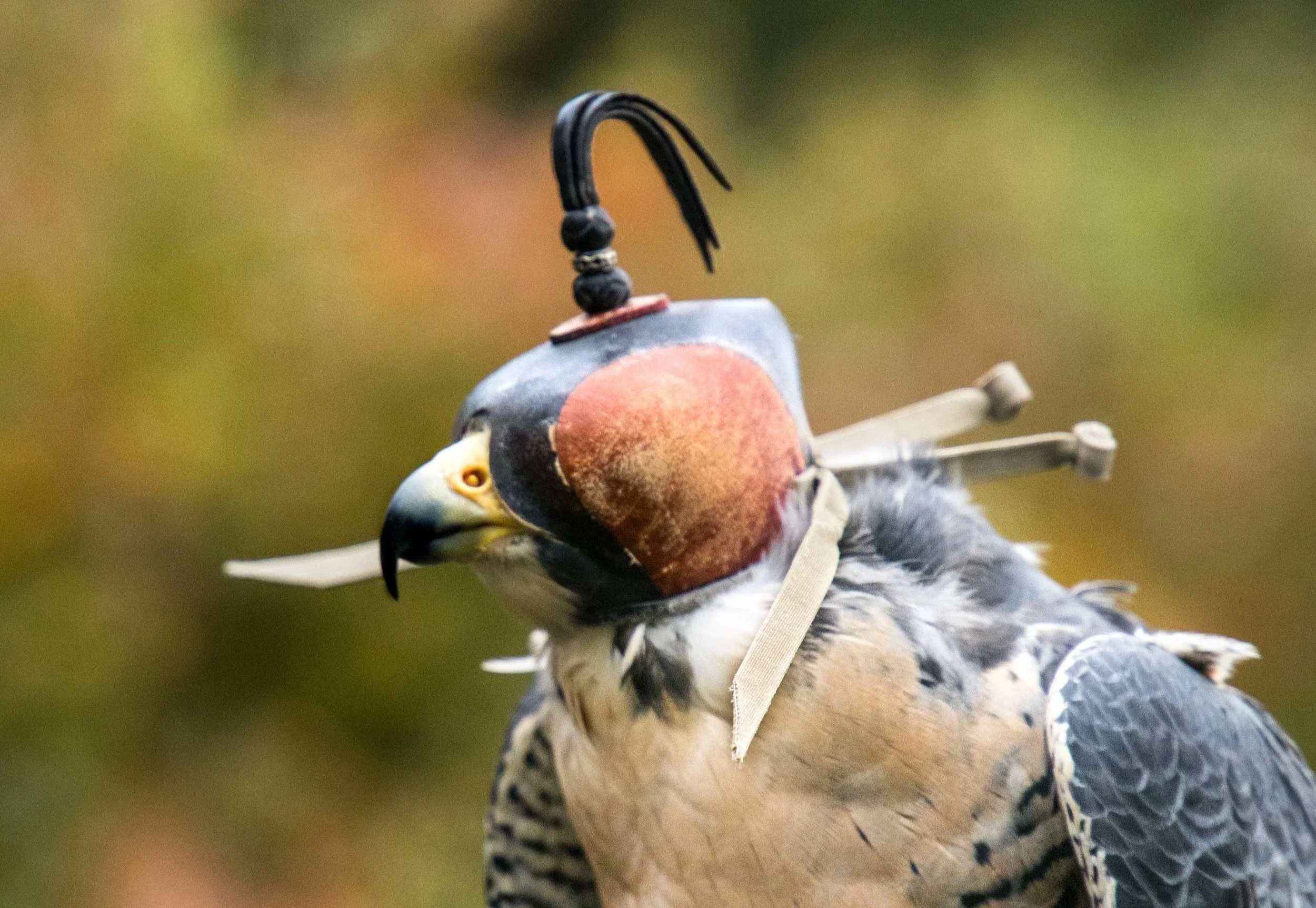
A peregrine falcon sits perched on a gauntlet, its hood covering its eyes. // Photo by Jesse Paull
Photo Essay by Jesse Paull
December 12, 2025
Caitlyn O’Neal walked through the dusk-lit field. Clouds billowed like cotton balls, enveloping the sky, their edges traced with the gold of the setting sun. A Harris hawk soared overhead, his silhouette reflected by the evening light.
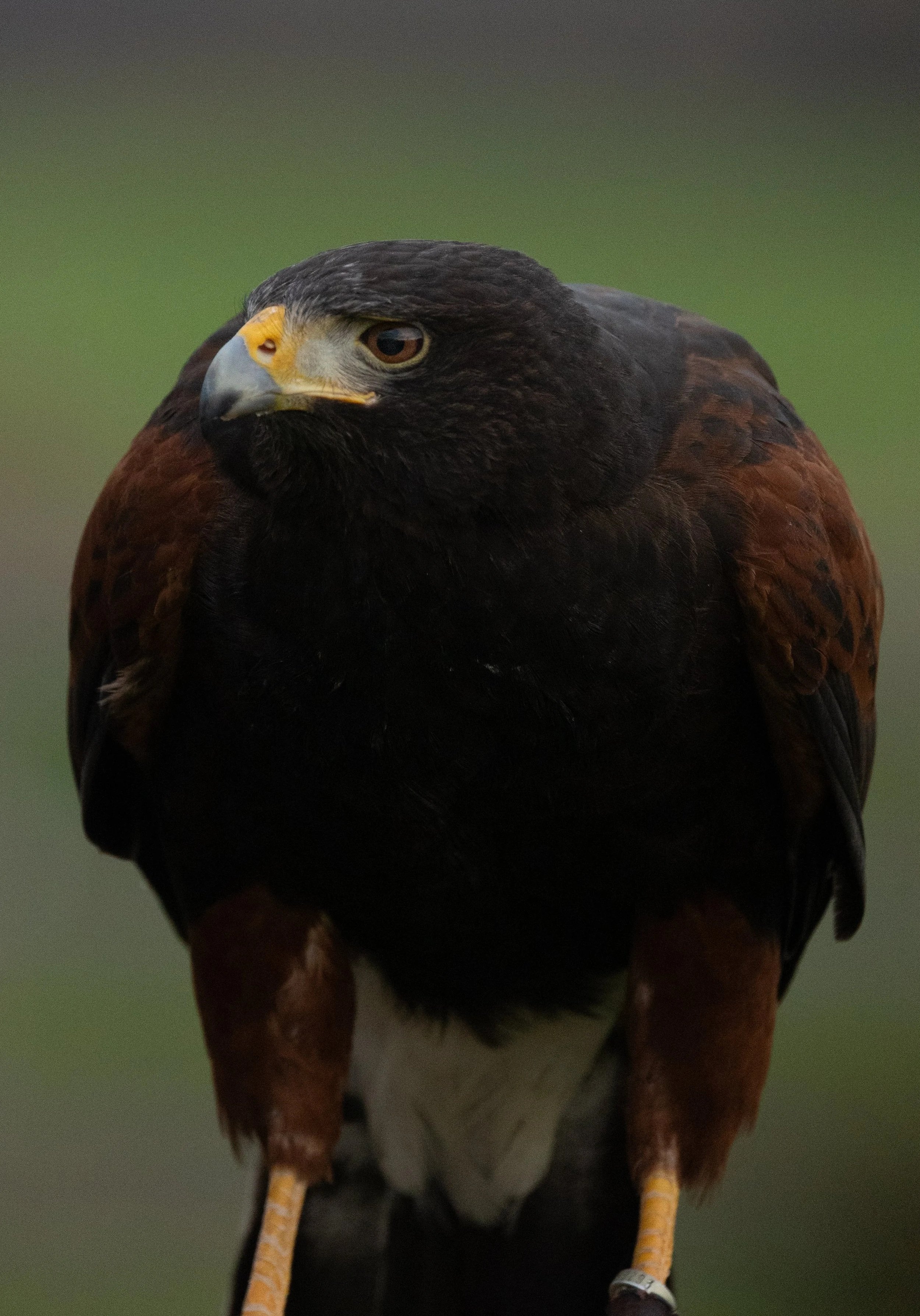
“His name is Beetle,” O’Neal said. “My boyfriend named him after Beetlejuice.”
O’Neal is an abatement falconer. She travels the state of Washington, flying her four birds — Beetle, Nora, Casca and Luis — at farms in the summer and urban locations, such as ports, when peak season slows down, working to scare away pest birds.
Year-round, these pest birds scavenge through Whatcom and Skagit countries, carrying disease to livestock and turning harvest time into a battle between farmer and flock. Among the most notorious of these birds is the European Starling.
European Starlings were first introduced to Central Park in 1890 by Eugene Schieffelin, an amateur ornithologist, who released 80 birds. In the following years, their population quickly exploded across North America.
Today, an estimated 200 million starlings populate North America., ranging from the mountains of Alaska to northern Mexico.
Karen Steensma, retired owner of Steensma Creamery, has seen their pervasive presence firsthand.
“The cows were lined up at the feed bunk, and the feed was so covered with starlings that the cows had to push the birds out of the way,” Steensma recalled.
During fall and winter, as flocks grow larger and food grows scarcer, birds often seek protection from harsh weather in barns and farms. This crowding of animals creates an environment ideal for diseases such as Johne’s disease, salmonella and E. coli.
Larry Stap, owner of Twin Brooks Creamery, deals with starlings weekly. His 400 Jersey cows contend with thousands of starlings nesting in straw feed or resting on their backs.
O’Neal’s falcon, Beetle, perched atop a greenhouse. // Photo by Jesse Paull
“I call it a disaster,” he said.
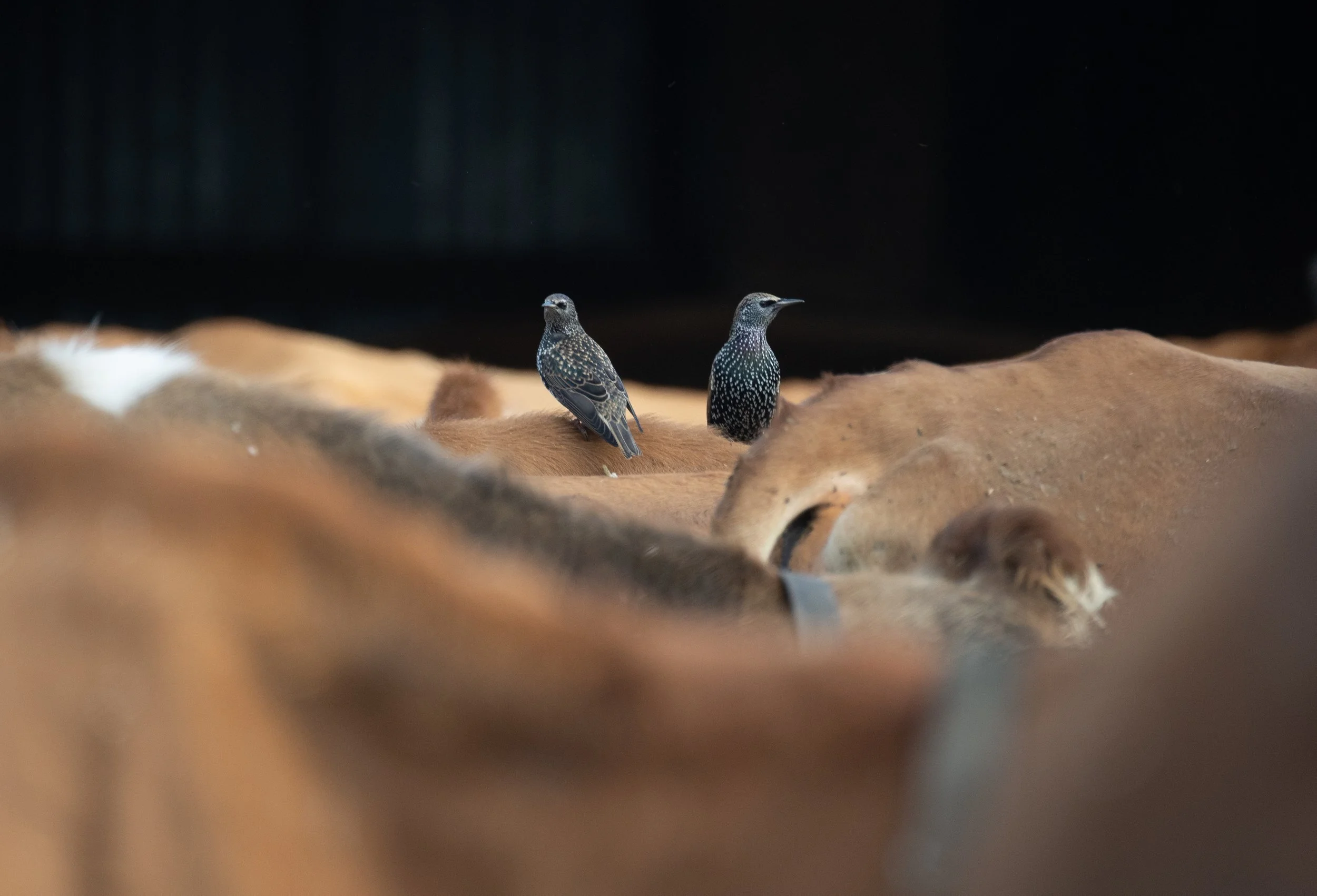
Two European starlings perched on the backs of Twin Brooks Creamery’s Jersey cows, with starling feces visible on many of their cows' backs. // Photo by Jesse Paull
These birds cost farmers an average of $55 per cow. For Stap, that’s $22,000 in lost earnings.
Starlings take their toll on berry harvests, too. On average, farmers lose one out of every 15 berries to hungry birds. For those who don’t put significant effort into abatement, losses can be much higher.
“[How] they do the most environmental damage, or economic damage, is they poop everywhere,” Ezra Ranz, partial owner of Bow Hill Blueberries, said. “With hand-pick [farms], it's something that you have an experienced eye overlooking … a machine is indiscriminate.”
For many farms, O’Neal offers a remarkably effective fix: falconry.
Falcons are well-suited for this line of work due to their psychological impact on prey, their innate ability to fly at high speeds and adapt in real time.
Once a starling sees a falcon hunting in the area, it will avoid the location at all costs, Frank Lapsansky, a retired falconer, explained. Non-animal deterrents, however, don’t instill the same fear. Starlings will quickly realize there is no real danger and return.
“[Falcons] use height like a fighter aircraft to gain the position on their prey,” Lapsansky said.
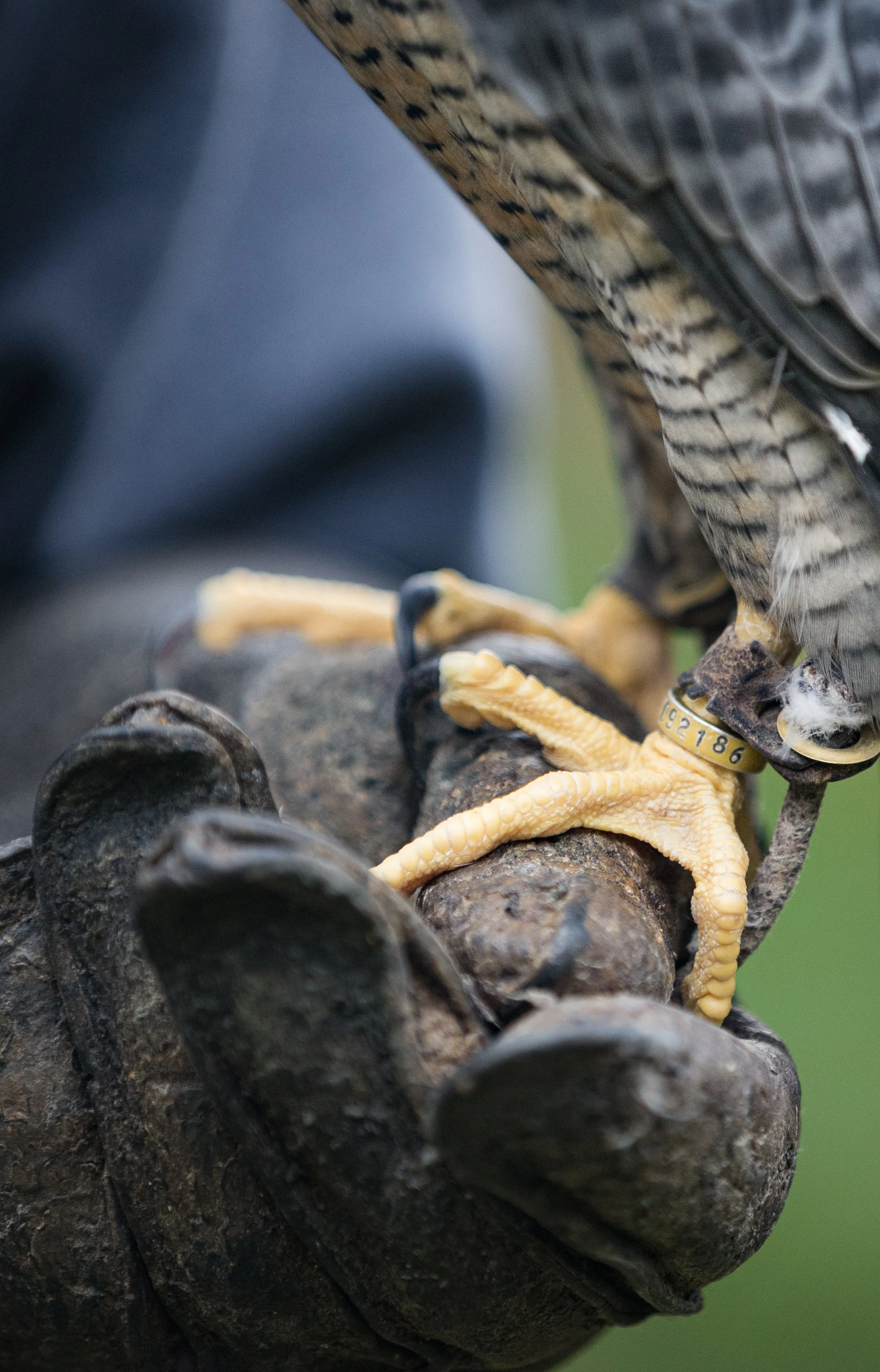
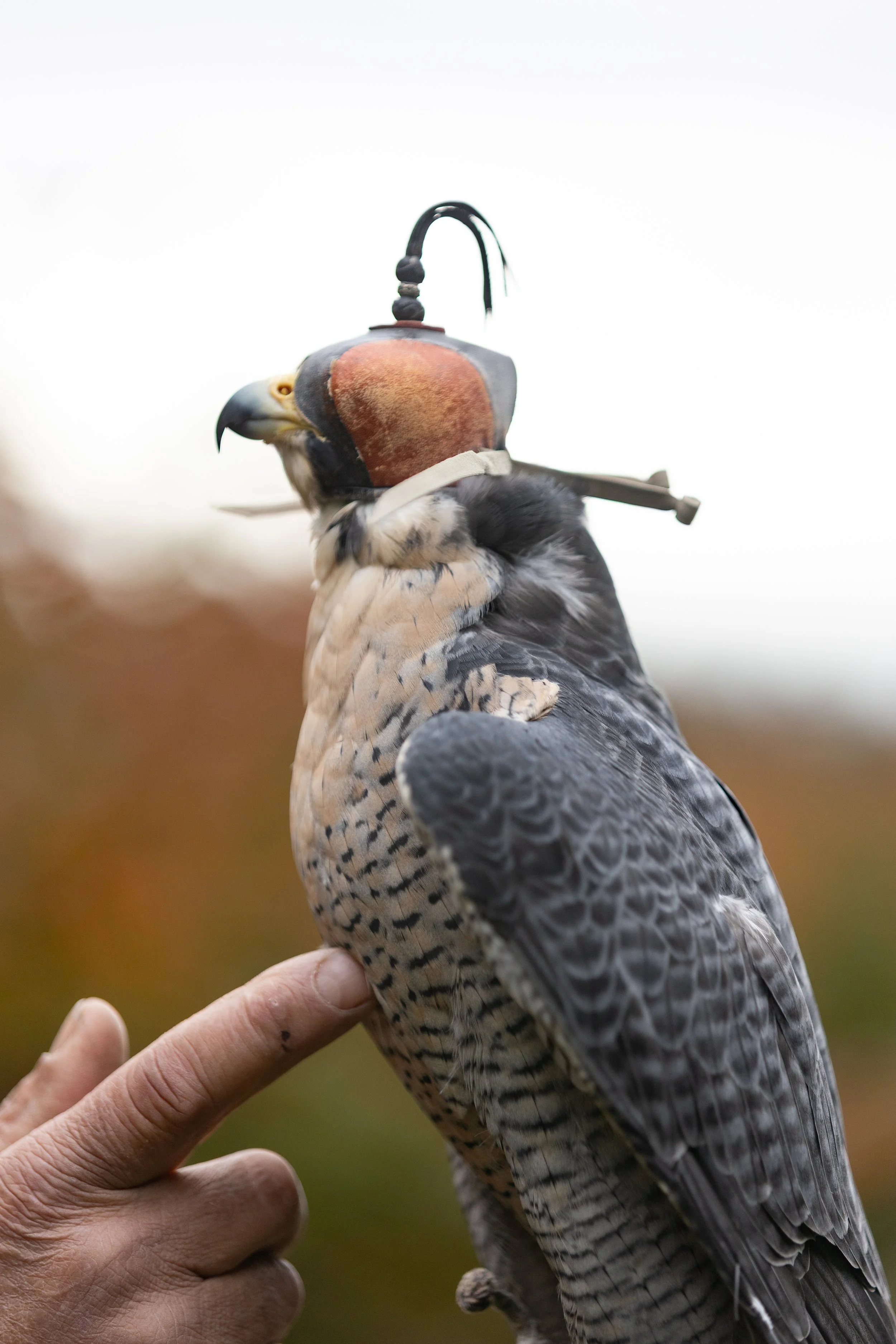
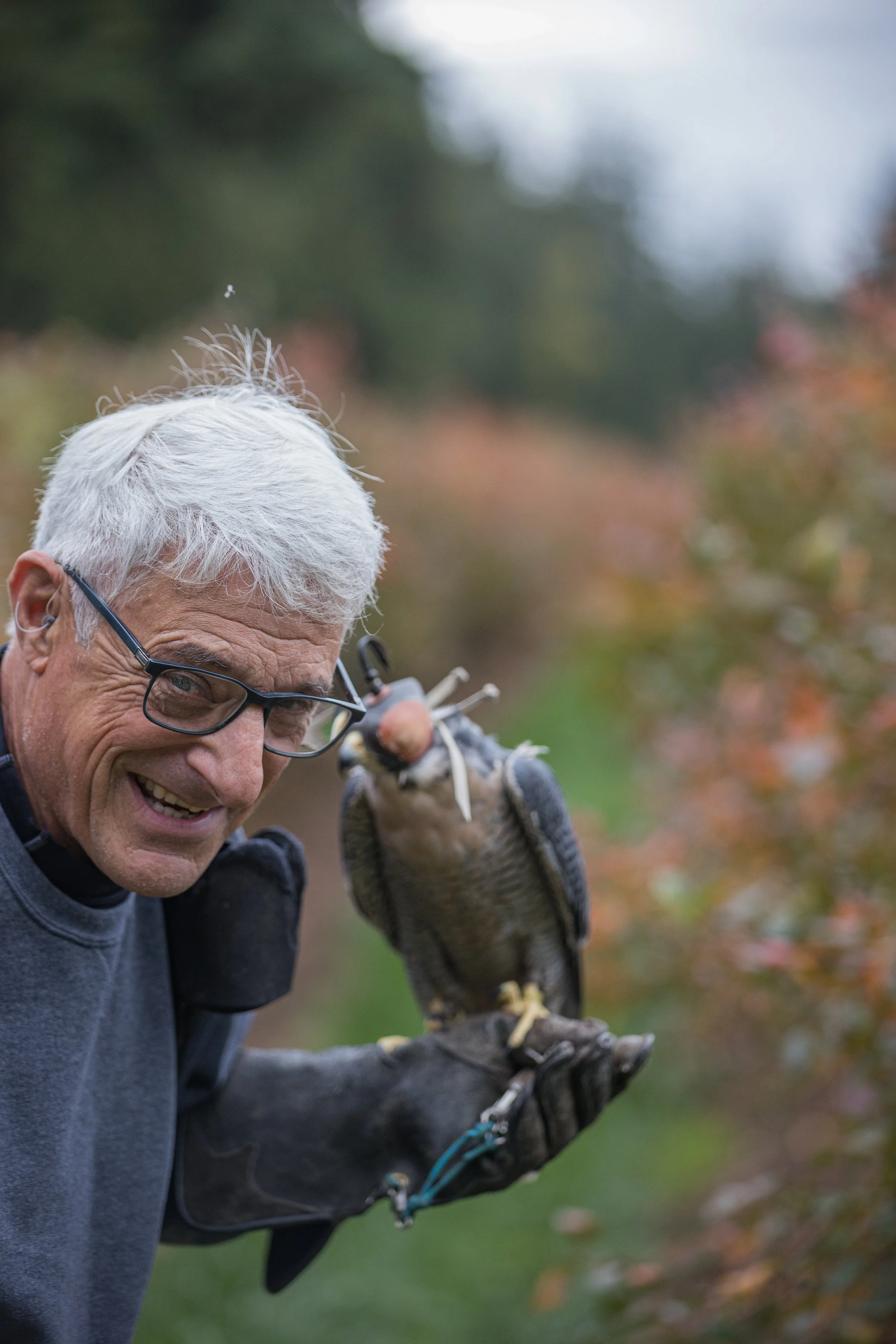
LEFT: A peregrine falcon grips Lapsanskys' leather falconry glove, also known as a gauntlet. // Photo by Jesse Paull
CENTER: Lapsansky checks the weight of his hooded peregrine falcon with his finger. Falcons must be a specific weight to fly. // Photo by Jesse Paull
RIGHT: Lapsansky holds one of his peregrine falcons at a Whatcom County blueberry farm. // Photo by Jesse Paull
Once they reach such heights and spot their prey, they dive at speeds upwards of 200 mph. This sheer speed and agility can be used to manipulate clouds of starlings like sheep dogs.
“They do a lot of adjustments mid dive … they don’t have a set path,” O’Neal said. “They’re calculating, up until the last second they hit the [bird’s] head with their foot.”
These factors make falconry one of the best options to control pest birds — but for many farmers, the cost is unrealistic. Falconers typically cost around $300 per day, and effectively keeping pest birds away could take weeks or even months.
“The problem is, smaller growers who don't have as high a value of a crop can't justify the economics of hiring the falconer,” Steensma said.
To ward off birds, farmers have come up with their own solutions.
Stap uses his trusty old shotgun, shooting shells into the air and often killing one or two starlings to get his point across: get off my farm.
Steensma deploys kestrel nests, reaping the same benefits a falconer would offer. Although this seems like a great solution to the problem, it’s a gamble if and where a kestrel will nest.
Even Lapsansky, a falconer, tries his luck with other methods.
“Every morning, I'd go out with my cup of coffee … I'd either crack the whip or shoot [into the air], and that would clean the field of birds,” Lapsansky said. “But the problem is, once they figure that you're not going to kill them, they start coming in.”
Falconry may be a great option for large-scale farms, but for smaller operations, the price can be too steep. Questions about farm management will continue to be an endless tug-of-war between cost and effectiveness.
“People don't realize that farms are ecosystems, and we can make them all work together. It's a juggling act, and it can be tricky,” Steensma said. “It's a whole big story of how we can work together with the natural world to have the best solutions for some of these conflicts.”
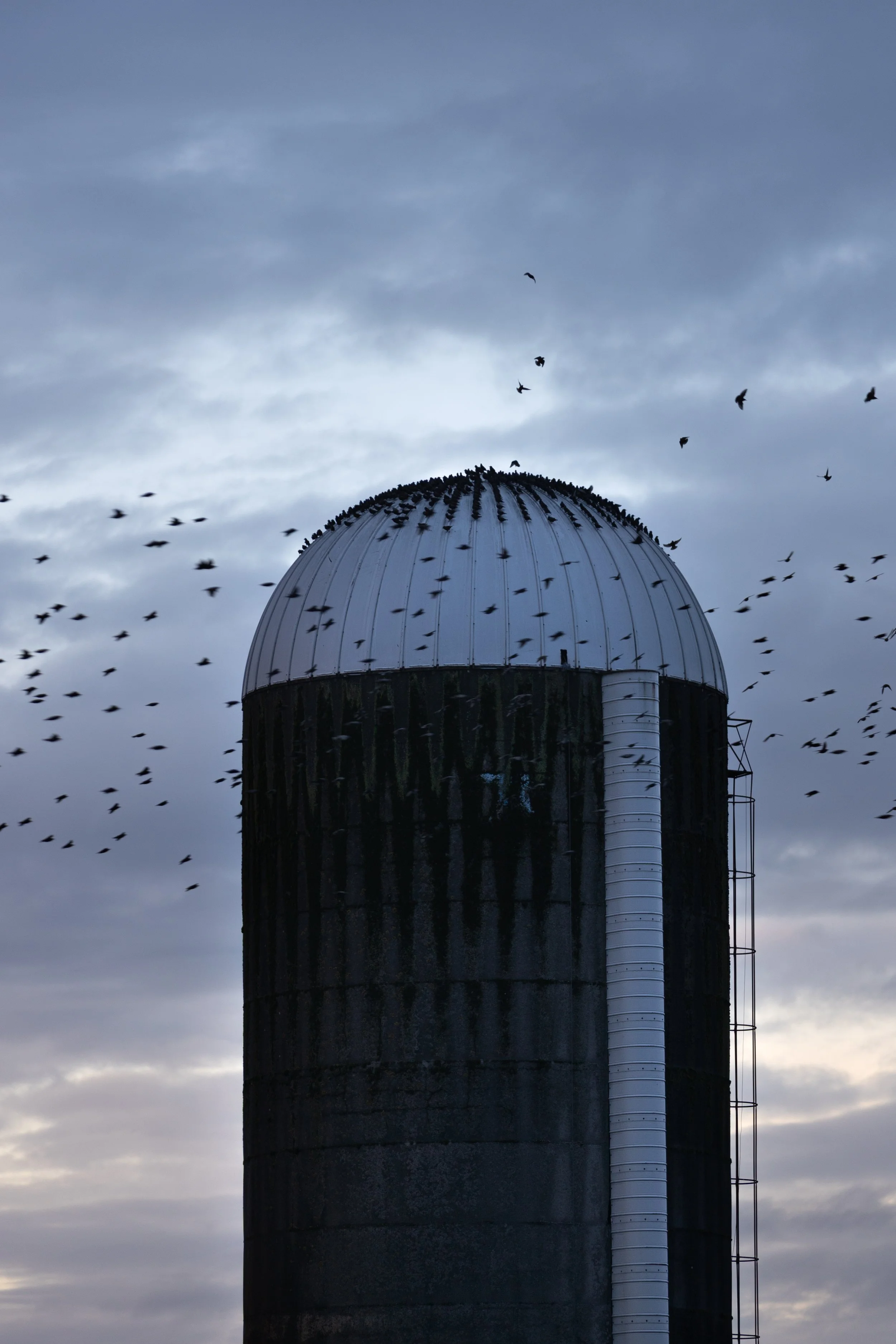
LEFT: A murmuration of European starlings above a dairy farm near Lynden. // Photo by Jesse Paull
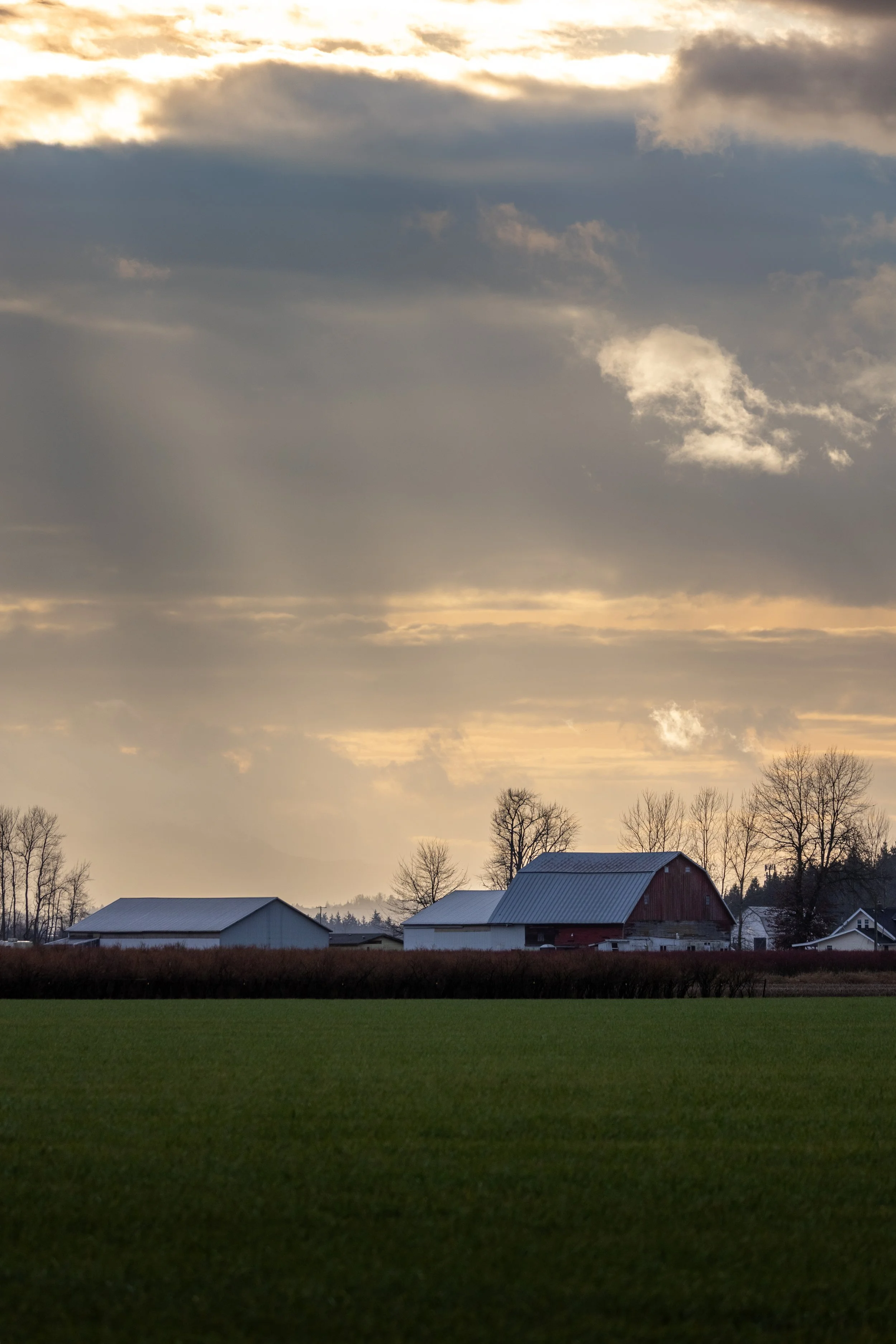
RIGHT: A Whatcom county blueberry farm. // Photo by Jesse Paull