
Sustaining the Subsoil
A microscopic world exists under our feet, and farmers are finding new ways to protect it
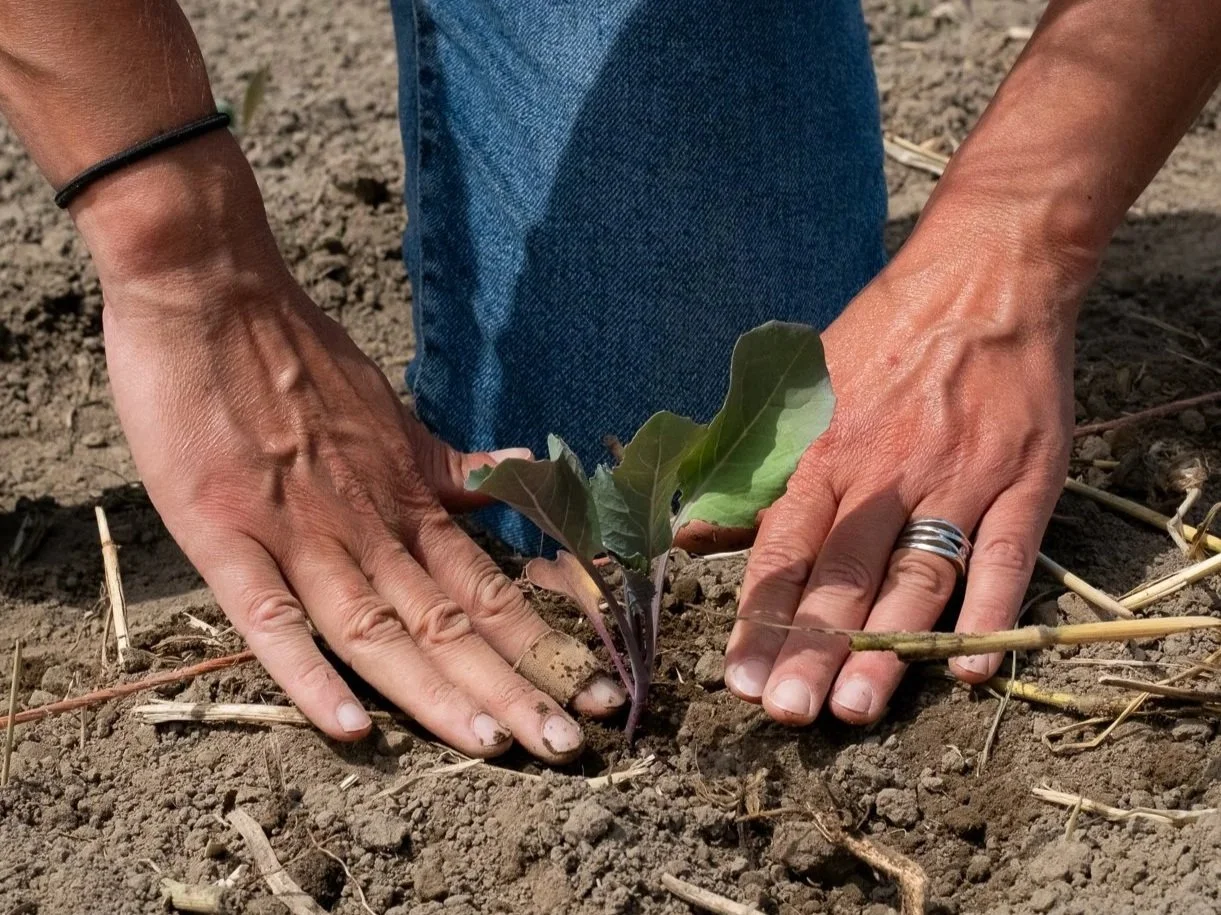
Aneka Sweeney planting crops at Hilda Farm showing that opportunities to assist farmers are abundant. // Photo by Evan Coleman
Photo Essay by Evan Coleman
Blaring sunlight shines throughout a freshly prepared planting bed. The soil retains its heat as farmer Hilda Sandoval examines the earth.
“You don’t work with your body; you gotta work with your brain,” Sandoval said.
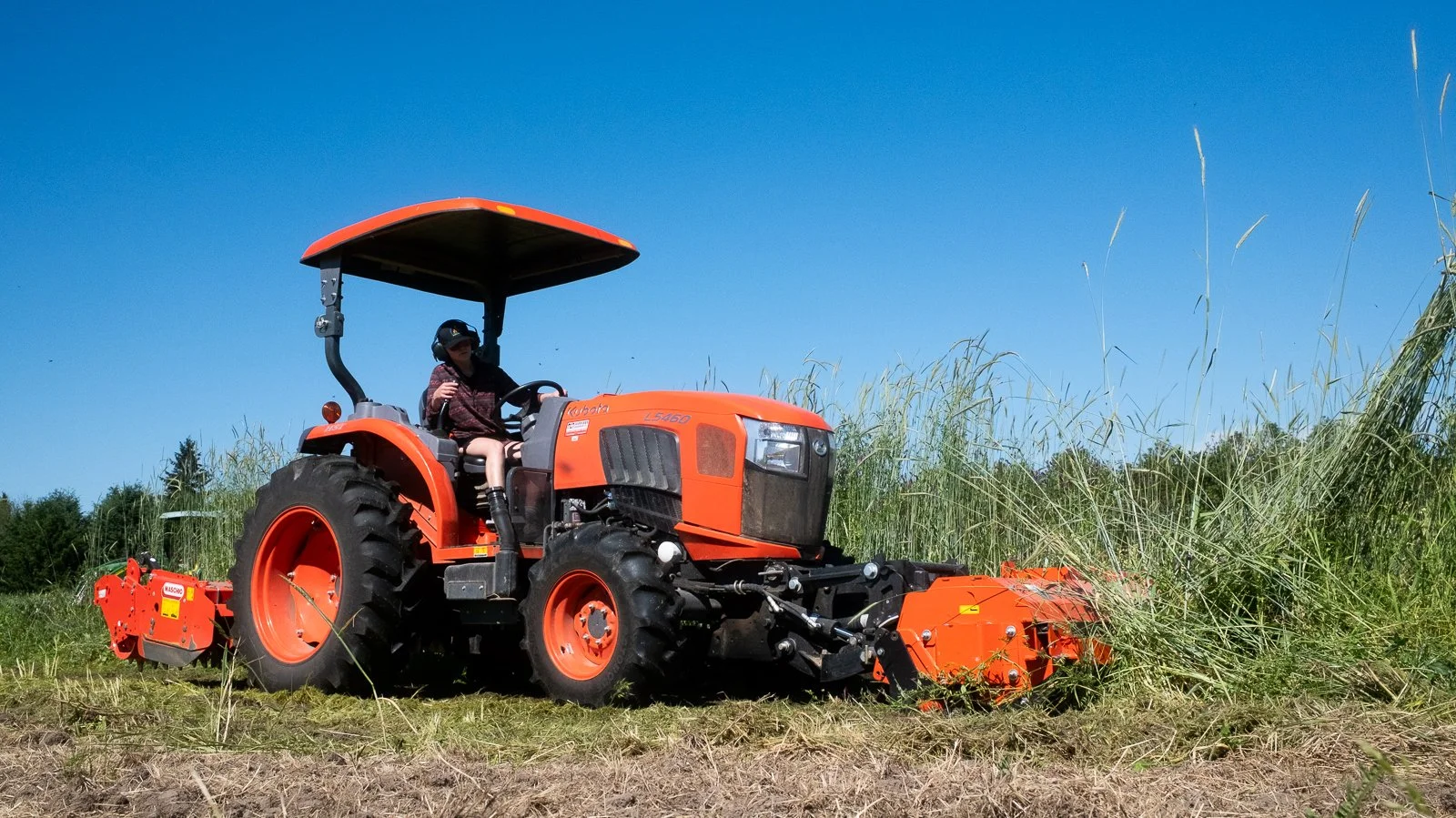
Samantha Shortledge, an organic farming system's scientific assistant with WSU, operates a power hower to flail-mow a reduced tillage plot of cover-crop previously a plot of broccoli. // Photo by Evan Coleman
Farming is more than just physical labor. She explains that caring for the soil in farming demands the mind as much as it demands the body. Her knowledge is gathered from many places: books, YouTube, other farmers and the field itself.
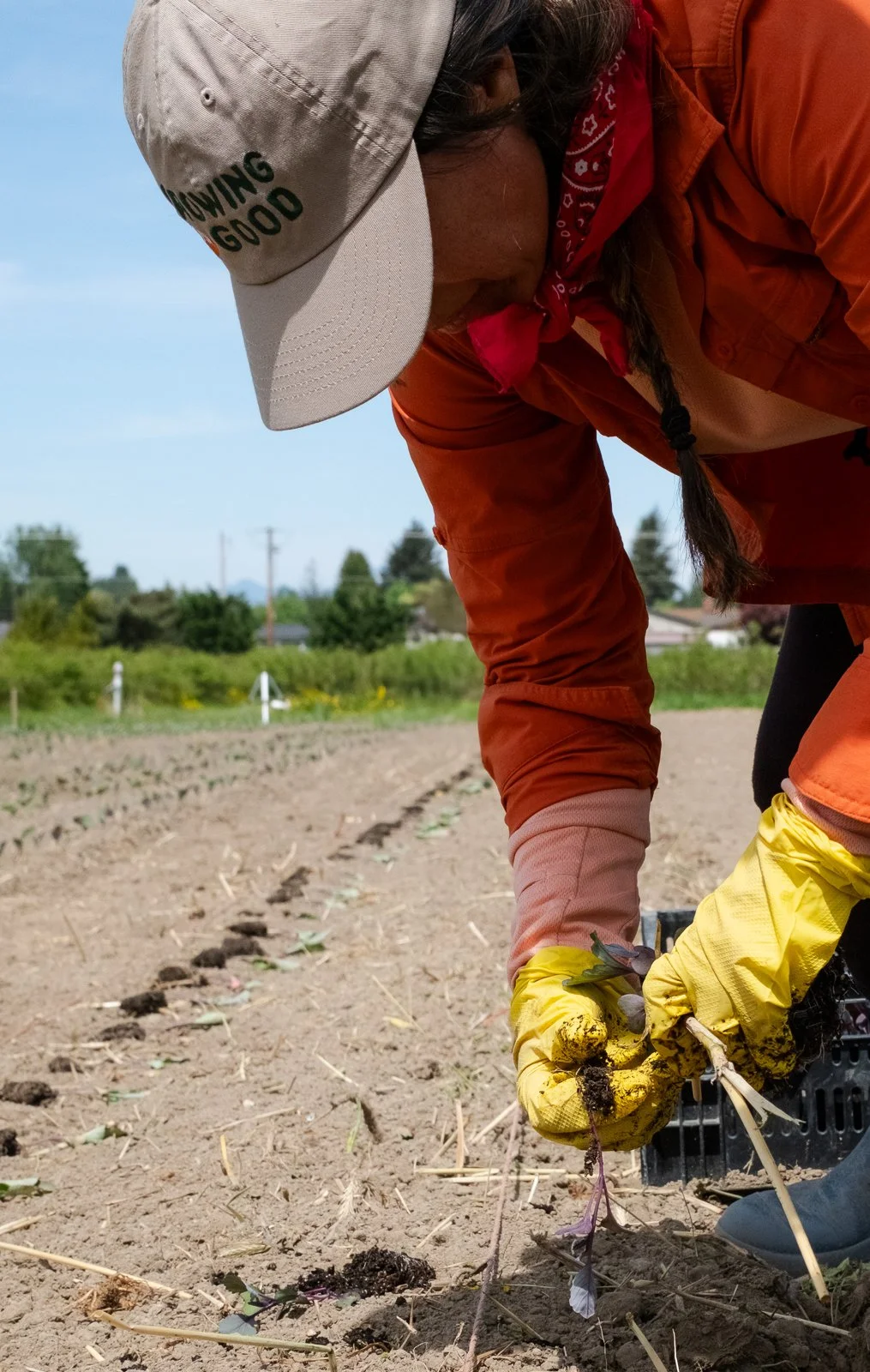
Sandoval, a farmer in Whatcom County, works with practices that limit surface disturbance such as reducing tilling and letting her fields rest. // Photo by Evan Coleman
“If you want to take care of the soil, it has to be like that,” Sandoval said.
The success of soil conservation is often quiet. There are no towering dust clouds, abandoned farms, or ecological catastrophes demanding public attention. Instead, the work happens before disaster can arrive.
Conservation districts arose after waves of drought, over-plowing and wind erosion stripped millions of acres of topsoil from the Great Plains in the 1930s. Supporting soil stewardship became a central goal of the U.S. government, ensuring that farmers are protecting their land in the shadow of one of the most devastating soil disasters: the Dust Bowl.
“We’re one of the few government agencies that can work directly with private landowners,” Aneka Sweeney, the outreach and education manager from Whatcom Conservation District, said.
Katie Pencke works as a farm planner at Whatcom Conservation District. Her job bridges institutions and individual farmers, helping turn broad conservation goals into practical changes on the land while listening to farmers' concerns and navigating the tensions those goals can create.
“If you’re working as a farm planner or for the conservation district you’re working near the farm,” Pencke said.
One of the clearest examples of tension in agriculture is tillage. Many farmers consider tilling a normal agricultural practice, but it isn’t without its trade-offs.
A healthy soil environment includes a vast diversity of lifeforms. Mycorrhiza, the relationship between fungi networks and plant roots, is foundational for an estimated 80-90% of all plant life, according to a 2016 study by the Ohio State University department of plant pathology.
Dani Gelardi, a senior soil scientist and climate coordinator for the Washington State Department of Agriculture, explains that fungi networks form microbial webs that bind clumps of sand, silt, clay and organic matter to help form the soil aggregates. This makes the soil more structurally sound, less likely to erode during wind events and less likely to wash off the surface during floods.
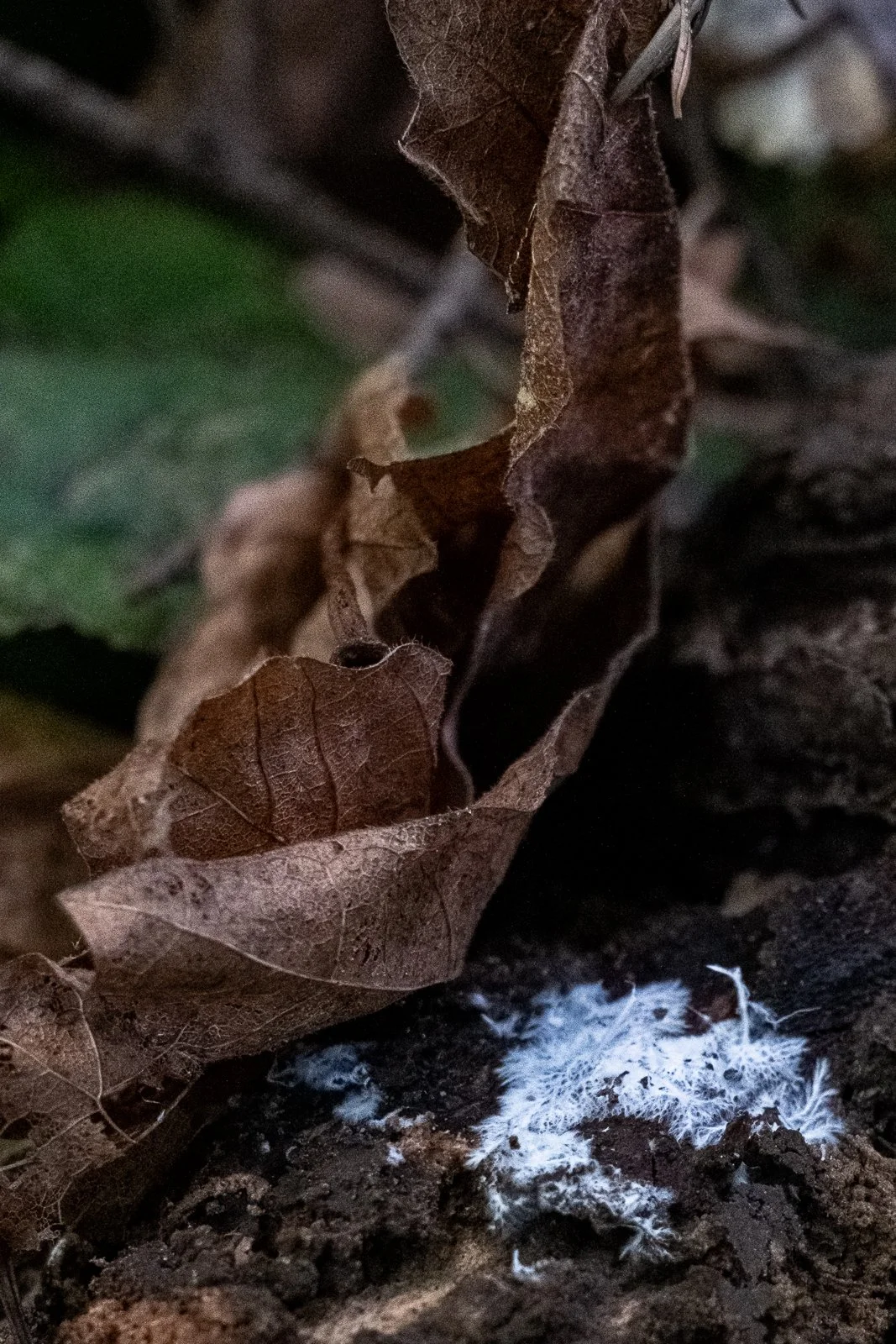
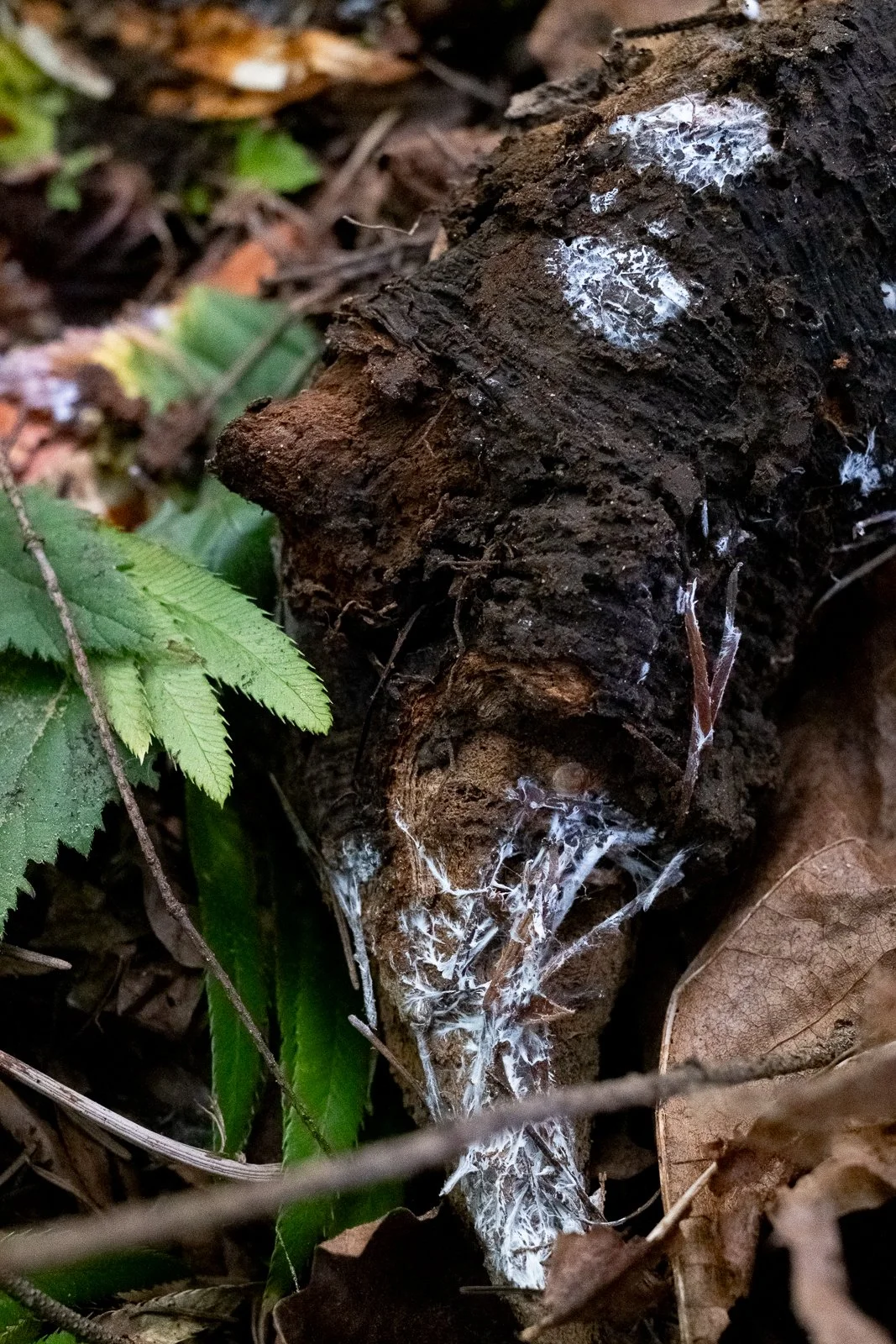
ABOVE: Mycelium spreading across decaying forest matter. // Photos by Evan Coleman
“They form associations with plant roots and help mine soil nutrients from really far away in the soil and bring those nutrients to the plant,” Gelardi said. This relationship gives many plants the extra range they require to get all of their needs.
Gabe LaHue, a professor of soil science at Washington State University, highlights that beneath farms, gardens and forests, healthy soil is a cornerstone to the ecological environment.
Farmers steward the land by preserving healthy soil. In turn, that soil holds water while allowing it to drain freely, which reduces flooding and cycles nutrients.
“It's the foundation for our agricultural productivity.” LaHue said.

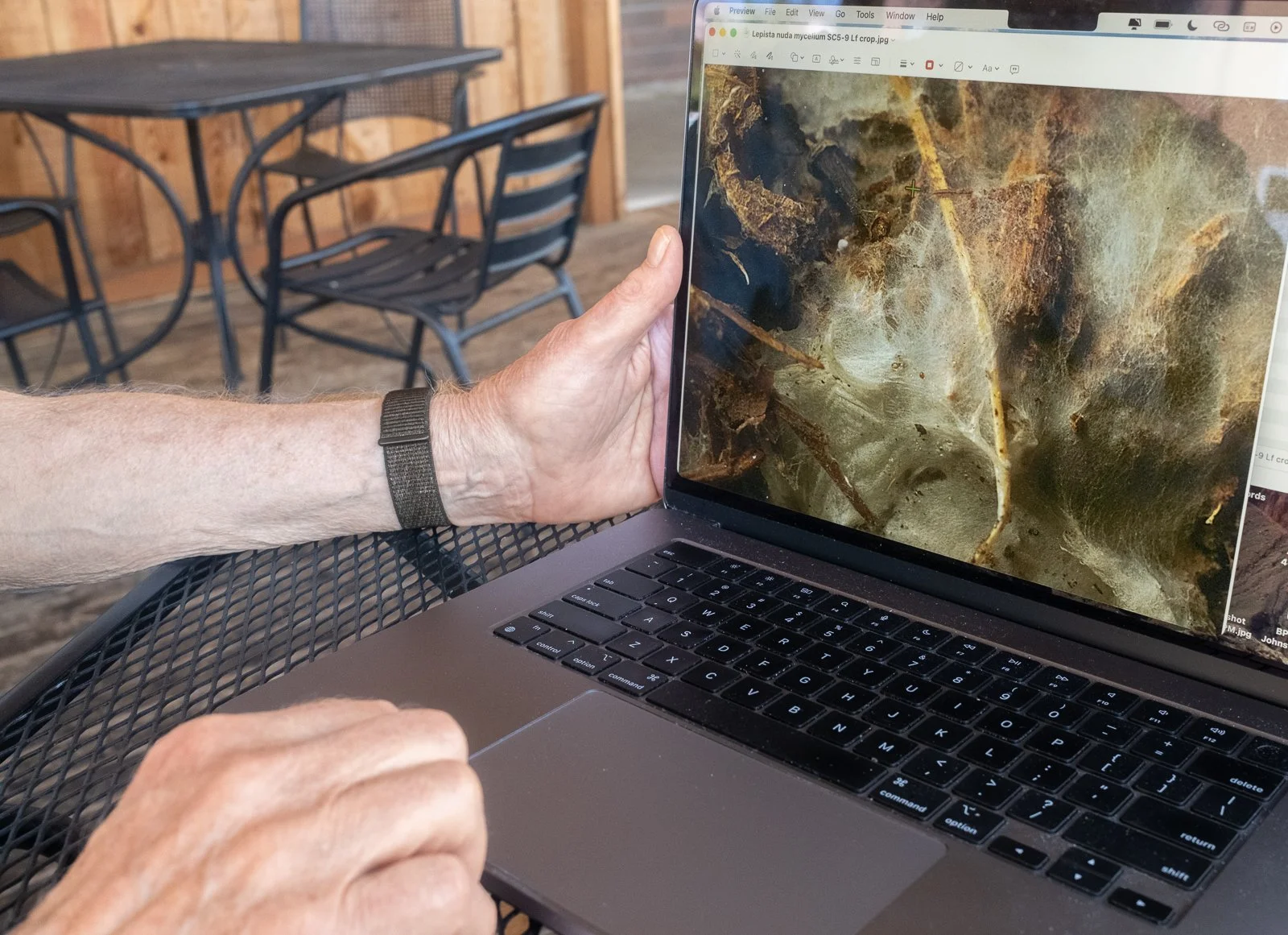
Fred Rhoades describing mycelium, explaining hyphae as the thread-like filaments of the mycelium that grow and perform specific functions and mycorrhiza are the symbiotic relationship between the mycelium and the plant. // Photos by Evan Coleman
Soil is created from organic and inorganic matter, and a diverse microbial community is necessary for its physical structure. Ongoing tilling destroys the structures that plants depend on.
Today, low impact regenerative farming practices such as no-till farming reflect a different philosophy to protect soil by disturbing it less.
Challenges still exist regarding size, scale and costs of farming to transition from the efficiency based monocrop model to a more ecological approach like no-till, according to the U.S. Department of Agriculture.
Despite challenges, farmer Brian Kerkvliet embodies ideas rooted in permaculture, polyculture and biodynamics.
According to Kerkvliet, transitioning a farming operation towards no-till or other ecologically sustainable practices can be achieved in stages that are economically viable, with more effort on the front end and huge returns at the back end. Scalability exists in no-till and doesn’t have to be limited to smaller operations.
“The soil is that living, breathing mechanism of all the substrate of our earth. It's what gives life,” Kerkvliet said.
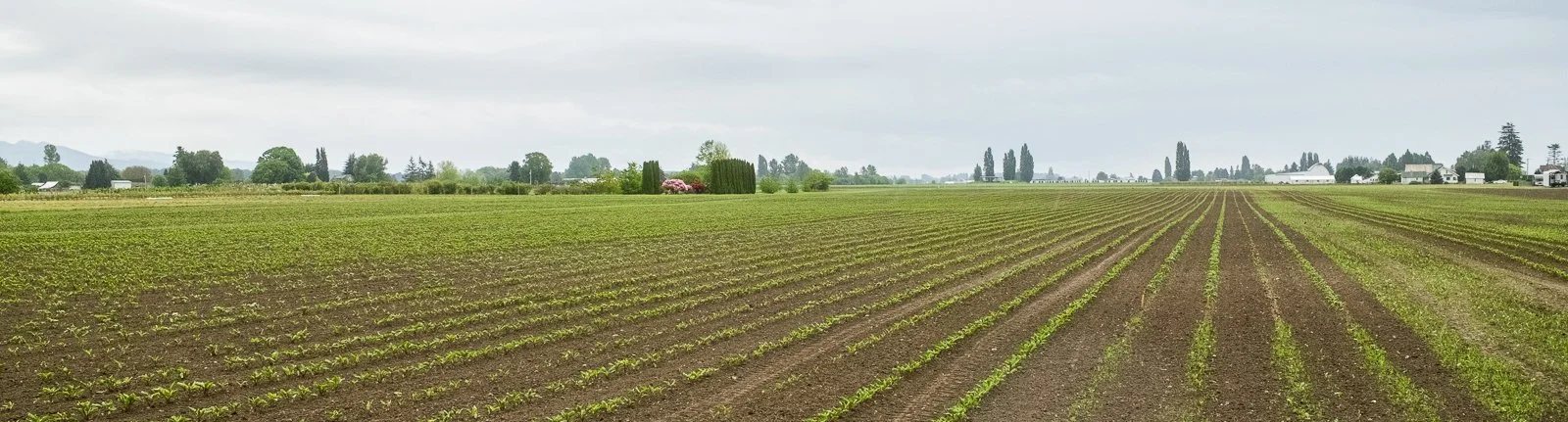
A farm in Skagit County. // Photo by Evan Coleman