
The Recycle Center Has Been Reduced and Reused
After more than 50 years, Western’s student-run Recycle Center has changed hands, raising concerns about sustainability on campus
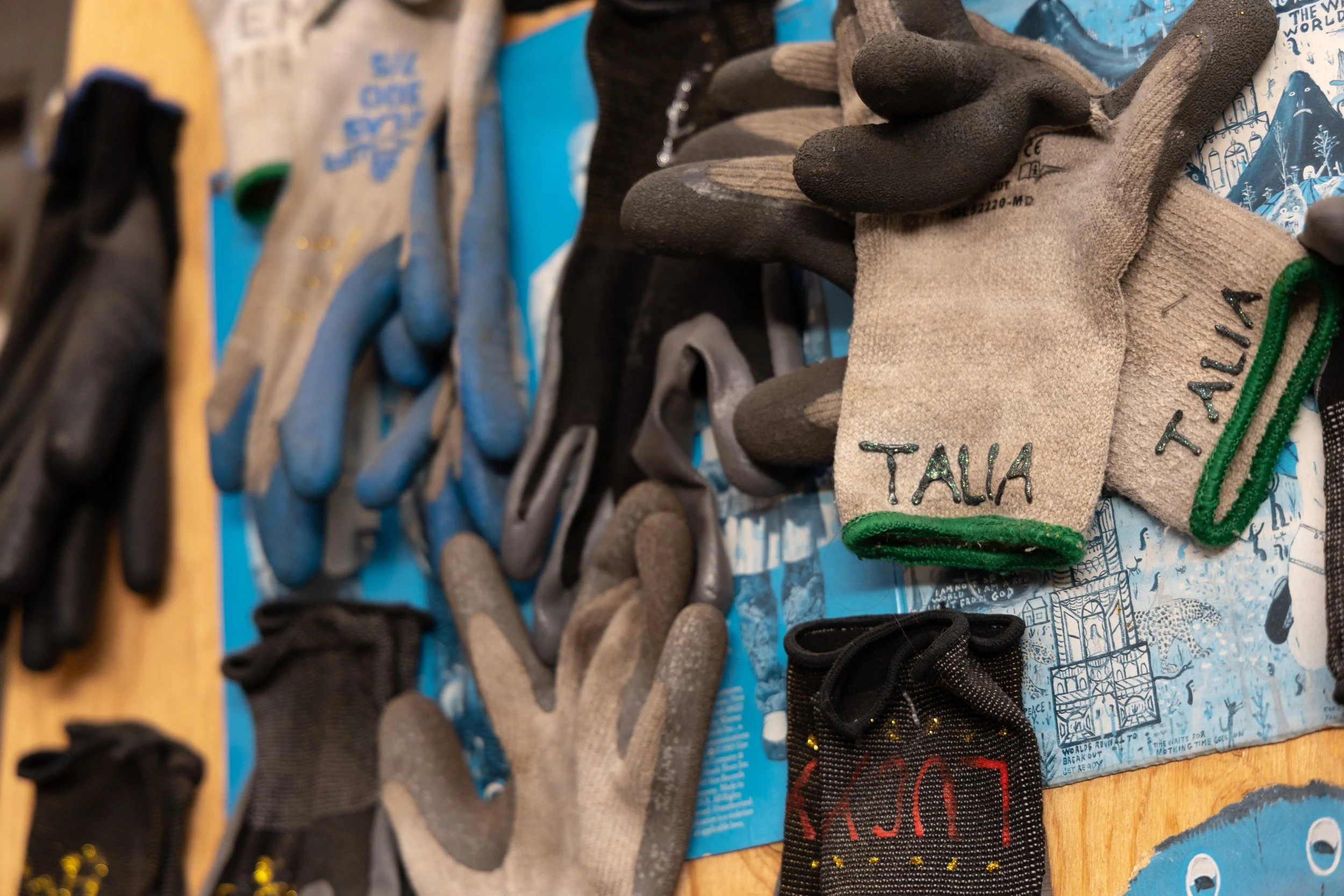
Previous employee's gloves hang up on a wall in the Recycle Center as a way to commemorate their time there. // Photo by Blake Smithers
Story by Paola Falcon // Photos by Blake Smithers
December 12, 2025
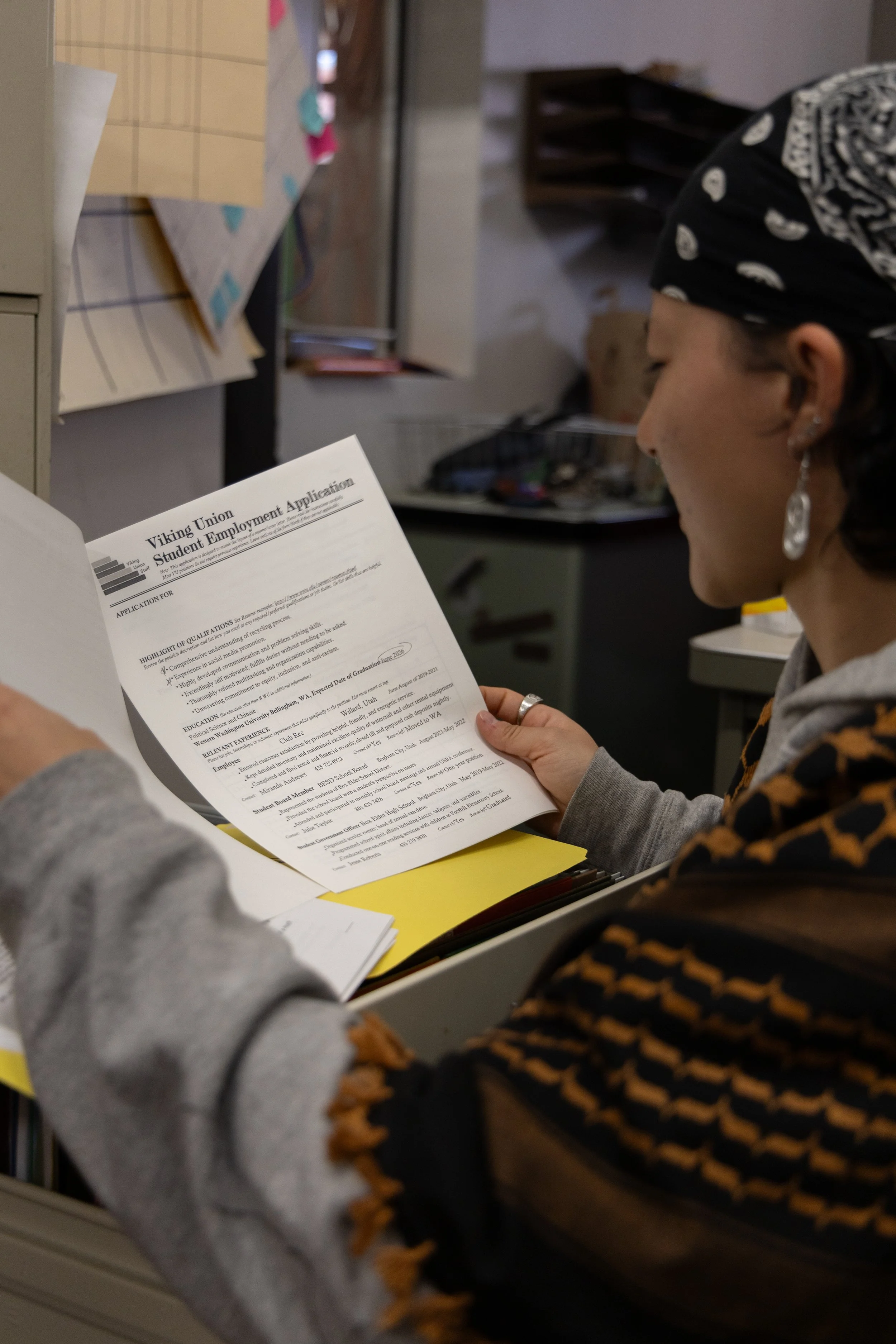
Shan Robinson gazed over the wall hung with gloves from previous Recycle Center employees. They still needed to hang their own pair. Wearing earrings made of repurposed soda can tabs — a remnant of the center’s past upcycling jewelry events — Robinson flipped through the decades of Recycle Center employee files. Finding theirs, they opened it to find their cover letter and resume from the two years they worked as a laborer and later the education coordinator.
Exploring what had once been their beloved workplace, Robinson felt strange being back. Despite being littered with abandoned student art projects, ancient artifacts of floppy discs, and a vintage vacuum, the warehouse was bare compared to its prime.
Founded over 50 years ago as one of the first student-run recycling programs in the country, Western Washington University’s Recycle Center was suddenly shut down last spring quarter.
Since 1971, the Recycle Center has worked to reduce waste contamination and collect recyclables for redistribution. Now, employees like Robinson are left with just their memories.
“We’re this little corner of the university that is tucked away,” Robinson said.
Last spring quarter, employees at the Recycle Center were concerned about the safety of the department’s vehicles, leading federal regulators to designate over half of them as unsafe to operate. The vehicles were never fixed due to budget restraints, and the Recycle Center couldn’t resume operations.
The Recycle Center’s abrupt halt that left employees without work was a factor in the student union’s choice to strike last spring quarter. Former Recycle Center employees were unhappy with how the university handled the shutdown, saying there was a lack of communication.
Robinson looks over their job application in their file at the Recycle Center at Western Washington University in Bellingham, Wash. // Photo by Blake Smithers
“Nobody, especially this boss who shut us down, came and ever talked to us face to face,” Anastasia Bashkatova, a former Recycle Center employee, said.
Although the union came to an agreement with Western’s administration, the Recycle Center has not been reinstated to what it once was.
“We could no longer continue with the operation as it had historically been run. There was really no choice in the matter,” Wayne Galloway, who heads Western’s Facilities Development & Operations department, and Jeff Aslan, the assistant director of campus utilities, said in an email.
Formerly managed by Western’s Associated Students, oversight of the Recycle Center was transferred to the facilities department within its Waste Operations, where custodial and ground teams work in waste collection. The university now contracts with the private Sanitary Service Company, known locally as SSC, to collect recycling.
While students feel that the Recycle Center is effectively gone, university officials maintain that it is a transition in the organization of the waste program, not a shutdown. Some student employees at the Recycle Center, like Bashkatova, were offered positions at Waste Operations — but some, like Robinson, did not return.
“The Recycle Center has not and will not be closed,” Aslan and Galloway said.
Former employees of the Recycle Center also have concerns about the new operation methods. SSC uses single-stream recycling, which researchers criticize for causing more waste contamination. When an item that is not recyclable or clean is recycled, the entire bin can be contaminated and has to be thrown in the garbage.
Single-stream recycling uses one bin for all recyclables, increasing the likelihood of contamination, while multi-stream recycling sorts items into different bins, reducing contamination risk. While a downside of multi-stream recycling is that it requires more labor, and therefore more costs and transportation, it has a contamination rate of 18%, as opposed to 27% for single-stream.
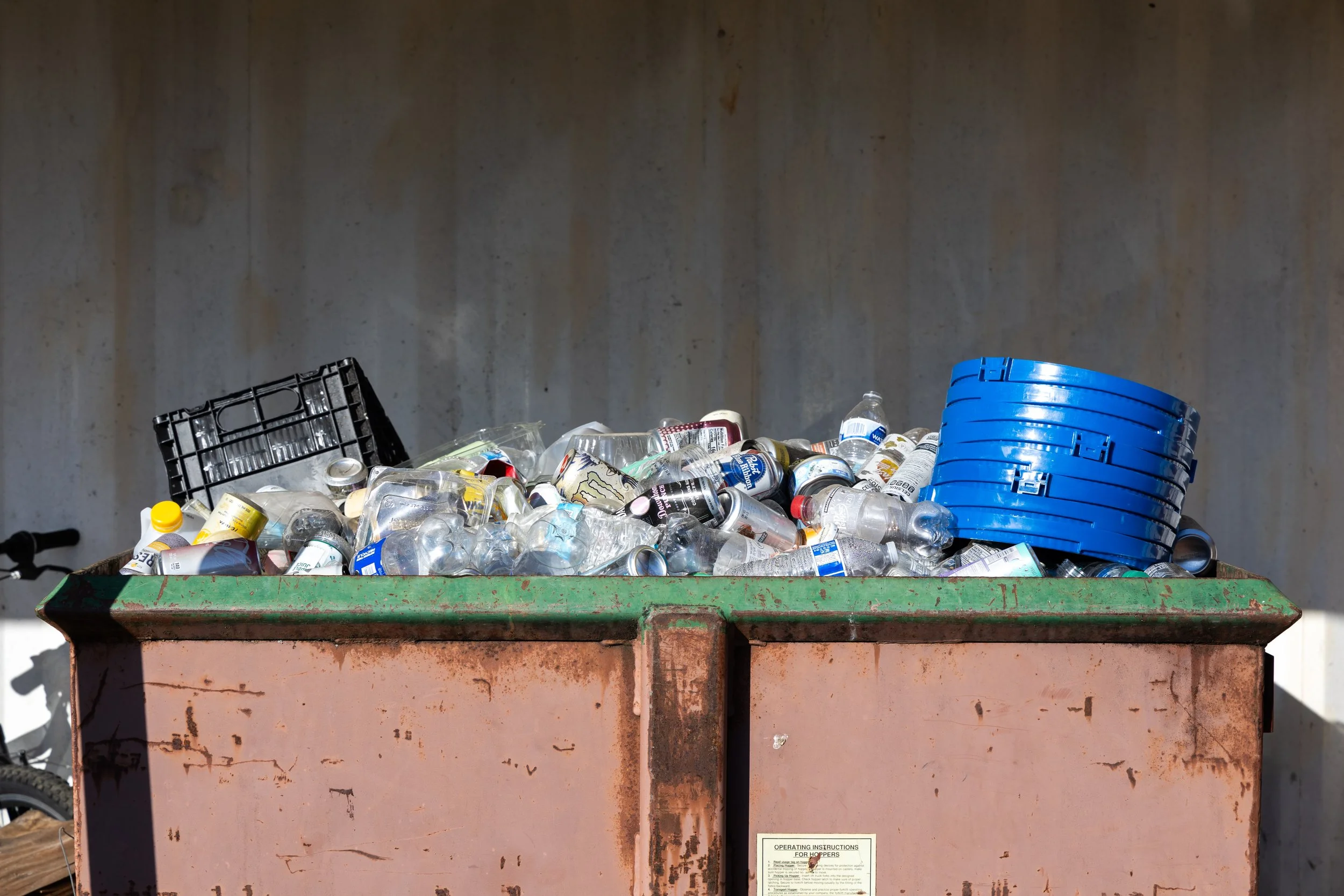
Recyclables pile up in a large trash bin at Western Washington University in Bellingham, Wash. // Photo by Blake Smithers
According to Aslan and Galloway, one of the biggest contributors to contamination on campus is the act of “wishcycling,” where people throw an item into a bin hoping it is recyclable.
In addition to contamination, the transition to SSC has caused more waste overflows.
“It’s just more work for everybody, because campus is gross too,” Grace Ritchie, a former employee of the Recycle Center, said. “Now there’s overflowing trash and recycling. It used to not be overflowing, because we would deal with it.”
Financial constraints were a factor in the Recycle Center's reorganization. Currently facing a $23 million structural deficit, the university has identified areas for budget cuts and made campus-wide layoffs.
Aslan and Galloway expect to see significant savings from the new operations.
Bashkatova disagrees.
“We are almost certain that SSC has cost WWU a huge amount more than we ever did,” Bashkatova said in a text. “We’re literally recycling our blue barrels right now.”
Robinson argues that the transition to SSC creates a disconnect for students. Without a peer-led hub like the Recycle Center, students are a step removed from their waste and don’t know who is handling their recycling or why sorting matters.
“That gets really dangerous, especially as we are in a climate crisis. It’s way bigger than, like, 25 students lost their jobs. It's like, how do we value what we do with our waste?” Robinson said. “I think by shutting down the Recycle Center, Western has communicated that they care a little less about their waste.”
Although the future of the Recycle Center and Western’s promise for sustainable waste management is uncertain, students still find hope.
“I would like to think that the value of what the Recycle Center was is not gone forever,” Robinson said. “The university, as much as it sucks, sometimes has to bend to the will of their students. It's just a matter of how strong the will is.”
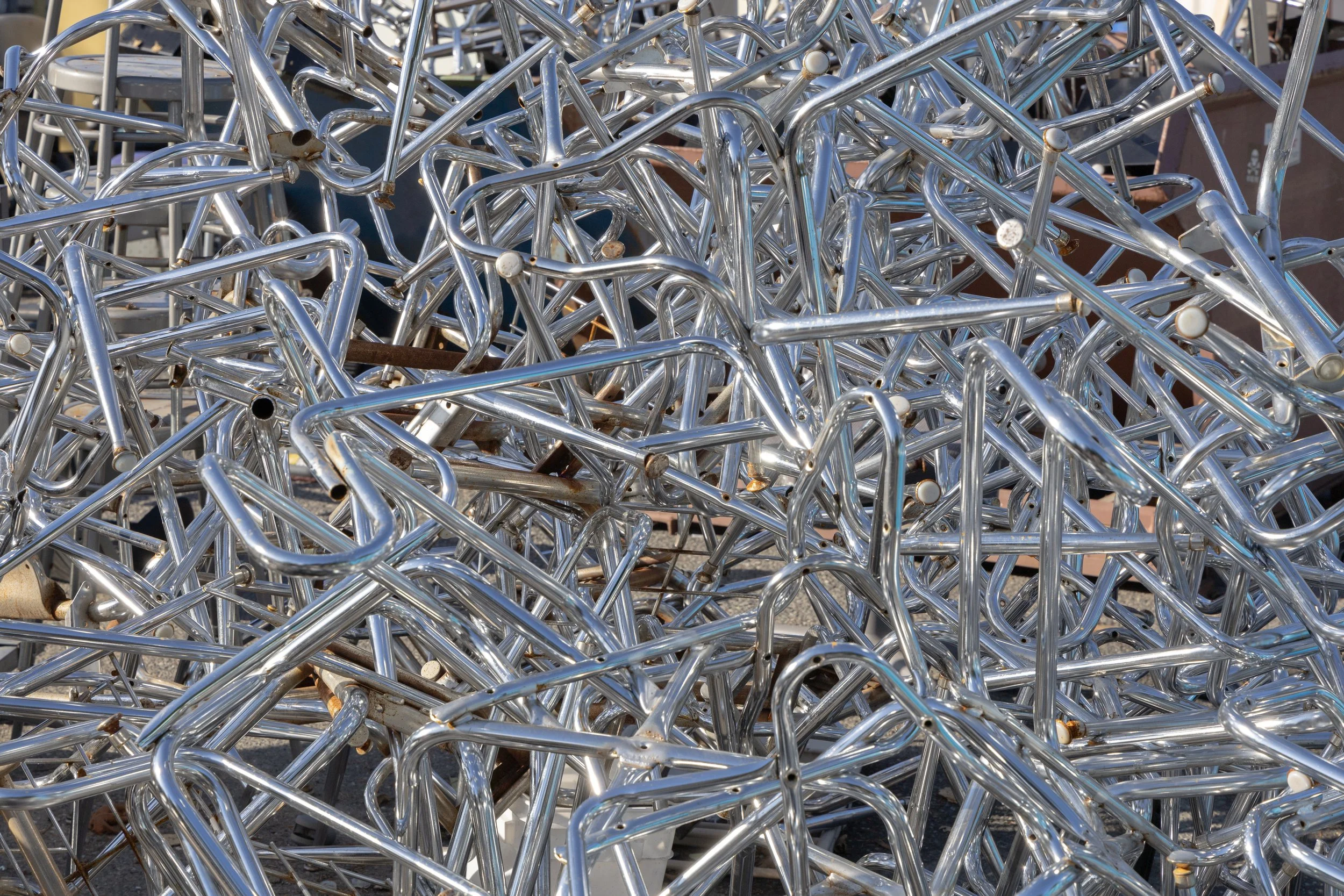
LEFT: Metal chair legs piled outside of the Recycle Center at Western Washington University in Bellingham, Wash. // Photo by Blake Smithers
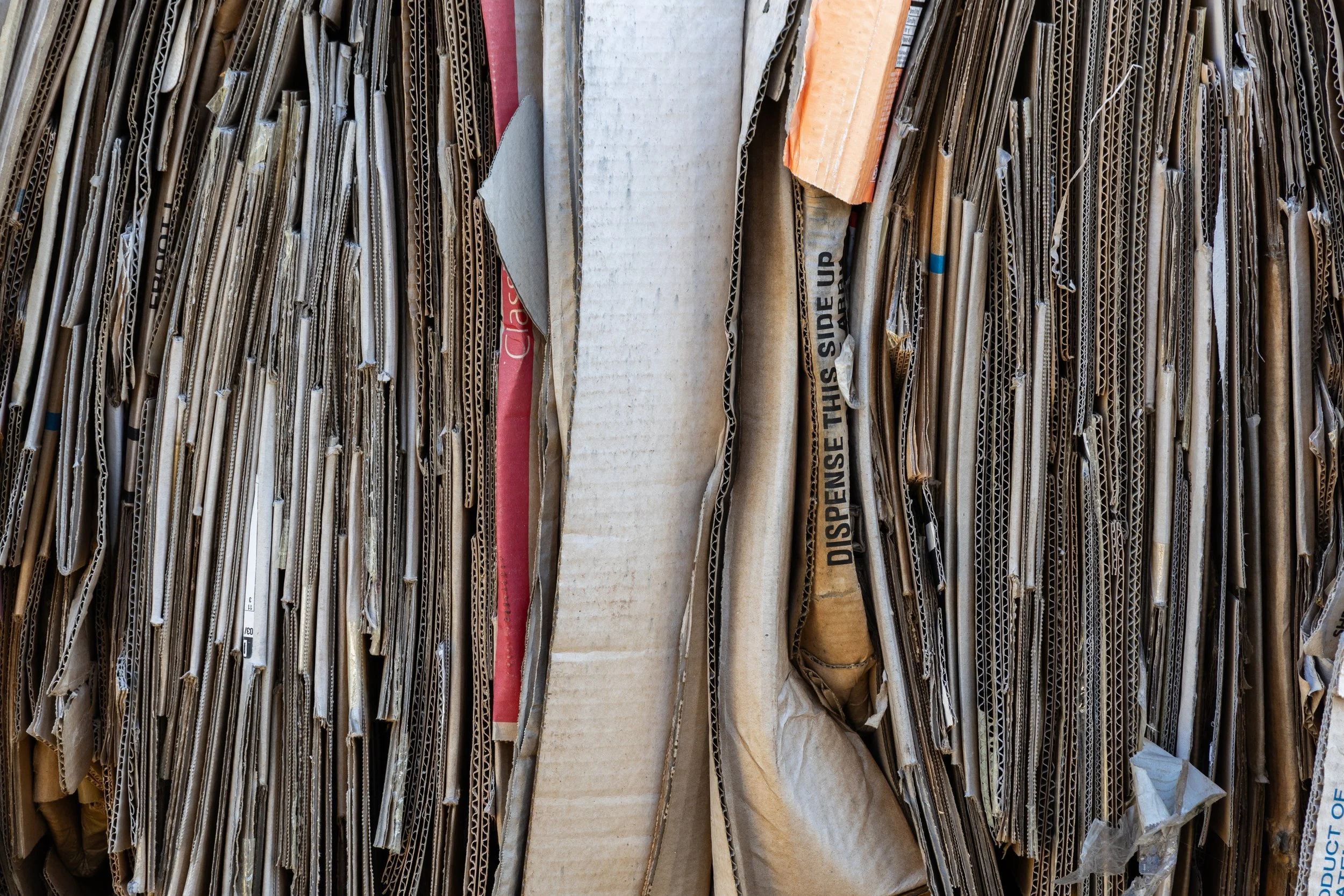
RIGHT: Corrugated cardboard is compacted for storage at the Recycle Center at Western Washington University in Bellingham, Wash. // Photo by Blake Smithers