
Broadening the Bank
Roberts Bank Terminal 2 Expansion is encroaching on Western Sandpipers’ Habitat
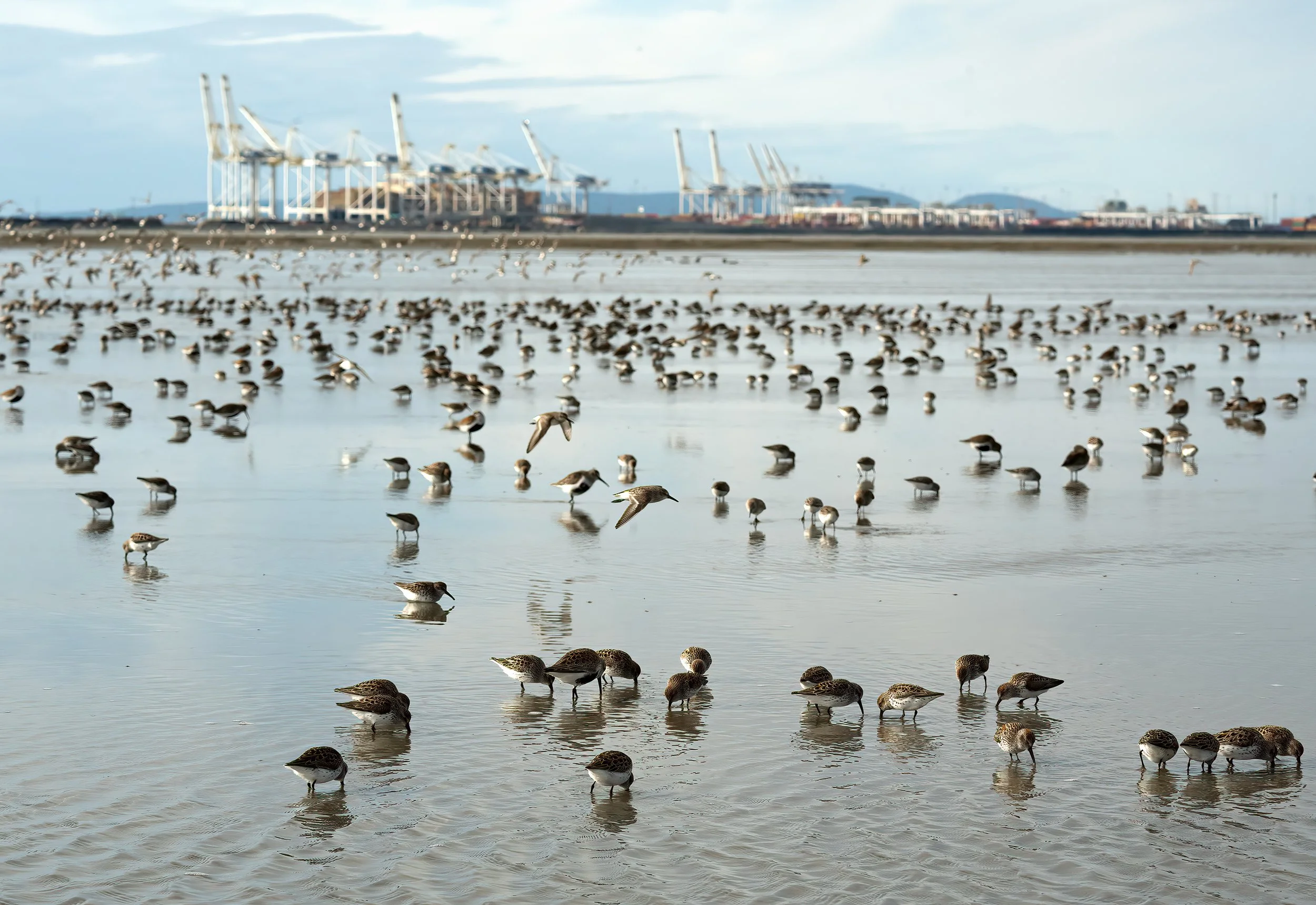
Western Sandpipers feeding on mudflats at Roberts Bank, B.C. // Photo by Isabelle Groc
Story by Kamra Greenwall // Photos courtesy of Isabelle Groc
June 19, 2026
Smoke lingers on the horizon as tens of thousands of Western Sandpipers cast a shadow above the soggy substrate of the Roberts Bank mudflats.
Like clockwork, every spring Western Sandpipers migrate through the Pacific Flyway. They are not alone — millions of migratory birds flock from Alaska to South America, including a significant portion of the global Western Sandpiper population.
“It's a life-transforming experience,” Isabelle Groc, a conservation filmmaker, said. “It's one of nature's most beautiful spectacles.”
The beauty of estuarine sites, such as Roberts Bank, is often overlooked. Instead, these sites are seen as prime territory for industrial construction. A 2015 study on Western Sandpiper migration found that stopover locations supporting migratory shorebirds are seen as strategic hubs for commercial development.
In the face of a growing economy, Canada’s west coast is pushing to expand its trade sector. With close to 40% of the nation's economy coming from the natural resource-rich western region, Canada hopes to keep up with the ever growing Pacific markets.
The Vancouver Fraser Port Authority is gearing up to break ground on 320 acres of usable waterfront industrial land, located in the heart of the Fraser River Estuary. Roberts Bank Terminal 2 is an impending container terminal facility and key strategy in the government's hopes to grow its shipping and trade sector.
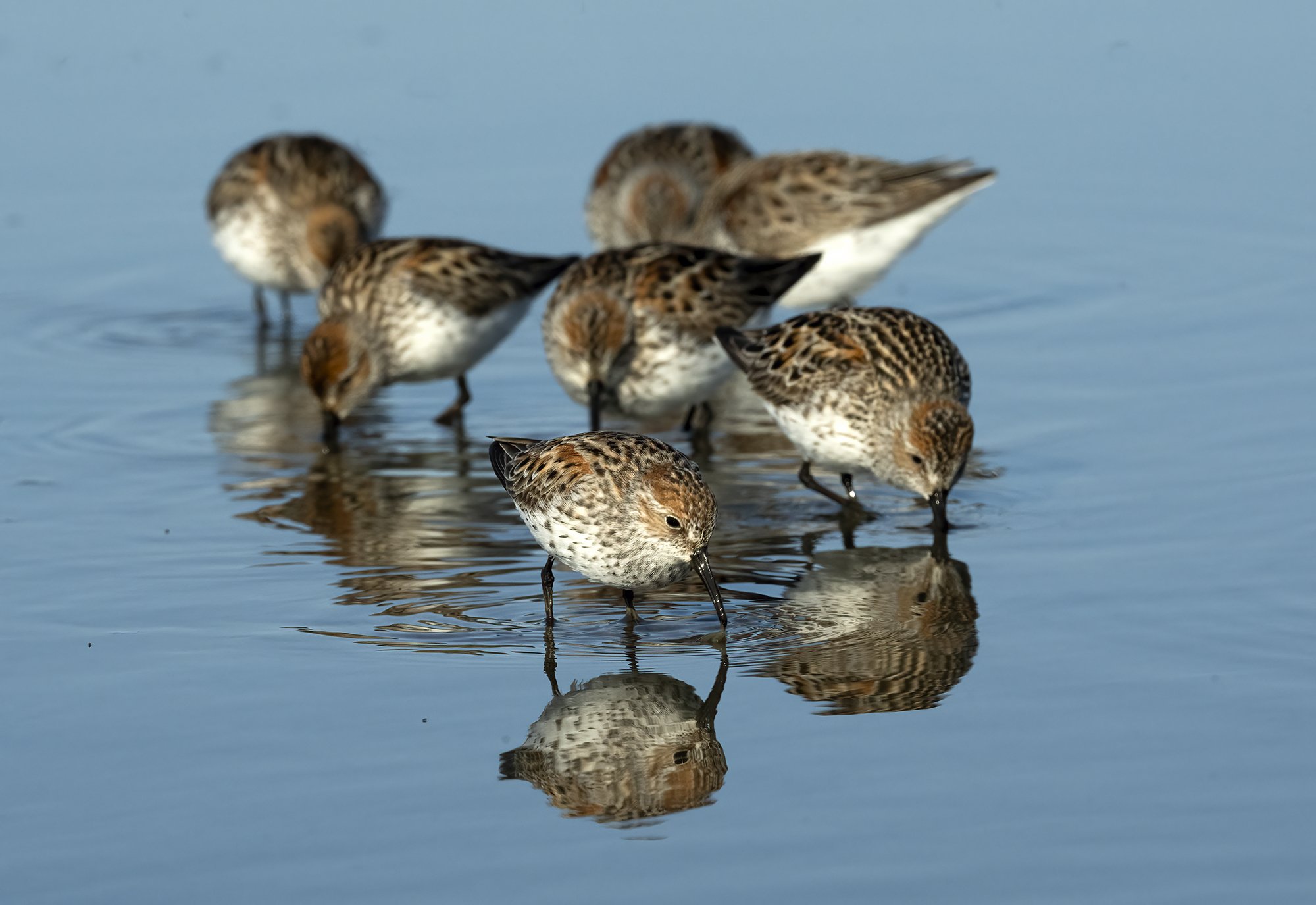
Western Sandpipers Feeding at Roberts Bank, B.C. in 2025. // Photo by Isabelle Groc
According to the port authority, the terminal is an investment into Canada’s economic resilience. They estimate the facility to increase annual trade capacity by $100 billion and stimulate the job market.
Estimates for the impact on the environment, however, are comparably lacking. In a public engagement survey, western Canadians have expressed concern for the impacts that economic and industrial growth can have on the environment.
A study from The Society of Conservation Biology observed that 102 species are at risk of extinction in the Fraser River Estuary. The project itself is expected to require 177 hectares of mudflat for development, with an additional 558 hectares indirectly affected.
“Flats have declined tremendously,” Groc said. “They're just deemed as not worthy of protection, because they just look like this vast expanse of mud.”
Roberts Bank’s intertidal mudflats are a critical refueling site as these birds embark on their journey.
Resting on the mudflats’ surface is an ecosystem engineer known as biofilm. Biofilm is foundational to marine ecosystems. These blankets of slimy goo are pillars for the food web and promote nutrient cycling. Research from the Western Geographic Science Center found these birds are capable of consuming 20% of their body weight in biofilm per hour for migration.
“A lot of people have trouble understanding the value, but also the beauty of these habitats,” Groc said. “But the mud flats are really critical habitats for shorebirds.”
Groc isn't alone in pining to preserve the mudflats' beauty. Ecojustice lawyers advocated on behalf of environmentalists groups, such as Georgia Strait Alliance and the Wilderness Committee, that the construction of the mega-project is unlawful. Environment and Climate Change Canada have also argued that the “effects on biofilm and Western Sandpipers would be unmitigable, immediate and irreversible.”
However, development planning is still underway. The project was greenlighted by the Canadian federal government in 2023, with several other permit decisions pending.
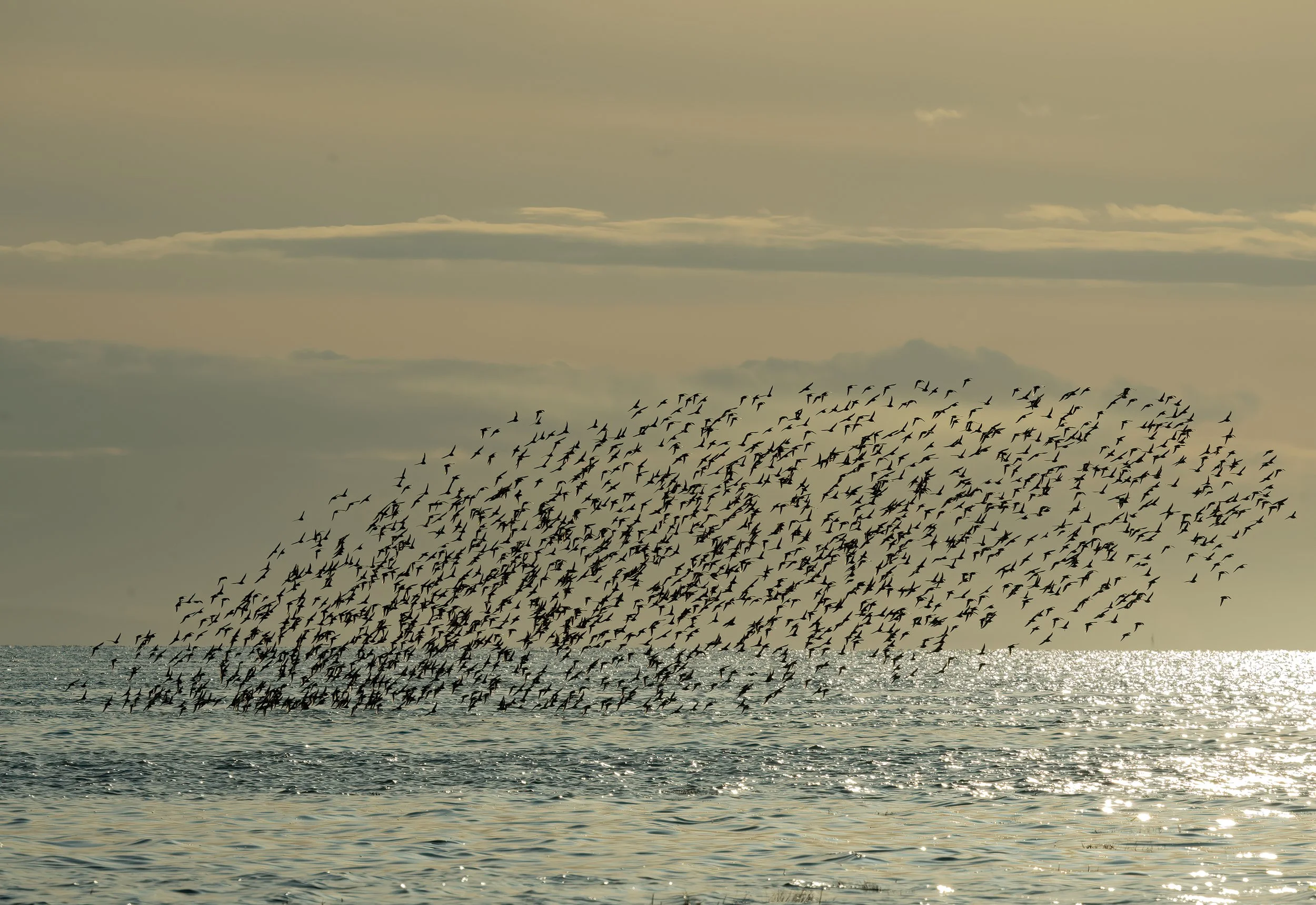
Western Sandpipers Murmuration during sunset at Roberts Bank, B.C. // Photo by Isabelle Groc
The port authority maintains that the project will provide enhanced environmental protection to iconic Salish Sea creatures, such as the Southern Resident killer whale. They further claim that the development will make progress on climate change mitigation.
“One of the things that the port is trying to find out is whether they could create biofilm in other places,” Ronald Ydenberg, a biology professor and director of the Centre for Wildlife Ecology at Simon Fraser University, said. “The answer to that is, undoubtedly, yes, that could be done.”
The port authority claims to be taking a science-backed approach to infrastructure development by collaborating with scientists such as Ydenberg.
“A lot of the research so far indicates that the effects on sandpipers shouldn't be big,” Ydenberg said. “But there's plenty of other people who believe that it's going to be catastrophic.”
Conservation groups worry the port's precautions will not be enough to protect the vast and diverse landscape.
“The port keeps saying, ‘Oh, but we can grow biofilms’,” Pat Baird, a shorebird biologist, said. “No, you can't, no one has ever grown biofilm.”
Baird has previously picked apart the port’s Environmental Impact Statement. She argues that the port failed to consider individual fatty acids, a key component in biofilm. Baird stresses that the intricacies of biofilm cannot be overlooked, otherwise the ecosystem engineers are fated for disaster.
“When everything finally collapses, they're gonna say, ‘Oh, right, I guess we really should have studied the biofilm’,” Baird said. “It's gonna be too late.”
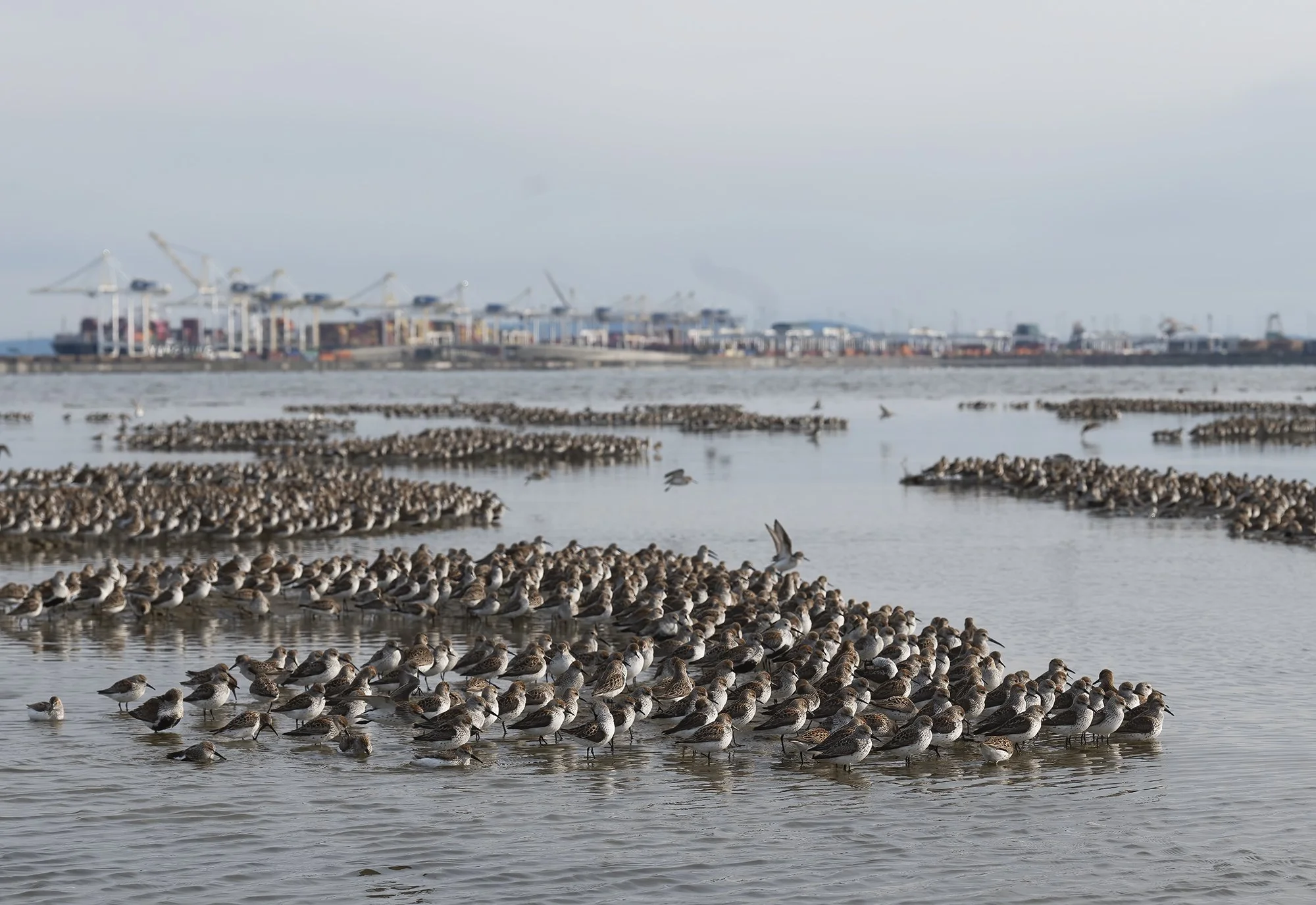
Western Sandpiper spring migration at Roberts Bank, B.C. in 2023. // Photo by Isabelle Groc