
Losing the Life Line of Logging
The Harkness family’s story amidst the quiet decline of Washington State loggers
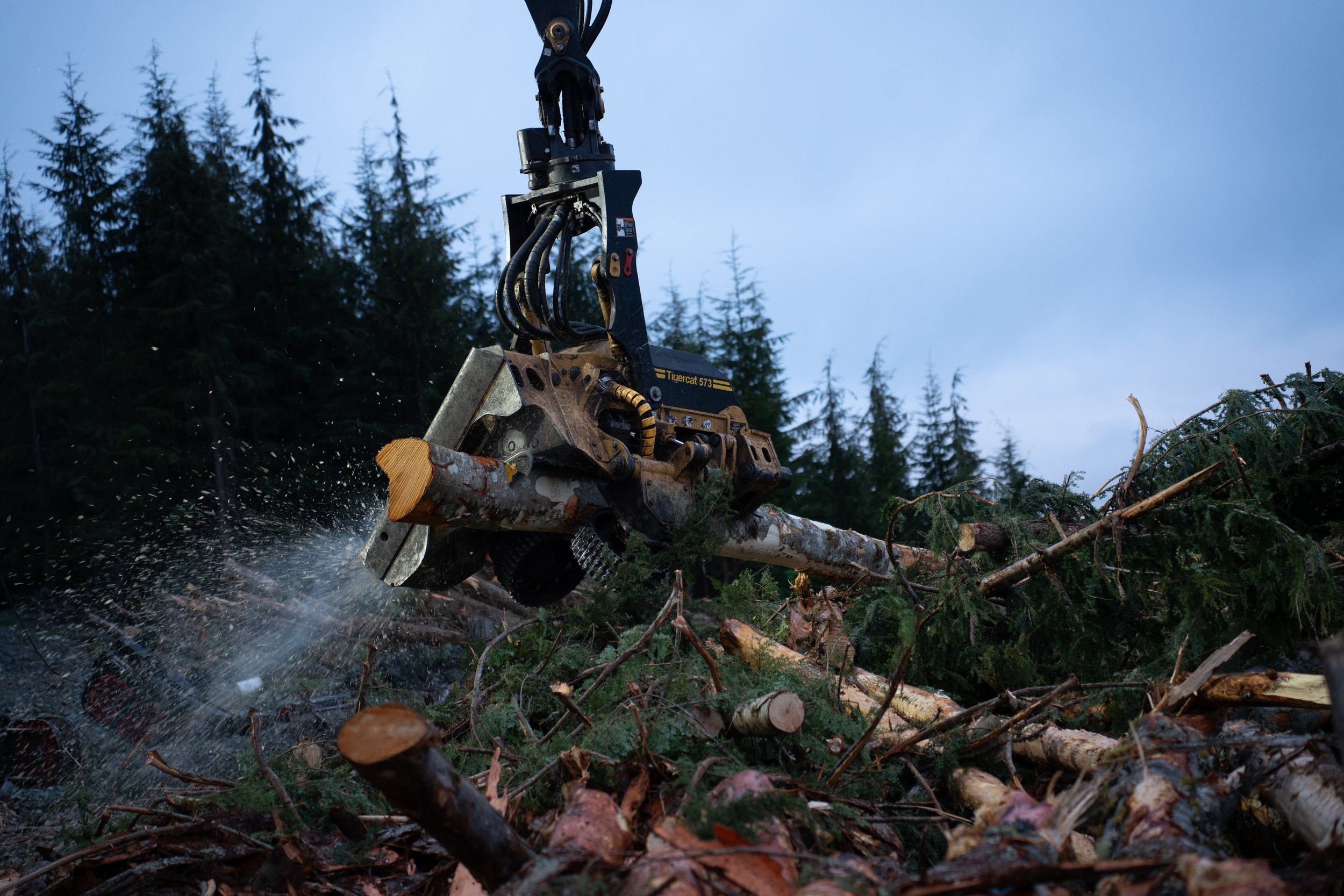
A logger operates a Tigercat equipped with a harvesting head. He is cutting timber down to size, one of the many functions a harvesting head has, Friday, June 5, 2026. // Photo by Theodore Crowe
Photo Essay by Theodore Crowe
June 19, 2026
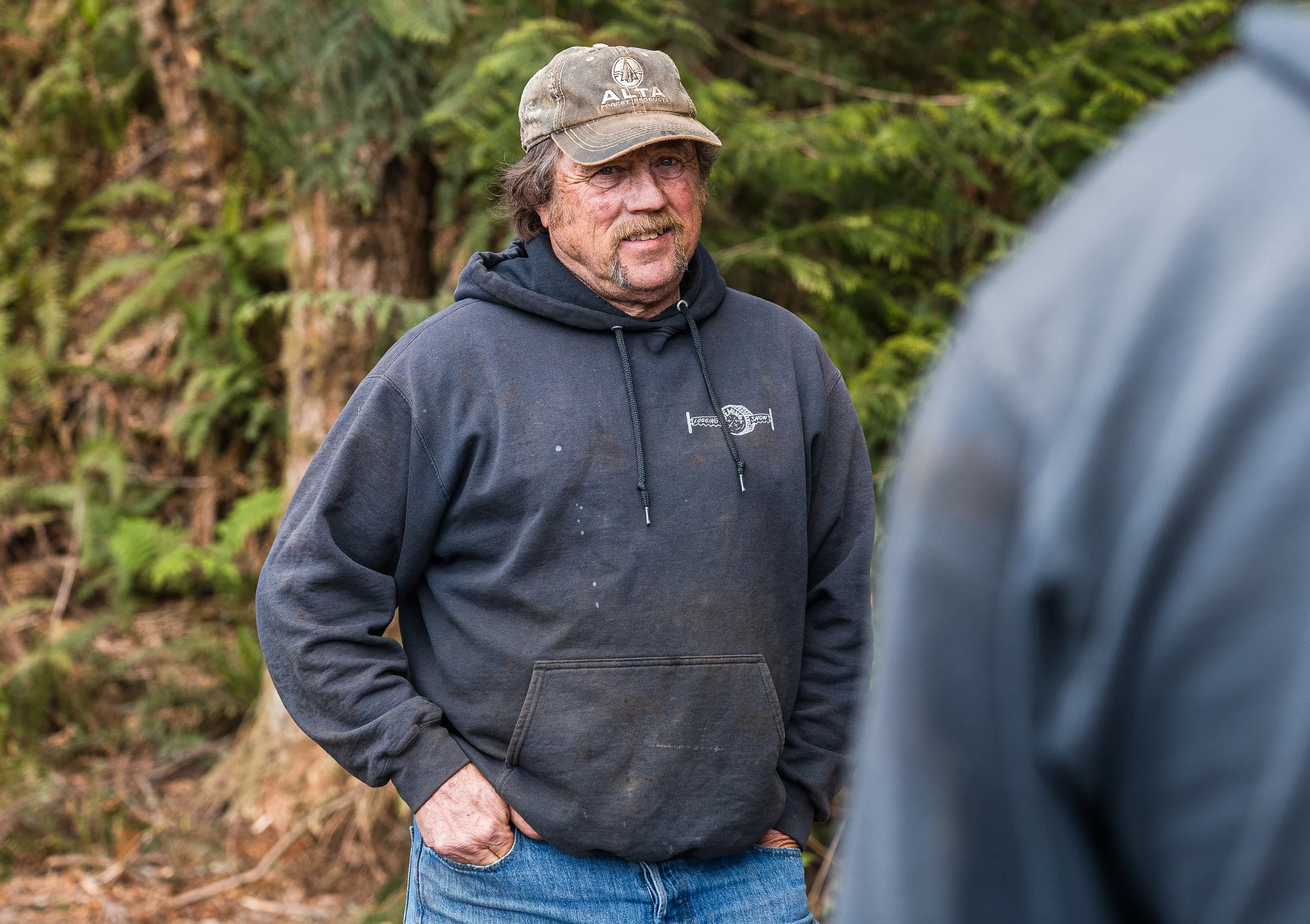
Frank Harkness, the owner of Frank Harkness Trucking and Logging, stands talking with Washington DNR foresters and his employees near Larrabee State Park, Monday, April 27, 2026. // Photo by Theodore Crowe
Surrounded by a sea of lush green and never-ending slopes, Brandon Harkness scrapes his shovel between the track frame of a worn excavator. His jeans sink into the soft, freshly churned dirt, and his body bears the tapestry of a day's work; dust coats the thick workboots he wears, and the rich brown soil fills the deepest creases of his hands.
More than just his weary soul and track-linked machinery rests on this mountainous two-track road; his pride does as well. Born into a generational family of loggers, Brandon, like his father Frank, and Frank’s father before him, is a logger.
However, logging is on life support in Washington. An industry that once dominated the state’s economic and geographic landscape is now steadily declining, leaving its workers to face problems such as rising costs, loss of working forests and competition from foreign markets.
“Just battling to survive is the biggest thing,” Brandon said as he leaned against the tailgate of his truck, looking off into the thicket of tall brush and second-growth timber. “I just want to come out here and make an honest living, a decent living; have good employees, pay them what they're worth.”
In the 1970s, roughly 15,400 people claimed to be loggers working in Washington, according to a 1994 OSHA report. Now, only 1,295 loggers were registered with the Washington State Department of Labor and Industries as of 2024.
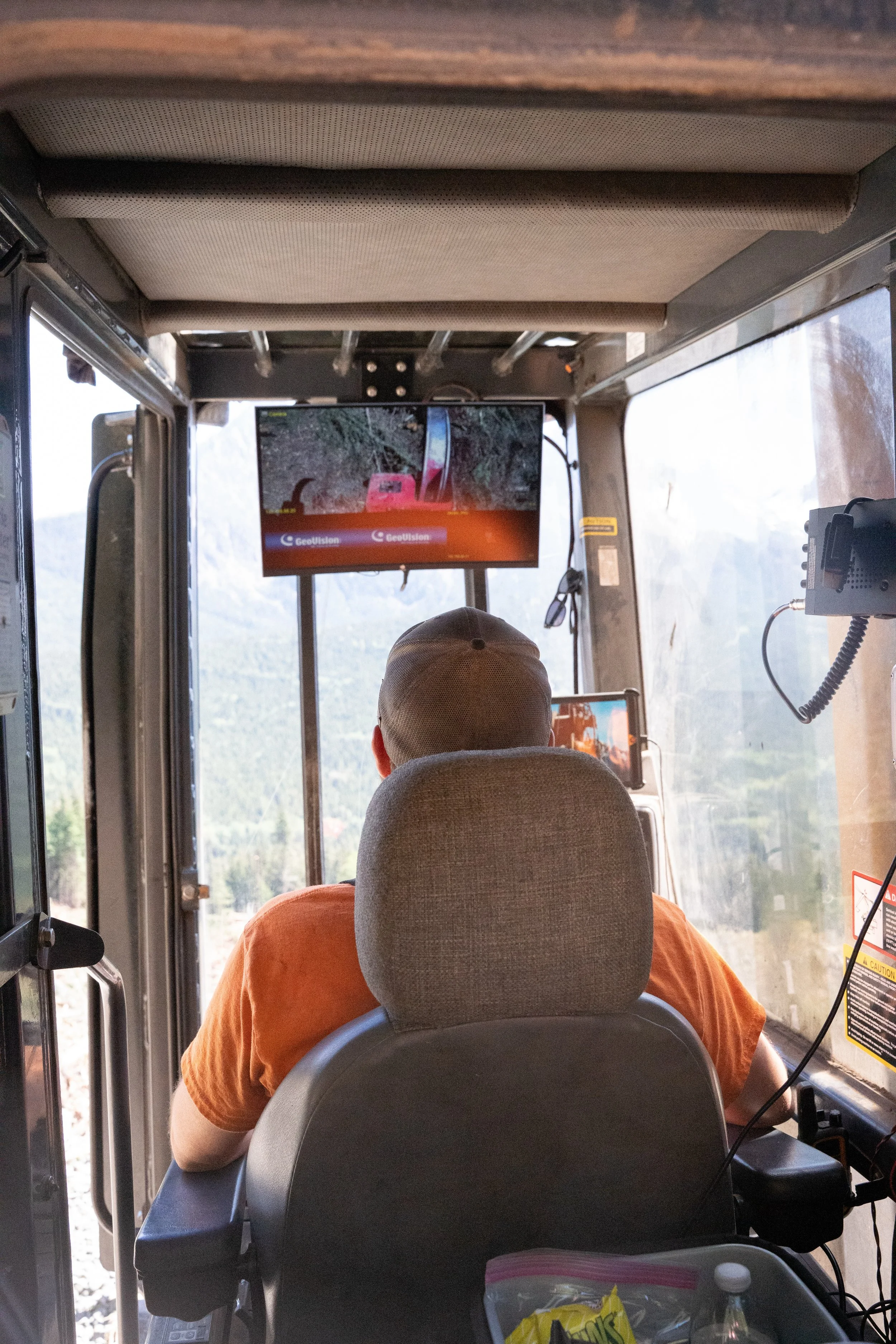
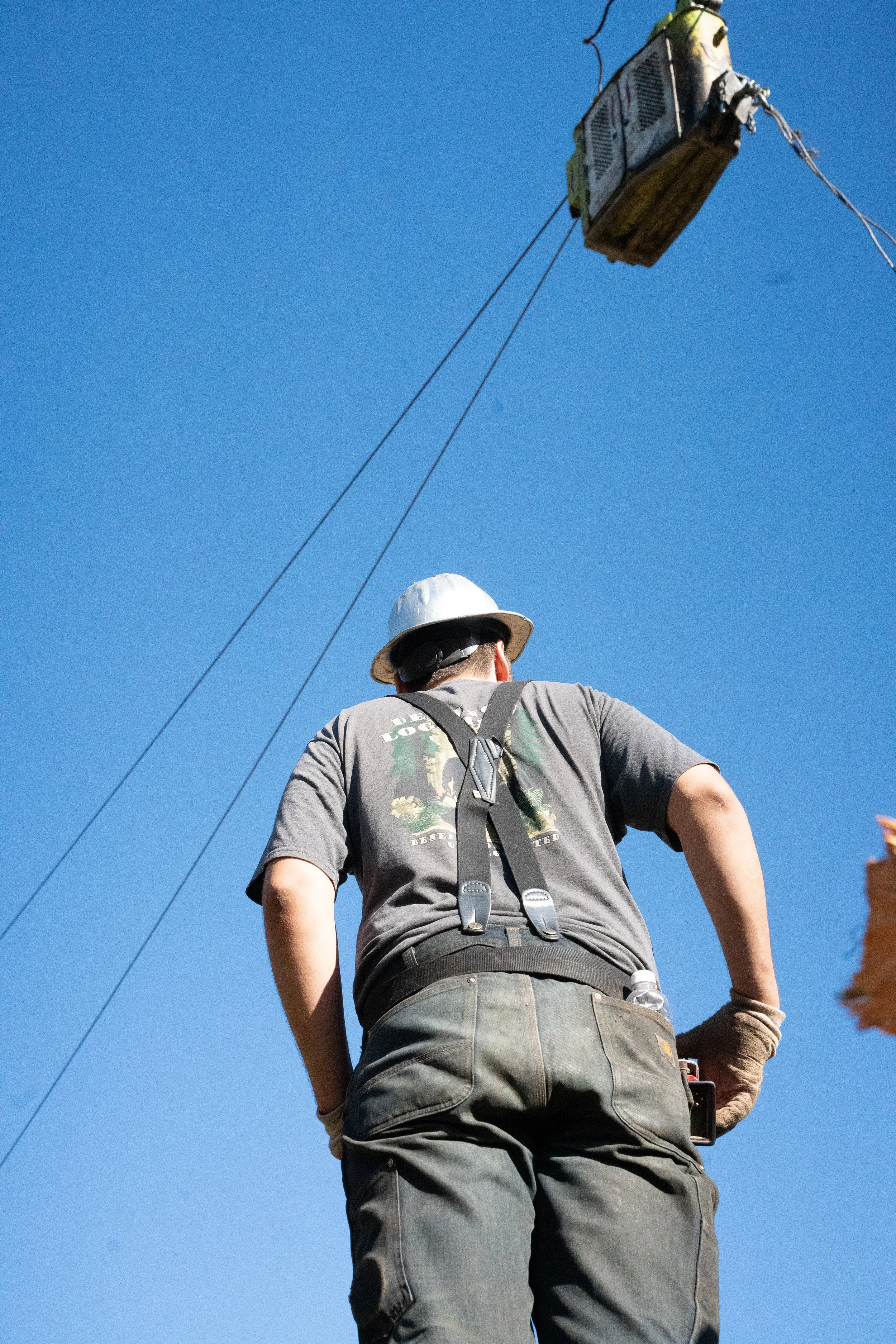
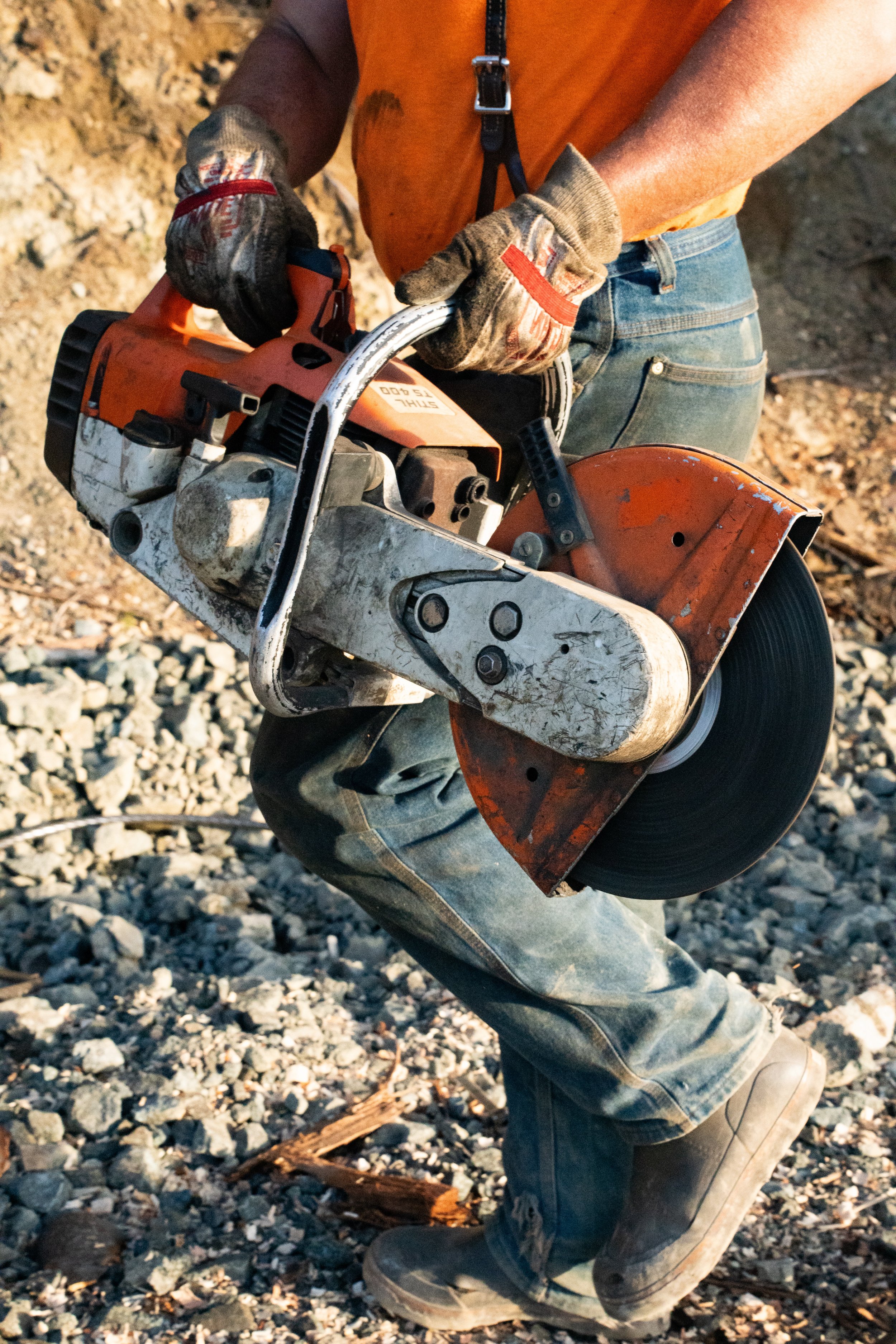
FIRST: The inside of a yarder being operated by a logger, he is using a grapple carriage to pick up logs and bring them upslope to be processed, Tuesday, June 2, 2026.
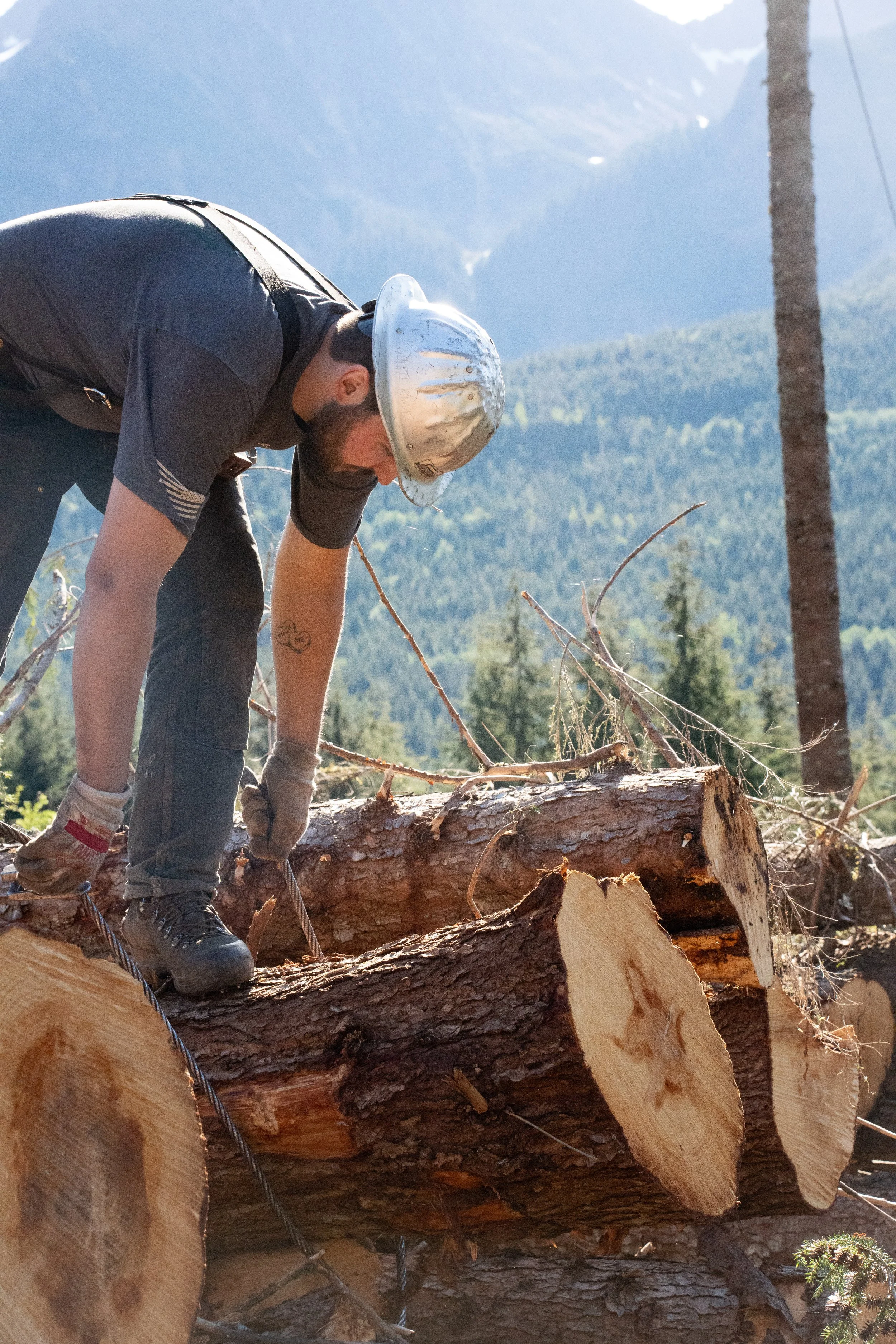
SECOND: A logger sets choker cables on downed timber. These choker cables are attached to a carriage and are used to pull timber to the top of a slope, Tuesday, June 2, 2026.
THIRD: A logger watching a carriage come to a stop and waits for the right time to call down the choker cables, Tuesday, June 2, 2026.
FORTH: A logger walks with a circular-saw on a jobsite. This tool can be used to cut through yarder cables and to clean up the frayed ends, Tuesday, June 2, 2026.
All photos by Theodore Crowe
But these people aren’t just numbers. For loggers like Brandon and his family, it’s their way of life. It has been for generations.
Frank and Brandon have watched as the amount of work, and land to work, has declined each year. This means that loggers like the Harknesses have to travel further and work for lower pay in order to keep their businesses running.

Brandon Harkness on a logging operation seated at the feet of the Twin Sisters Mountain, Tuesday, June 2, 2026. // Photo by Theodore Crowe
For Brandon, this has made it harder to wake up in the morning.
“We ended up having to travel or work cheaper than we really needed to,” Brandon said. “If you start not making money, there's no sense in being here.”
When Frank started logging, the operations conducted on the timber-laden green slopes of Washington looked vastly different from the ones that his sons and grandson see today. The days of men on the steep slopes donned in cork boots and hickory shirts cutting timber by hand with power saws have largely become a thing of the past.
“We don't have anybody on the ground with a power saw in 90% of our woods,” Frank said as he looked at his sons and grandson down the dirt road. “But that's where everybody got killed. We've had, in my immediate family, four or five people [killed] and we're a lot safer than we were.”
Logging today has become much safer, but the rising cost of equipment is an unfortunate side effect of this change. Rudimentary machinery and men on foot with hand tools have been replaced by technologically advanced and computer-laden machines that do the work of 10 men.
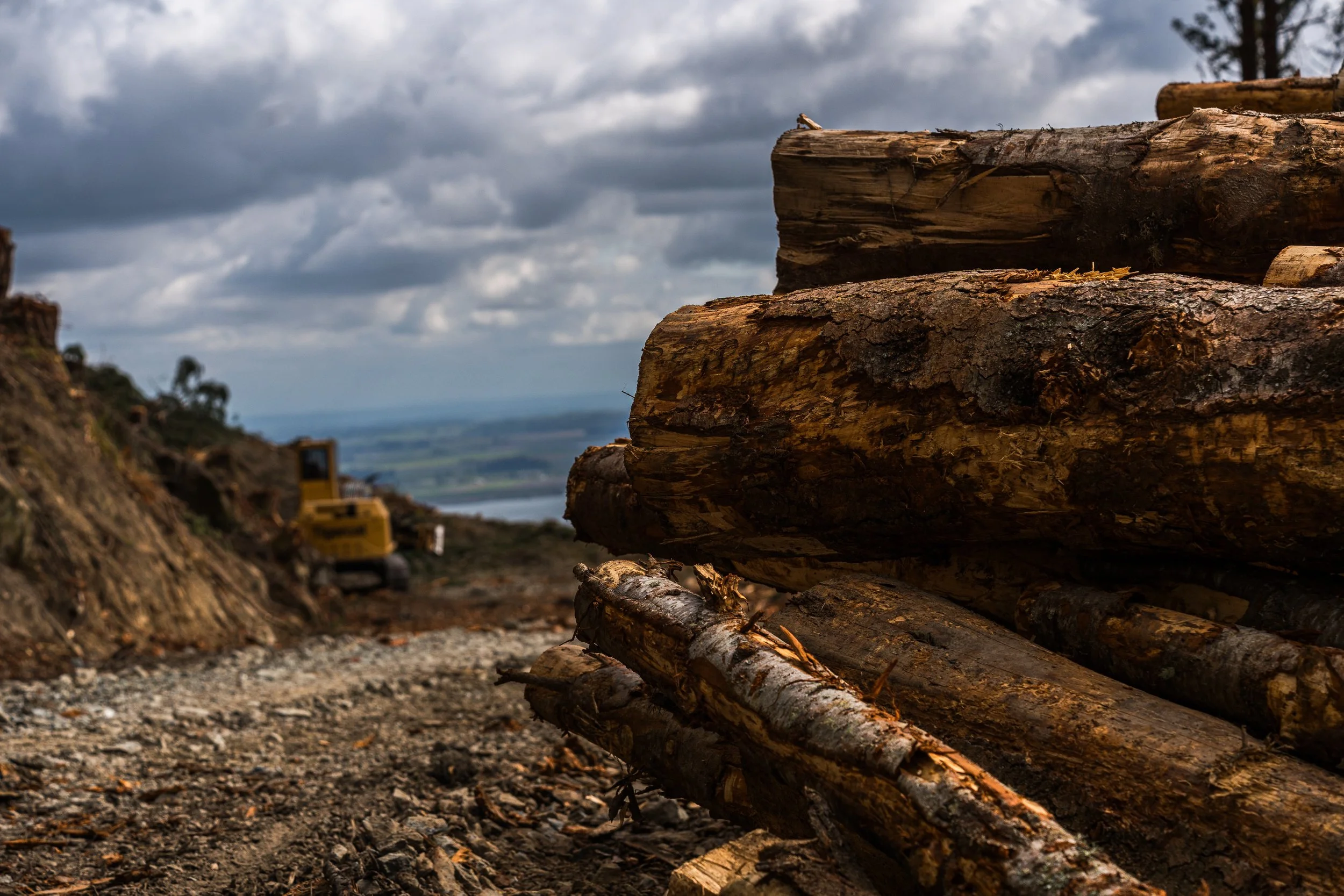
Logged timber overlooking Samish bay, Monday, April 27, 2026. // Photo by Theodore Crowe
“This equipment is outrageous these days,” Brandon said as he leaned against his truck, gesturing to an excavator. “A lot of our machines are over $800,000 a piece. So, you start buying those and it gets expensive in a hurry.”
With logging operations requiring multiple different types of machines, smaller family-run companies have larger receipts than ever before. In a market where work has become harder to find and less lucrative than desired, this can be a deathblow.
Cheap foreign competition in the domestic market has added to these struggles. Canada produces upwards of 20 billion board feet of softwood lumber every year, with a national economy that only requires roughly 7 billion annually. This mass surplus of lumber has led Canada to export almost 90 percent of its excess timber to the U.S., driving down prices for locally produced lumber in Washington.
Despite the hardships, life-long loggers like the Harkness family continue to get up before the sun and load up their trucks.
“I love being out here. Days like today are nice,” Brandon said. “Some days are miserable, but I think it's what gives you character, you know?”
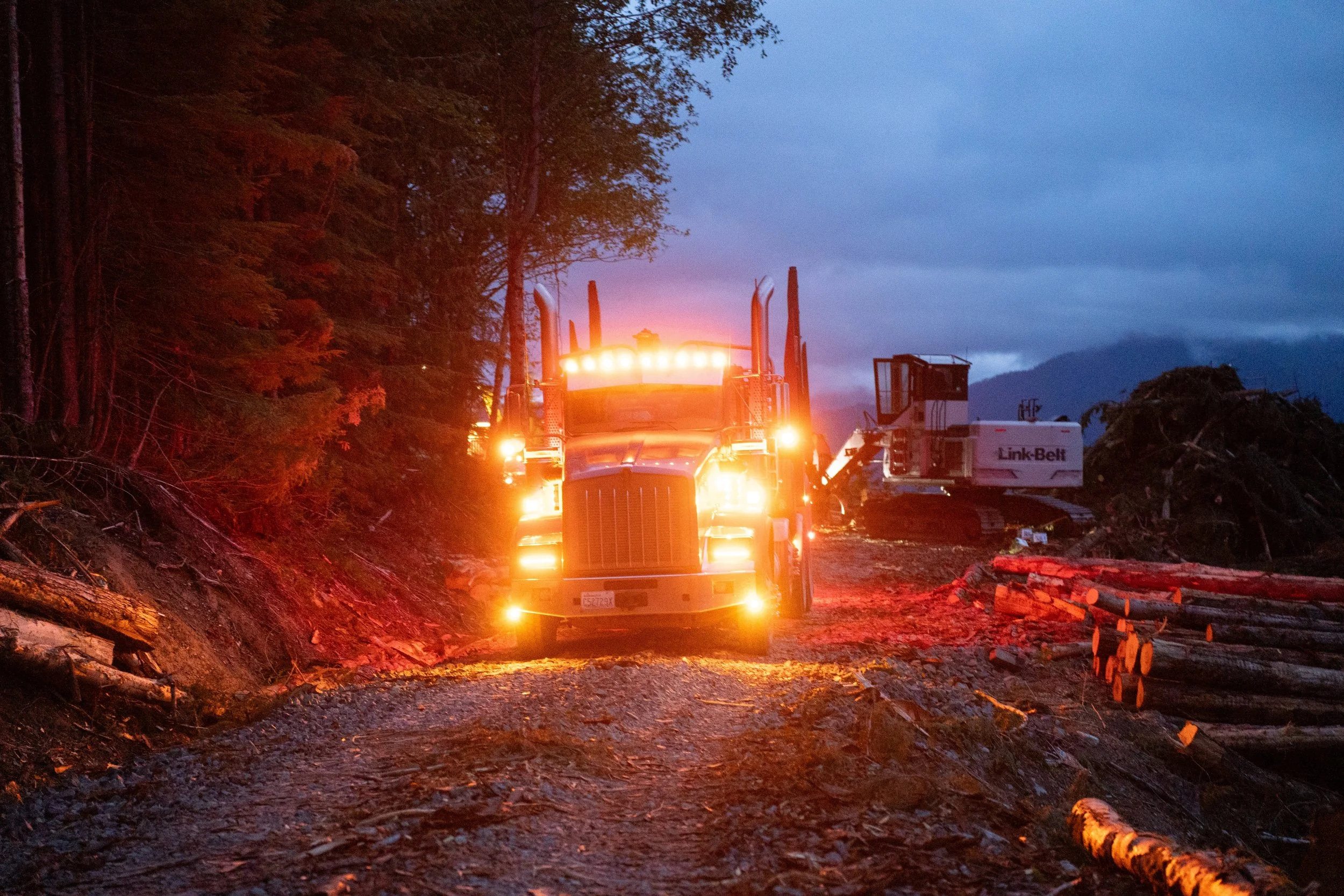
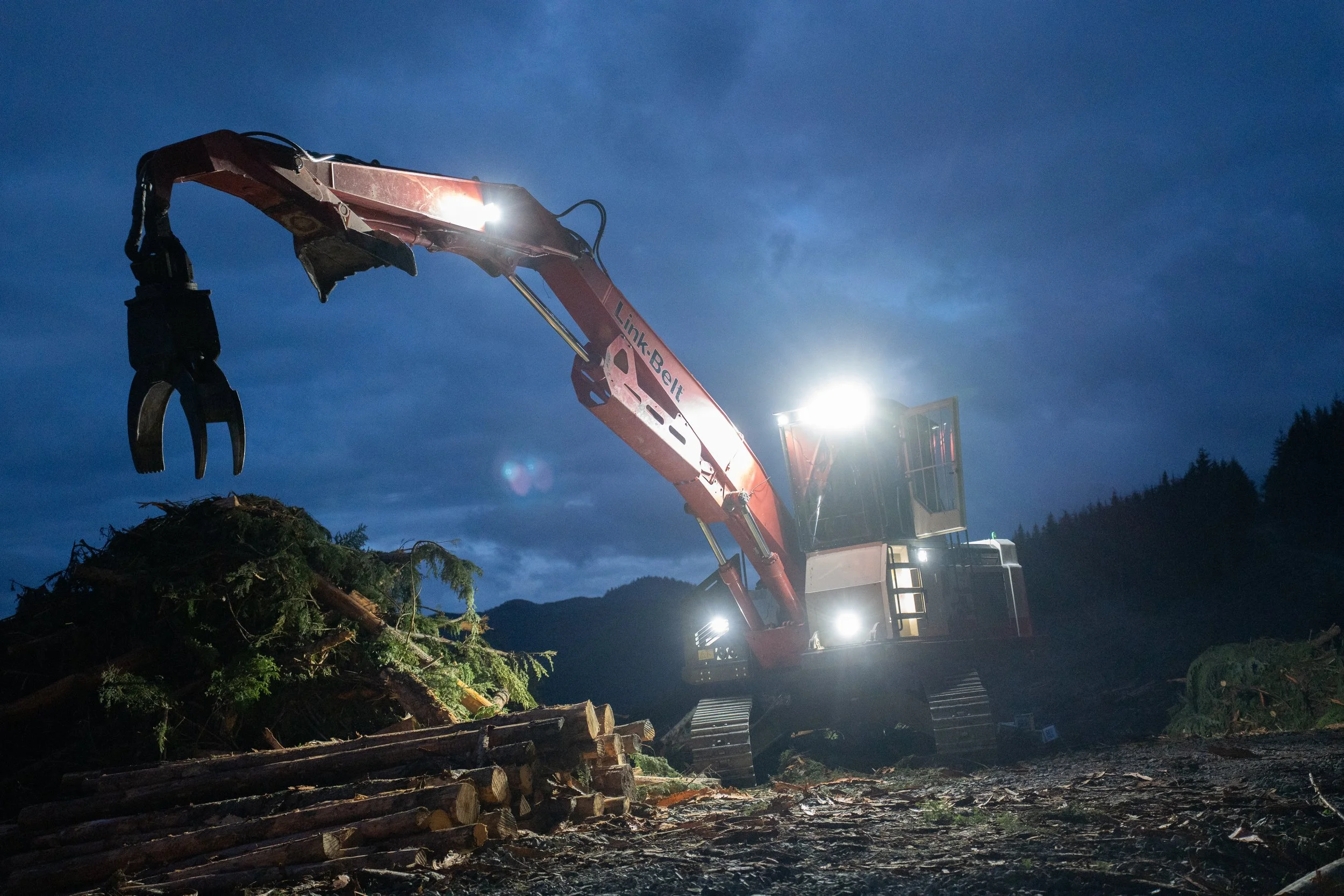
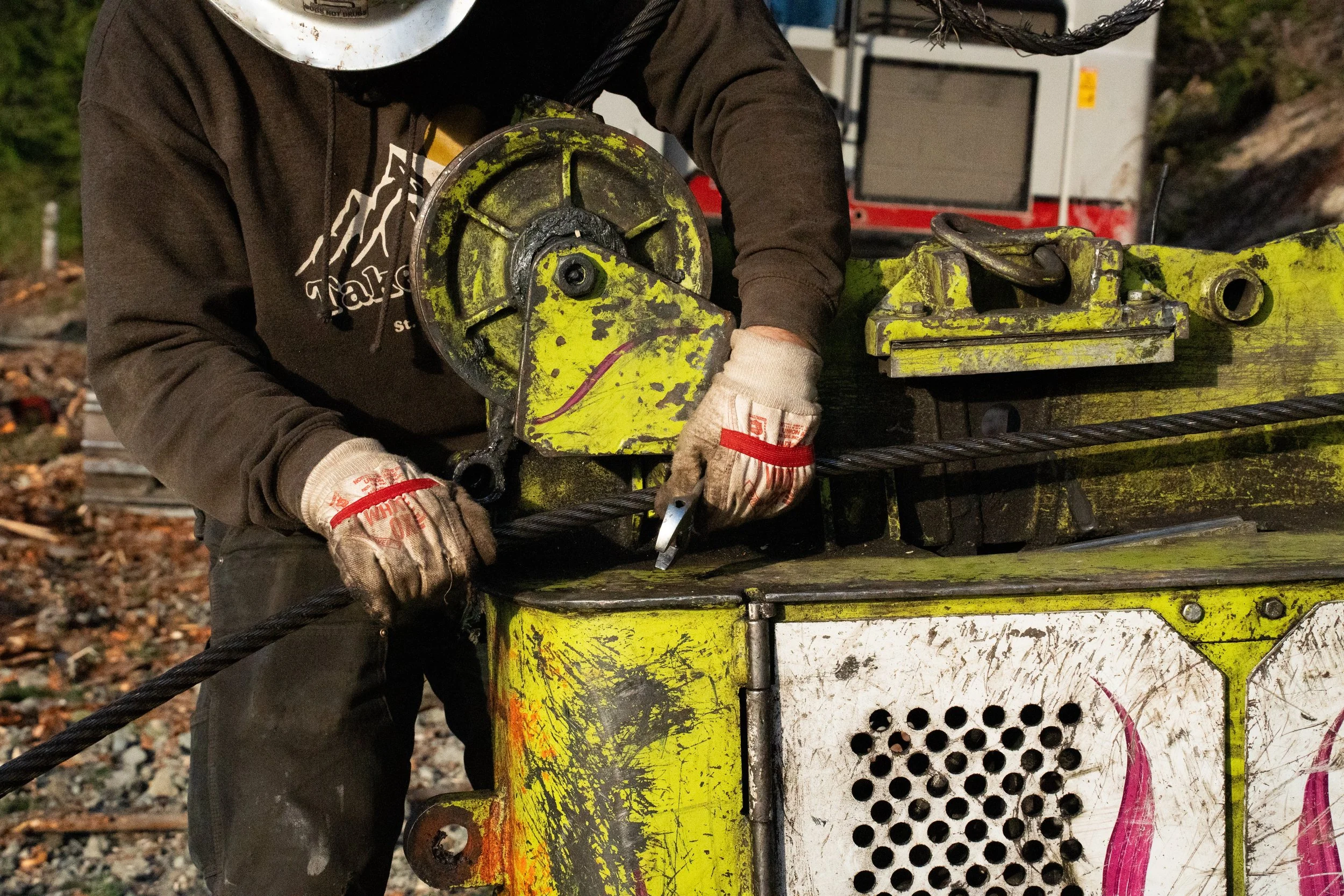
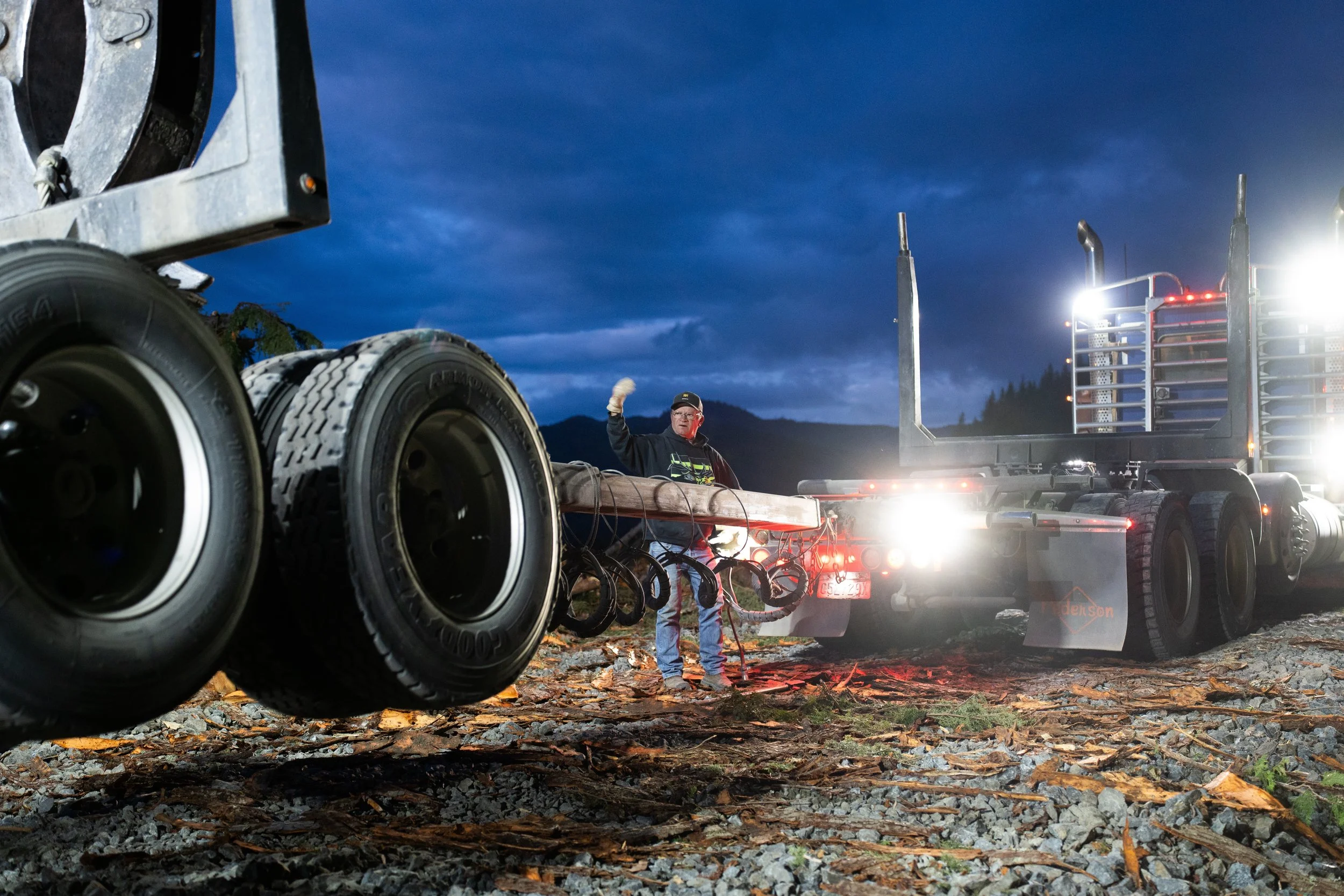
TOP LEFT: A logging truck sits idle and ready to be loaded with timber, Friday, June 5, 2026.
TOP RIGHT: Brandon Harkness moving an excavator equipped with a grabber into position to load logs onto a logging truck, Friday, June 5, 2026.
BOTTOM LEFT: A logger connects a carriage to yarder cables. Carriages like this are used to move timber upslope and allow for a degree of freedom that other carriages can't offer, Tuesday, June 2, 2026.
BOTTOM RIGHT: A logging truck driver directing an excavator operator attaching a trailer to a logging truck, Friday, June 5, 2026.
All photos by Theodore Crowe