
Estuary Protectors
Researchers at Shannon Point are making waves with their work on eelgrass
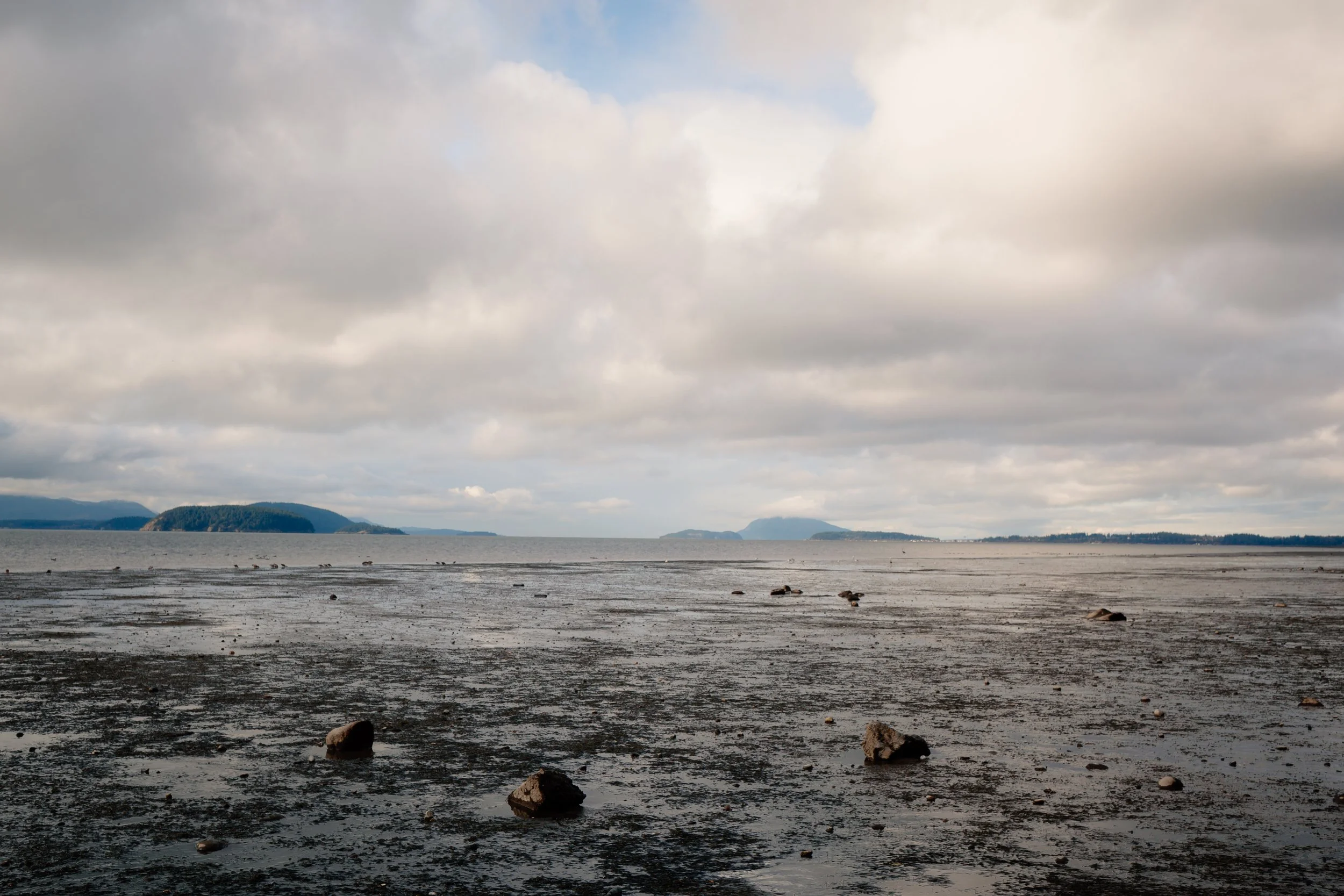
The mudflats of Padilla Bay on Feb. 16, 2026. On low tide, the waters give way to beds of long, thin eelgrass. // Photo by Harley Brown
Photo Essay by Harley Brown
March 30, 2026
As researchers wade through mudflats before the sun comes up, the squelch of rainboots echoes into the night. This routine is part of daily life for the team at Western Washington University’s Shannon Point Marine Center, an educational hub in Anacortes, Washington. The coveted item they’re looking for? Eelgrass.
“I didn’t even really know eelgrass existed. Then I started working with Sylvia… and I was like, ‘Oh, this stuff’s incredible,’” Ian McBride, a graduate student working under Sylvia Yang at Shannon Point, said.
Eelgrass is a keystone species in Salish Sea ecosystems. The aquatic plant grows in estuaries, where salt water and fresh water meet, giving shelter to young fish and invertebrates. It also acts as a structural support for the sediment that it grows on, both protecting and providing for its ecosystem.
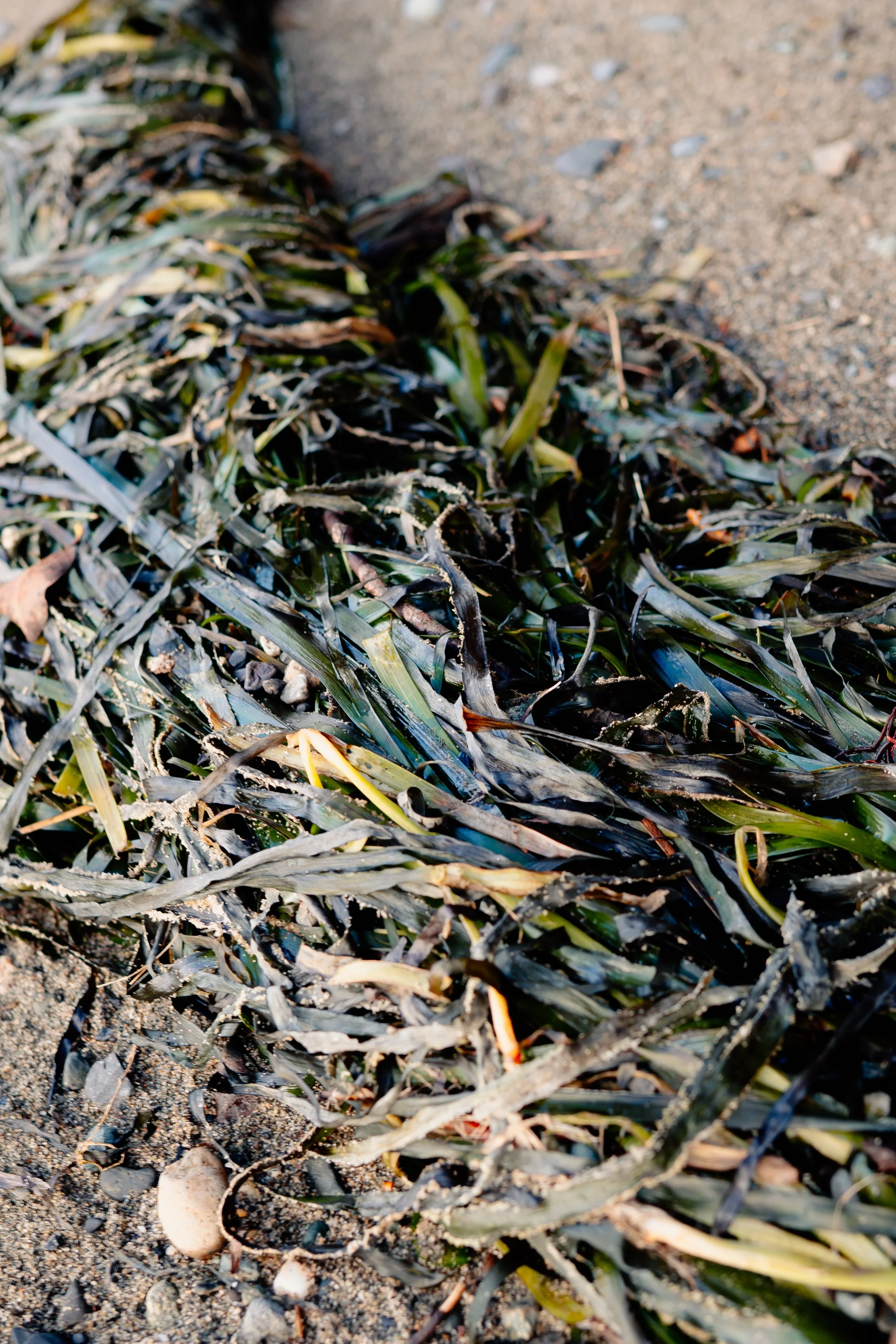
LEFT: A clump of eelgrass on the shore of a Padilla Bay beach on Feb. 16, 2026. Easily mistaken for seaweed, most beach-goers might overlook this plant. // Photo by Harley Brown
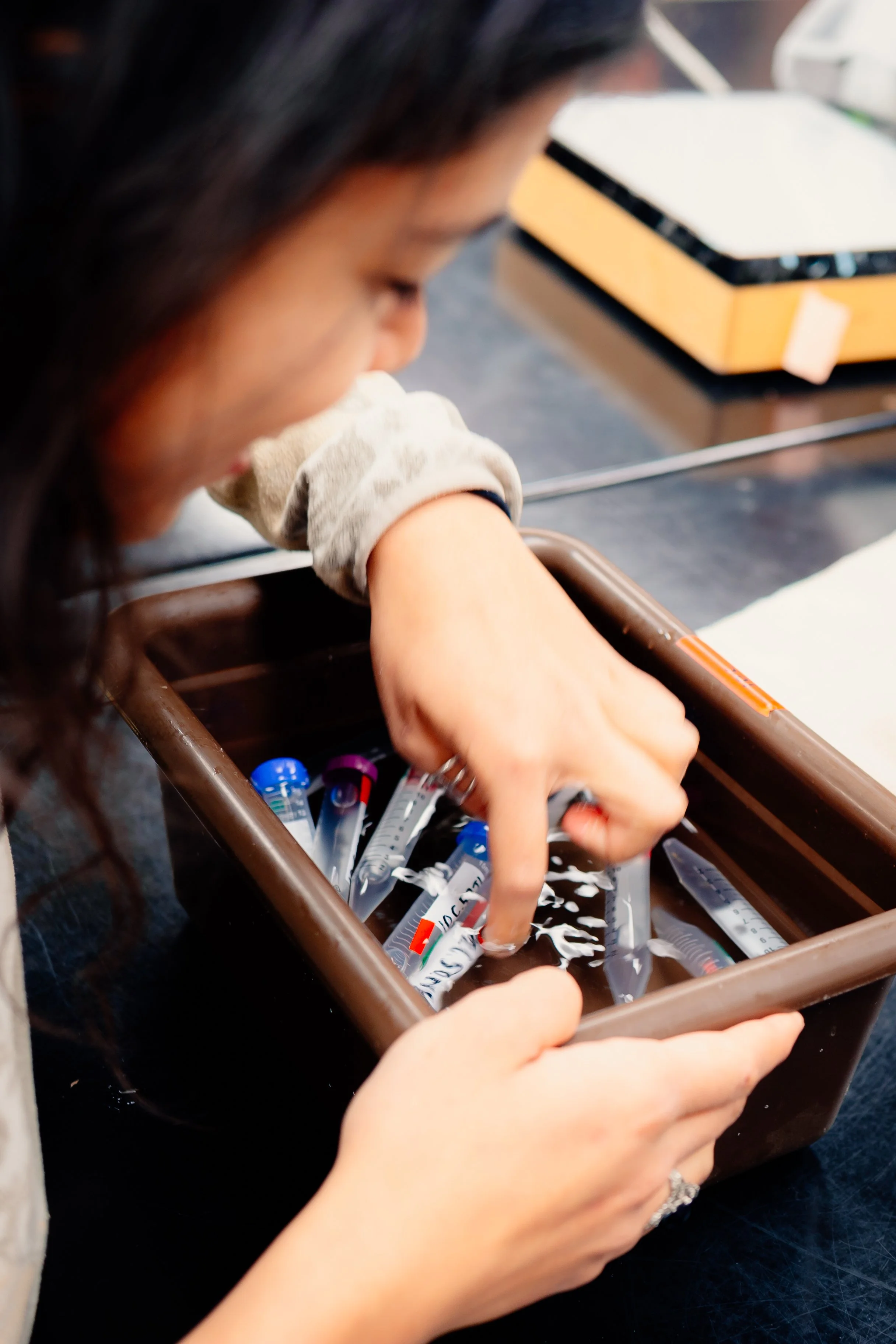
RIGHT: Rachel Corici studying submerged test tubes on Feb. 10, 2026. These test tubes are filled with eelgrass seeds, which are being stored at different temperatures for use in the spring and summer months. // Photo by Harley Brown
“The amount of animals that those meadows produce… fish, crabs, millions of invertebrates, anemones, jellyfish… It’s like walking through an aquarium, and it’s just incredible,” McBride said.
At Shannon Point, a group of four undergraduate students and one graduate student have been working in local Salish Sea estuaries such as Padilla Bay, in an attempt to better understand and protect eelgrass.
“I grew up here, and I’ve seen the changes and have been exposed to the talk of climate change, ocean acidification, and just all of the bad, lots and lots of bad. And that’s gotten me really psyched to be a part of the good,” Rachel Corichi, one of the newer undergraduate research assistant students, said.
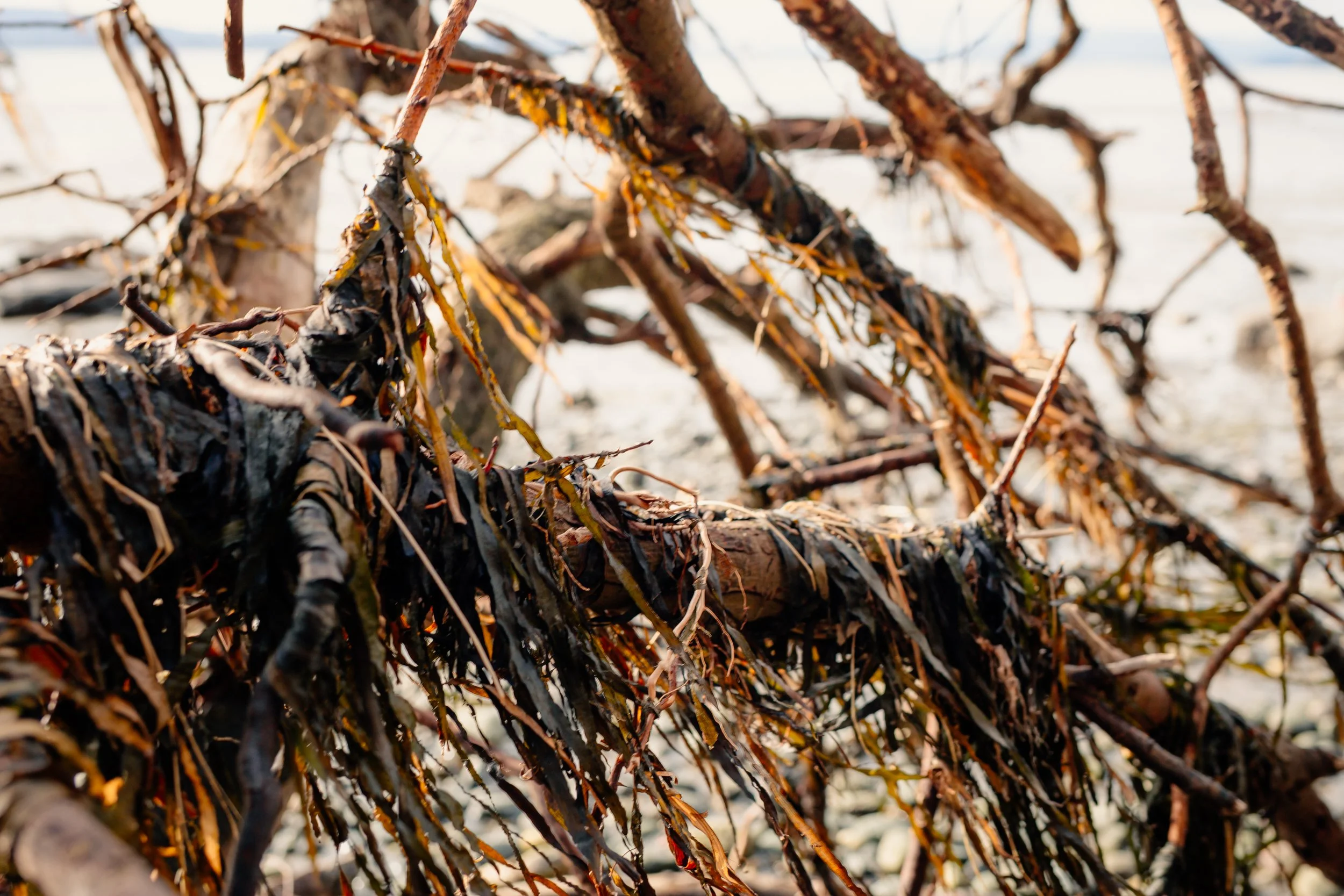
Eelgrass on a tree at Padilla Bay beach, Feb. 16, 2026. These blades must’ve gotten onto the tree at high tide. // Photo by Harley Brown
This winter, a majority of their work has been preparation for the spring and summer months. The team counts the sprouted seeds they planted in the fall, stores new seeds to plant in the spring and takes trips to the mudflats to monitor the pre-existing eelgrass beds.
“It’s essentially gardening,” Corichi said.
Because eelgrass beds grow so close to the shore, they are particularly susceptible to the effects of human development. The local beds have faced severe degradation due to urban expansion, runoff and pollution. With such a vital part of the Pacific Northwest’s ecosystems in danger, local scientists have stepped up to protect this plant and the estuaries it resides in.
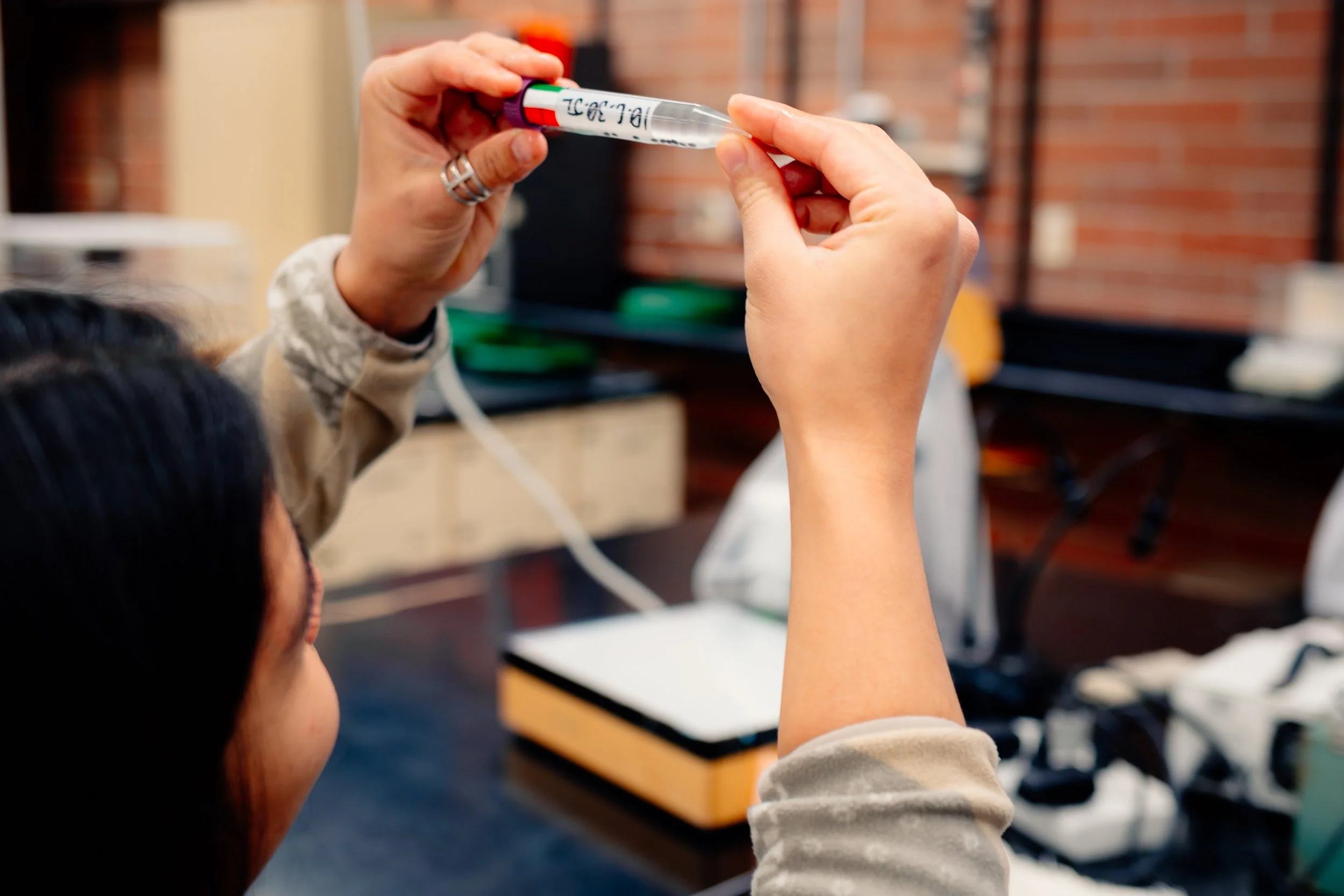
LEFT: Rachel Corici holding a test tube of eelgrass seeds up to the light on Feb. 10, 2026. Eelgrass seeds are extremely small and hard to see in lower light, which finally gives miserably bright fluorescent lighting a purpose. // Photo by Harley Brown
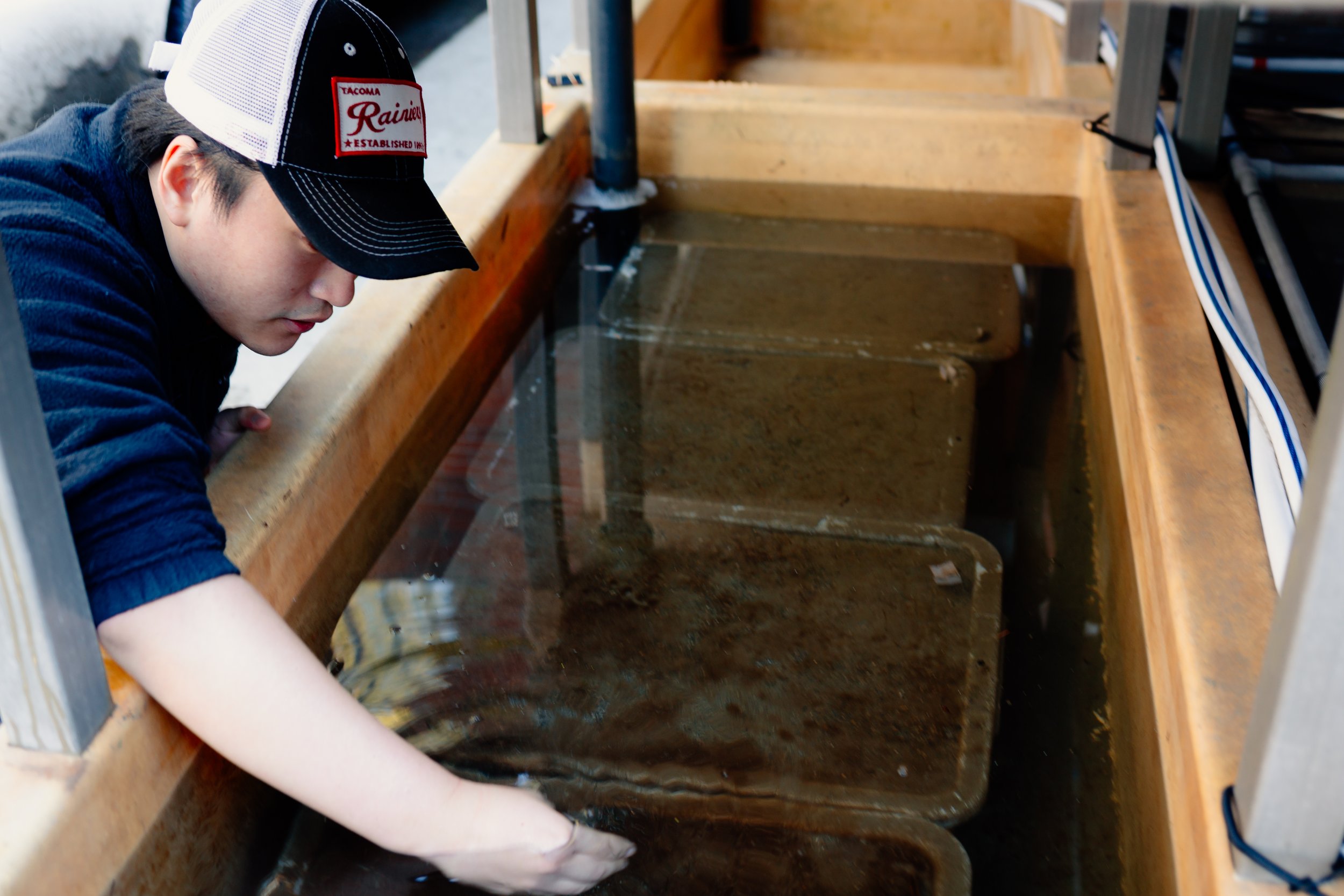
RIGHT: John Vu is studying a small nursery filled with eelgrass seeds on Feb. 10, 2026. There aren’t very many growing eelgrass blades, but with the current construction of larger nurseries on the site, there may be hope for them yet. // Photo by Harley Brown
“There's all these groups that are working towards the same goals of not only understanding eelgrass, but trying to protect it in our region, and they all want to work together,” McBride said.
The team journeys out once again to the mudflats. Through the smell of low tide and bitter morning air, they stand two miles out from the shore. Eelgrass surrounds them, stuck deep in the mud. While they shovel sand to count seeds and eelgrass blades for the thousandth time, one of them stalls, waiting for something only she seems to recognize.
She listens to the wind whistle as it catches the eelgrass blades, blowing across the mudflats in the early morning light.
“Anyone can do this stuff," Corichi said. “It just requires… being interested in a topic and going for it.”
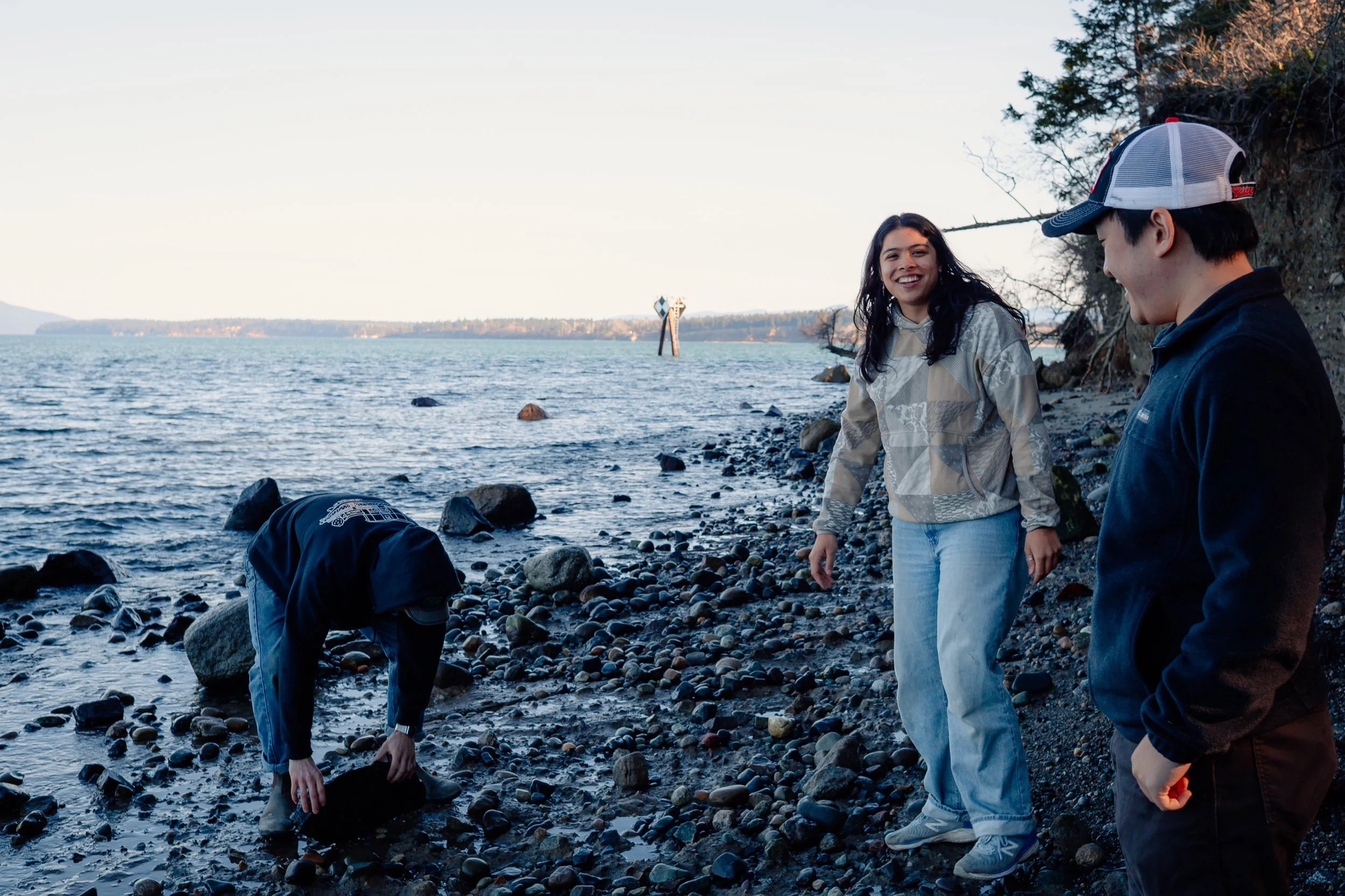
Ian McBride (left), Rachel Corichi (middle) and John Vu (right) on the Shannon Point Research Center beach. From this point, you can easily see across the waters between Padilla Bay and the Rosario Straight to the Cypress and Guemes Islands. // Photo by Harley Brown