
Sustainably Stylish
Two Bellingham businesses bring old textiles into new styles
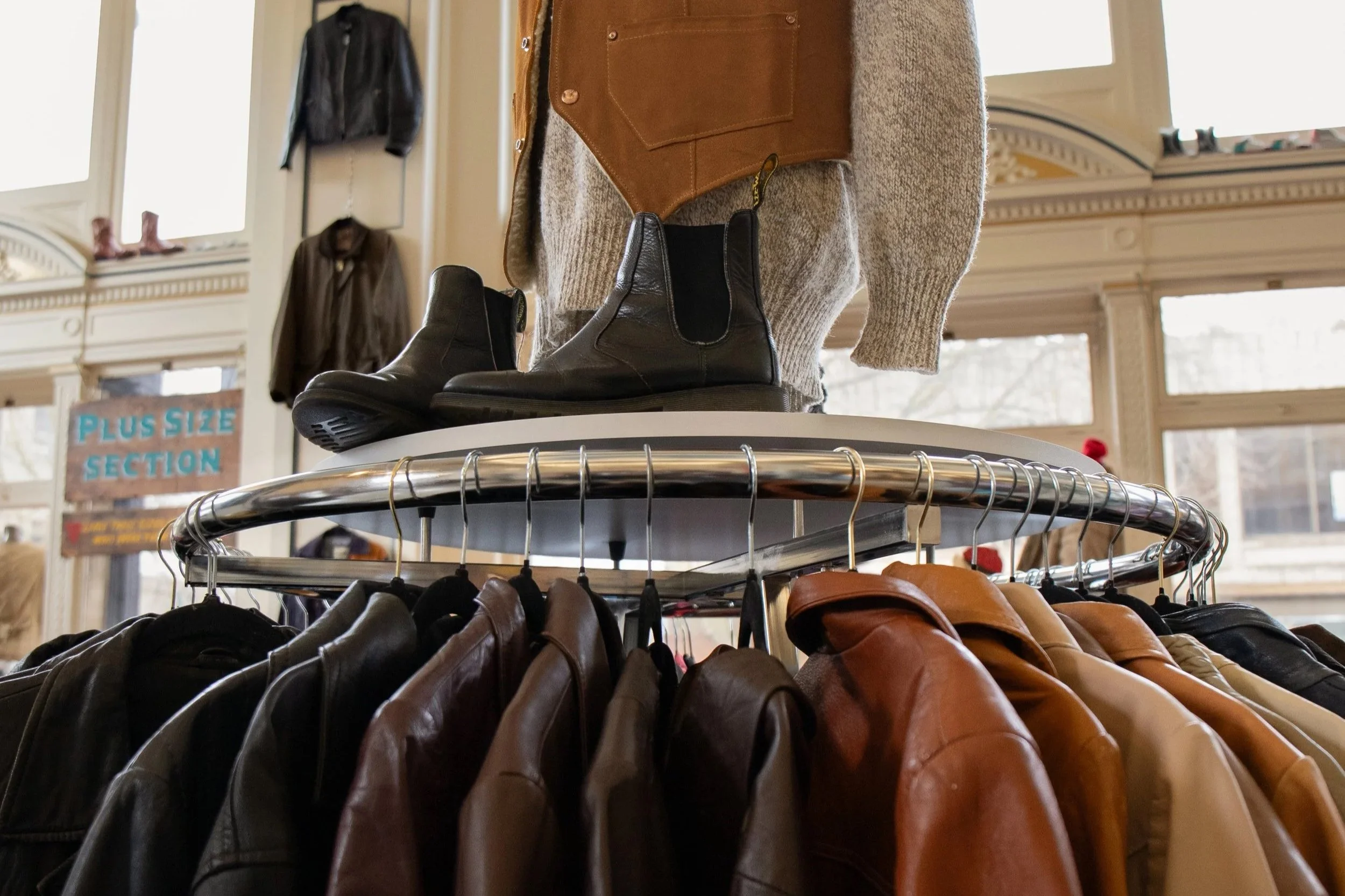
A clothing rack of vintage, second-hand leather jackets hang beneath a styled mannequin and vaulted ceilings in Worn Again Thrift. // Photo by Elena Delgado
Photo Essay by Elena Delgado
May 18, 2026
Mountains of discarded clothing sit in America’s landfills, stretching far wider than the eye can see. When waste facilities incinerate these garments, local communities deal with the smell of melting plastic — and the health consequences of particulates in their lungs. Unsold and out-of-style victims of fast fashion rot away, but do not biodegrade, many with the tags still attached.
The fashion industry is the second largest polluting industry globally. Textile production alone releases an estimated 1.2 billion tons of CO2 into the atmosphere every year, the equivalent emissions of 25 million American households.
Under the guise of affordability, fast fashion garments seem to offer an accessible price point to the majority. However, an increasing amount of modern clothing is produced extremely rapidly, with poor quality and cheap materials. Consumers are buying more garments and disposing of them faster than ever before.
In Bellingham, two local businesses are looking to combat this clothing overconsumption.
West Persons, the owner of Madrona Wear, and Natalie Mote, manager of Worn Again Thrift, are both dedicated to the recirculation of clothing and supporting the community’s relationships with fashion.
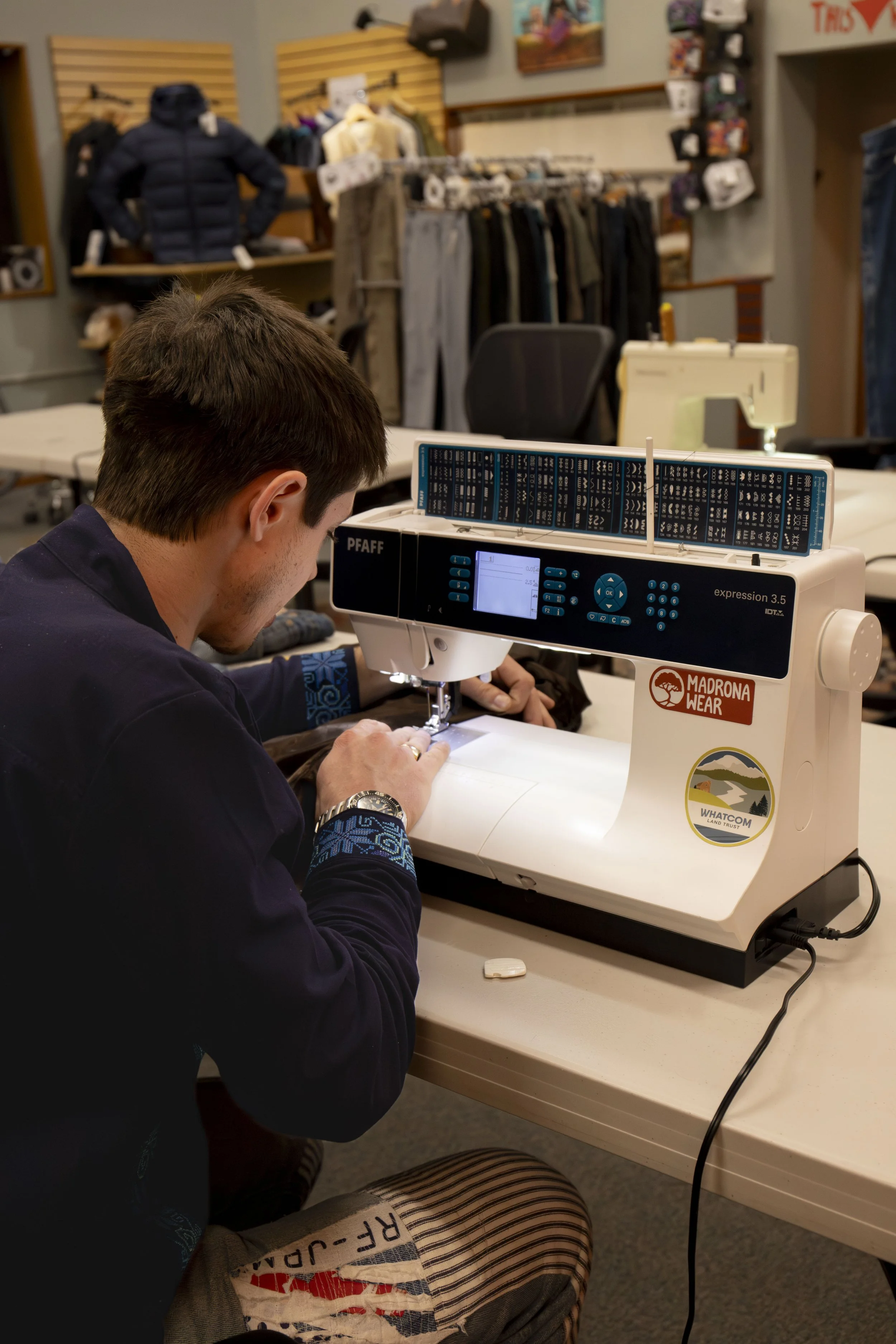
Persons sits at a sewing machine, performing a quick repair on the torn section of a customer’s jacket liner on Feb. 4, 2026. // Photo by Elena Delgado
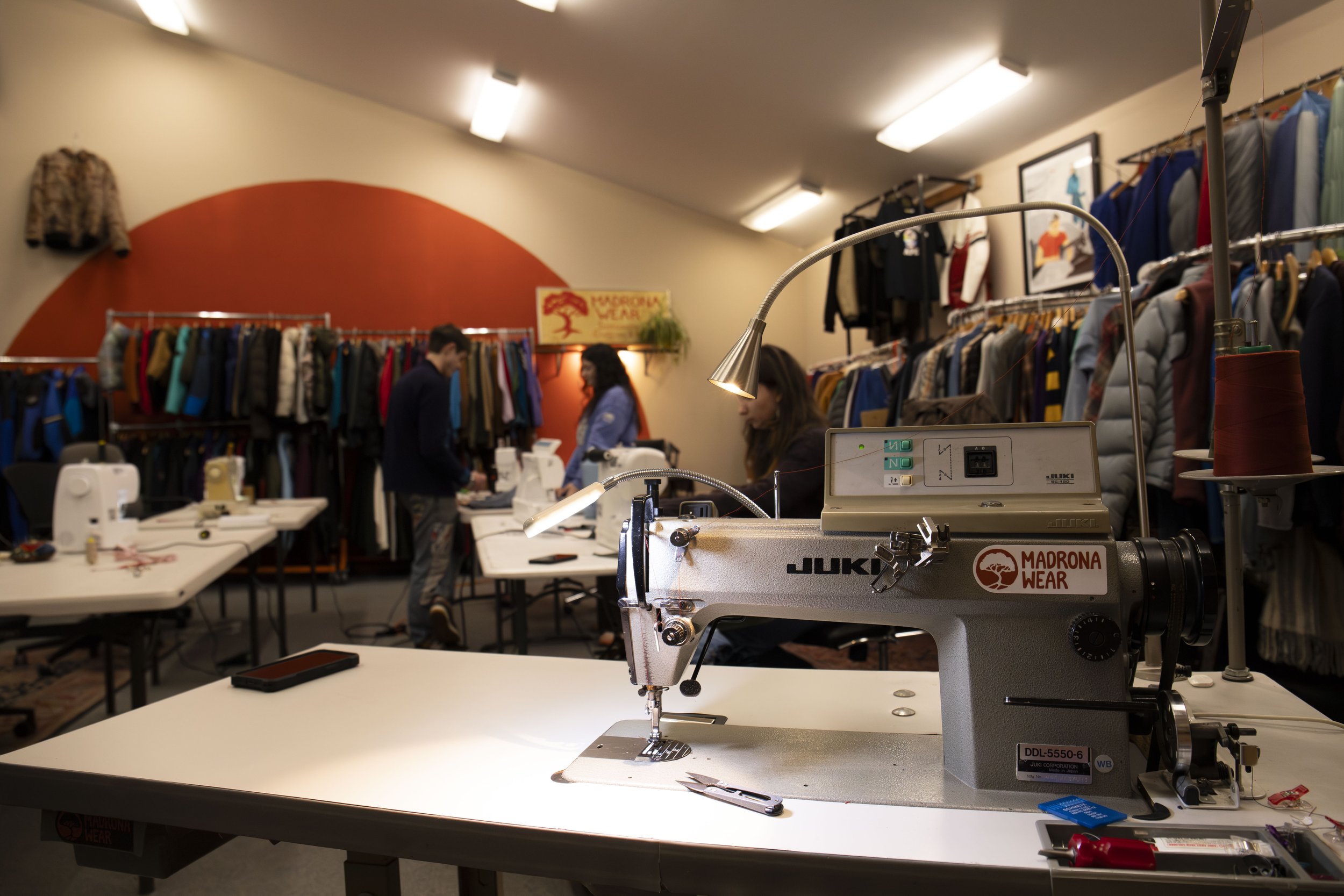
A sewing machine sits on a table in the room where Madrona Wear hosts its Hemming Pants and Jeans workshop. // Photo by Elena Delgado
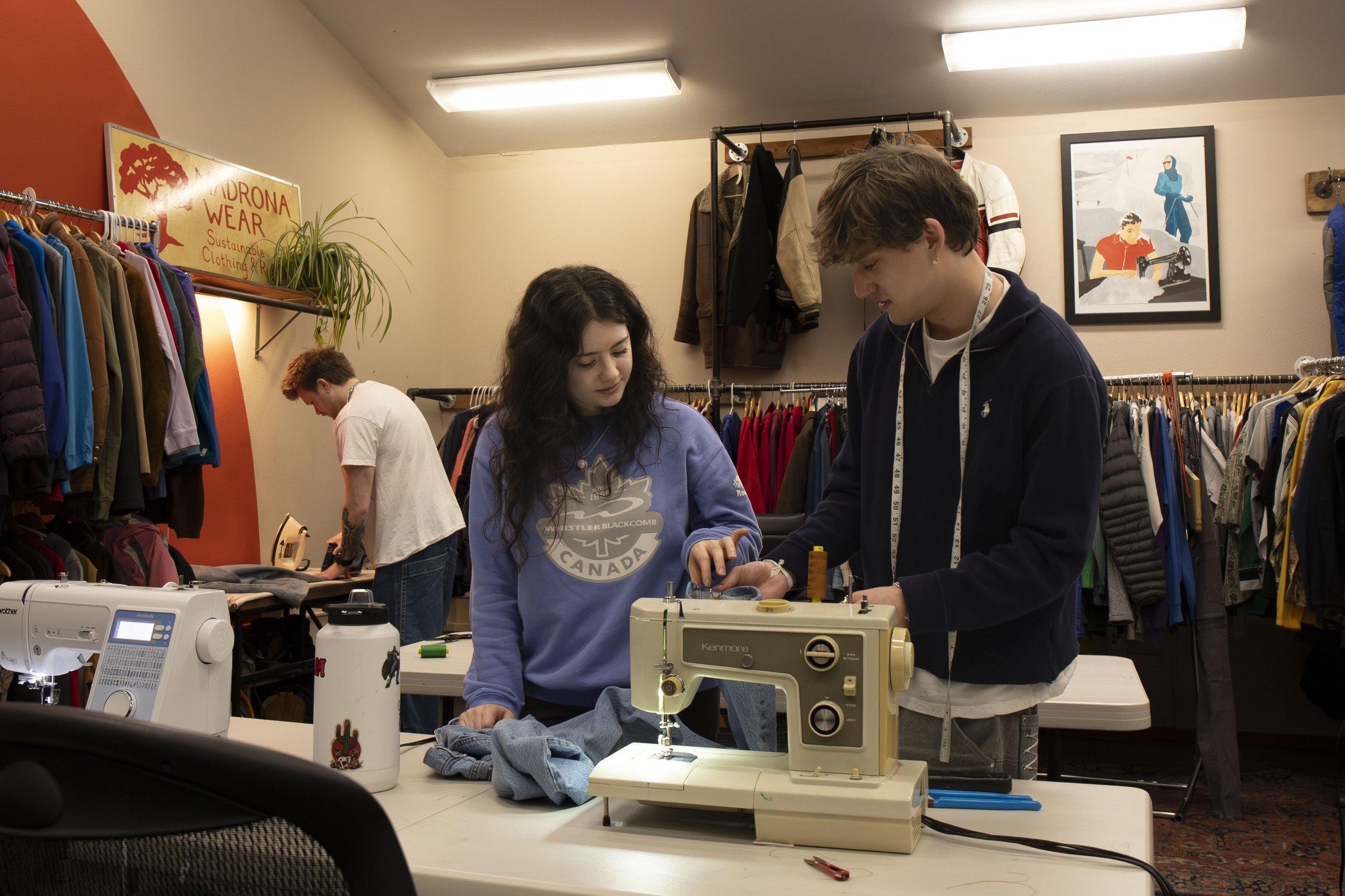
During the Madrona Wear workshop, Hemming Pants and Jeans on Feb. 4, 2026, a student consults a shop technician about their work, while another student irons their pants in the background. // Photo by Elena Delgado
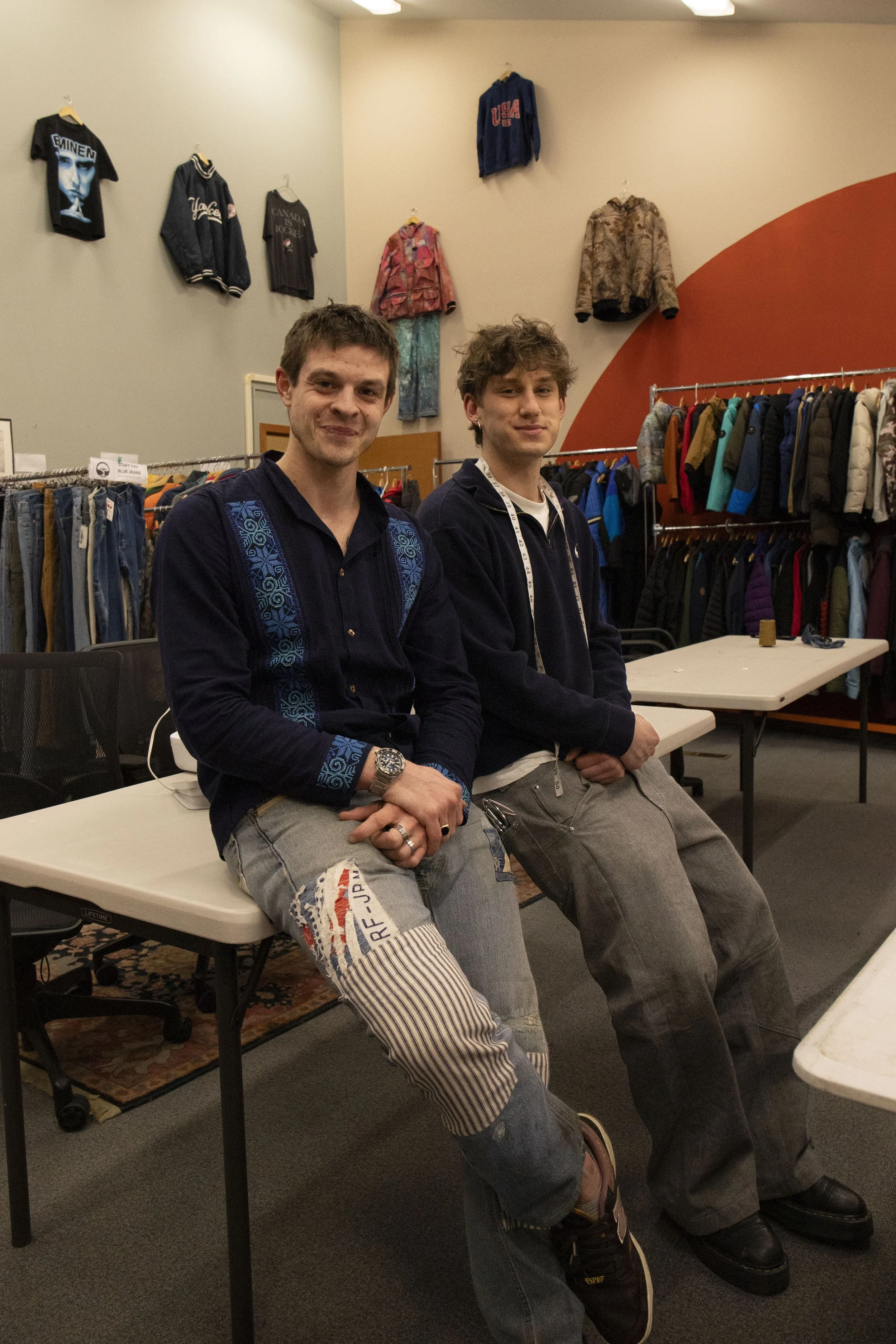
West Persons (left) and Archer (right) pose for a portrait after another successful evening at the Madrona Wear Hemming Pants and Jeans workshop. Persons sports uniquely patched jeans, while Archer shows off jeans that he handmade himself from scratch. // Photo by Elena Delgado
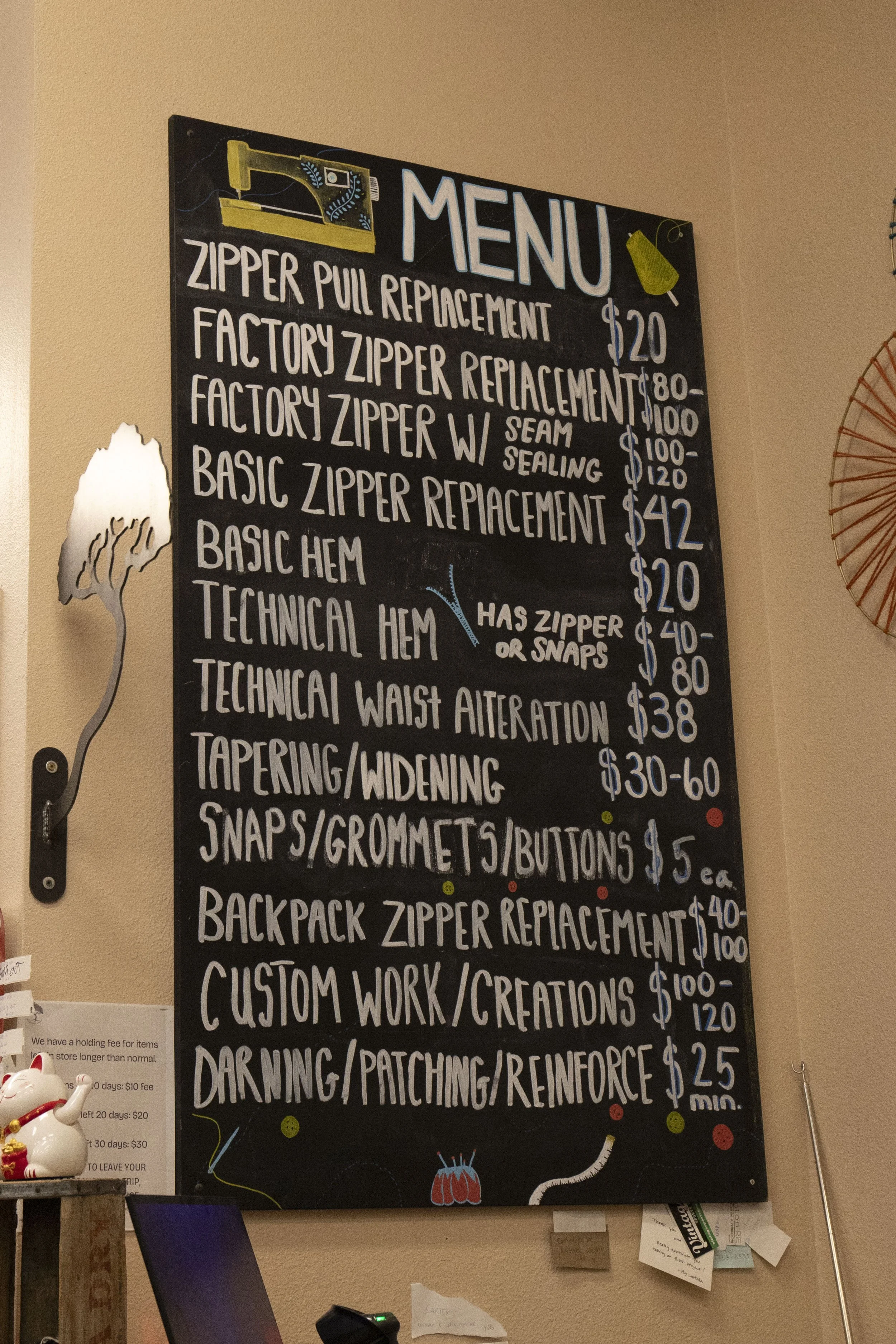
Madrona Wear’s menu shows the wide variety of repair and customization services they offer. Their logo, a Madrona tree, symbolizes resilience through its ability to thrive in difficult conditions. // Photo by Elena Delgado
Persons spends the day in a Madrona Wear backroom under warm-toned shop lights and among piles of scrap fabric, disassembling an old backpack. Far beyond the scope of repair, the backpack has inevitably reached the end of its life cycle. Apart from the mangled shoulder straps and deteriorating material, scraps are salvaged, buckles are saved and zippers are reclaimed.
Madrona Wear seeks to be an exemplary model of a store built by community, for the community, with accessible and sustainable fashion. Persons is committed to limiting clothing waste through repair services, textile recirculation and fabric recycling.
In 2025, the Madrona Wear team repaired thousands of items of clothing. From zipper repairs to custom creations and everything in between, Persons’ shop has received close to 5,000 orders in the past year and a half.
“We’ve, in a year, likely saved over 7,000 pounds of clothes from the landfill,” Persons said with a faint glow of pride.
Clothing which was once considered garbage is now wearable again, restoring its place in someone’s daily wardrobe.
“We want to get gear from the people that have a ton of it and circulate it through the community,” Persons explained.
Not only does this give customers the opportunity to buy high quality products at a lower price point, but purchasing a used garment saves a multitude of resources, like water and crude oil, that a new item would have needed in order to be produced.
With the recent introduction of sewing workshops at Madrona Wear, the team empowers students to repair their own clothing. In leading these workshops, Persons’ goal is to teach people to care for themselves and their clothes; he aims to build a community that is sustainable even without Madrona Wear around.
“This is the world that we want to live in, this world where we are passing equity between each other,” Persons said.
Madrona Wear is one of many trailblazers when it comes to recycled clothing in Bellingham. Worn Again Thrift, a few blocks away, shares similar goals.
Located inside one of downtown Bellingham’s magnificent historic buildings and under meticulously crafted ceilings, Natalie Mote and other team members sift through collections of pre-loved vintage clothing that customers are hoping to pass along. Like Persons, the team is dedicated to motivating consumers to reuse and recirculate their clothing.
“The more we can encourage the reuse, mending, upcycling and sustaining of what already exists, the more we can sustain our lives as we know them,” Mote said.
Another essential value of Worn Again Thrift is uplifting and supporting the community.
What was once a dream in their previous, smaller location became a reality when The Rage Magazine and Worn Again Thrift collaboratively organized a fashion show. The sold-out crowd filled the air with anticipation and cheers as the models strutted down the runway, showcasing eight different collections.
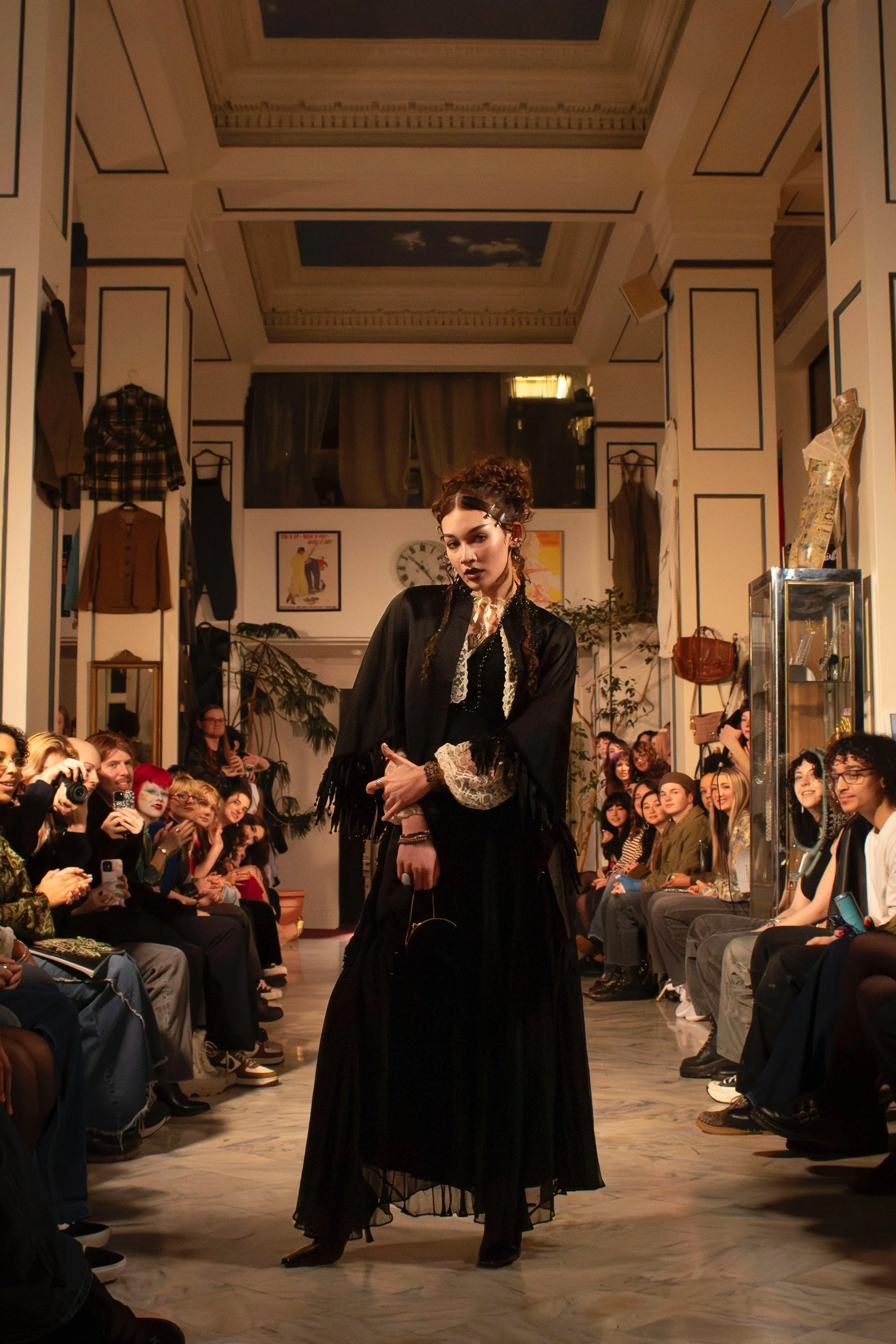
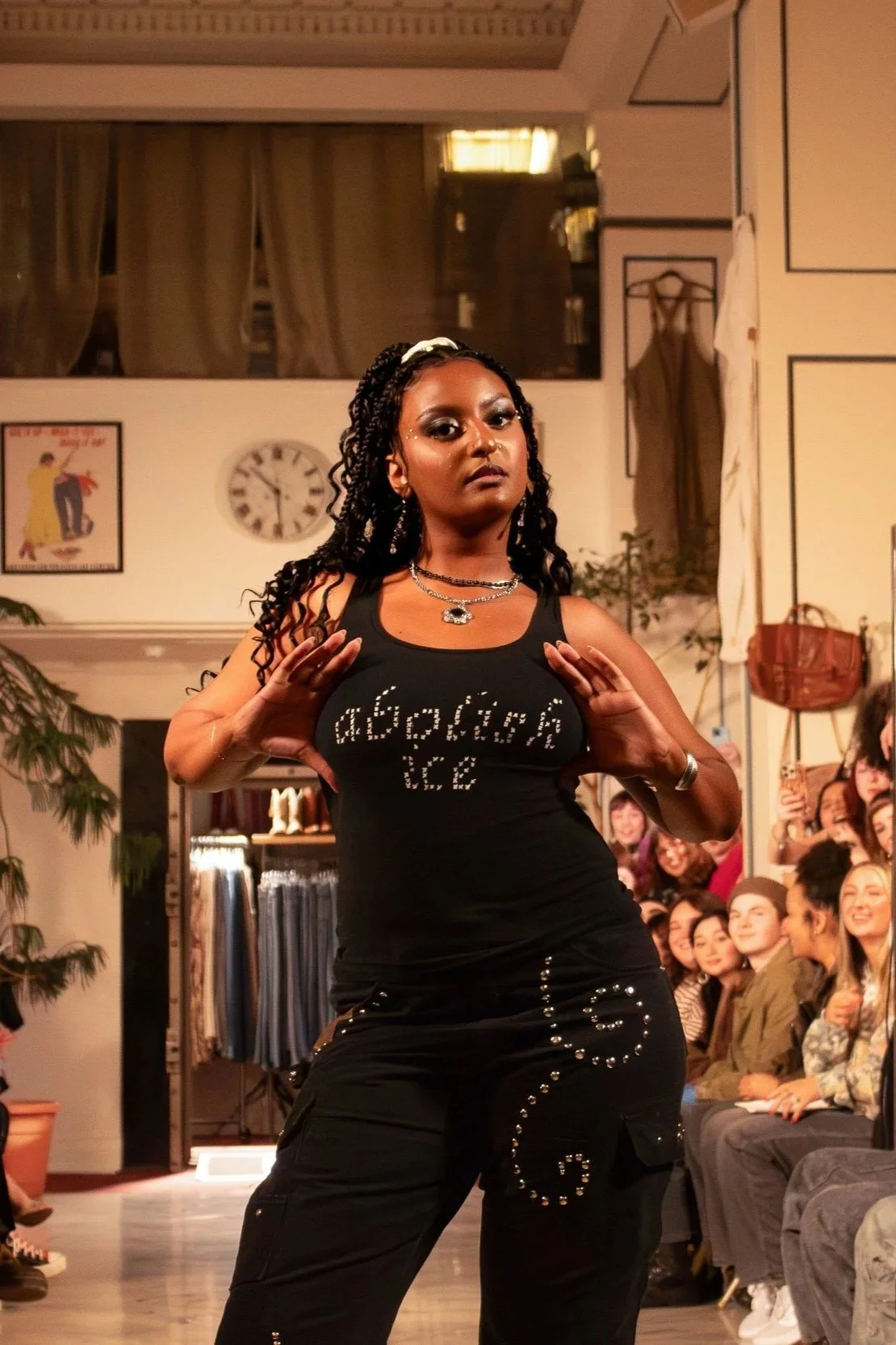
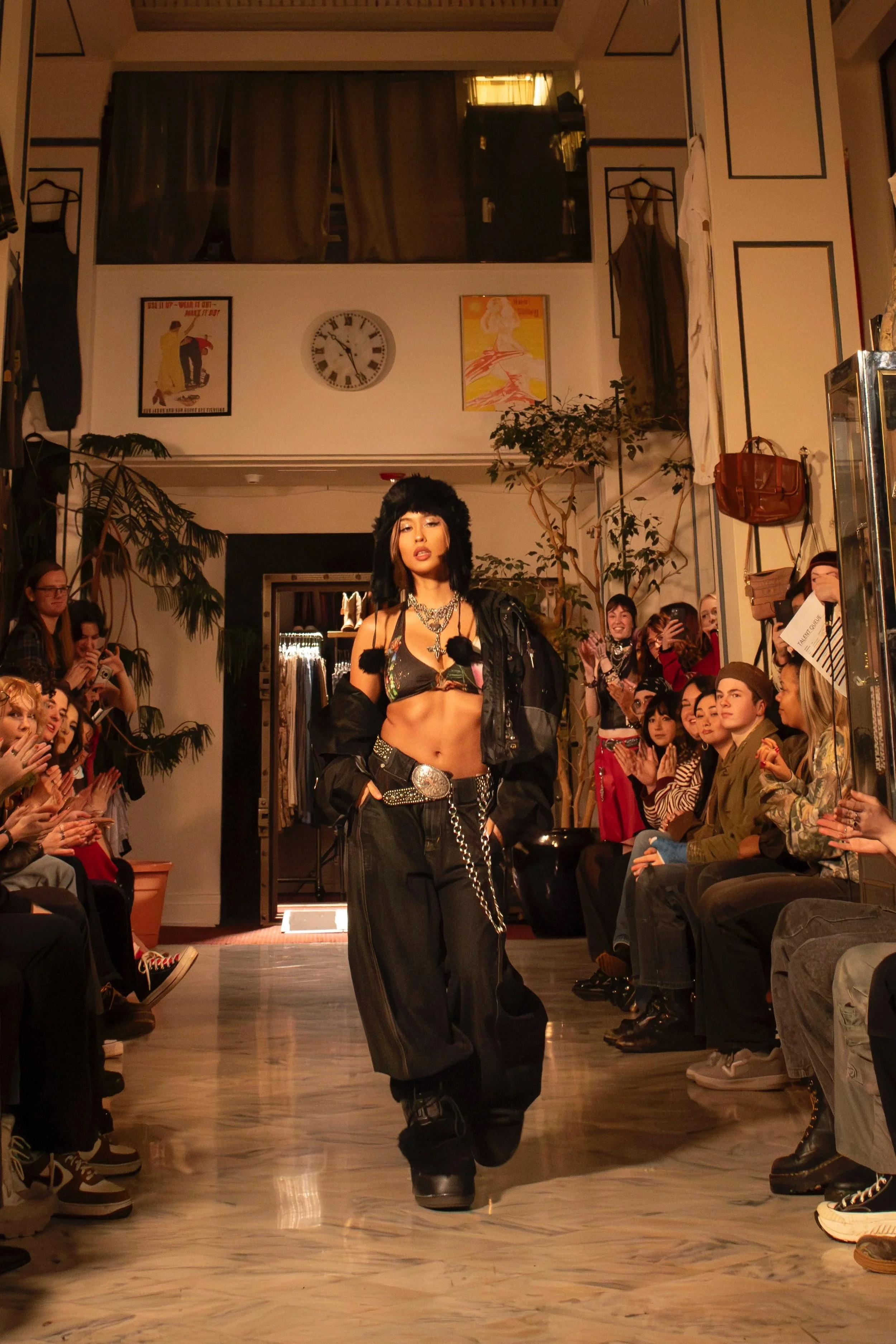

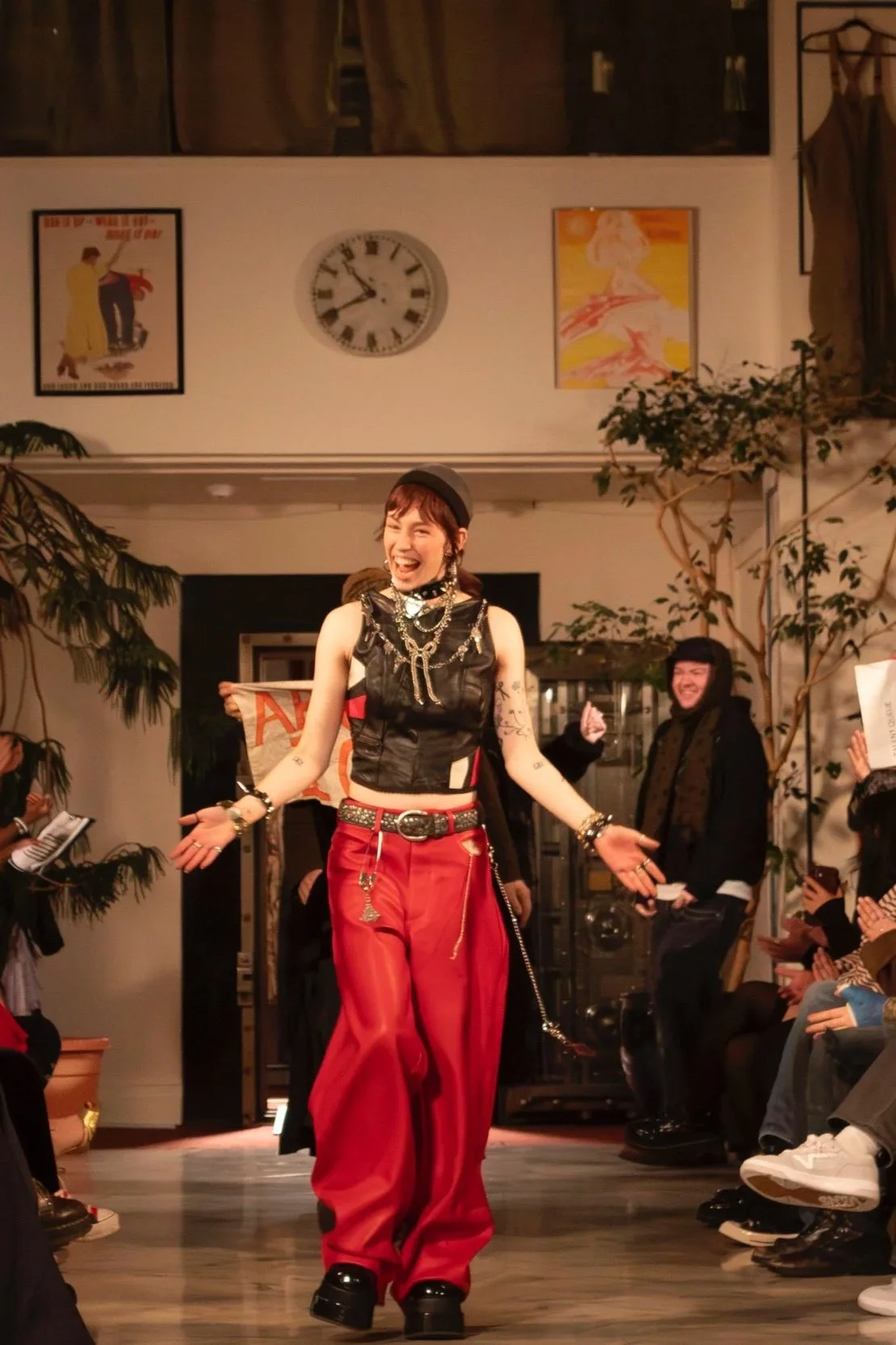
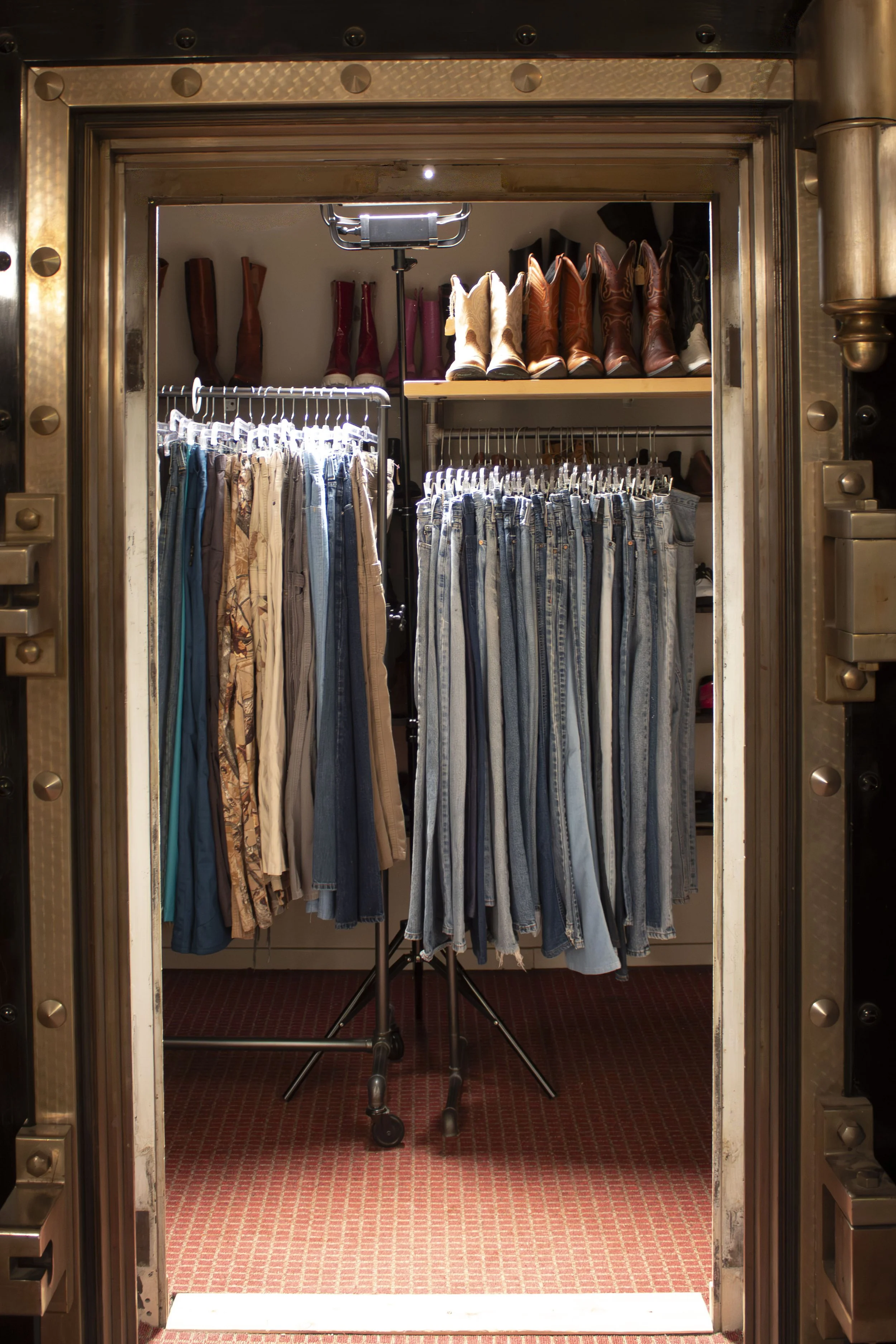
Two illuminated clothing racks filled with vintage denim sit in a Worn Again Thrift room serving as a backstage for runway models to walk out of during the Ragefest fashion show on Jan. 30, 2026. Previously a bank vault, the room is now repurposed as Worn Again’s treasured shoe vault. With shelves wonderfully stocked with vintage footwear, the vault retains all of its original features including the vault door which is still on display. // Photo by Elena Delgado
FIRST: Ragefest model Adrianna Froman strikes a pose at the end of the Ragefest Runway on Jan. 30, 2026. Styled by Eva, a Worn Again team member, Froman sports layers of vintage second-hand clothing and various textures from a collection called “Wight Palace”.
SECOND: Ragefest model Sesina Negasi poses for a photo on Jan. 30, 2026. Styled by Lolly, a local designer, the collection is titled “Moon Metal”.
THIRD: Ragefest model Allie Smith poses for a photo on Jan. 30, 2026. Styled by Ellette, a Worn Again Thrift team member, the collection is titled “Beyond Skin”.
FORTH: Ragefest model Tyler Nansel walks for “the Rage Collection” on Jan. 30, 2026. Styled by Manna Spiro, the Rage Magazine style and beauty team member, Nansel wears the outfit and handmade bunny mask featured in the magazine titled “Through the Looking Glass”.
FIFTH: Illuminated under warm-toned lights, Mote beams with delight as they walk down the Ragefest Fashion show runway along with the other featured designers on Jan. 30th, 2026. As the final song plays, the crowd loudly claps and cheers, signifying the end of the fashion show, only the first of more to come.
All photos by Elena Delgado
“I think it is so important that more people connect with those around them and realize how many people out there have similar interests, opinions, feelings and passions,” Mote said. “When we combine these powers, we can find a power within ourselves that we didn’t even know we had.”
The featured collections of Ragefest included the work of three local designers as well as second-hand items. This creative display of sustainable fashion shows the community that individuals don’t have to sacrifice personal style and expression for the sake of sustainability.
Sustainable fashion highlights how the environmental impacts of garments can be largely reduced by shopping second-hand or upcycling and mending worn clothing. It ultimately encompasses themes of resource efficiency, reuse and recycling of garments and investing in high-quality materials.
The goal is to mitigate pollution produced during the fiber process, manufacturing and disposal of items.
Luckily, sustainable fashion is on the rise. More and more consumers are shifting their patterns to include eco-conscious habits. Businesses like Worn Again Thrift and Madrona Wear are making meaningful connections within the fashion community, encouraging consumers in their shift towards sustainable fashion.
“What we can do is inspire those around us,” Mote said. “We can be a part of this community, we can gather, and we can create change.”
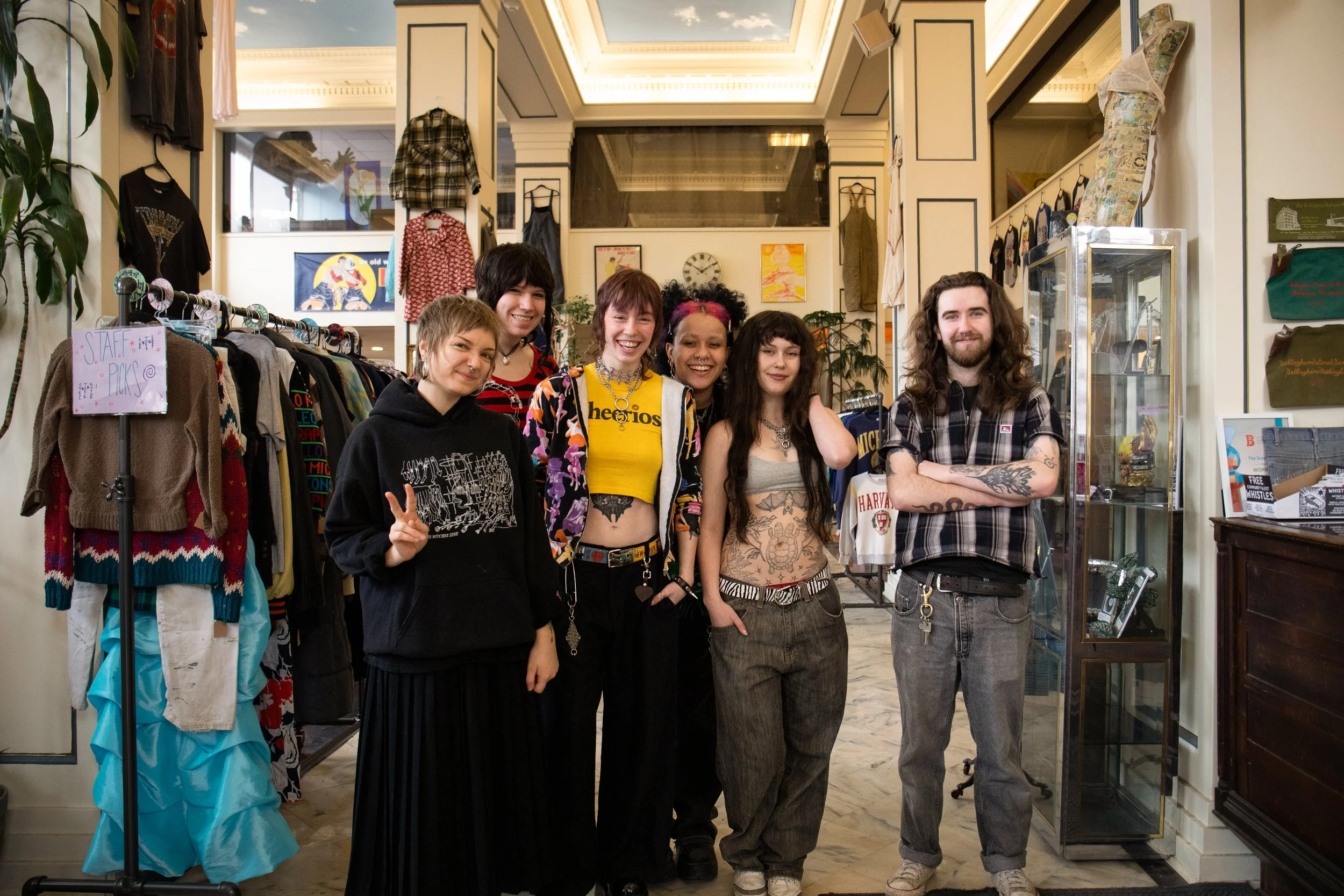
Part of the Worn Again Thrift team smiles for a photo on the marble walkway of the historic bank building on Feb. 12, 2026. The vaulted ceilings filled with light depict a lightly cloud-filled sky. // Photo by Elena Delgado