
Holding the Future
Seed saving as a key to a more resilient community
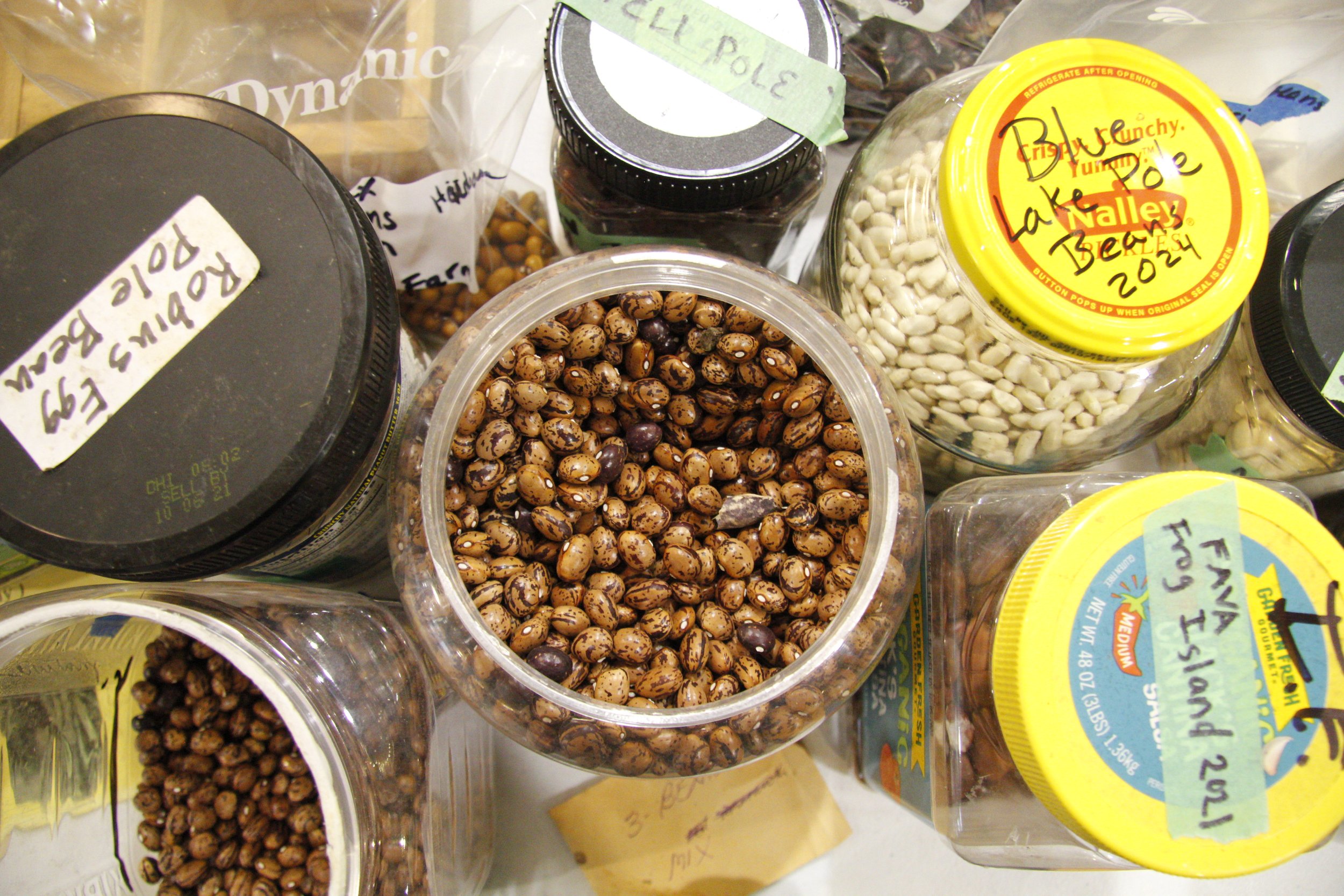
Jars containing different varieties of dry beans to choose from. // Photo by Brooklyn “Bug” Santee
Story by Ava Glaspell // Photos by Brooklyn “Bug” Santee
March 30, 2026
It’s a cold, wet Saturday afternoon, but inside the Bellingham Unitarian Fellowship, it’s cozy and warm. A handwritten sign directs attendees of the annual Salish Seed Swap down the stairs and into the basement. Inside, they find twinkle lights strung across the low ceilings, giving the room a comforting glow. A guitarist on a small raised platform opposite the entrance strums chords as people shed their layers and shake out their damp hair. A table is laden with snacks, bowls of chips and cut fruit. But people aren’t here for the free salsa or the quaint ambiance — they’re here to swap some seeds.
All around the room, folding tables are piled high with seeds. Some come safely tucked into paper packets, neatly labeled with their name and species; others are housed in repurposed yogurt containers or peanut butter jars with strips of colorful duct tape for labels. Folks wander from table to table, asking questions, sharing gardening tips and debating the best variety of tomato.
Renée Soule, a home gardener, came to the swap armed with tall rubber rain boots and a wicker basket to carry her seed selections. She’s on the hunt for beans, but the deeper reason she keeps coming back — this will be her third year at the swap — is the sense of community.
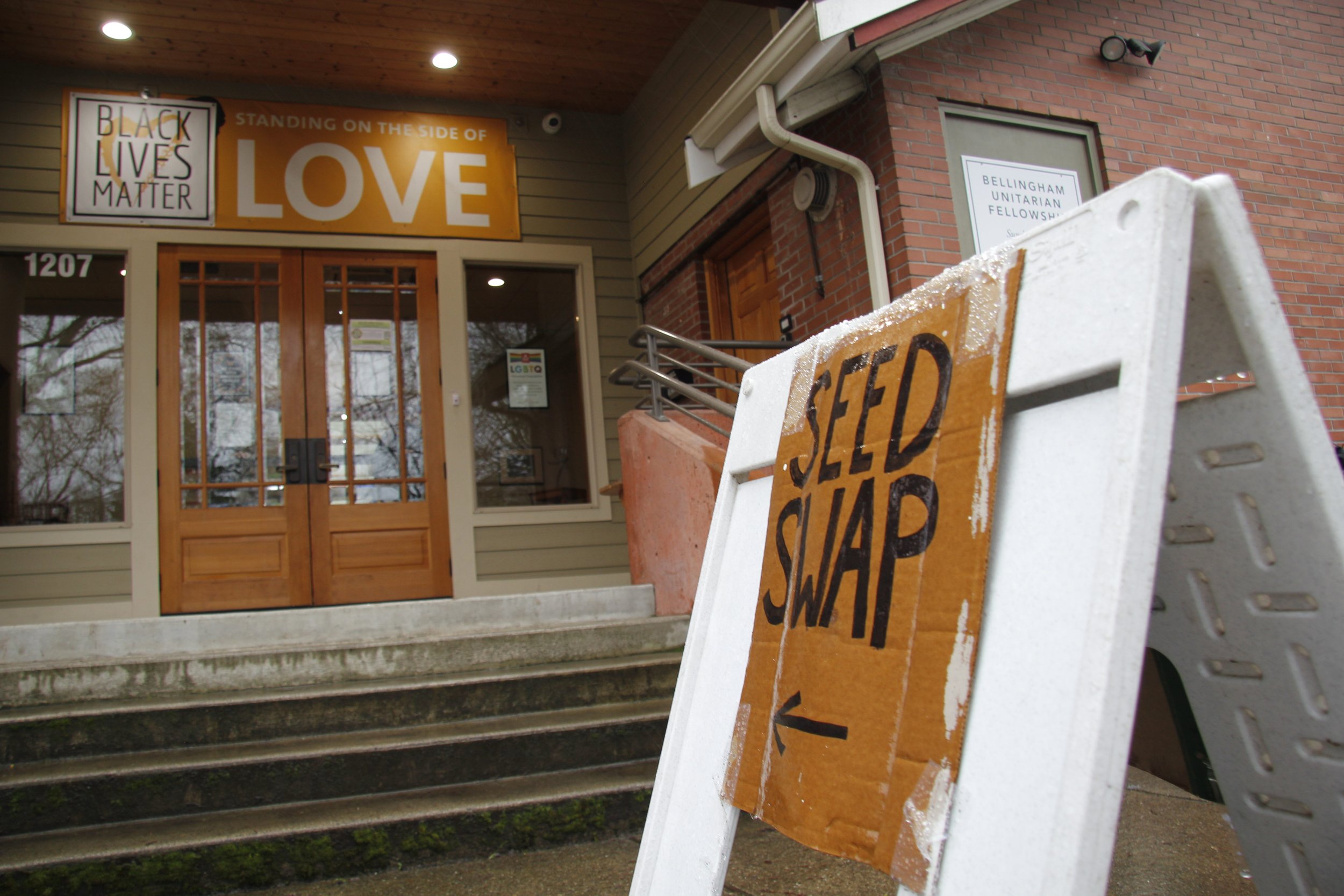
This year, the Salish Seed Swap was held on February 7th at the Bellingham Unitarian Fellowship. // Photo by Brooklyn “Bug” Santee
“It’s one of the places you’ll find resilience,” Soule said. “Seeds are a potent symbol of hope in today's world.”
Organized by the Salish Seed Guild, the Salish Seed Swap has been happening in the Bellingham community in some capacity since 2009. Year after year, farmers, gardeners, and anyone interested in learning more about seeds can attend to swap, educate and learn. There is a suggested donation of $10 at the door, but no one is turned away for lack of funds.
Brian Kerkvliet co-founded the Salish Seed Guild along with Krista Rome. It is now an official organization, housed under the umbrella of the nonprofit Sustainable Bellingham, but it’s rooted in the idea of a community seed swap.
“People grew out seeds, they saved seeds, they brought them together, and they swapped. So that went along for a little while, but it was the same five to eight people that would bring seeds, and like hundreds of people would show up,” Kerkvliet said. “It wasn't a seed swap, it was a seed grab.”
To move toward a true swap, Kerkvliet and other guild members started the Salish Seed Garden at Kerkvliet’s Inspiration Farm about six years ago.
“It was largely kind of a response to COVID, because we realized a lot of seed companies were out of seed, or they were backlogged. They couldn't ship seed,” Kerkvliet said.
With their new space, the guild could host work parties and educational workshops where people could learn to grow, harvest and process seeds to preserve. More than 150 volunteers showed up throughout the growing season to help plant. Seeds grown at the garden were distributed back into the community through swaps, seed libraries and food banks.
Since the founding of the seed garden, the guild has distributed between 5,000 and 7,000 packets of seed each year, and they’re not planning on slowing down anytime soon. The Salish Seed Guild is just one of hundreds of organizations nationwide working to preserve locally grown, open-pollinated seeds.
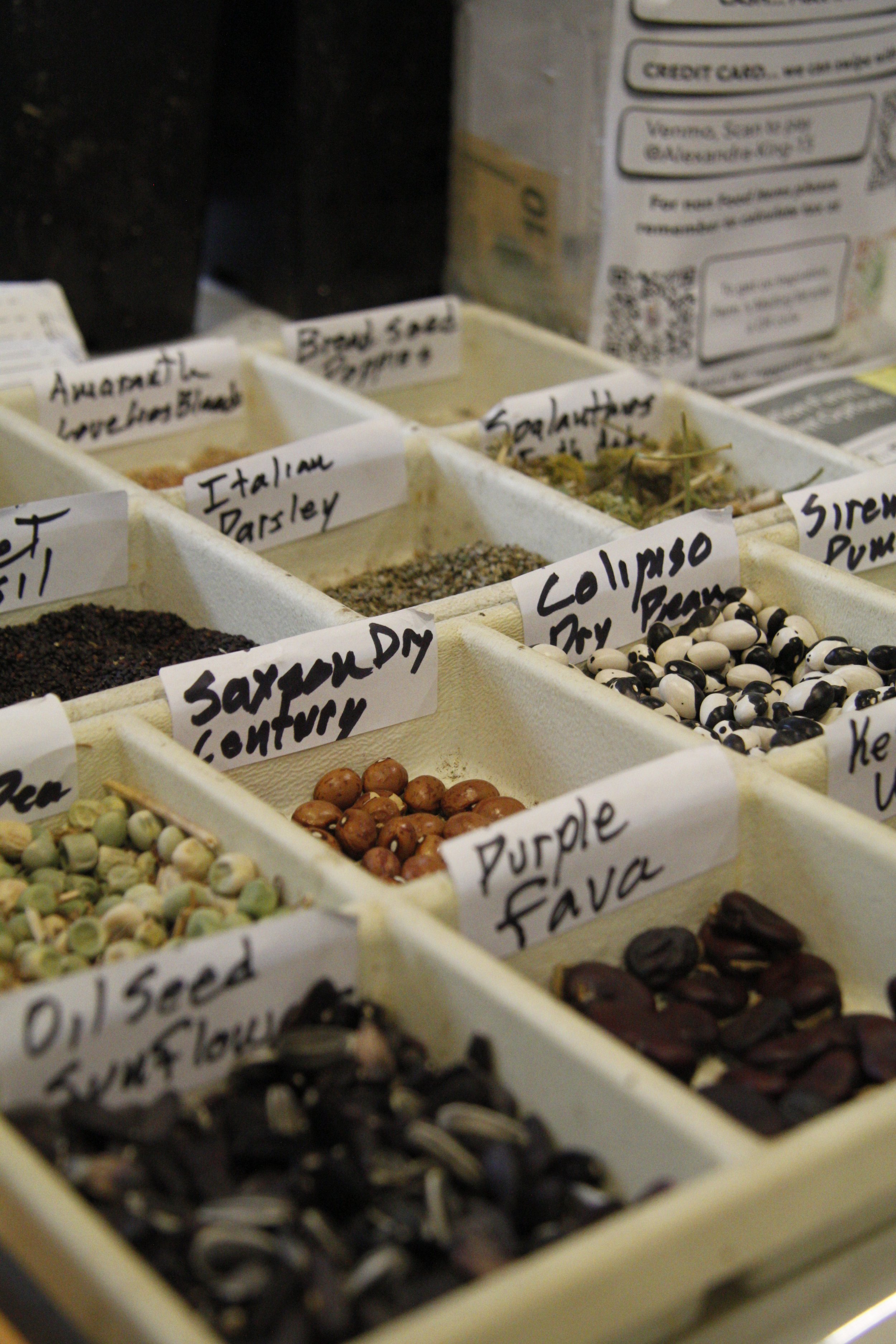
Seeds and beans sorted for visitors to bag up and take home. // Photo by Brooklyn “Bug” Santee
Seeds local to a specific region are adapted to the soil and climate, making them more resilient. They also provide better food for local pollinators and other wildlife than non-native plants, encouraging biodiversity.
Open-pollinated seeds can be cross-pollinated — via pollinators, wind or water — or self-pollinated. They can be collected at the end of the growing period and planted again next year.
“That's what farmers did forever. You grow some, you eat some of the plants, you save some for seed, and then you plant again the next year,” Terri Kempton, manager of The Outback Farm and a Western Washington University professor, said. “But along came hybrid varieties, which are generally sterile.”
Hybrid seeds are a deliberate cross between two parent varieties of the same species. These seeds are enticing to farmers because they produce big yields and uniform, high-quality crops, but the seeds can’t be regrown. Hybrids contain genes from both parent varieties, so there's no telling what the seed will produce, if it grows at all. This means that farmers who plant hybrids have to buy new seeds after every harvest.
“What a clever thing for seed companies who want to sell you seed every year,” Kempton said. “Having the ability to grow and save your own seed year after year after year — that's a huge, powerful ability.”
Yet another type of altered seed is genetically modified seeds, or GMOs. These are seeds that contain DNA that has been manipulated in a lab.
Compared to hybrid seeds, which replicate natural reproductive processes, GMOs allow scientists to sidestep any natural barriers and combine genes from completely different species. GMO crops are often modified to be resistant to pests or herbicide-tolerant, making them enticing to commercial farmers.
Despite these advantages, GMOs have a devastating impact on biodiversity. In the past 100 years, an estimated 75% of plant genetic diversity has been lost. In 2024, 186.3 million acres of genetically engineered crops were planted in the United States, covering more than half of all American cropland. The popularity of these herbicide-tolerant seeds has also led to the widespread use of toxic chemicals, which can harm native plants and lead to the emergence of herbicide-resistant species.
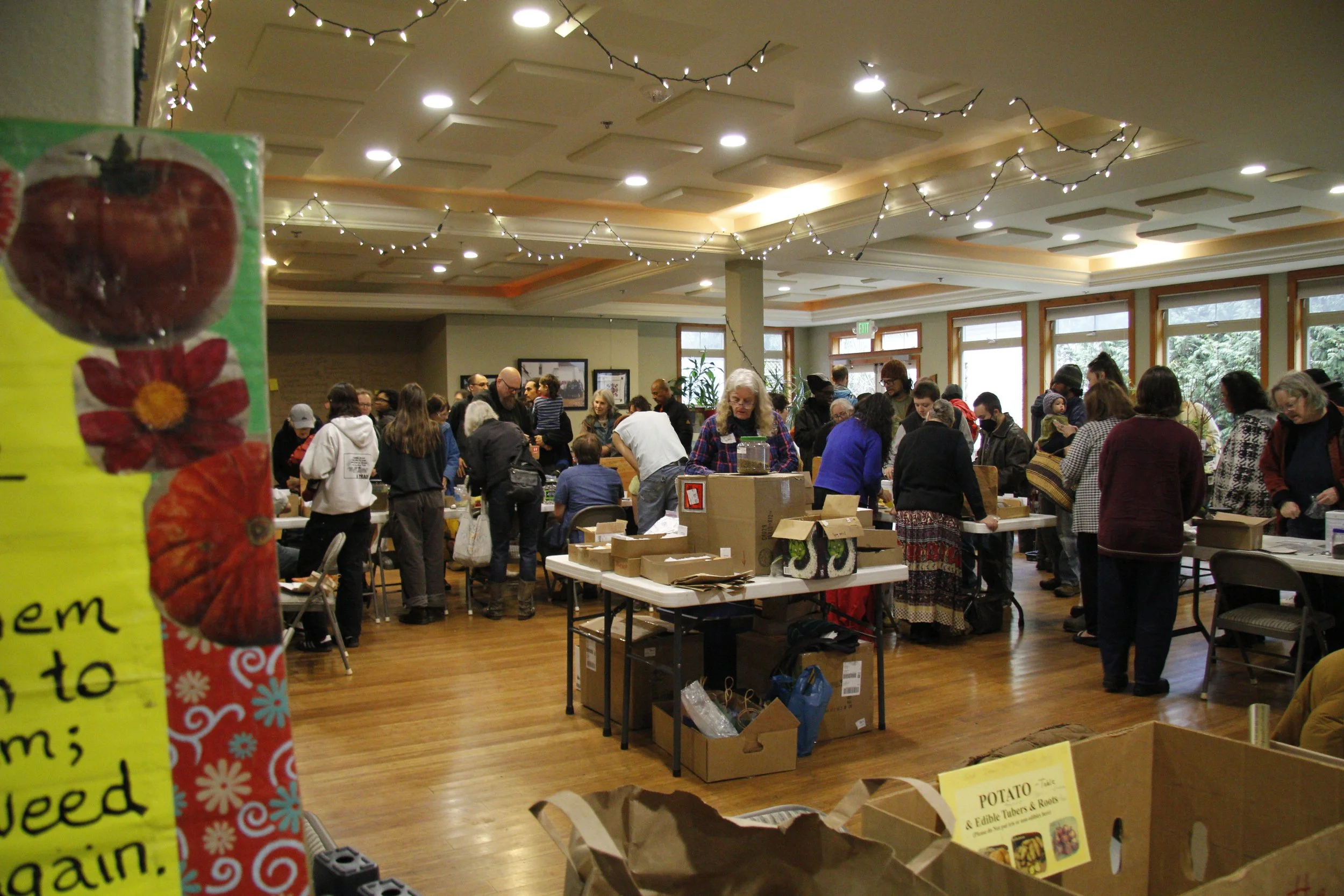
Tables of seeds fill the bottom floor of the Unitarian Fellowship, complete with a lively crowd of volunteers and visitors. // Photos by Brooklyn “Bug” Santee
These agricultural innovations have taken thousands of years of seed control out of the hands of farmers and led to a consolidation of power within the seed industry. Today, just four companies control an estimated 60% of the global seed supply. Seed saving is not just about preserving local food resiliency — every seed saved is part of a larger, global fight against corporate control.
Mike Bollinger is the executive director of the Seed Savers Exchange, a national non-profit organization that has been working to preserve seeds since 1975. Similar to the Salish Seed Guild, the non-profit started as a member-to-member network of seed exchanges.
“Across the country we see a lot of small seed companies and regional seed initiatives popping up,” Bollinger said. “And I think that there is an incredible amount of community energy in the seed space right now.”
This energy can be felt at cozy community seed swaps. It can be observed in home gardens, in jam jars filled with preserved seed that line the shelves of backyard sheds. It’s on family farms, where farmers are attending workshops to learn how to save their own seed and investing in organic, open-pollinated varieties.
“We evolved to love seeds because they were survival,” Kempton said. “So we still feel that — even if it's something we don't know how to vocalize — but there's something comforting about holding seeds, because we understand that we're holding the future. Seed really is a miraculous vessel.”