
Mount Baker Blues
As winters warm, snow recreation faces a slushy future
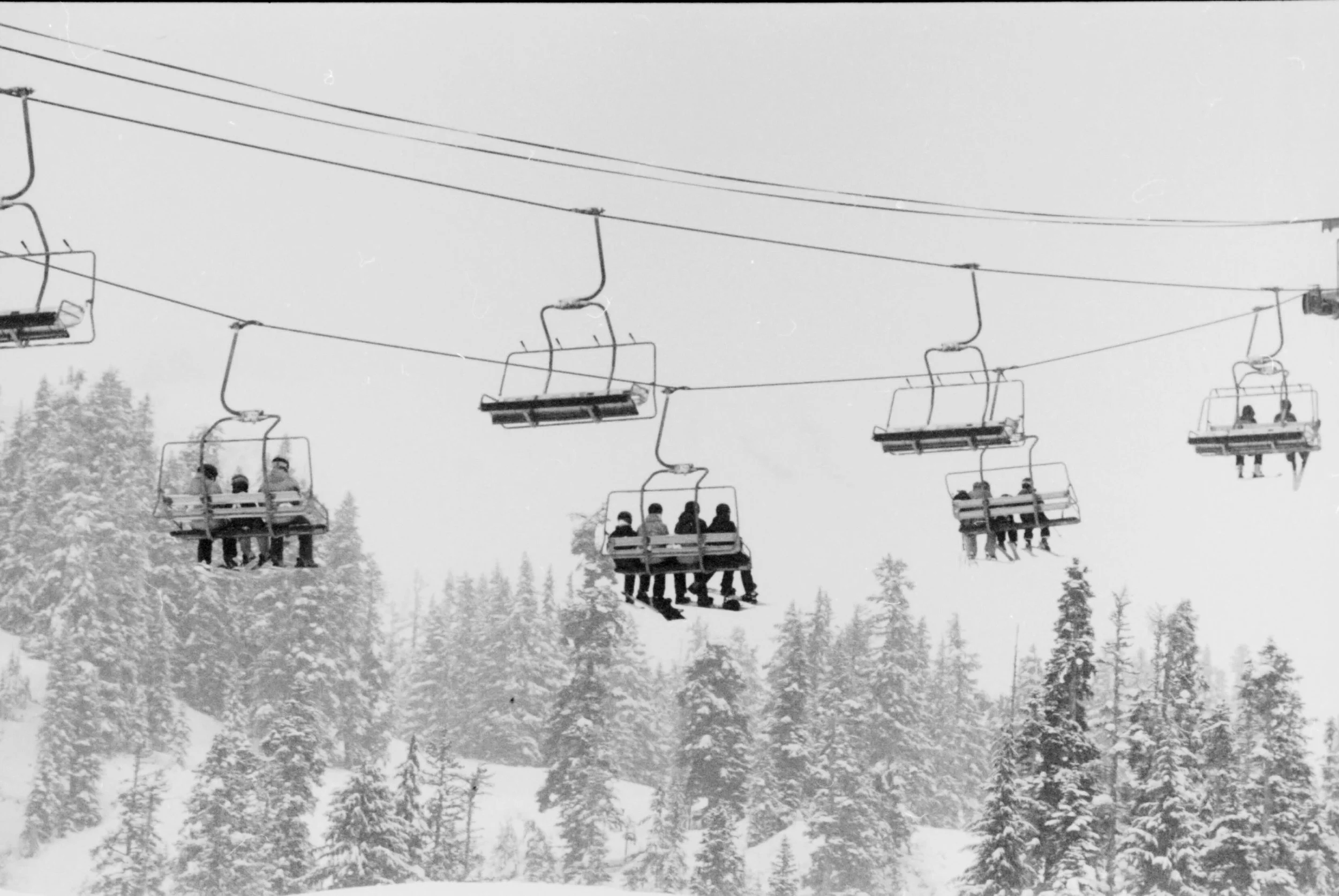
Skiers and snowboarders ride a chair lift at the Mount Baker Ski Area in Deming, Wash., on Feb. 22, 2026. The resort is in the process of installing a new electric motor at the White Salmon base area, which will reduce carbon emissions by 80%. // Photo by Avery Robertson
Story by Byron Jordan // Photos by Avery Robertson & Jordan Brotamonte
March 30, 2026
In a powdered gully on the slopes of Mount Baker, basking in the unkempt glow of the mid 1980’s, 16 snowboarders held a race along the snow-packed walls of the natural halfpipe. In a flash of brilliance, Mount Baker’s Legendary Banked Slalom was born, and for almost 40 seasons competitors from all corners of the globe traveled to Northwest Washington to showcase their skills on the iconic, icy chute.
But in 2026, unworkable snow conditions drove the event organizers to cancel the race — the second time in three years that the event has been canceled due to poor snow quality — forcing a multi-decade saga of snowboarding history to an abrupt halt.
While the Mount Baker Ski Area opened later than its target date of Thanksgiving, snowstorms in December and early January established a solid base of snow, which helped the resort get back to usual operations and raised hopes that the February race would go off as planned. As winter crept on, however, long stretches of warm, snowless days began to slowly degrade the snowpack.
Mike Trowbridge, the ski area’s operations manager, explained that these weather-related challenges have a direct impact on the company’s ability to do business.
“We’re doing the best we can with what we’ve got,” he said. “A lot of the strategies that we’re doing are just to keep the area open and get operating days.”
According to Trowbridge, exaggerated conditions in the weather have become commonplace in recent years.
“If it’s windy, it’s really windy… If it’s cold, it’s really cold… If it’s snowing — when it comes — it hammers snow, but then we end up with long stretches in between where when it’s dry, it’s dry,” he said. “It seems like our challenging seasons are coming a little bit closer together.”
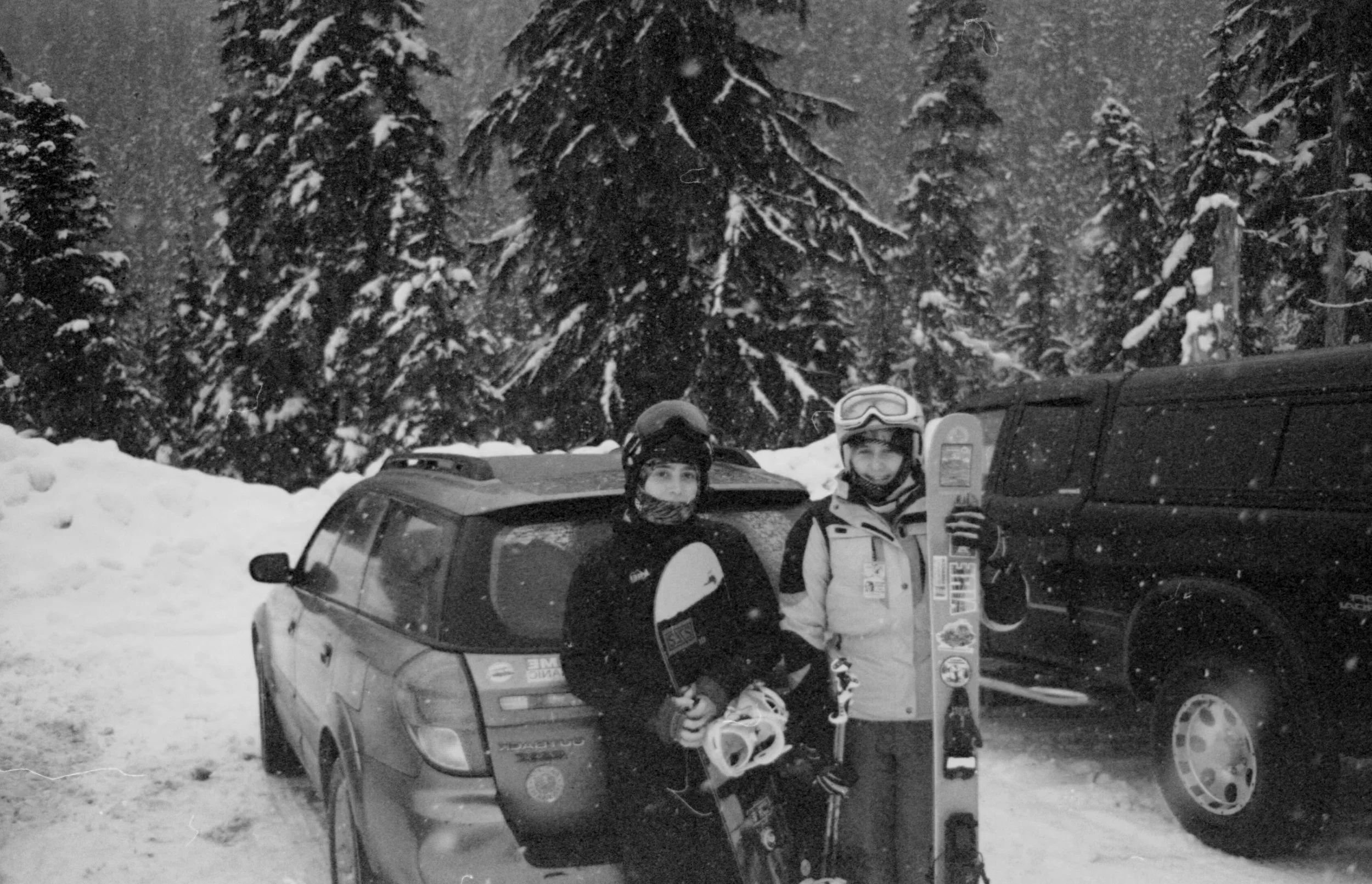
Snowboarders stand by their car at the Mount Baker Ski Area in Deming, Wash., on Feb. 22, 2026. // Photo by Avery Robertson
Mount Baker is not the first ski area to have their season impacted by a lack of snowfall, nor will it be the last. Resorts across the U.S. have felt the frosty chill of winter slowly warm in recent years, bringing rainfall in place of snowstorms and slush in place of powder. These changes have swept like wildfire across the industry, and more than just business owners have taken notice.
Joe Cowther, a snowboarder from the U.K. who moved west in 2013 to chase high-mountain air and deep powder, said that snow conditions have grown noticeably worse in the Pacific Northwest since.
“When I first came to North America, it tended to be a lot colder winters. Not necessarily crazy powder dumps all the time, but more consistent snow with colder temperatures,” Cowther said. “I’ve seen, in particular in the last five or six years now, a big difference in temperatures and snowpack. It’s nowhere near as consistent as it used to be.”
Cowther’s observations are not without evidence. Since 2010, almost every winter has been charted within the top third warmest in North America’s recorded history.
So far in 2026, many of the Rocky Mountain states have observed a concerning lack of snowfall, and warm temperatures in the Pacific Northwest have caused what little precipitation there has been to fall as rain rather than snow.
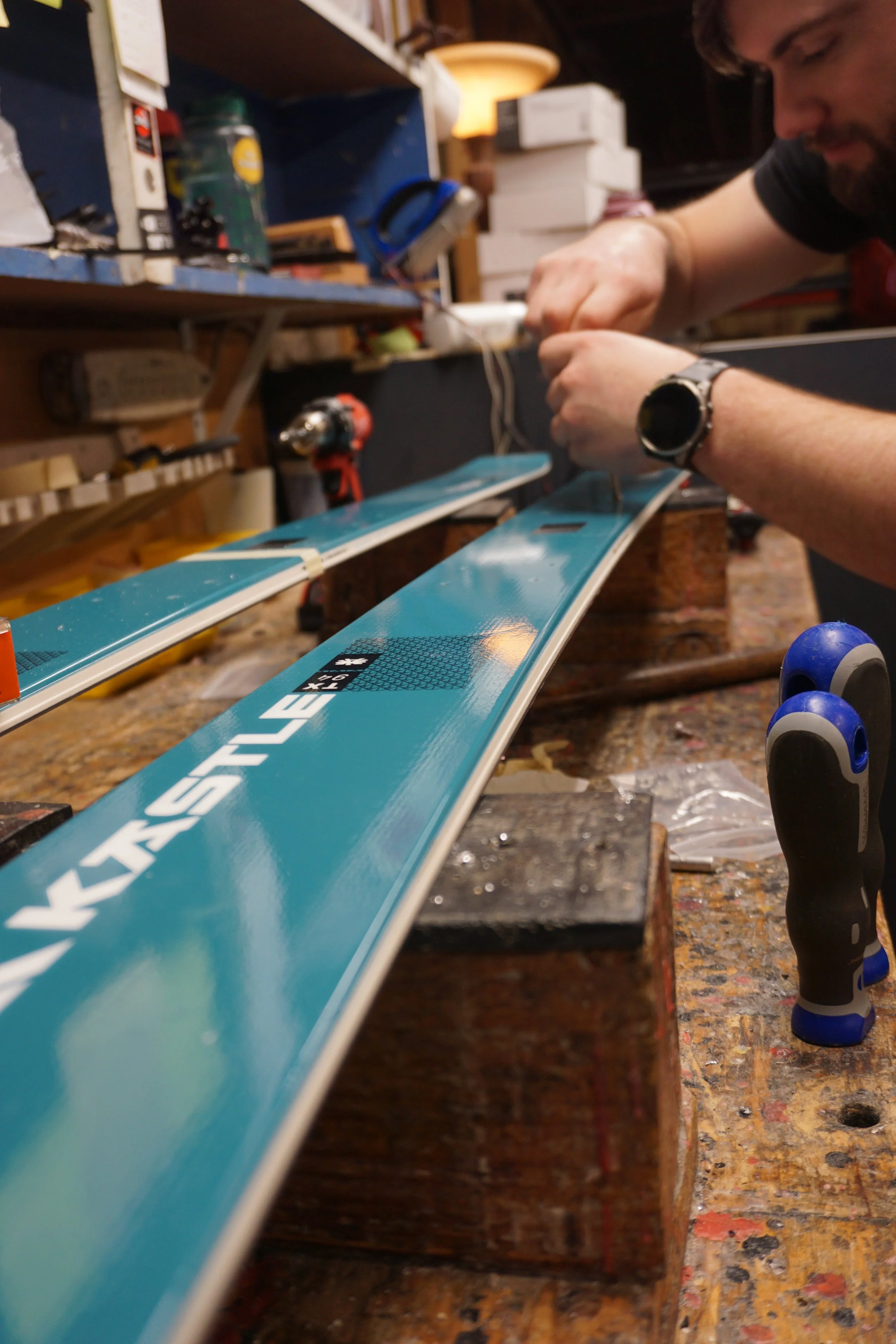
A worker tunes up a pair of skis at the Backcountry Essentials Ski Shop in Bellingham, Wash., on Feb. 18, 2026. On the bottom floor of the shop, Backcountry Essentials offers full-service in ski and snowboard tune-ups, mounting bindings, skin trim, binding adjustments, calibrations, and more. // Photo by Jordan Brotamonte
Maddi Adams, a sponsored freeride skier and Bellingham native, had originally planned to spend her winter in Jackson Hole, Wyoming, to enjoy its world-class terrain and compete in nearby ski competitions. Poor snow conditions across the west forced her to pivot.
“All of the competitions that I do in Colorado got canceled,” she said. “And a bunch of others in Tahoe and California have gotten pushed back and canceled because [of] not enough snow or unsafe snow conditions.”
It may be convenient to dismiss these snowfall events as outliers within a normal winter, but it’s important to recognize that extreme weather circumstances such as these have been occurring at increasingly rapid rates.
Many global climate change projections predict that temperatures will continue to rise in accordance with CO2 emissions, which will lead to higher precipitation-to-snowfall ratios, and ultimately less snow.
Karin Bumbaco, the deputy climatologist for Washington State, said that the relatively low peaks of the Cascades make them particularly susceptible to this phenomenon, and increased rainfall has already had a negative effect on the snowpack.
“[At the start of winter] our temperatures were causing our precipitation to fall as rain in the mountains instead of snow, but it is now transitioning to a dry snowpack drought,” she said. “We have not been getting our normal precipitation for all of January and February.”
As of March 3, Washington has reached only 51% of its median snowpack average, meaning our mountains hold just over half the snow they normally would at this time of year. This is the state’s fifth-lowest snowpack in recorded history.
“It's [been] an issue both in the Cascades locally in Washington State, but also globally,” Alia Khan, an environmental scientist who works with both Western Washington University and the University of Colorado-Boulder, said.
According to Khan, the challenges of warming winters stem from more than just increased temperatures or rainfall. Receding snow can expose alpine environments to dust and other dark-colored particles which had previously been buried in the snowpack, disrupting their natural defense against the sun.
“Fresh snow is almost the perfect reflector,” she explained. “When light-absorbing particles, such as black carbon from the incomplete combustion of fossil fuels… are on the surface of snow or ice, the dark particles absorb more of the incoming solar radiation... causing the snow to melt faster.”
The fast rate at which snowpack has vanished has had broad-reaching impacts on more than just the ski and snowboard industry; almost all recreationists in alpine environments have experienced some kind of disturbance in their typical pastimes.
From their headquarters in Bellingham, the American Alpine Institute has begun reevaluating its approach to guiding trips in mountainous areas across the Cascades, the Rocky Mountains and the world.
“The mountain changes by degrees, where if you were to look at it between one trip and another trip in the same season it doesn’t seem like that big of a change, but if you look at it over a span of five years, the changes are pretty dramatic,” Jason Martin, the executive director of the American Alpine Institute, said. “I’ve adjusted the way I’m operating to a point where it’s hard to even imagine that people used to go the other way.
Martin began guiding trips for the organization back in 2000, when many of the effects of climate change had yet to have a tangible impact on the alpine world. Since then, he has observed firsthand how rapidly snowpack can vanish.
“The glacial recession is wildly concerning… I’ve been able to see just massive, devastating changes,” Martin said. “There are areas where we used to ice climb on the bottom of the glacier that are just rocks now, crevasses that we used to practice in that are just gone… parts of the mountain [that] have fully melted away.”
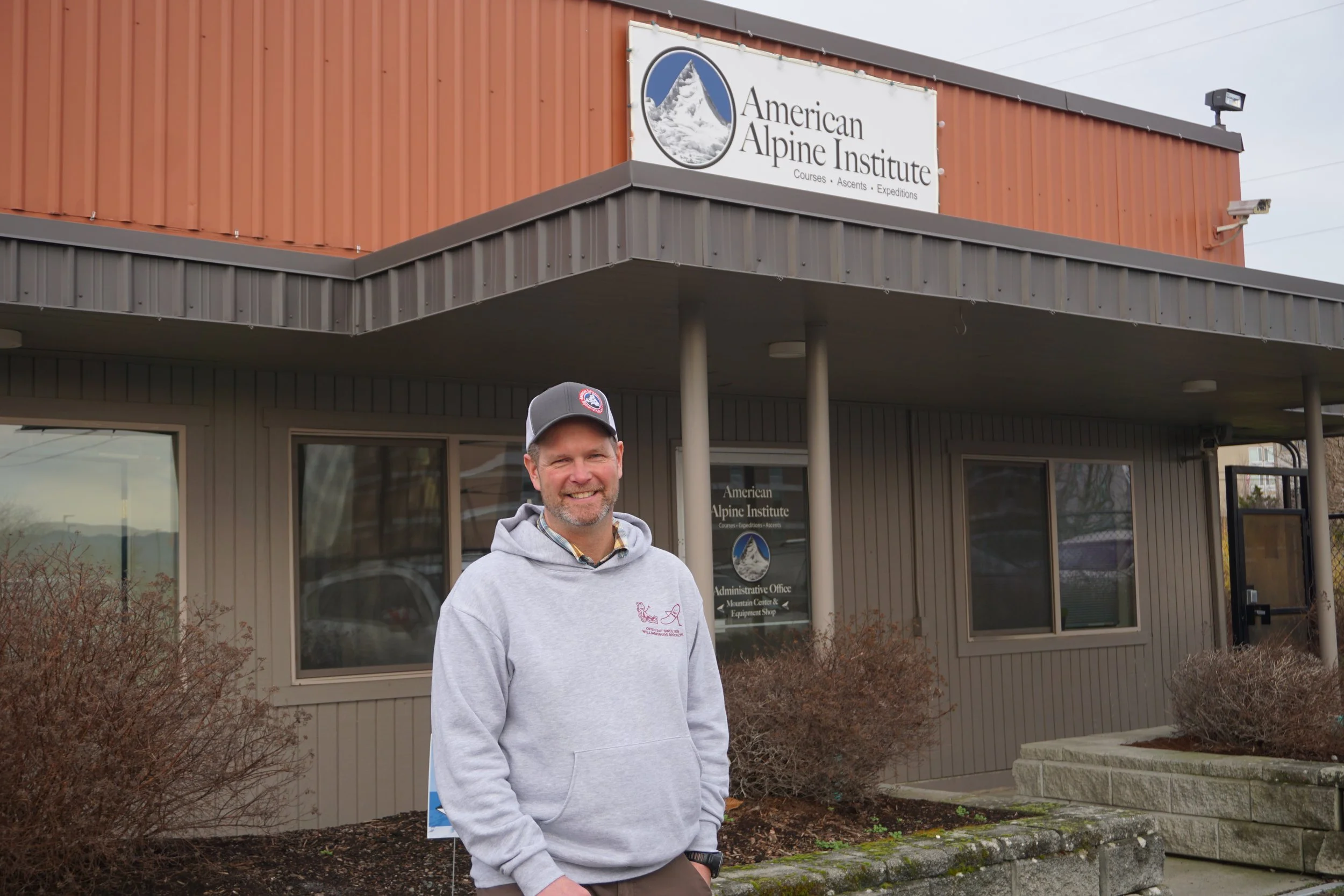
Jason Martin stands in front of the American Alpine Institute building in Bellingham, Wash., on Feb. 4, 2026. Martin is the co-owner and executive director of the American Alpine Institute, where he oversees a wide array of guides, manages risk assessments, builds risk management plans and creates the curriculum for the institution. // Photo by Jordan Brotamonte
These transformations can impact more than just the institute’s ability to do business, they also pose a severe threat to human life.
A lack of snowfall for much of the year can open up many previously impassible or hard-to-access areas to the public. These openings create opportunities for inexperienced people to get themselves into trouble, or for seasoned veterans to find themselves in unsafe conditions.
“There's a real hazard to exposed ice late in the season,” Martin explained. “Last year… there were two accidents: one on Mount Shuksan, and one on Mount Baker. They were both solo climbers who probably thought that because it was late season they could see the crevasses and walk around them. They got into steep terrain and slipped… in both cases they went into crevasses and were killed.”
Aside from average winter sports enthusiasts, athletes at the highest levels have also had to adjust their training and competition schedules to accommodate for a dwindling snowpack.
Nick Orfanakis, the manager of the ski team at the University of Utah, spoke candidly about his experiences with navigating environmental changes.
“There’s usually snow somewhere, and at the higher levels of the sport, we’re lucky enough that we can travel to where the snow is, and last minute, change plans,” Orfanakis said.
While top athletes may have access to these opportunities, that sort of flexibility simply isn’t feasible for the average person. The ability to seek out snow has large costs, and travel-related emissions can harm the environment.
“Priority will obviously go to the older, higher-level athletes. It becomes harder at the younger levels, and I think the biggest thing with it is the overall cost of the sport is incredibly high and increasing,” Orfanakis said.
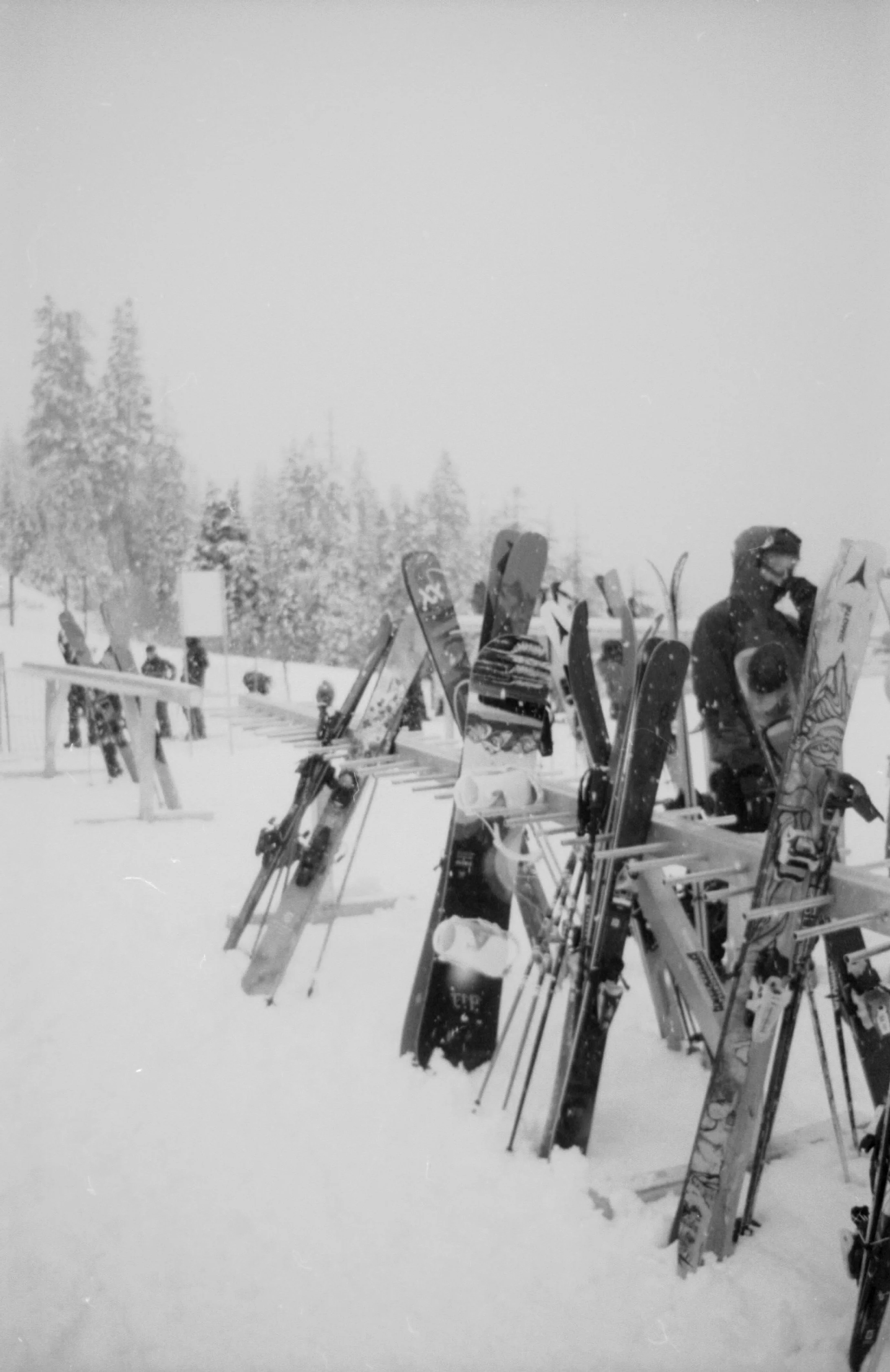
Gear is lined up at the Mount Baker Ski Area in Deming, Wash., on Feb. 22, 2026. // Photo by Avery Robertson
Accessibility has been a known issue in winter sports, and rising costs will only cause exclusivity to worsen. These barriers disproportionately impact people of color, who have long been marginalized within the alpine community.
With single-day lift tickets selling upwards of $250 during peak season, all but the wealthiest Americans are getting priced out of winter recreation. These large price tags may grow in future years due to the increasing prevalence of warm winters.
According to a 2024 survey from the National Ski Areas Association, people of color make up just 12% of American skiers. Additionally, according to 2024 data from the Federal Reserve, people of color accounted for roughly 17% of the country’s total wealth.
Many ski areas have begun investing in snowmaking technology to offset the difficulties of maintaining natural snow. These devices convert stored water into manufactured snow by spraying a compressed mist through freezing conditions, but can cost several million dollars to install — an expense that is often paid off through lift prices.
Snowmaking does present a viable solution to lackluster snowfall; however, dry and exceptionally cold conditions must be sustained for several days in order to produce a significant quantity of snow.
For resorts like Mount Baker, which are located in more humid environments, this technology may not be an option. Trowbridge said that while Mount Baker is considering investing in snowmaking technology, the company is wary of the risks it poses.
“It’s something that we’re looking at, but it’s challenging,” he said. “White Pass just installed a great snowmaking system, they got it well set up … they made a bunch of snow, [then] they got a rain storm, it wiped everything out.”
Regardless of how they might feel about the risks of making snow, Mount Baker may be forced to set their sights on this solution if our winters continue to warm.
Trowbridge and his team have made it clear that maximizing operating days is one of their top priorities, but their clientele might have to learn to recalibrate their expectations.
“[Climate change] is something that we’re still wrapping our heads around like everybody else,” Trowbridge said. “We’re learning in real time what the effects are now, and what it’s going to look like in 5 years, 10 years, 30 years and beyond.”