
Braiding Destruction And Regeneration
A wildland firefighter’s journey from battling fire to welcoming it
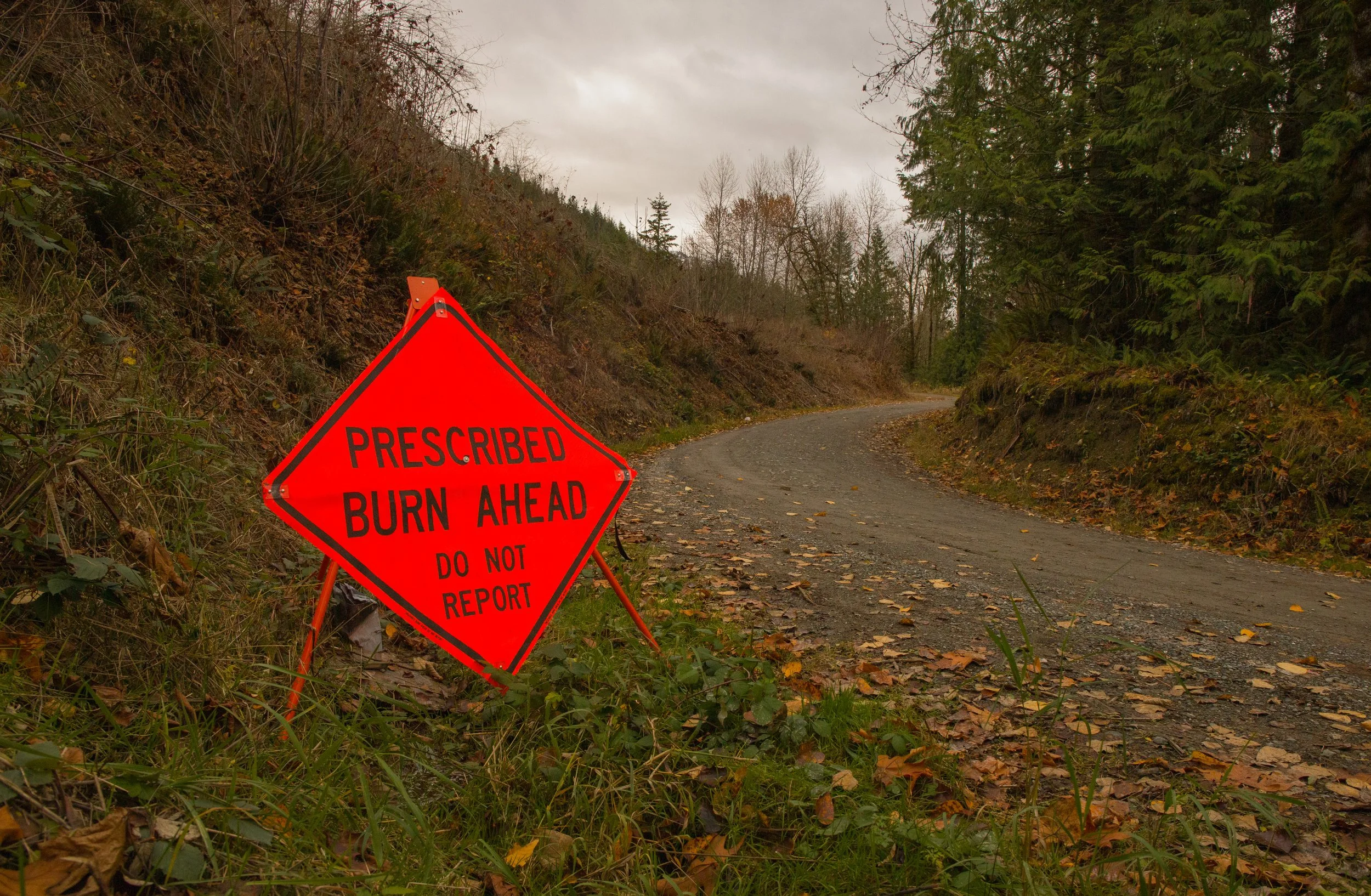
A sign warns of nearby prescribed burn activity at the entrance of a forest access road. // Photo by Aidan Brynes
Story by Mars Wetzbarger // Photos by Aidan Byrnes
December 12, 2025
She hears the slow crackle of ponderosa pines burn, their undergrowth snapping. The fire moves slowly, only a few inches off the ground. She doesn’t feel any wind, and the lack of smoke surprises her. But she knows how dangerous fire, any fire, can be at a moment’s notice.
Fire can also heal. That is, after all, why she’s here.
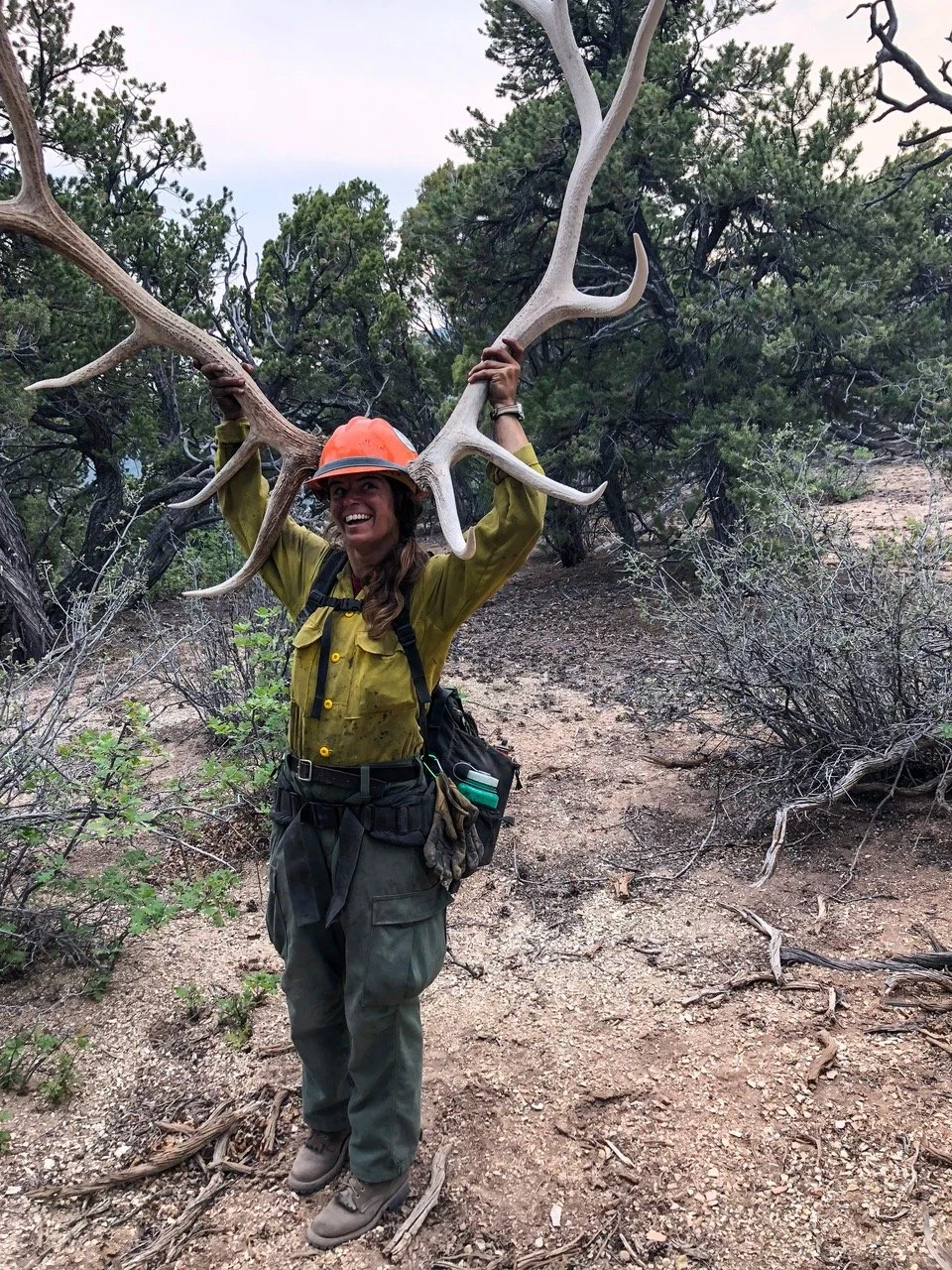
To Amanda Monthei, a former wildland hotshot firefighter, disturbance often precedes growth.
Through a prescribed fire training exchange in southern Washington, Monthei got hands-on education in how using prescribed fire, a planned and controlled burn, can help ecosystems.
“[Fire] can cause disturbance, it can cause destruction. It can be incredibly catastrophic in some cases. But in essence, it's also this source of renewal…that destruction, what can feel like destruction, is in many cases a necessary ecological process,” Monthei said.
It wasn’t always this way: Fire was once seen as a firm enemy. The U.S. Forest Service developed hotshot crews specifically to fight fires in the “rugged West.” The history of the hotshot crews program paralleled the federal government's aggressive policy for combating western wildland fire.
Hotshots are highly trained, specialized firefighters that perform some of the most demanding and hazardous tasks in wildland firefighting. They spend more days on the fire line performing fire suppression activities than any other fire crew.
“I am definitely a hotshot at heart. You're seeing more fire than anybody else out on the line.” Bre Orcasitas, a wildland firefighter trainer, said. “There are a lot of parallels to the military and wildland fire, especially when you look at hotshot crews."
Starting in 1910, a devastating fire in the Northern Rockies killed 78 firefighters. In response, Congress doubled the Forest Service’s budget and passed the Weeks Act, which legislated permanent emergency funds to prioritize aggressive wildland fire suppression. Such fire suppression has led to a buildup of fuel for forest fires, increasing the severity of wildfires.
Amanda Monthei on a job site near Duchesne, Utah in 2018. // Photo courtesy of Amanda Monthei
Conversely, by the end of the 1970s, forest ecology research confirmed fire's beneficial role in maintaining forest ecosystem health. Fire can renew ecosystems, creating new opportunities for growth, such as camas, a plant traditionally used by indigenous tribes in the Pacific Northwest, where burns have increased the productivity of the plant. Indigenous communities and tribes in the Pacific Northwest since time immemorial have burned areas to maintain a landscape. This also clears the buildup of smaller twigs that act as fuel for major wildfires.
In the Upper Chehalis River basin, low-intensity, high-frequency fires were used to create forest openings, maintain prairies and keep plant communities in the early to mid-seral stages, which enhances the diversity and yield of plants.
The new National Forest Manual began to move away from the prior assumption that all fires needed to be put out, although it still mandated an aggressive initial attack on wildfires, reasoning that they threaten ecosystems and human communities.
Finally, the director of the Bureau of Land Management and the forest service chief ordered their respective agencies to produce an interagency report after the deaths of 14 wildland firefighters. They challenged the current fire suppression policy and declared that agencies and the public needed to recognize that not all wildland fires could or should be suppressed.
“Fire has always been a part of the environment,” Orcasitas said. “We've toyed with that to the point that now we have a lot of readily explosive fuel.”
For example, when thick underbrush dries out, fires that break out become more intense.
“It's a human created issue that we're dealing with, and so putting good fire on the ground is how you clean it up,” Orcasitas said.
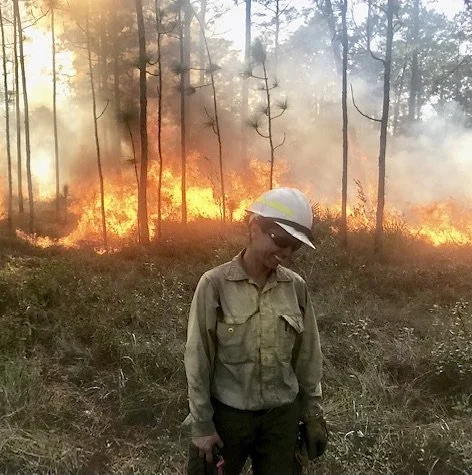
Bre Orcasitas in Florida in 2019 while at a Prescribed fire training center. // Photo courtesy of Bre Orcasitas
With a Nutter Butter in one hand and a jerry can in the other, Monthei hikes the side of a steep avalanche shoot up to a blazing fire. She’s more than halfway through this hitch, on day 10 out of the 14-day work week during the first season of hotshotting. Her crew is working on a heinous fire in the mid alpine of Wyoming in October.
Tonight, as with every night, her crew will sleep in the buggies in order to stay warm, waking up to frozen boots every morning. This is the life of a hotshot.
“I had a really hard time early in the summer because it was hard to acclimatize to working on a hotshot crew. It's a really intense environment, and then eventually I got the hang of it,” Monthei said.
The Salish Sea and surrounding area is one of the riskiest places of catastrophic burns in the last 150 years because there's an abundance of accumulated fuels, according to Sam Qol7ánten Barr, executive director and co-founder of Coast Salish Youth. Hotshots like Monthei rely on prescribed burns to combat this, burning accumulated fuel and reducing risk of wildfires.
Some indigenous communities also use cultural burns — a form of controlled burn which includes cultural context and multi-generational indigenous knowledge — rather than prescribed fire, which is a colonial adaptation.
Through relearning indigenous fire methods, ancient fire practices in Washington can return, according to Barr.
“The United States has taken a militant approach to managing [fire], but then to see how reintroducing fire can be this family activity with elders and children and traditional food and playing by the beach, it can be such an inspiring family scene,” Barr said. “It's just beautiful, it's not the picture that we have of fire at all in our American dialog.”
Cultural burns build a bridge to ancestral traditions by honoring the land’s wisdom, creating a harmonious relationship with the natural world. For many tribal nations, fire represents renewal, not just for the land but for the spirit of those who engage in cultural burning.
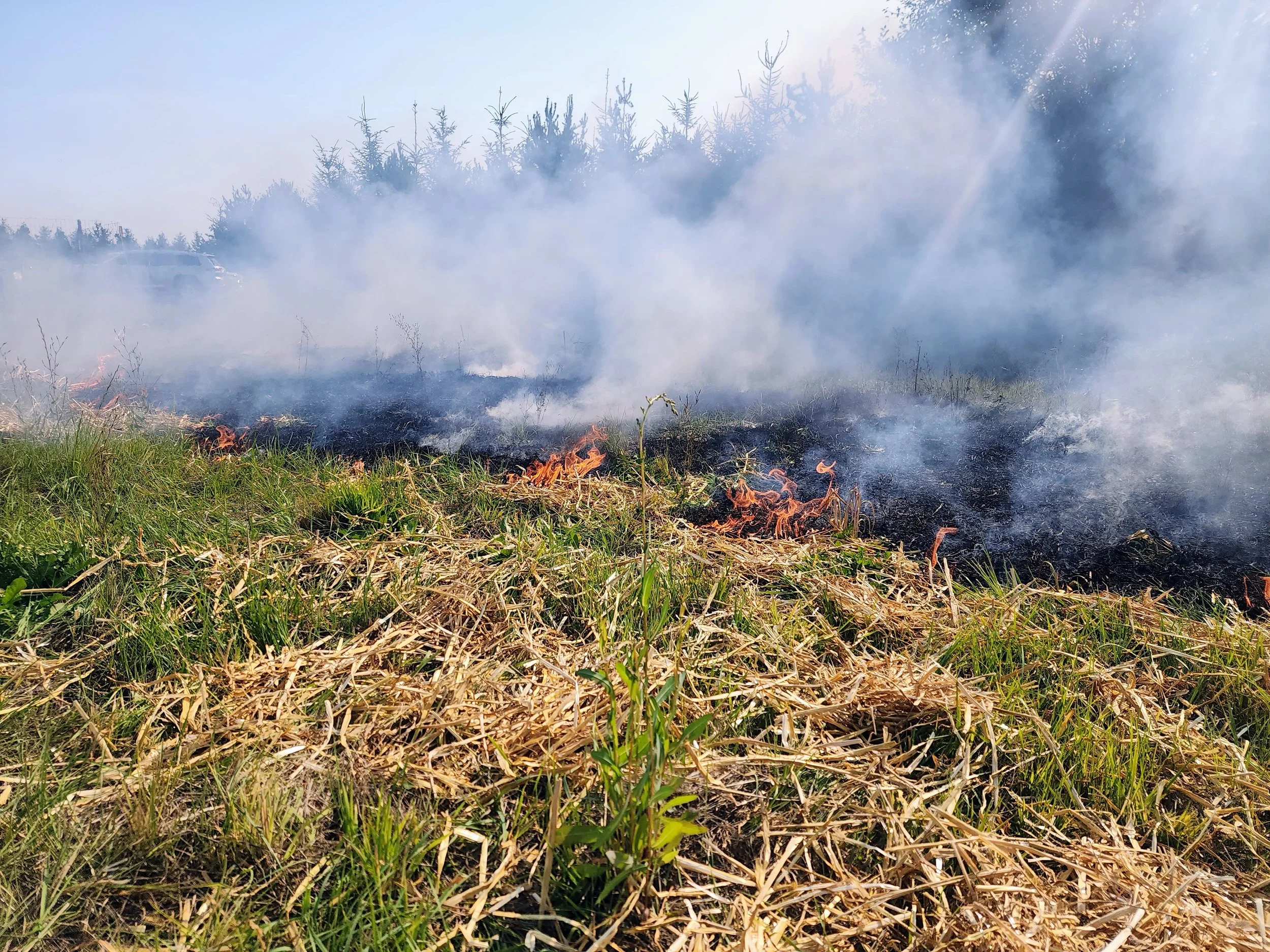
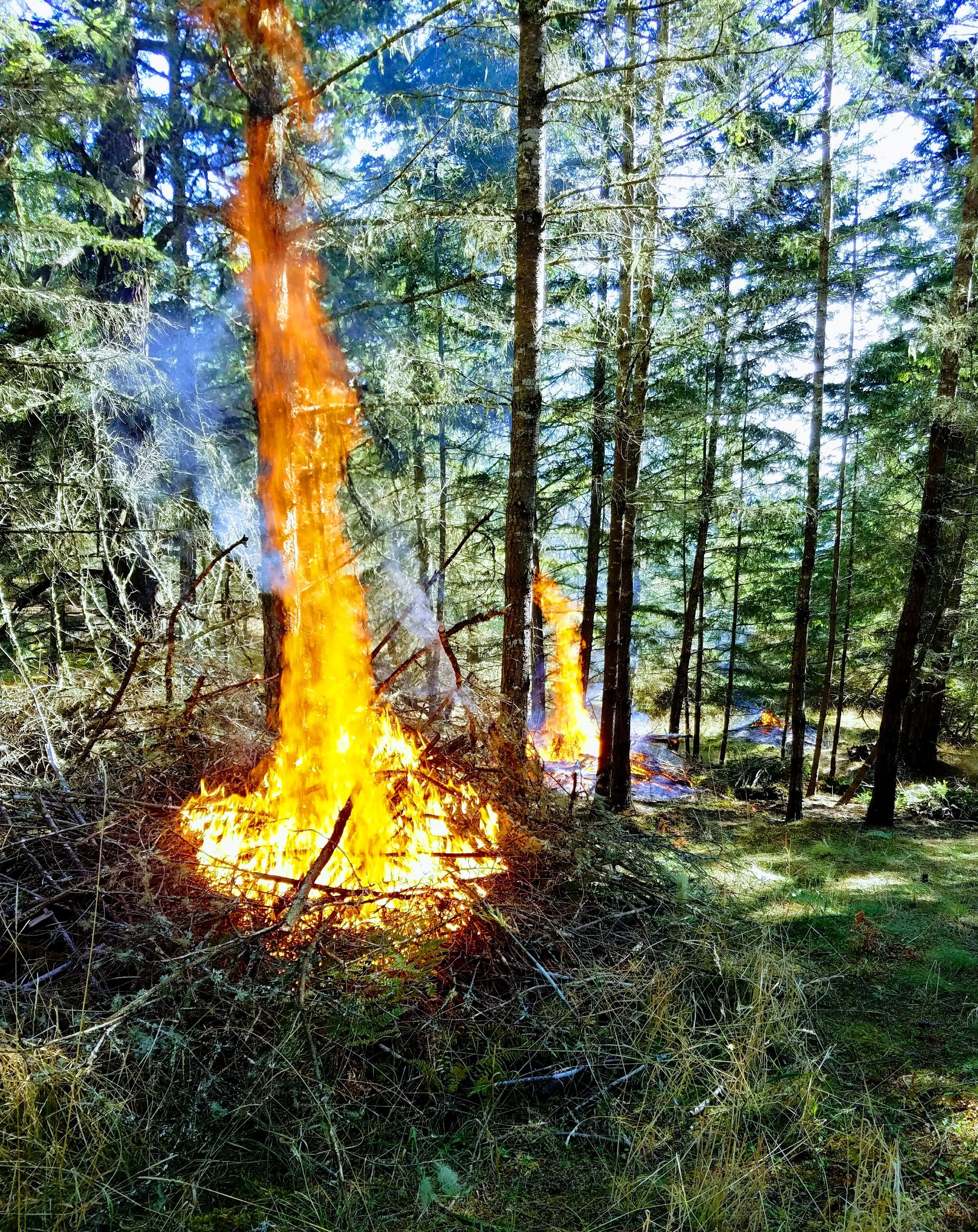
A debris pile burn done by Coast Salish Youth Coalition. // Photo courtesy of Sam Qol7ánten Barr
One October, Barr was using debris pile burns to restore an ancient garden and revive camas.
Barr’s wife surprised him for his birthday by bringing s'mores along in the field pack.
“Using these debris burn piles, we all cooked s’mores over the fire. It's just a really funny connection between s'mores. It’s this really sugar-dense modern food, but in this restoration of a traditional garden to revive camas, which is one of the traditional sugar-dense foods from the pre-contact era,” Barr said.
At these burns there will be holders of plant knowledge who gather tea plants, medicines that grow in the traditional gardens. They will roast onions and blackberry leaf tea mixed with madrona bark brewed over a debris fire.
“We have all the different root foods, the wild onions. It's funny, calling them wild onions is an ironic term for an indigenous person, when they're not wild at all,” Barr said. “That's a cultivated onion; it's not wild. It's an Indian onion.”
If you take the gardeners out of the garden, it looks wild. If you take the stewards away from the fires, they look like wildfires.
“It feels like backtracking, trying to get the land back to what it used to be, burning all this debris… As soon as the gardeners were taken out, it's like any garden,” Barr said. “In a couple of years, it's going to become overgrown as other plants move in and take over.”
For Coast Salish people to consider a burn to be a cultural burn it needs to include Indigenous people, ceremony and acknowledgement of history. It also has an intergenerational chain or connection.
“There's a huge gap in that [generational] chain, and that's what we're trying to restore. And there's just a lot that is lost, and we have relearning to do,” Barr said. “When we bring our children here to these spaces, and there's all these fingerprints of our ancestors, the fingerprints of the gardeners that used to be there, it just fills your heart up to see that a new link was added to that chain when that chain was broken before.”
After four seasons, Monthei decided to hang up the Nutter Butters but keep the dedication to healthier ecosystems; she is now a grad student at the University of Montana, working as a science communicator and journalist.
“I saw what it was doing to my co-workers, who had been around for 10 to 15 years. They were getting cortisone shots in their knees in order to be able to function all summer,” Monthei said. “Sometimes they would just have to take weeks off in order to heal from a fairly minor injury.”
This led to Monthei’s career in writing about fire; she saw her coworkers having a deep pride in their work despite the mental and physical turmoil that it put people through. By expanding knowledge around fire, she hopes to make life better for people and the creatures that rely on forests.
“It made me respect and deeply empathize with the folks that do that work in a way that I would have never been able to experience had I not done it.”
She now has a podcast dedicated to spreading knowledge about fire.
A debris pile burn done by Coast Salish Youth Coalition. // Photo courtesy of Sam Qol7ánten Barr
“I was getting in pretty deep, and I knew I didn't want to make a fire career. It has actually become my career in a different way, through communication work,” Monthei said.
At prescribed burns, Monthei feels a sense of community building. It’s not the same as a cultural burn, but it builds connection.
“It's a totally different mindset on those burns. You're not in this fight or flight mode that you often are on wildfires, it's almost a community moment,” Monthei said. “I think that's what I most value about that experience, and it's something I find really powerful as far as getting more people engaged in the idea of using wildfire as a stewardship tool and as a community building tool.”