
Hidden among the flurry of policy changes by the Trump Administration, the rescission of the Roadless Rule may have far consequences for our public lands
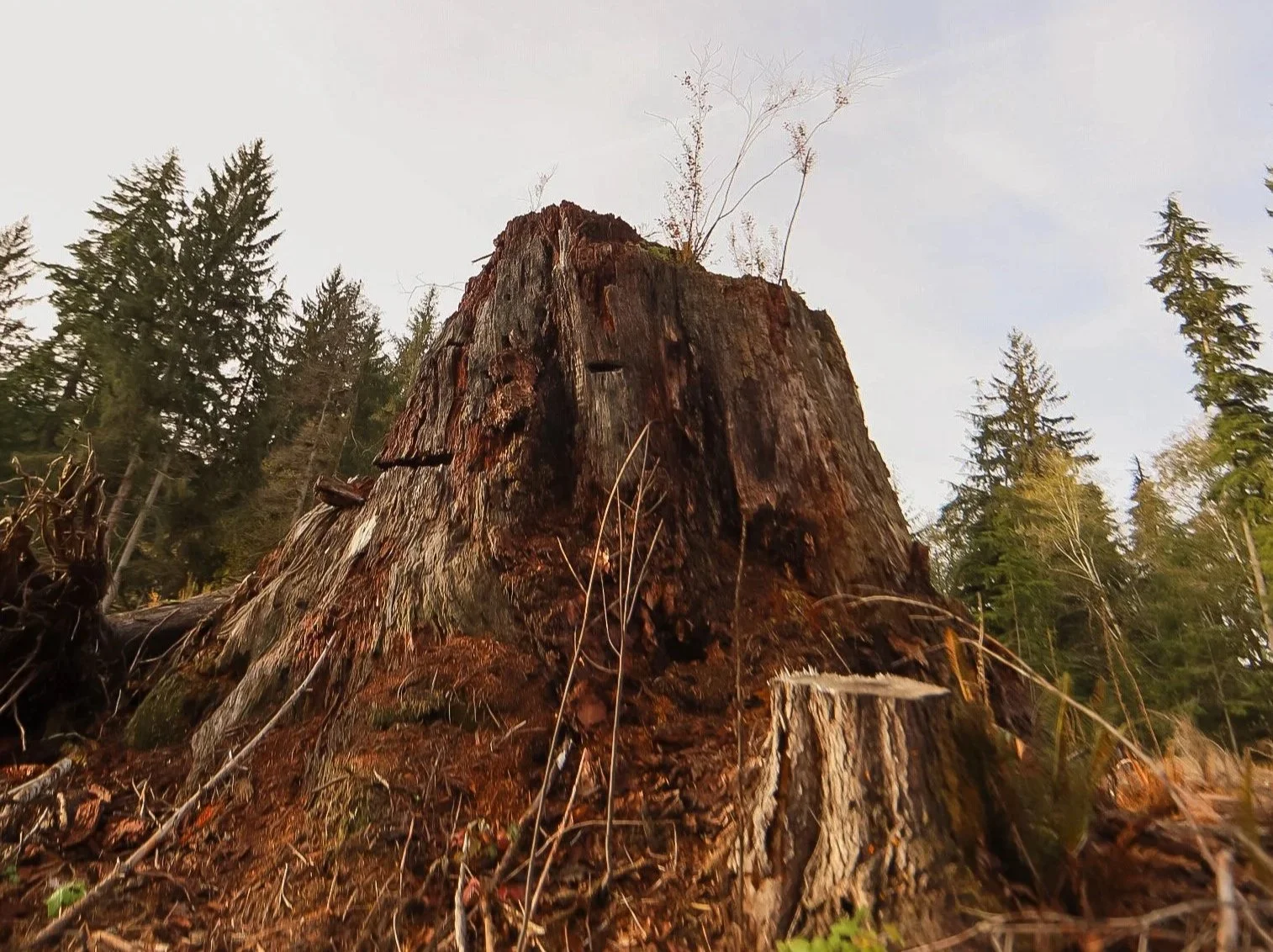
All that remains of a felled tree in Olympic National Forest near Port Angeles, Wash. At an estimated 8 feet in diameter, it’s likely this tree was visible through the canopy of the surrounding forest. // Photo by Aidan Byrnes
Photo Essay by Aidan Byrnes
December 12, 2025
Since their inception, Americas’ public lands have created space for outdoor recreation and protected some of this country’s most valuable natural resources. They have become crucial research centers for conservation efforts, from reintroduction of gray wolves in Yellowstone National Park to restoring salmon stocks in Olympic National Forest.
However, recent policy changes by the Trump administration in 2025 have left the future of these lands up in the air.
One of the most notable changes is the pending rescission of the Roadless Rule. Established in 2001, the policy protected nearly 58 million acres of National Forest Service lands and prevented logging, mining, drilling and the development of roads.
"We're really seeing an unprecedented attack on the environment,” Caitlin Soden, the Washington State Assistant Attorney General, said.
According to the U.S. Department of Agriculture, the removal of the Roadless Rule will increase domestic timber supply, reduce wildfire risk and ultimately aid in sustainable forest management, as outlined in an April 3 memo from Secretary of Agriculture Brooke Rollins.
While the USDA claims the rule is outdated and contradicts its mandate to sustain the health and diversity of the nation's forests, forestry experts disagree and believe the Roadless Rule is critical in ensuring the health of public wilderness, and its rescission will lead to increased fire frequency and severity, degradation of important waterways and substantial loss of wildlife habitat.




FIRST: A young barred owl perches on a branch above a popular walking trail at Larrabee State Park in Bellingham, Wash. // Photo by Aidan Byrnes
SECOND: A female black-tailed deer stares intensely at nearby noises at Larrabee State Park in Bellingham, Wash. // Photo by Aidan Byrnes
THIRD: A bald eagle sits upon a gazebo to watch over the nearby estuary at Nisqually National Wildlife Refuge in Olympia, Wash. // Photo by Aidan Byrnes
FOURTH: A Townsend's chipmunk munches on seeds that have fallen to the forest floor at Larrabee State Park in Bellingham, Wash. // Photo by Aidan Byrnes
“Statements from the Administration seem only to highlight challenges with no acknowledgement of the benefit or rationale for the 2001 Rule,” former Forest Service Chiefs Mike Dombeck, Dale Bosworth, Tom Tidwell and Vicki Christiansen said, in a letter addressed to the current USDA and Forest Service.
One of the greatest potential consequences of the rule’s removal is an increase in clearcutting, removing whole stands of trees, in sensitive ecosystems. The development of more roads on public lands could promote clearcutting when alternative logging practices, such as removing timber by helicopter or skyline, are the established protocol for areas where roads are prohibited, unprofitable or impossible.
Additionally, most logging operations target conifers, a group of trees physically adapted to wildfire. Removing the protections on older trees may increase the severity of wildfires in a forest left only with young vegetation unable to withstand intense flames. Combined with the development of roads, which is likely to increase instances of human ignition, low severity fires that may have once been beneficial will instead be devastating.
Just as there are alternatives to roads for removing timber, there are also sustainable options to avoid clearcutting.
The removal of excess timber from forest lands using methods such as selective logging and salvaging fallen timber, while leaving mature specimens upright, are widely accepted practices in sustainable forestry. These practices reduce the environmental impacts of the timber industry and decrease wildfire risk by removing critical fuels.
The lands protected by the Roadless Rule are located adjacent to or directly harbor 661 of the nation's approximately 2000 major watersheds. Improper forestry practices like clearcutting often increase erosion and sediment may flush into rivers and streams. The associated impacts include loss of aquatic habitat, increased respiratory stress in fish and declines in invertebrate populations.
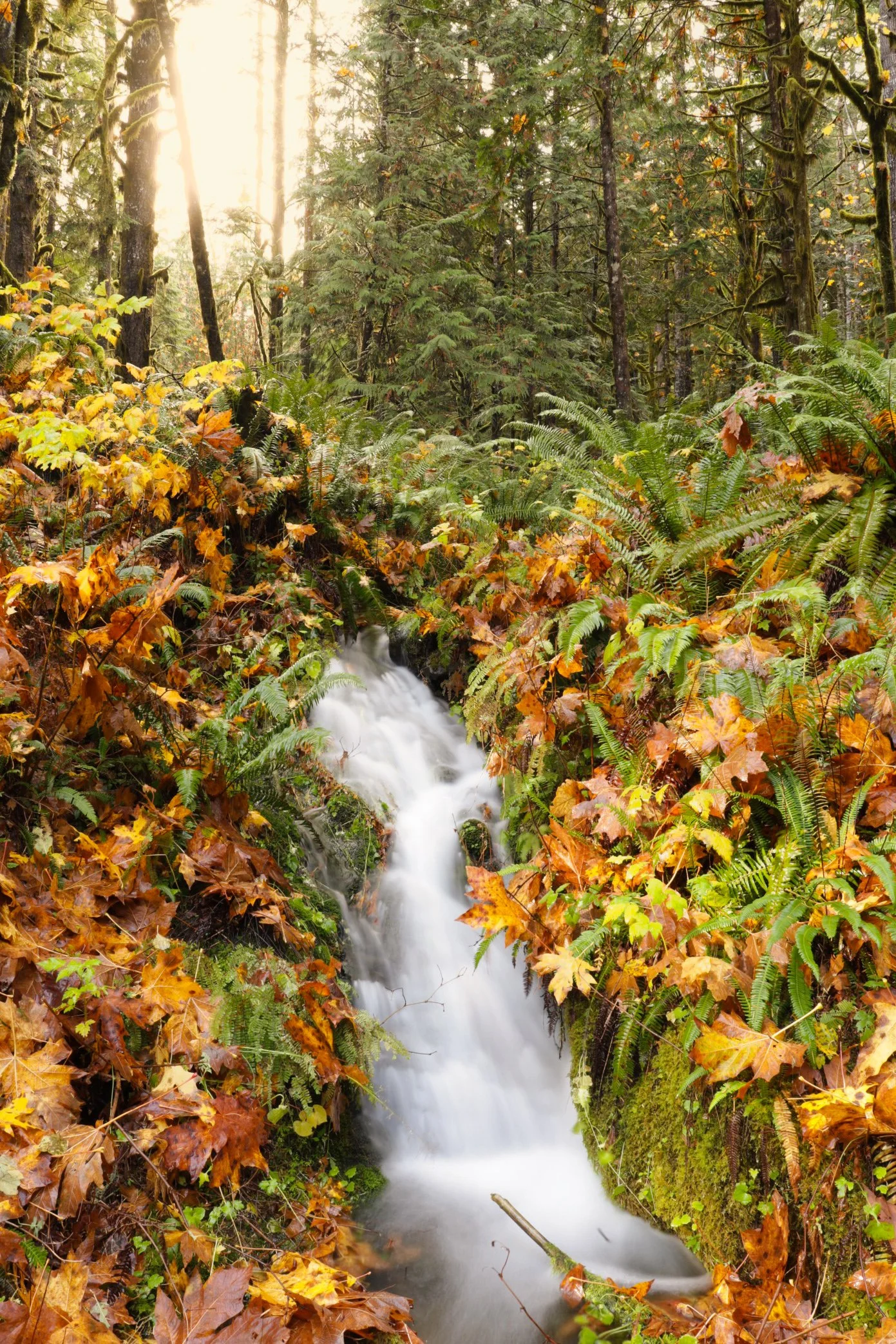
LEFT: A small waterfall cascades in the Mount Baker-Snoqualamie National Forest in Marblemount, Wash., as the sun peeks through the trees behind it. // Photo by Aidan Byrnes
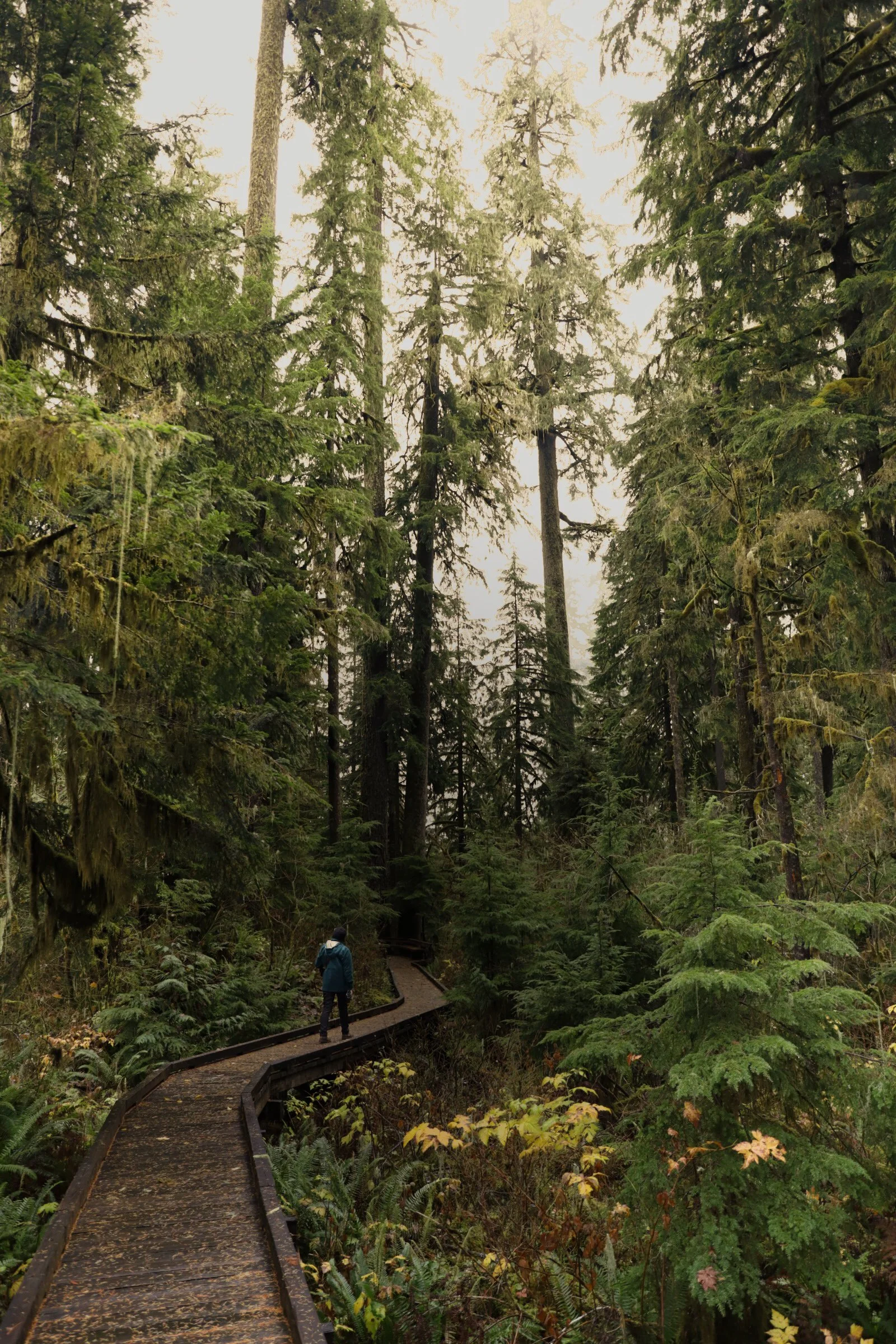
RIGHT: Walking through the Shadow of the Sentinels Interpretive Site in the Mount Baker-Snoqualamie National forest, hikers walk alongside trees which have been growing for an estimated 500 years. Hikers walk alongside trees that are an estimated 500 years old at the Shadow of the Sentinels Interpretive Site in the Mount Baker-Snoqualamie National Forest in Marblemount, Wash. // Photo by Aidan Byrnes
Mitch Friedman, the executive director of Conservation Northwest, says government management of forests is important for ecological health — but he does not believe the rule is an obstacle to sustainable forest management the USDA claims it blocks.
Alongside these ecological concerns also come a handful of economic concerns, despite the USDA's stance that the rescission of the Roadless Rule will benefit the U.S. economy by increasing domestic timber supply.
“It's a terrible idea to rescind the Roadless Rule,” Friedman said. “The argument that got the roadless policy created 25 years ago was the economic waste, not just the environmental waste.”
The wilderness protected by The Roadless Rule was chosen in part due to its rough terrain. Labor costs were unjustifiably high to profitably develop the land and harvest resources. It is a possibility these issues will prevail once again, and tax dollars invested in the lumber industry will return a loss.
During the time of the rule’s establishment, the USDA faced a roughly $8.4 billion dollar backlog on forest service road repairs — roads which still exist and are in need of maintenance to this day.
Development near ecologically important forests is not a new thing, and its negative impacts have long been observed. While the Roadless Rule impacts national policy, community members are stepping up to preserve their local public lands.
In Bellingham, Washington, the recent development of an urban park had significant impacts on a nearby stream, which is an important salmon rearing habitat.
As the city's restoration contracts expired, the Nooksack Salmon Enhancement Association, a local non-profit, stepped up to fill the gap by organizing weekly work parties to remove invasive species like Himalayan blackberries and replant native flora.
“I do this every Saturday,” Padma, a Bellingham local and avid gardener attending the work party, said. “I would like to preserve nature as much as possible.”
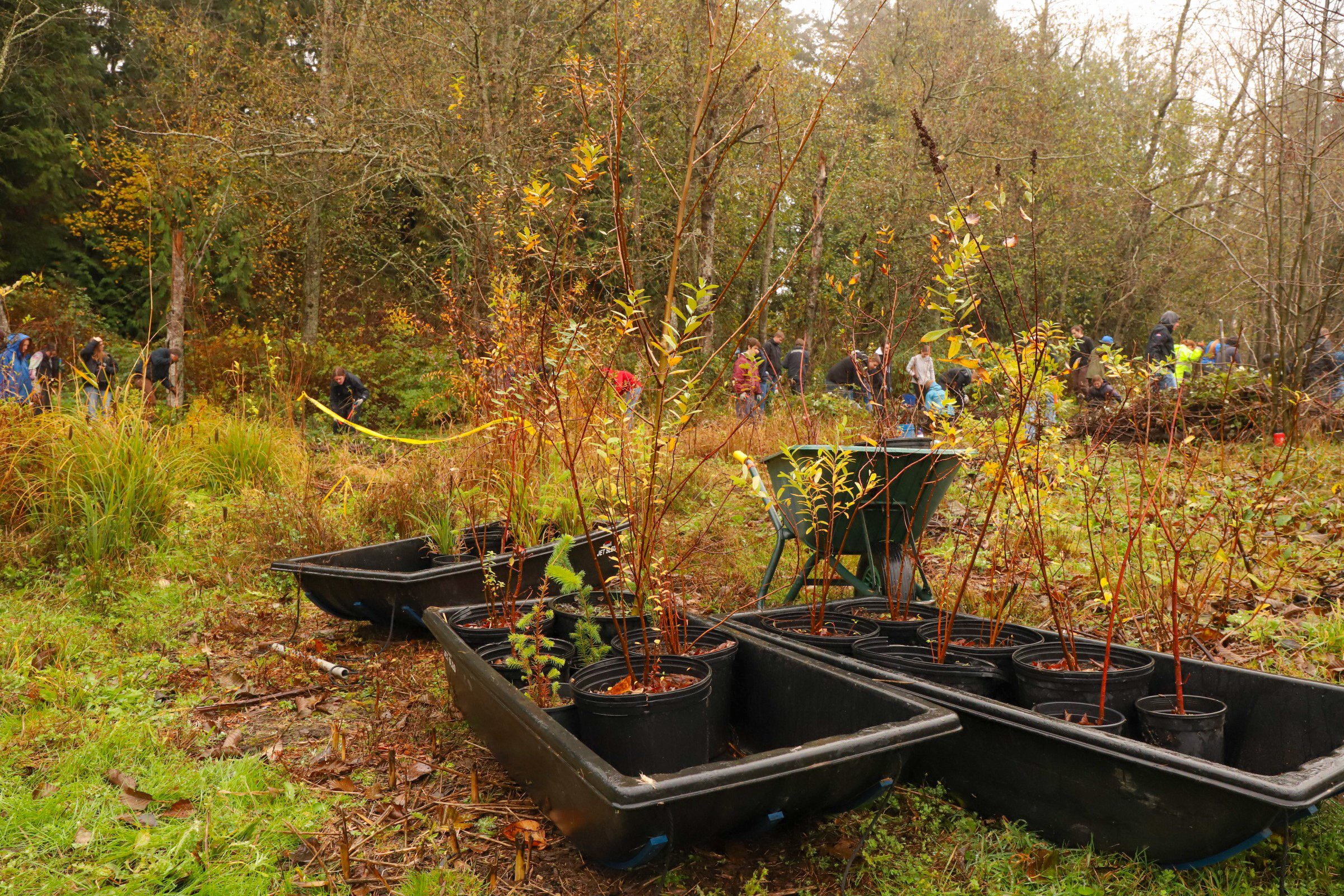
Sleds of native plants sit waiting to be planted at the Cordata Park NSEA work party. This final stage of restoration sows the seeds of succession, and through propagation, these plants will eventually restore the area. // Photo by Aidan Byrnes
Padma is not the only citizen concerned about the health of our public forests. During the first public comment period on Regulations.gov, an official public comment forum, more than 200,000 comments were posted urging the USDA to reconsider the removal of The Roadless Rule.
Many elected officials have also begun to oppose the administration's decision. In Washington State, Commissioner of Public Lands Dave Upthegrove signed an order to protect 77,000 acres of structurally complex State forest land.
Environmental policy changes are no quick feat, and it may be years before we see impacts from this rule’s removal — just as it took years to see the impacts of its implementation.
“Yes, much has changed over the past nearly quarter century, but much also remains unchanged,” the four former Forest Service Chiefs said in their letter. “More important, much has improved.”