
Toxic Turnaround
Currently contaminated, this site in Bellingham is soon to be the city’s biggest waterfront park
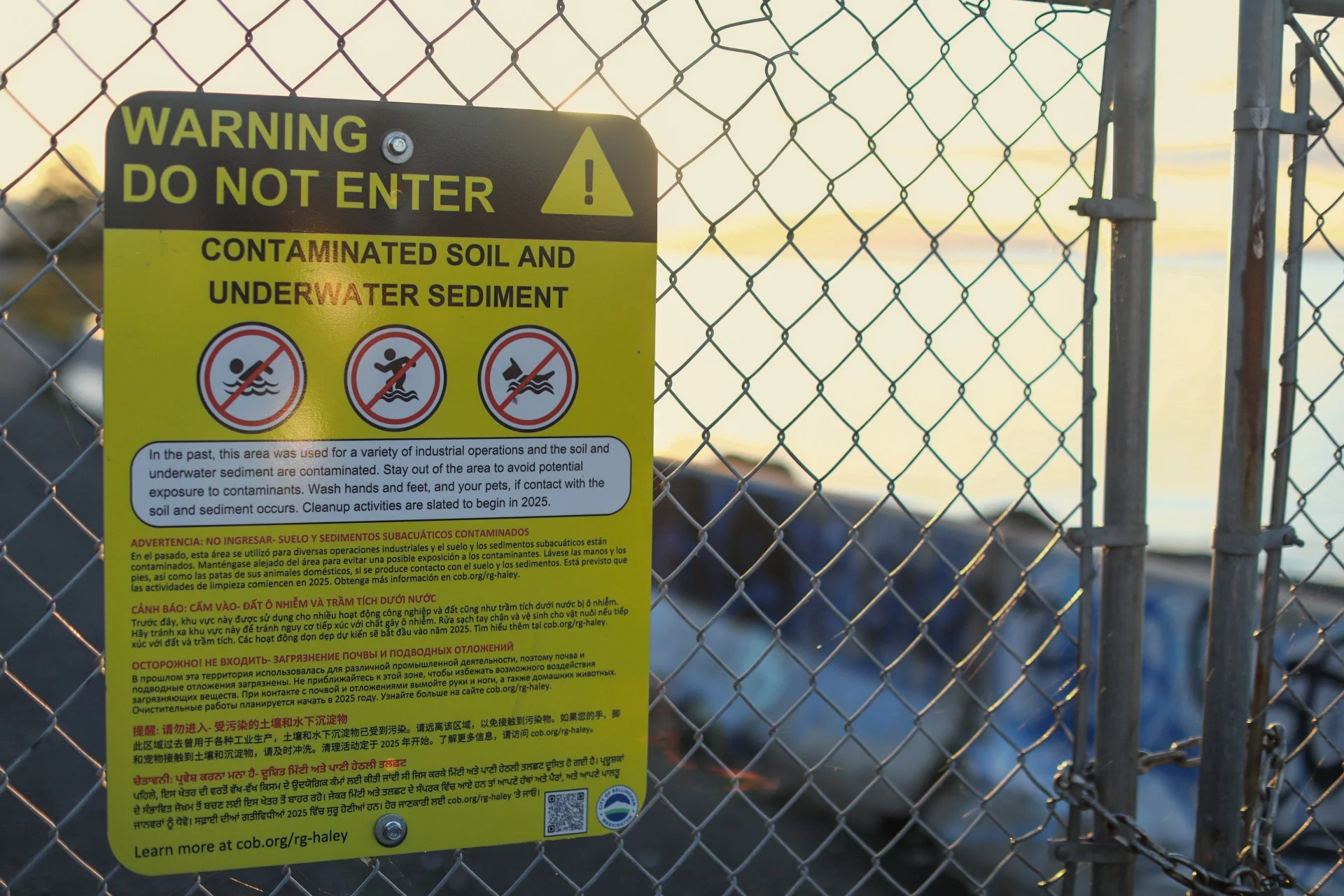
A sign on cyclone fencing warns that the Cornwall Avenue Landfill site is contaminated in Bellingham, Wash. The sign says: “Stay out of the area to avoid potential exposure to contaminants.” // Photo by Aidan Byrnes
Story by Brooklyn “Bug” Santee // Photos by Aidan Byrnes & Brooklyn “Bug” Santee
December 12, 2025
When you drive into Bellingham via Chuckanut Drive, your first impression of downtown is a welcome mural on the right and unsightly white mounds on the left. In summer, even through the leafy trees, white tarps stand out against the shoreline.
Much of Bellingham’s waterfront has been rehabilitated from its industrial past, but this site remains an outlier — its toxic cleanup has only just begun.
In a few years, when you drive on that same road, one of the first impressions you’ll get is a paradise of outdoor recreation connecting Fairhaven’s iconic Boulevard Park to downtown Bellingham.
At least, that’s the plan.
This site is an environmental cleanup in progress. Known as the RG Haley and Cornwall site, it has a long and storied history of industry, lumber and waste. Now, the site sits dormant with its pollutants tucked below its tarps.
“[The tarps were] only supposed to be there for about five years … It's been probably 10, 15," said Brian Gouran, the Director of Environmental Planning Services at the Port of Bellingham.
Hopefully, they won’t remain much longer. As of September 2025, responsibility for the site’s development has been awarded to IMCO, a construction company headquartered in Ferndale, Washington. Soon, the process will begin to turn this site into Salish Landing Park — Bellingham’s biggest waterfront park yet, at a whopping 17 acres.
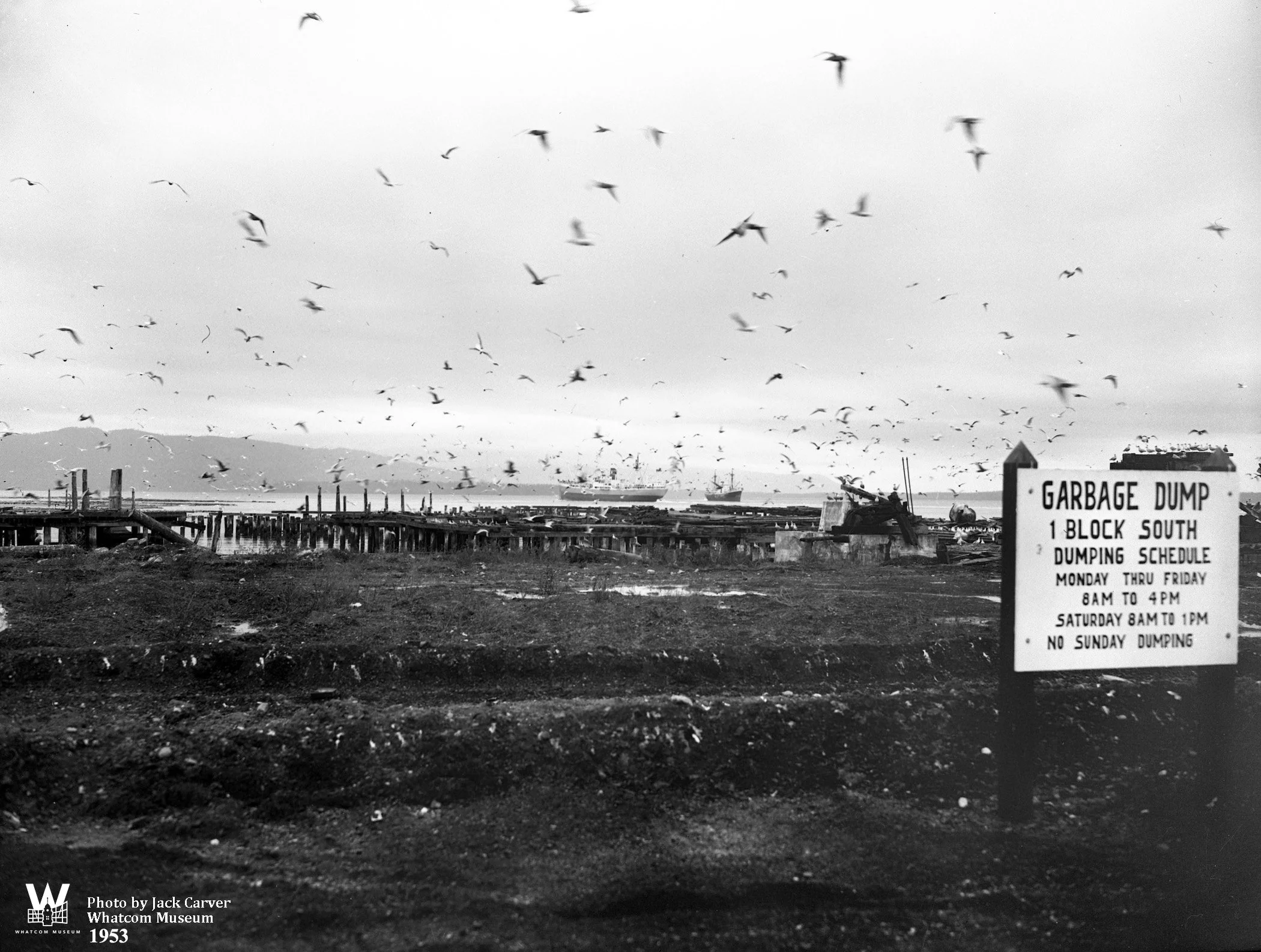
The Bloedel Donovan mill was once the star of the show here. After it was closed, mills and factories took its place, churning out wood products to ship around the county. For many years, the company RG Haley International produced crossarms, the beams that fit across the tops of power and phone lines, to the tune of 2,400 per day in 1964.
The Cornwall half of the site was the city landfill from 1954 to 1965, replacing tidal flats with municipal, wood and medical waste. Under a layer of soil sits 295,000 cubic yards of trash — enough to stuff roughly 2,500 standard semi truck trailers to the brim.
Though the history is no longer visible to the naked eye, the evidence remains as contamination in the soil, water and air.
“It's one of the most heavily contaminated sites in Bellingham Bay, so it's great to see it's now getting addressed,” Gouran said.
An archival photo of the Cornwall Landfill site in Bellingham, Wash., in 1953. // Photo courtesy of Archivist and Historian Jeff Jewell with the Whatcom Museum
Thorough investigations from the Environmental Protection Agency have revealed 13 different kinds of contaminants to be remediated. These contaminants come from a wide range of sources, from heavy metals like cadmium to persistent organics like PCPs or man-made chemicals like PCBs. PCBs were used in electrical devices like transformers, while PCPs were used for wood preservation.
The effects and danger associated with these compounds are variable, but overexposure can cause negative health effects in all organisms. In humans, some PCBs may cause cancer, as well as immune and endocrine system disruptions, according to the EPA.
Some varieties of chemicals, like PCBs, can linger for a long period of time in the environment and can biomagnify, climbing through the food web to congregate at the top.
“There's opportunities for organisms to be exposed to [contaminants] for multiple generations, because they don't go away once they get to the environment,” Ruth Sofield, a toxicology professor at Western Washington University, said.
Some of the chemicals can also be absorbed through contact at the site itself, which is why a thorough cleanup is in order.
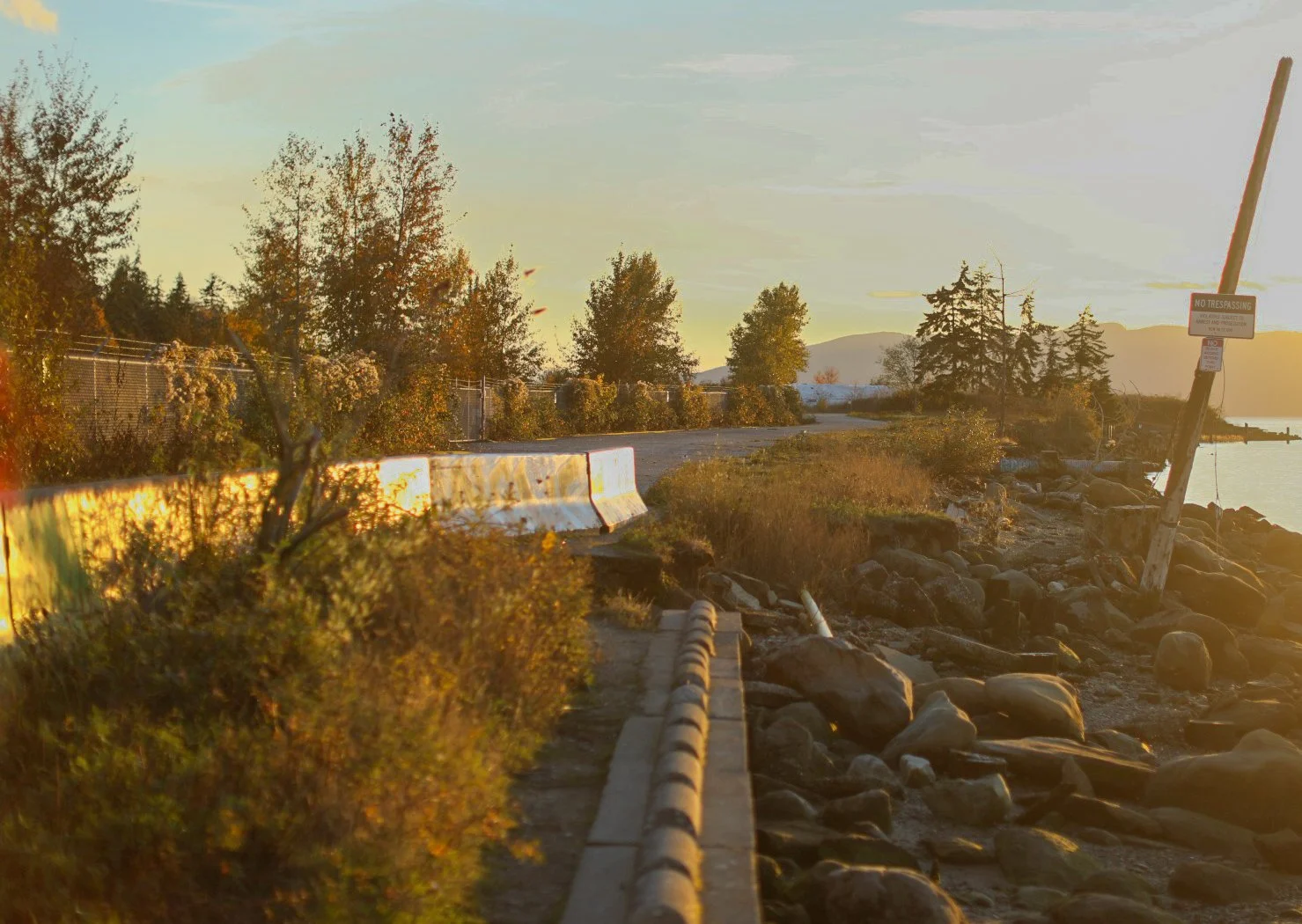
A look inside the Cornwall Avenue Landfill site in Bellingham, Wash., in 2025. Located towards the back of the site, large white tarps can be seen covering what remains of landfills activity. // Photo by Aidan Byrnes
“Unfortunately, you can't necessarily remove all contamination, especially when you have sites that are this massive and complex,” Kristen Forkeutis, the public involvement coordinator for the cleanup, said. “Despite the fact that there is contamination under the future park, it is cleaned up in such a way that it won't be impacting the public.”
If contaminants can't be removed outright, the next line of control is to cut off paths of exposure to the material — locking it in, and us out. The plan for the park is careful about this goal, which is part of why it has taken so long.
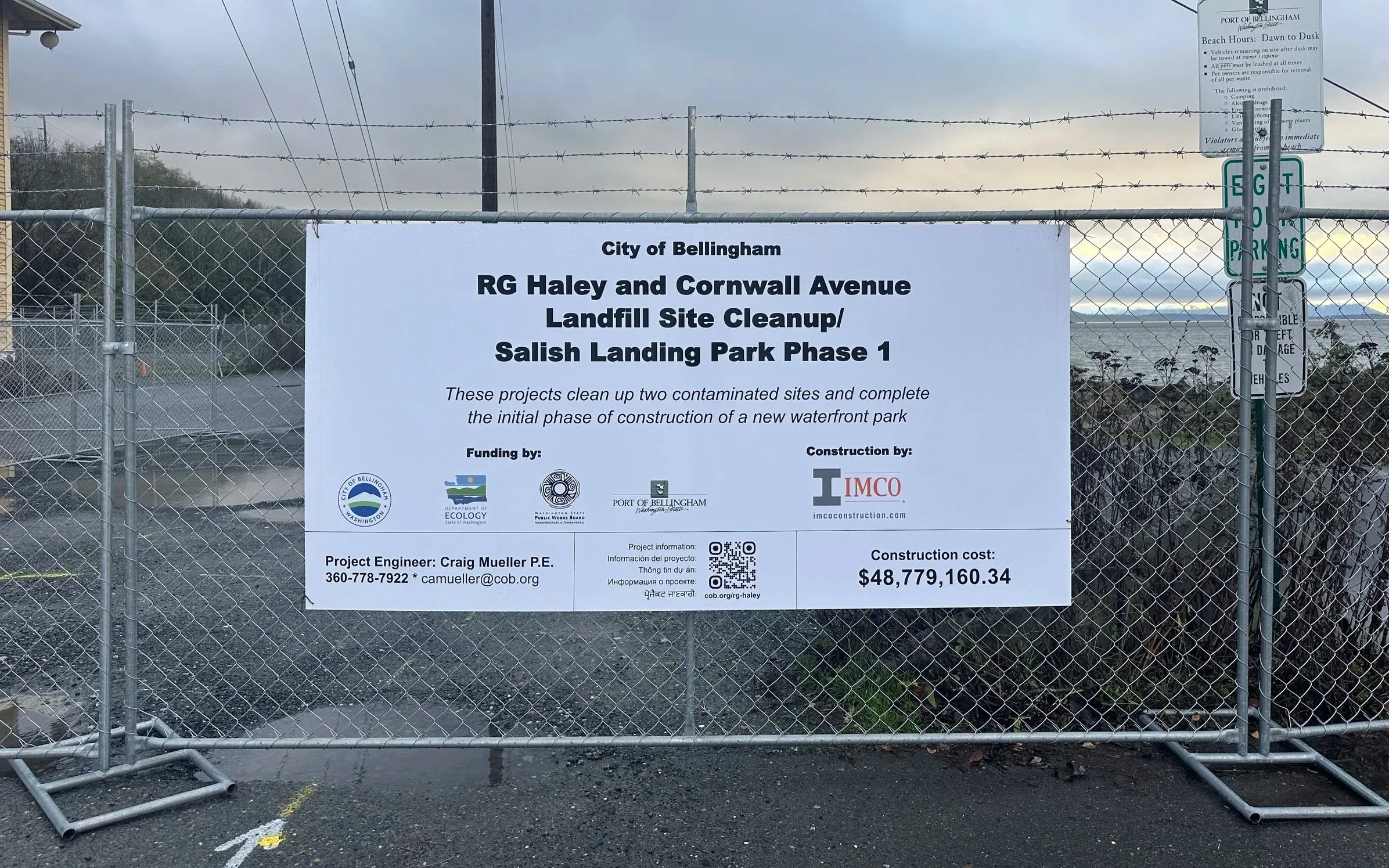
A sign on the cyclone fencing surrounding the project sites in Bellingham, Wash. The sign describes the goals, costs and contact information for the project. // Photo by Brooklyn “Bug” Santee
“If you can stop the exposure, if humans aren't going to be exposed to something like pentachlorophenol [PCP], then there's no risk from it.” Sofield said.
Major actions include capping the landfill permanently, using a multi-layer system to prevent rainwater intrusion and chemical leakage. The shoreline will be improved with gravel, sand and rock to prevent erosion and trash from escaping further. The gravel will bring additional benefits by improving habitat formation with the help of natural recovery processes already observed in the bay.
Those famous tarps are also part of the plan. Under them sits fine sediment from a past waterway dredge, which is being used to prevent water from seeping through the landfill before the major cleanup begins.
An undertaking of such size also takes a lot of funding.
The Washington State Department of Ecology awarded a grant that covers half of the cost for the clean up — funding that RG Haley project site manager Shawntine Lai has yet to see other state ecology departments put forward for similar projects.
“Incentive is really important if you want to have the site cleaned up,” Lai said.
Two popular waterfront parks have similar histories, showing how remediation can be successful on the bay.
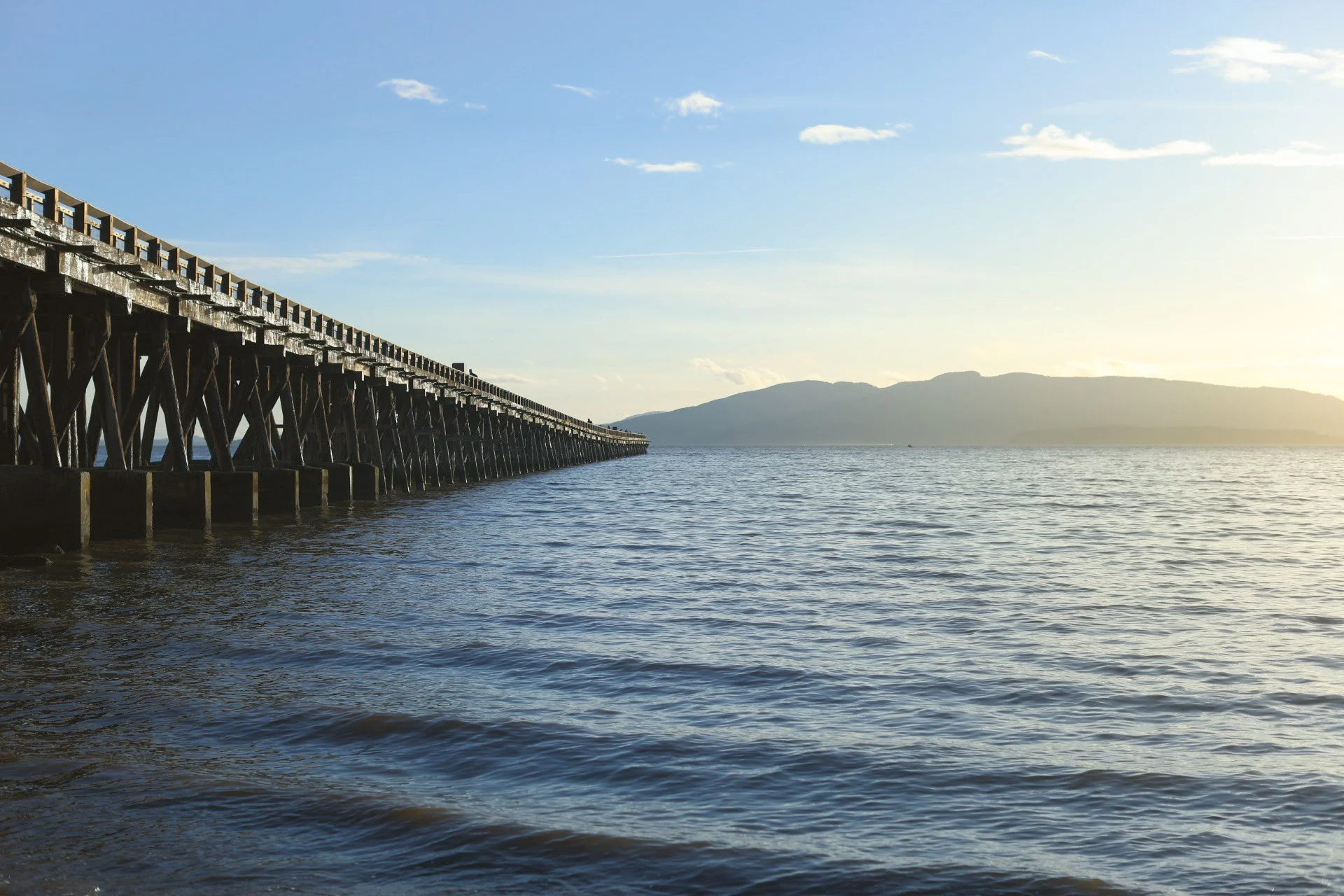
A view of the side of Little Squalicum Pier in Bellingham, Wash. Located within Squalicum Creek Park, it extends 1,248 feet into Bellingham Bay, making it is Washington State’s longest public pier. // Photo by Aidan Byrnes
Boulevard Park, which was opened in 1980, is on the site of a manufactured gas plant and a historic mill. Maritime heritage park was a former landfill and the site of Bellingham's very first sawmill. Most recently, an old pier designed to carry processed cement to barges off-shore has been restored into Little Squalicum Pier.
With each project, the Bellingham waterfront becomes more accessible to the public and cleaner for the environment.
“This is a generational project … not something that's going to happen overnight,” Gouran said. “There's a lot of data and information gathering, a lot of planning, a lot of community involvement.”
After such a long wait, the real action in this project is nearly underway. Actual construction, according to Gouran, is set to start at the end of 2025 or early 2026.
In a few years, the goal is for residents to have another bayside paradise to enjoy, making new opportunities of past pollution. As Gouran puts it, Salish Landing will be the new “jewel of the bay.”