
Feeling the Burn
In the face of worsening fire conditions, the federal administration is gutting wildfire mitigation and research across the nation.
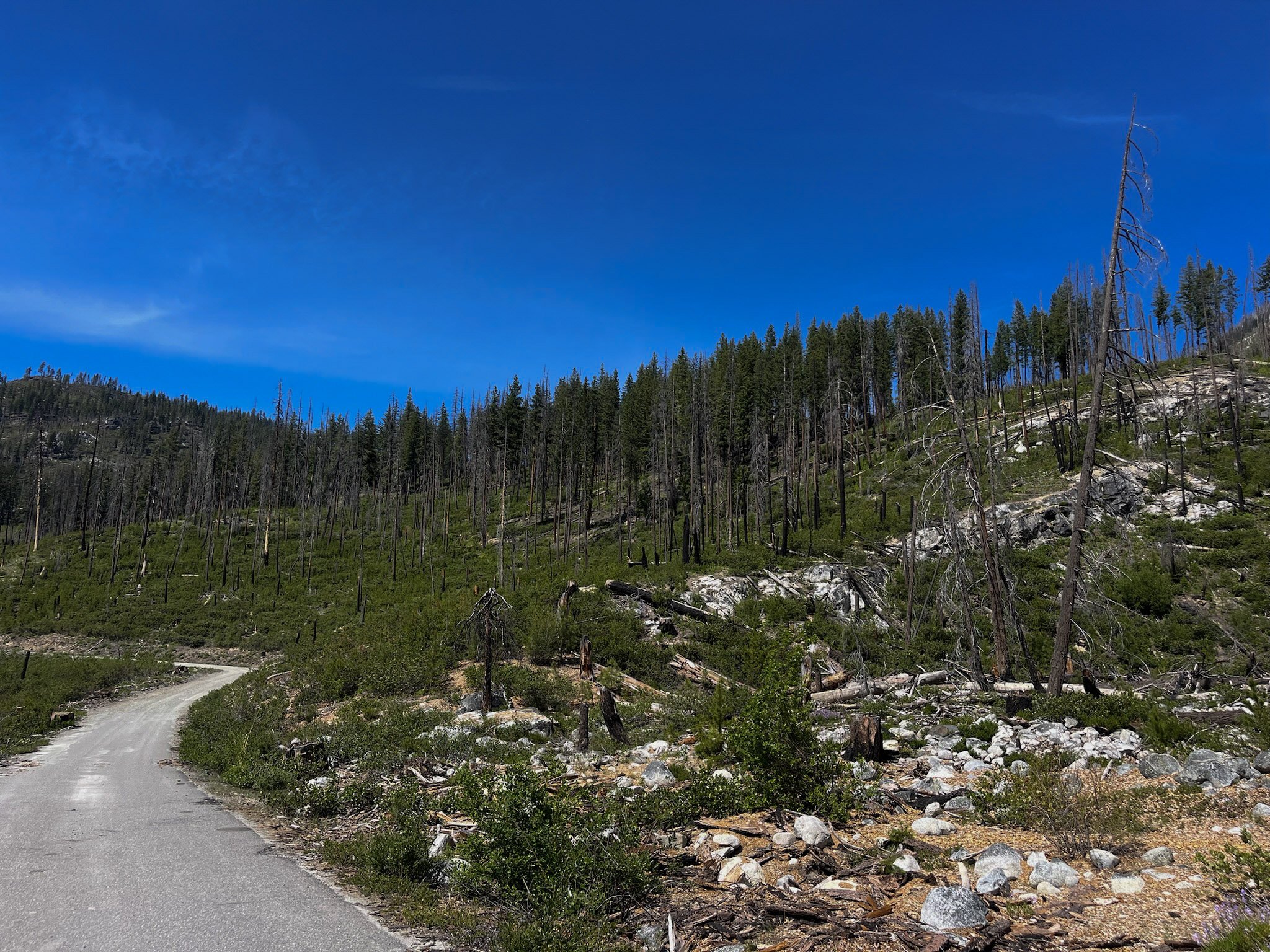
A burned area in the Okanogan Wenatchee National Forest in early stages of successional growth. // Photo by Samantha Boulware
Story & Photos by Samantha Boulware
June 19, 2026
When Tucker White fought wildfires in the Cascades, the job took him to remote locations that he describes as like being “on the moon." Even on the easiest days, the work is physical, dangerous and requires specialized knowledge. Fires are becoming more frequent and more intense, all while the fire season is expanding. The work is getting harder, not easier.
Most people would not say this job needs to be made more difficult. But according to forest policy experts, the federal government is moving to do just that.
In an unprecedented move that will change the management of nearly 193 million acres of public land, federal officials are pushing forward a sweeping restructuring of the U.S. Forest Service, leaving thousands of federal workers uncertain about the agency’s future.
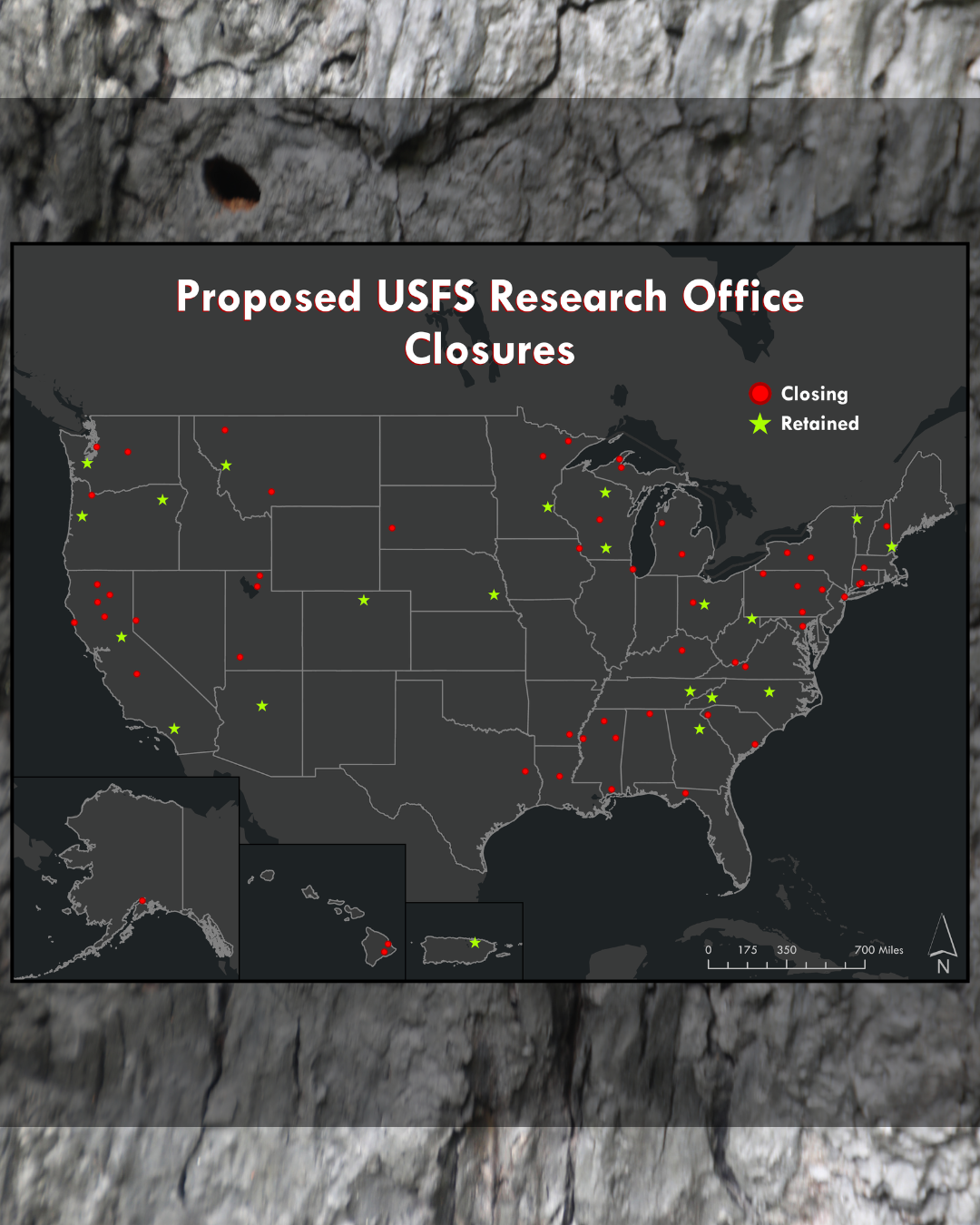
55 of the current 77 USFS research offices proposed to close with the restructuring. // Map by Samantha Boulware
The proposal shifts the agency away from its current regional format towards a centralized, state-based model, which was announced March 31, 2026. Under the plan, the Forest Service would close 57 of the agency’s 77 regional research offices, including facilities in Seattle and Wenatchee, moving its headquarters to Salt Lake City. The restructuring follows President Trump’s wildfire strategy outlined in Executive Order 14308, focusing on increasing lumber production as a means to decrease wildfire risk.
“It's an absolutely terrible idea,” Tucker White, a wildland firefighter who spent six years working in the Mount Baker and Columbia national forests, said. “What's doing the most damage is closing those research facilities. It is tactical: …[when] you defund an agency, the agency underperforms. When it underperforms, you justify defunding it further, and it continues a cycle until eventually they try to privatize.”
Just three days later, the Trump administration released its proposed 2027 budget, which eliminates the Forest Service’s Forest and Rangeland Research budget entirely. This budget includes studies on fire behavior, fire and air interactions, impacts on human health and more.
Forest Service Chief Tom Schulz argued the cuts will not harm scientific research, because the efforts will simply move to public universities with funding from the private sector.
“The Forest Service has a very long history of hiring really good scientists,” Andy Bunn, an ecology professor at Western Washington University who specializes in paleo forest climatology, said. ”But people build careers and families in locations, and even if their job can move to Salt Lake, that might not be possible for them… My guess, people are gonna be leaving.”
Although Congress hasn’t approved the 2027 budget proposal, the combination of the restructuring plan and the proposed research cuts has fueled confusion. Administration fact sheets assert that the process will not interrupt or eliminate any research being conducted by the Forest Service, while at the same time the Trump administration is completely “zeroing out” the USFS research and development budget.
“There's this very strange line that the administration is walking,” Michael DeCramer, senior policy and planning manager at the Washington Trails Association, said. “It's reasonable for folks to be suspicious of the claims that moving folks and closing things like the Pacific Wildland Fire Science Laboratory in Seattle won't disrupt that science.”
It’s not just outdoor groups concerned with the restructuring, career Forest Service employees oppose the move too.
“It's led to a lack of trust in the system,” Becki Heath, vice president of the National Association of Forest Service Retirees, said.
The same budget proposal that slashed research funding also cut Forest Service trail funding by 64 percent. Money that ensures trails and bridges are maintained and the environments around them are preserved. DeCramer warned that reductions could have serious consequences for both conservation and wildfire management.
The timing could hardly be worse.
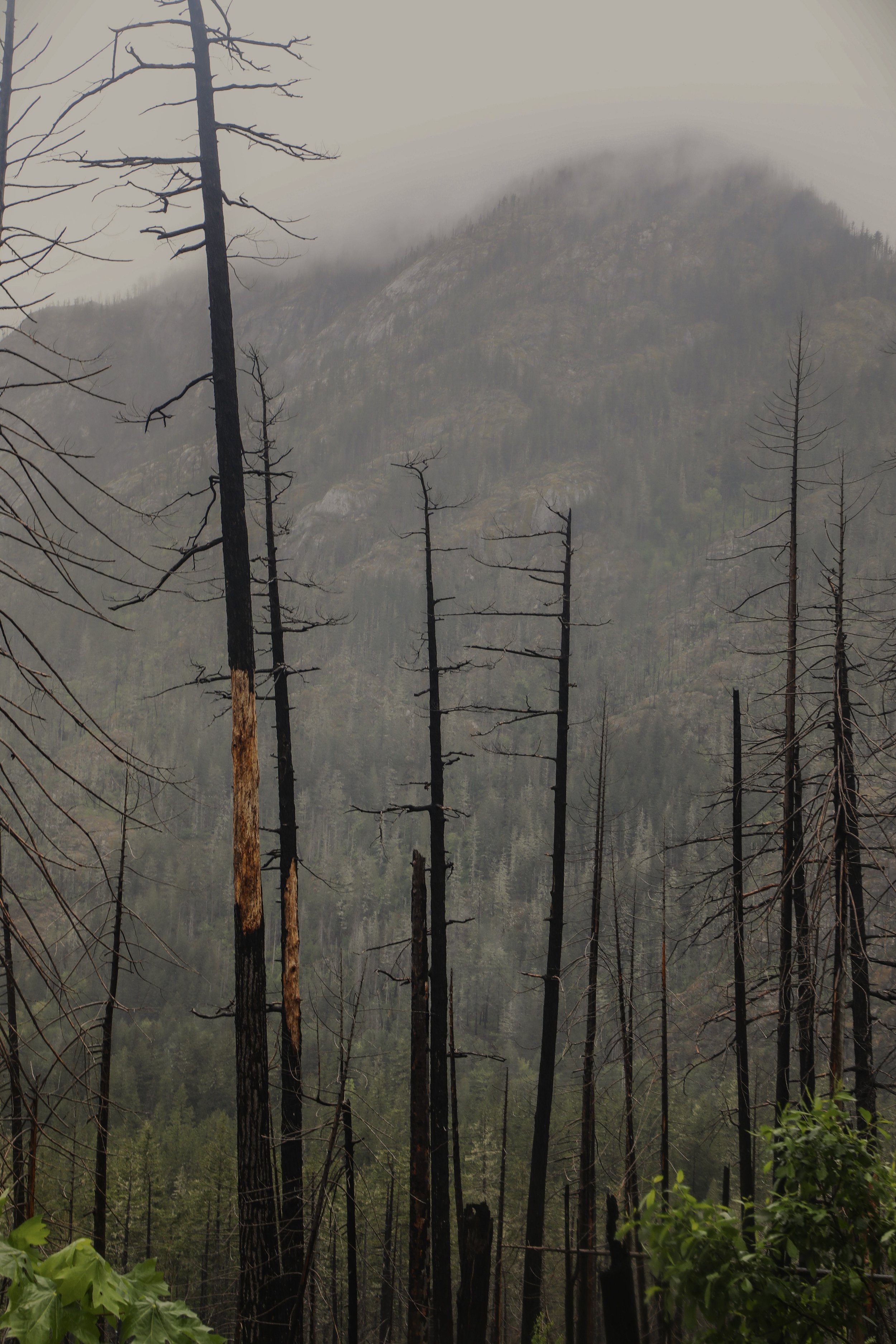
A burned area just outside of Newhalem, Wash. // Photo by Samantha Boulware
Washington's last two fire seasons rank among the state’s most destructive in recent years. During the 2025 fire season, 1,874 fires collectively burned nearly 250,000 acres — an area nearly five times greater than the entire city of Seattle. The 2026 fire season is expected to follow this trend as a result of below-average snowpack and early dry conditions.
“The fires that we are getting are burning in places they don't normally burn,” White said. “And they're burning much hotter… It's kind of obvious if you work on the ground and you see it.”
Not to mention the first two years of the Trump administration have already strained the Forest Service.
Last year alone, the agency lost 3,400 employees, nearly 10 percent of its workforce. Whether those workers were laid off or pushed into early retirement, public lands have felt the impact. A recent Trail Program Status Report found that many districts have lost the majority of trail staff, and some have had their entire staff dismissed. This leaves major operational gaps and the collective loss of thousands of years of experience, resulting in the miles of trails maintained by the USFS decreasing by 22 percent in 2025.
At the same time, firefighter retention has struggled to keep up as wildfire seasons have intensified. Grueling conditions, increasingly long seasons and low pay push experienced firefighters into an undesirable situation.
“A lot of folks do it for a year or two, right out of high school [or] right out of college,” White said. “But they kind of see the writing on the wall. It's a great life, but it's a hard life. I remember a couple years ago we saw an advertisement to get a job at Taco Bell, $19 an hour to start. I think we were making like 17-something to do what we were doing. Why would you choose this?”
Replacing experienced fire crews isn’t quick or easy. Wildland firefighting takes years of training before workers can safely perform specialized mitigation work.
“It takes maybe a year or two to get good at it,” White said. “But realistically, you're looking at a minimum of three years to get somebody trained enough on a chainsaw where they can reliably and safely do some of the work. You're not just going to send somebody at a 48-inch diameter tree and say take it down with one year of chainsaw experience.”
The inherent dangers of the work combined with its complexity means that expertise is indispensable.
“[Fighting fires is] hazardous, and it takes years for people to gain the qualifications they need to be at mid-level leadership and then higher-level leadership in any aspects of a fire, including prescribed fire and fuels management,” Heath said.
DeCramer believes the restructuring could accelerate the loss of institutional knowledge across the agency.
“You could very easily see… [a loss of] a lot of critical staff positions that help plan landscape scale conservation and fire management efforts,” DeCramer said. “The folks who have announced the reorganization say that won't occur, but we know that when you move people, not everyone can move ... What we expect to see is a loss of expertise, a disruption to research … and impacts to the agency’s ability to get its job done.”
Many experts are frustrated not just about the consequences, but about the process. The restructuring, they say, violates multiple federal laws. Pointing to sections in the 2026 appropriations law that say Forest Service funds cannot be reallocated without congressional committee approval, and that using funds to eliminate or relocate organizational entities without 30-day advance committee notice is prohibited. The move also seems to violate the Antideficiency Act, a foundational federal law that prohibits obligation of funds without federal approval.
Up to 9,200 employees will potentially be affected by this contested restructuring.
The Department of Agriculture did not respond to repeated requests for comment, but officials at the department have said in congressional testimony that the restructuring will improve efficiency and strengthen wildfire response on the ground.
Still, uncertainty surrounding the Forest Service’s future is wearing heavily on its researchers and employees.
“I know from my colleagues at Forest Service, the United States Geological Survey, but also at NASA and the Department of Energy, that morale is just at a low point,” Bunn said. “One colleague said, sometimes we just think, ‘What's gonna happen this week?’ It's like riding a bucking horse, and you just wonder how long you're gonna be able to hold on.”