
Mapping the Sounds of Silence
A local soundmapping project works to document noise pollution in the Bellingham Arboretum
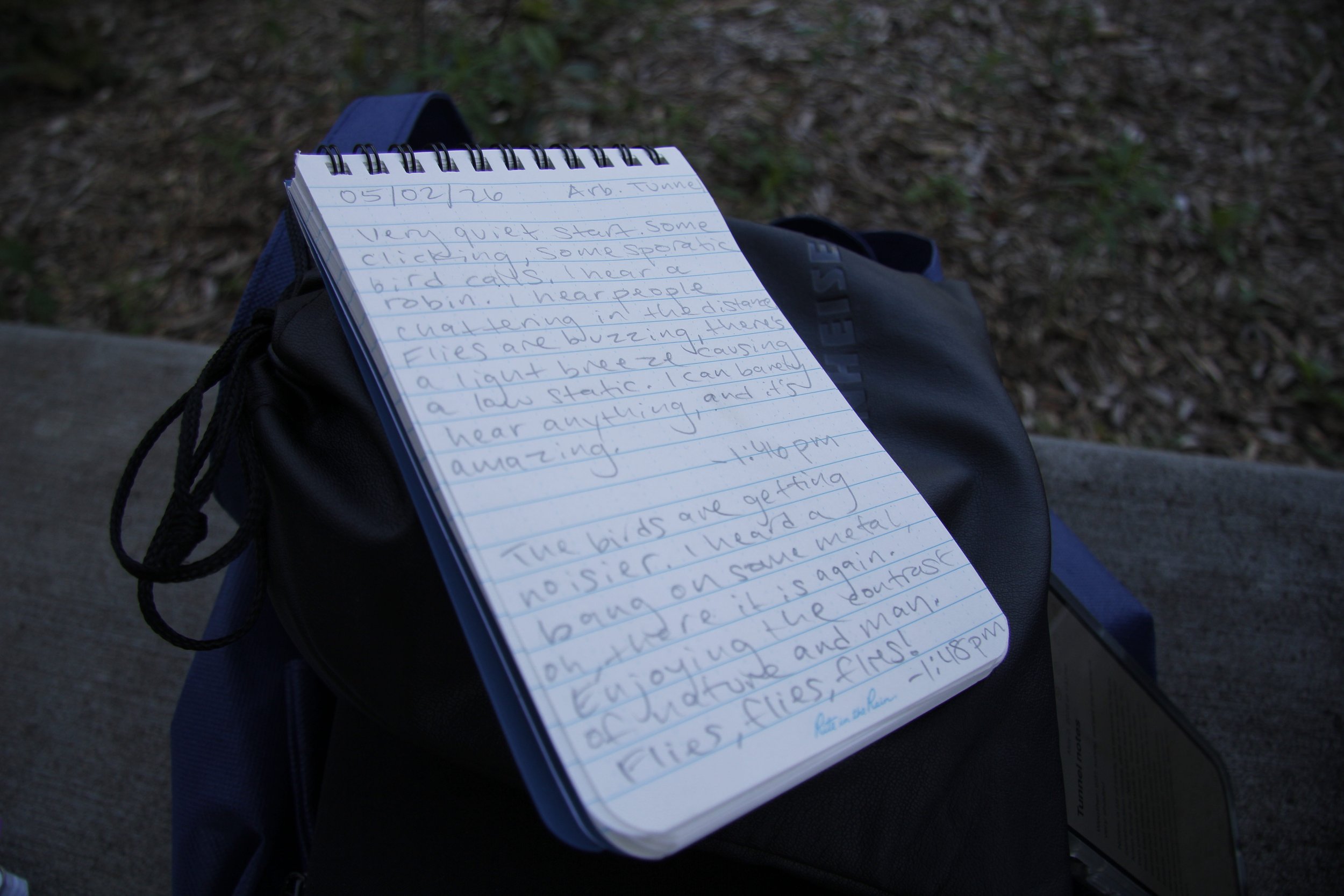
Notes on sounds heard while recording. // Photo by Brooklyn “Bug” Santee
Story & Photos by Brooklyn “Bug” Santee
June 19, 2026
The mournful song of a robin in the blue dawn. The urgent cries of crows descending upon spilled fries. The riverine symphony of a meandering creek. The drone of an ascending 747. The world is full of sounds, and they shape moods and perceptions more than most people realize.
There are many ways to define and analyze sound. One of these is the soundmap, which places audio recordings onto a digital landscape. By making recordings in set locations over time, researchers can create a map to show how both sound and the environment are evolving. From urban areas to national parks, sound mappers have collected data for this purpose.
Sound plays an integral role in environmental knowledge, helping define issues and find solutions.
With animals such as birds under threat, the power to track their songs strengthens the potential for conservation. By being able to pinpoint where a sound is — in addition to volume and frequency — it becomes easier to mitigate noise or track the spread of natural sounds, like birds and amphibians, post-restoration.
At Western Washington University, Professor Felicia Youngblood and a dedicated team of volunteers are working to collect this data in the Sehome Hill Arboretum. Every spring, a handful of student volunteers trek into the arboretum, equipped with microphones, notebooks and a keen ear. In small groups, they set up in the same locations each year throughout the forest.
The results are several recordings, about 90 seconds long, in crisp 360-degree audio. The goal is to create an accurate representation of the soundscape during that moment, from singing sparrows to raindrops on leaves, hikers’ footsteps to planes overhead. Youngblood's team uses mapmaking software to turn the recordings into listenable pinpoints on an online map.
The project began as part of Youngblood’s Music and Sustainability course at Western in 2022, with the support of a grant from the university’s Sustainability Engagement Institute. Two years later, the music department cancelled the class due to a changing curriculum, yet the project lives on through volunteers. The Sonic Mapping Collective meets each Saturday in spring quarter. They’ve published their data on a new map established in 2025.
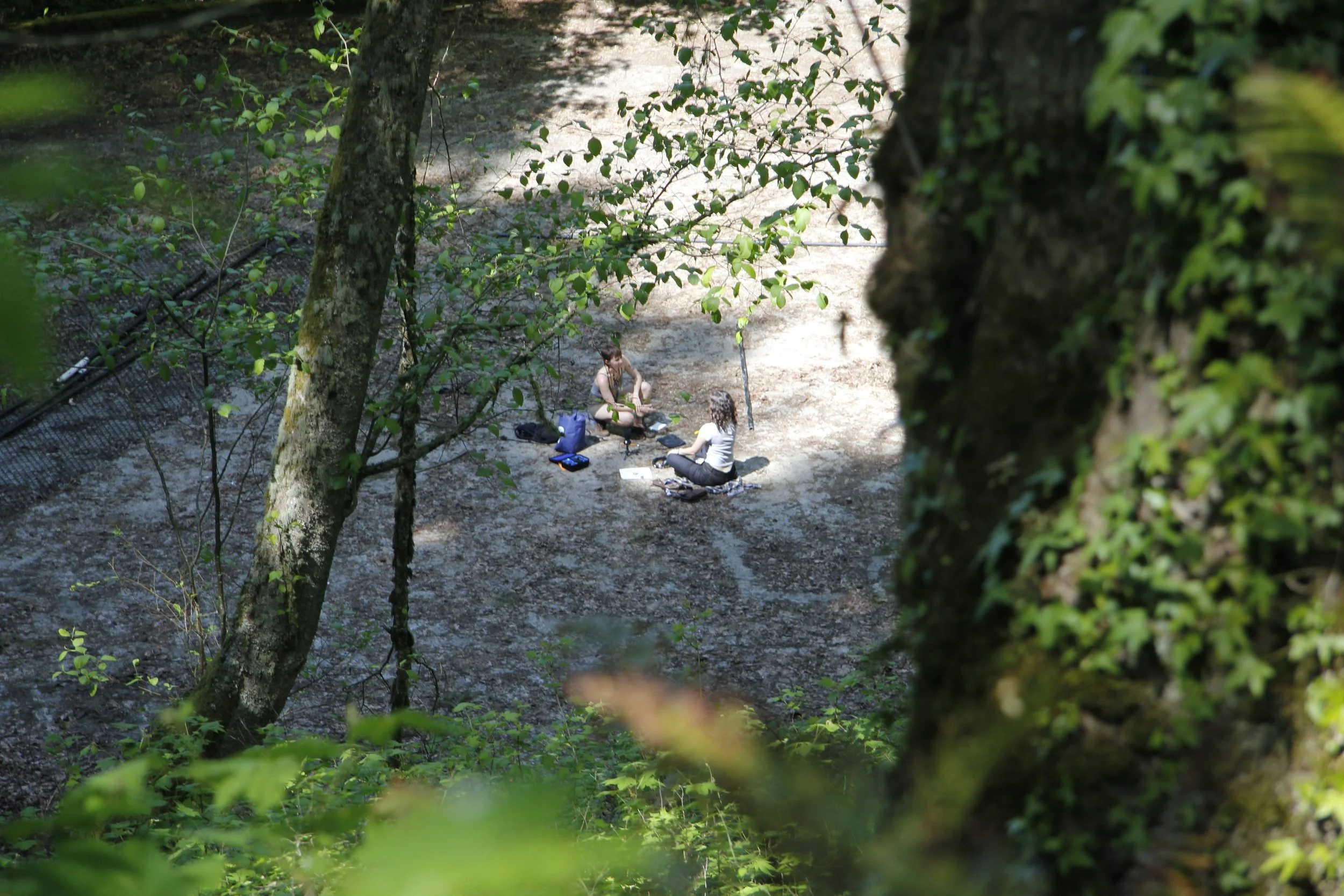
FIRST: A soundmap group records at the reservoir in the Arb.
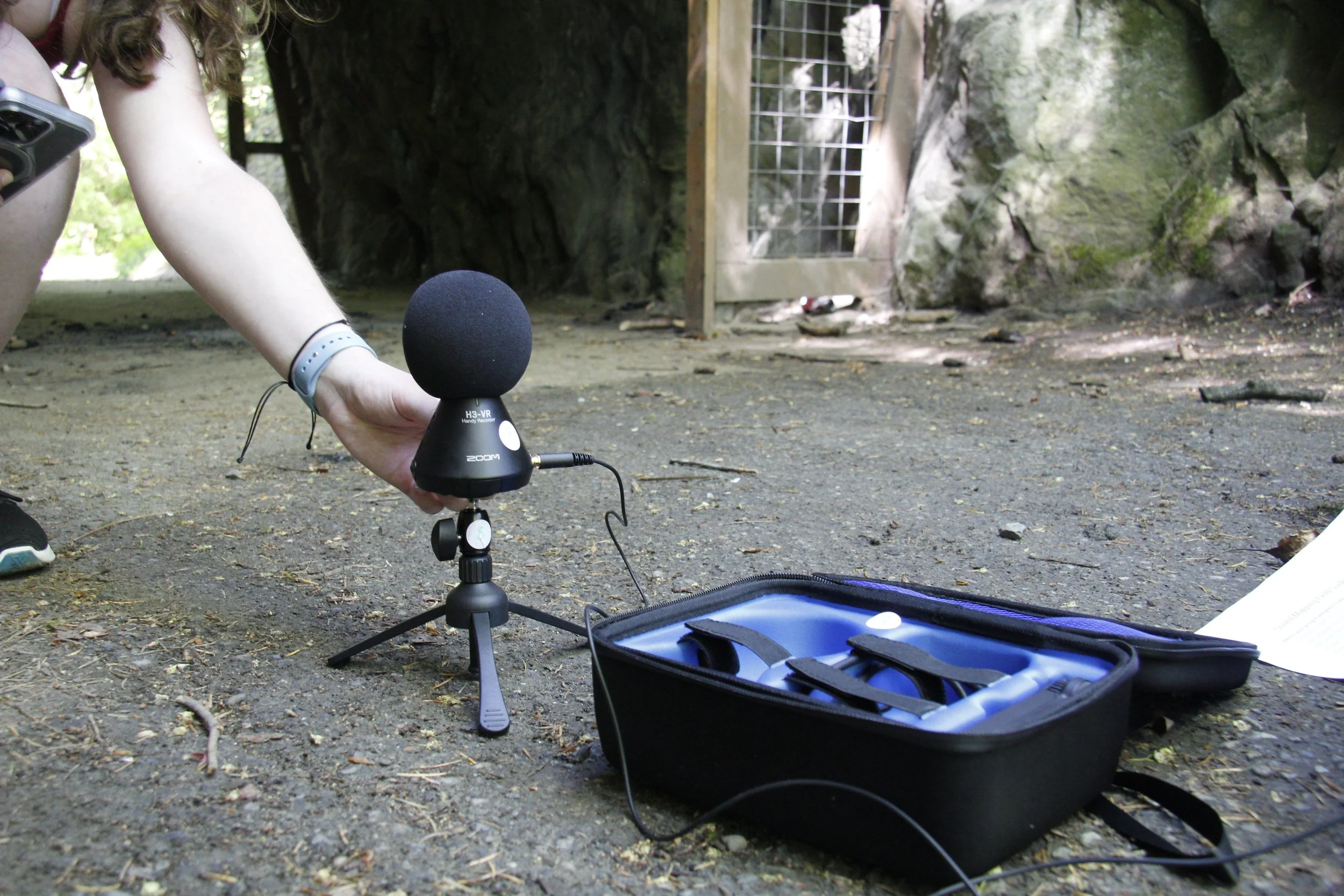
SECOND: SMaC uses small 360 microphones to capture the soundscape with remarkable clarity
THIRD: Volunteers make several recordings per location and play them back to choose the one that best represents the soundscape.
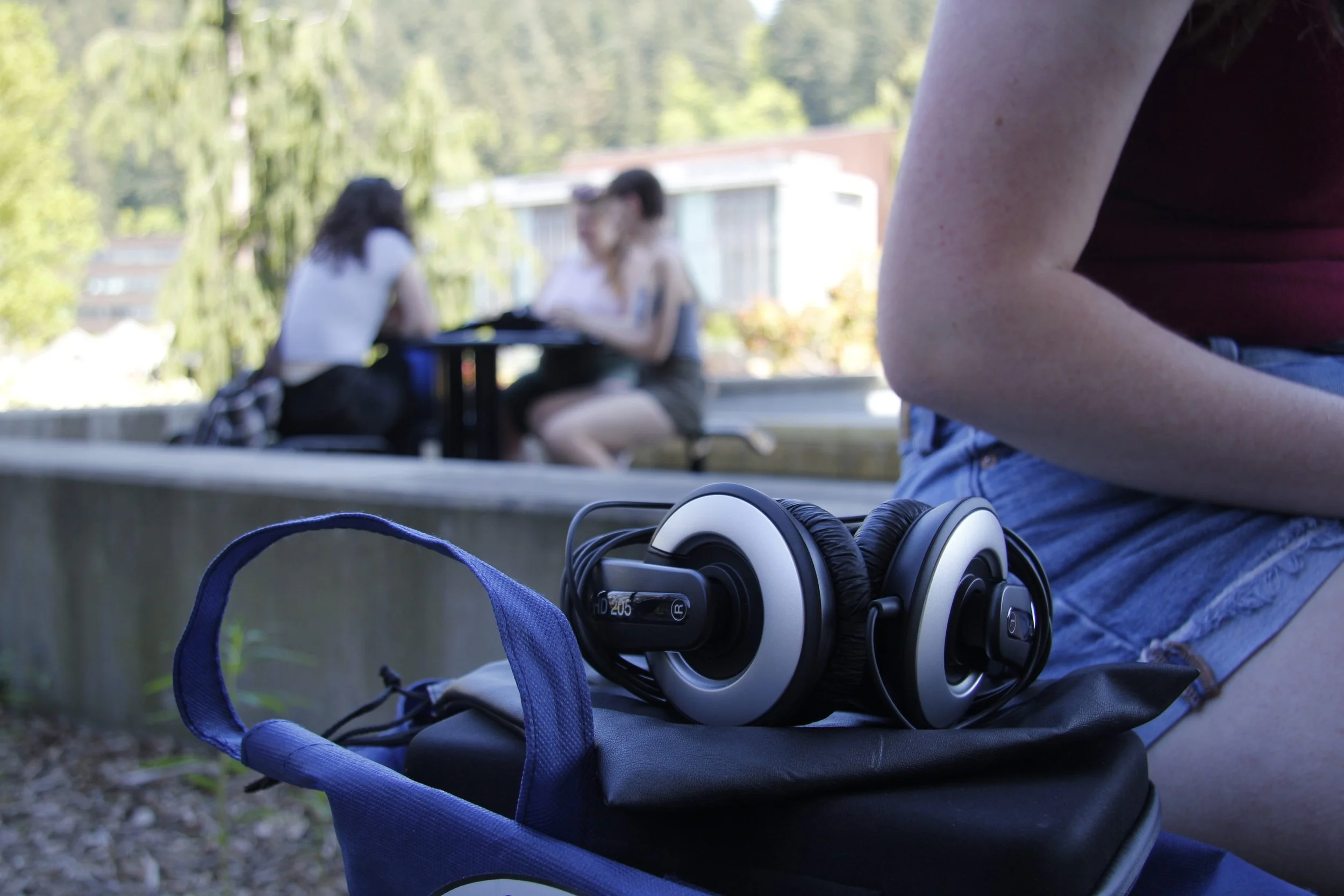
FOURTH: The Sehome Hill Arboretum is jointly managed by the City of Bellingham and Western Washington University.
All photos by Brooklyn “Bug” Santee
“I want somebody to be able to, just from listening, tell how the arboretum has changed in a certain number of years,” Youngblood said. By returning year after year to make recordings, Youngblood has developed an in-depth audible history of the forest.
Preventing anthropogenic sounds is also valuable to animals — too much noise drives them away, changing their behavior and interactions with one another.
Data such as Youngblood’s can make a major impact in conservation efforts. For example, birds are commonly featured in audio data, since their presence or absence reveals a lot about an ecosystem. They’re also of great concern for conservationists. Between 2005 and 2023, the number of urban birds spotted in Seattle’s green spaces has fallen by 21 percent. This trend is consistent across both the United States and Europe.
Recordings can be used to track bird songs, creating a picture of bird populations that would be difficult with just visual sampling. The Conserva Aves Initiative in Colombia is applying these techniques, using passive acoustic monitoring and recordings taken remotely at set intervals. This audio evidence of bird calls can tell researchers which birds visit protected reserves, informing conservation actions and progress.
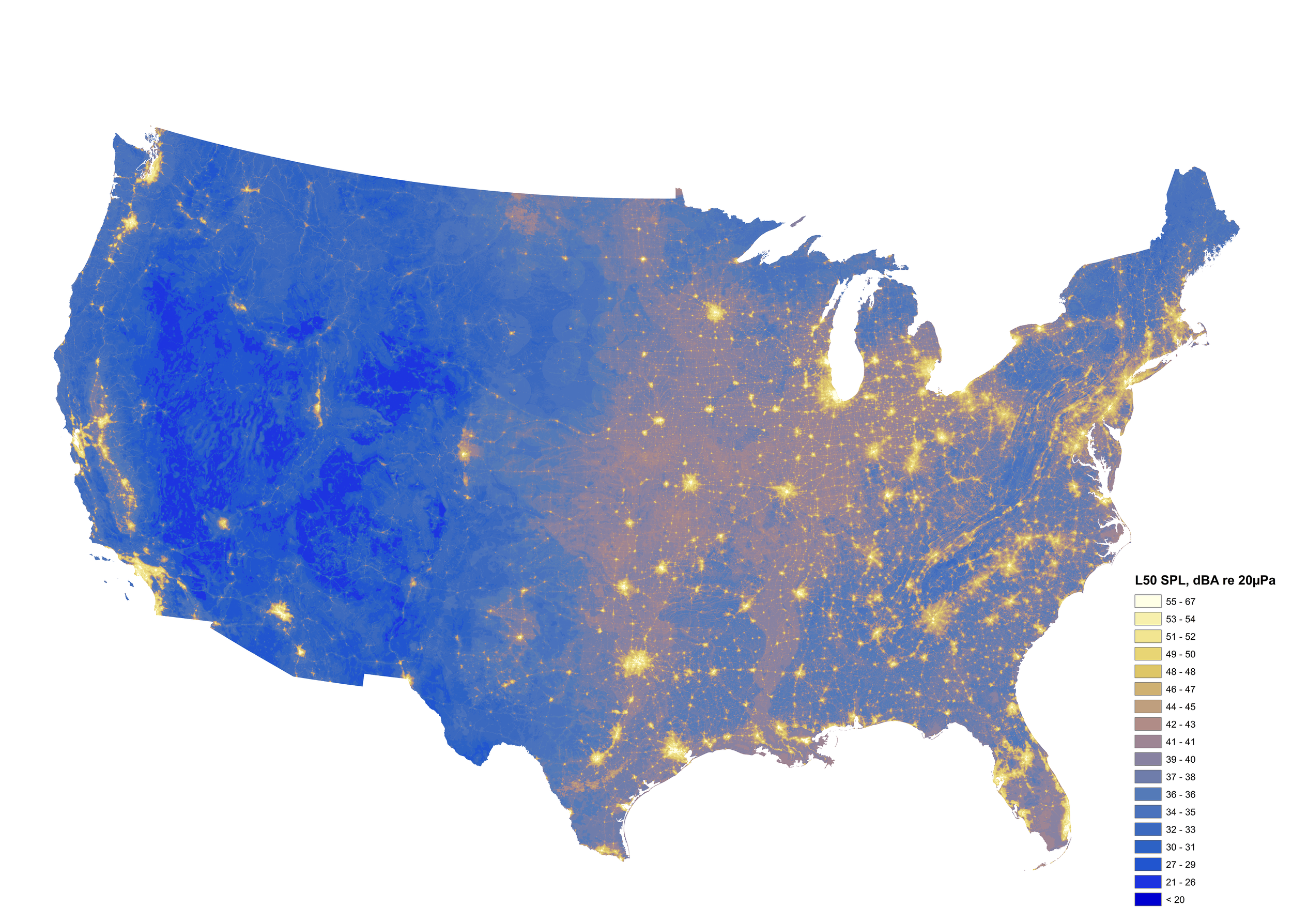
This map measures sound across the US. Yellow is louder, while blue is quieter, measured in decibels compared to the average measurement across the country // Map from the National Park Service Division of Natural Sounds and Night Skies
In 2000, the National Park Service founded the Natural Sounds and Night Skies Division to log and analyze audio in parks and other protected lands. Through combined data, this division has created a soundmap of the entire United States. Noise is loudest in urban centers, depicted in bright yellow on the map, while remote and quieter places appear in dark blue.
Inspired by this influence, dedicated listeners like Youngblood and her students are putting in the work to conserve natural soundscapes locally.
Gordon Hempton, an acoustic ecologist, started the One Square Inch of Silence project in 2005. Several miles out from a trailhead in the Hoh Rainforest, Hempton made it a personal goal to protect a single spot, originally marked by a small red stone on a log — a spot he thinks might be the quietest place in the United States.
Airlines rarely fly over this area of the rainforest. The few airlines that did fly over this square inch were contacted and asked to redirect, a request with which they complied. One Square Inch of Silence developed into Quiet Parks International in 2019, a group devoted to defending natural quiet around the world.
Silence is fragile, however. This spot is not as quiet as it was in 2005. Since then, the US Navy has increased Growler flights — jet training flights in planes known for their loudness — over the Hoh. With 2,000 individual flights occurring over the park in 2020, it can turn the quiet of birdsong and rustling leaves up to a volume equivalent to standing next to a garbage disposal.
Since quiet oases like the Hoh are increasingly few and far between, it's becoming hard for many people to find places to enjoy the quiet of nature. A myriad of studies have found that sounds like birdsong and running water have a positive effect on mental health, stress reduction, focus and happiness.
The Sehome Hill Arboretum may not be as quiet as the Hoh, but it’s still chock-full of natural sounds. For Western students living in the city, it’s an easy way to soak in the birdsong and rustling leaves.
“It can be so terrible for how you feel to constantly be surrounded by roads and pavement and the sounds of cars,” Cassie Paetkau, the events coordinator of the WWU Ecological Restoration club, said. “So me being able to come here, it's really, really good.”
Beyond the data, the real heart of the Sehome Hill Arboretum soundmap project is to foster sustainability, stewardship and accessibility among students in the arboretum. By maintaining this natural space so close to campus, the benefits of the soundscape are available to students.
Youngblood remarked that after taking part in the soundmapping project, many students who only occasionally visited became regular visitors.
“Even though you might… feel disconnected from nature, you have never been disconnected,” Hempton said. “We've always been a part of nature; there is no separation [from] it, and listening will help us remind ourselves of that.”