
The Debate Over Development
As Bellingham plans for a growing city, environmental groups raise concerns over water quality
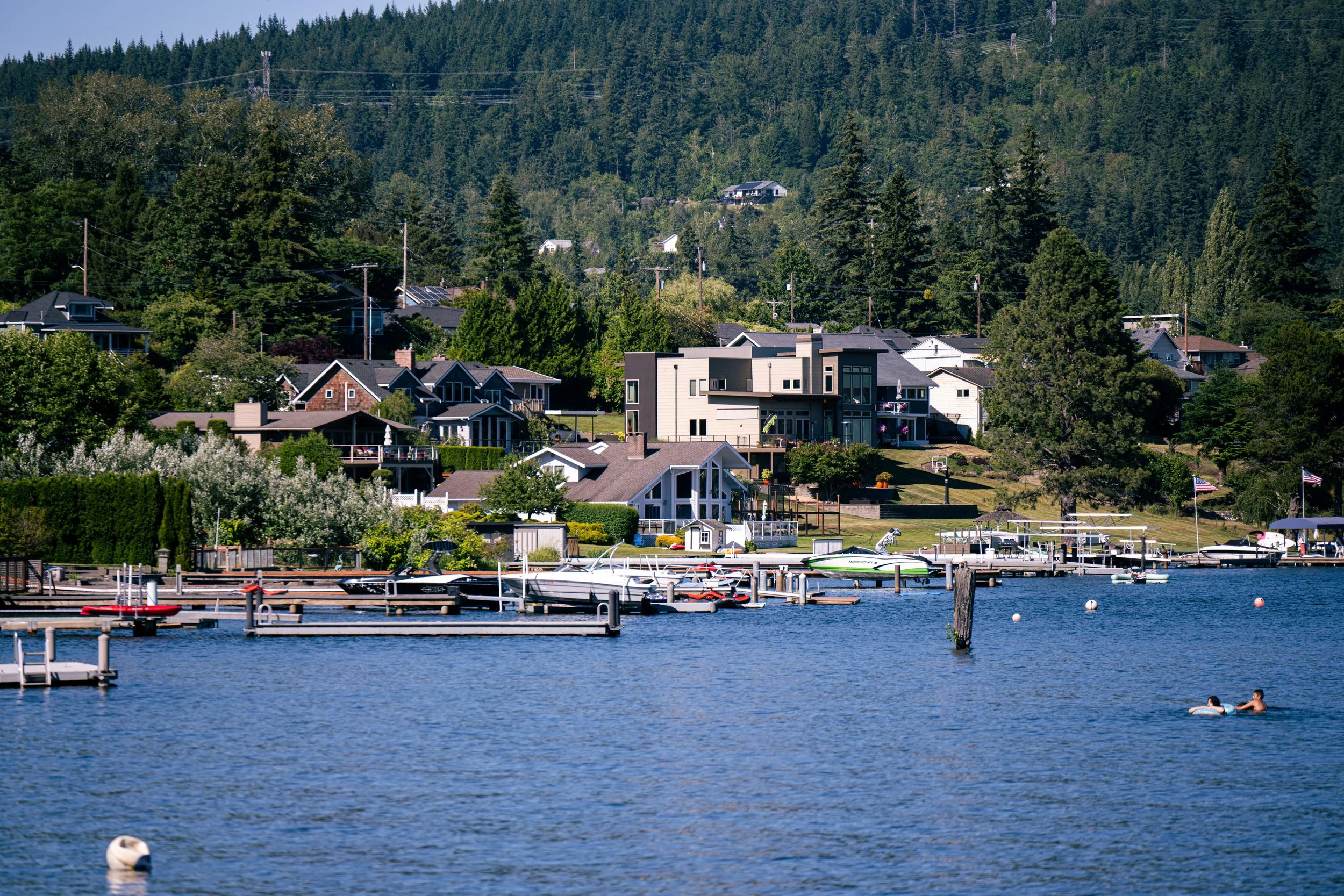
Houses along the northern edge of Lake Whatcom on June 16, 2026. // Photo by Avery Robertson
Story by Sofia Weber // Photos by Avery Robertson
June 19, 2026
The city of Bellingham is home to breathtaking views of land and seascapes, neighborhoods with rich, historic character and tight-knit communities. The past few years have been marked by a host of progressive, resident-approved, climate-friendly policies created by the city to preserve Bellingham’s environment.
Much of this progress can be attributed to the efforts of advocacy groups like the Whatcom Environmental Council, whose members are committed to protecting the county’s natural environment. Through policy advocacy, public education and resource sharing, the council has been a watchdog for local decision makers since 2024.
The council is made up of retirees who used to work as environmental lawyers, urban planners, recycling gurus and water resource managers. Their efforts have shifted away from the traditional workforce and now focus on monitoring and responding to current actions at various levels of local government.
Lake Whatcom has been a longstanding priority for these environmentalists. The lake is an essential source of water for most of Whatcom County, with a portion of its watershed located within Bellingham city limits. Development around the lake has been a consistent source of contention between regulators, policymakers and community members.
Rick Eggerth, a member of the Whatcom Environmental Council, has played a key role in ensuring the quality of the city’s water. He believes that while socially necessary, urban development hinders the lake’s water quality.
“The more housing you have, the more stuff goes into the lake. Everyone can pretty much agree on that,” Eggerth said. “After that, there's a lot of disagreement.”
Bellingham has faced a housing deficit for years due to inflated living costs, market pressures, an influx of residents with limited housing capacity and historic underplanning, according to a 2024 mayoral executive order.

The view from the road looking out on Lake Whatcom, June 16, 2026. // Photo by Avery Robertson
“While the city can adopt regulations to minimize development to protect the lake, we cannot legally prohibit development,” Chris Behee, the Long Range Division Manager within the city’s planning department, said in an email.
In early 2026, the Bellingham City Council finalized a plan to guide the city’s future development over the next 20 years and address the needs of a growing population.
Called the Comprehensive Development Plan, or the Bellingham Plan, it provides a framework for the city to, among other things, respond to the housing crisis, prioritize environmental resilience and mitigate increasing living costs.
While tailored to issues specific to Bellingham, the creation and implementation of the plan is mandated by Washington State’s Growth Management Act, and must meet 15 state-defined goals. These goals include the protection and enhancement of water quality, the availability of affordable housing and adequate public involvement in the planning process.
The Bellingham Plan names several key concepts considered in its creation, like “balancing urban growth priorities and environmental stewardship,” planning “with everyone’s interests in mind,” and “supporting more housing development…to meet everyone’s needs.”
In the plan’s land use chapter, the city expresses the importance of protecting the community’s natural resources, committing to minimizing “development and its impacts to water quality within the Lake Whatcom watershed.”
The Whatcom Environmental Council believes the plan fails to meet several provisions of the Growth Management Act. They assert that the approved changes to housing density in the watershed have the potential to directly impact the lake’s health and water quality.
“Whatever is put into that comprehensive plan … we're stuck with it for at least the next 10 years, which is a big reason why we decided to appeal it. We didn’t think we could afford 10 years of some of the problems we saw,” Eggerth said. “Because of the way updates work, once the city updates a plan, that’s the comp plan for the next 20 years, but after 10 years [it] can be updated again.”
The city previously determined that the Silver Beach area on the northeast edge of the lake would see the addition of only 98 new housing units. According to the environmental council, the 2025 plan says the same area could now see over 350 new units.
The Bellingham Plan created a new type of land use designation for the Silver Beach area called “residential watershed.” From the city’s perspective, designating the neighborhood as a residential area within a watershed is an important step toward protecting Lake Whatcom.
Before the 2025 plan’s approval, much of the Silver Beach area was zoned for low-density residential housing, meaning the lowest number of homes allowed per acre of any urban area in the city. Under this designation, the neighborhood was expected to include only 98 new units.
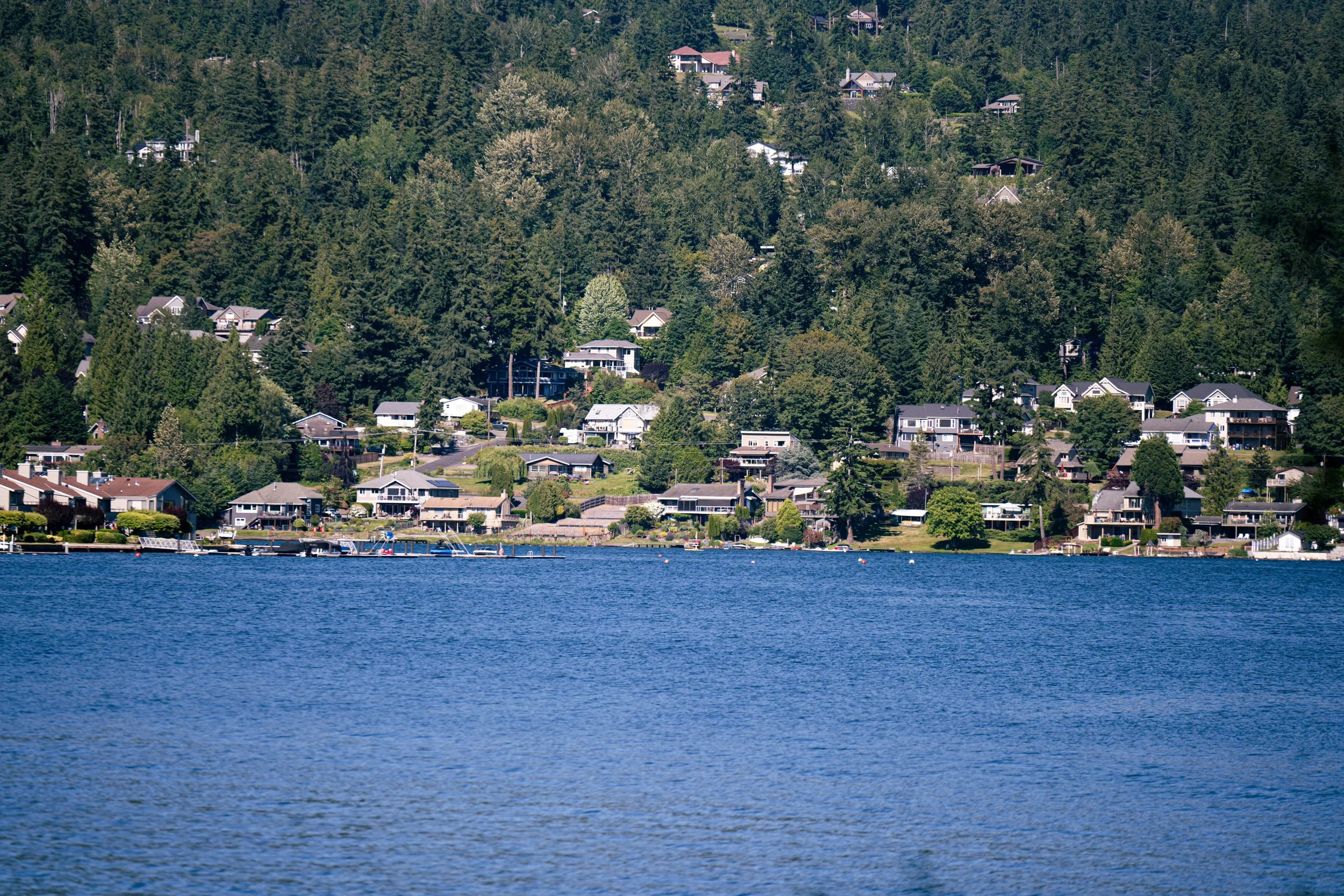
Houses along the northern edge of Lake Whatcom on June 16, 2026. // Photo by Avery Robertson
Following the new categorization of residential watershed, over 350 housing units could be allowed in that same area. The city states that this categorization “permit[s] a limited range of small scale housing types at a low density level to limit development and water quality impacts."
“The Bellingham Plan does not include any language or proposal that increases housing density in Silver Beach. In fact, the opposite is true,” Behee said.
In their appeal, the Whatcom Environmental Council questioned how increasing the number of housing units in an area along the lake’s shoreline is in line with the state’s goals to preserve and enhance water quality.
The Growth Management Hearings Board, the committee responsible for evaluating the appeal, has declined to comment on the proceeding while it’s currently under review.
Housing development concerns are not unique to Bellingham. The lack of affordable housing options impacts Americans across the country as rent prices soar to an all-time high, according to a 2023 Pew Research study.
The Bellingham Plan reinforces the necessity of housing in the city, emphasizing the importance of diverse development to increase affordability and accessibility.
Rather than the traditional suburban model of single-family homes, incorporating more housing options like apartments, townhouses or duplexes can help bridge the supply gap between those seeking housing and the available units. Silver Beach is considered one of the most upscale and expensive neighborhoods in Bellingham, and new single-family homes could be unaffordable to most individuals.
Reaching an agreement among all parties on the best management practices for the lake is a complex endeavor, as the actions of one party can affect the entire area.
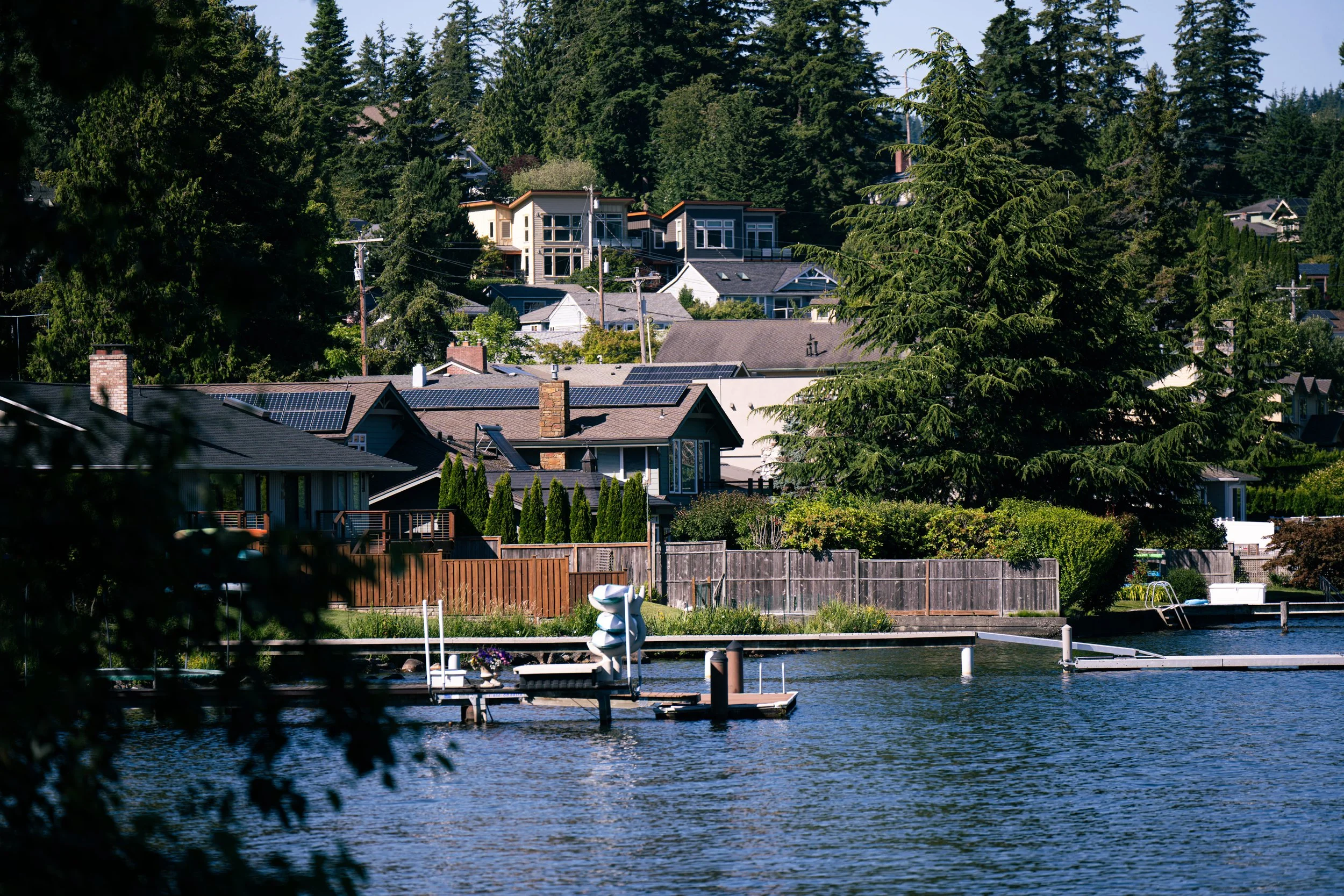
Houses along the northern edge of Lake Whatcom on June 16, 2026. // Photo by Avery Robertson
For the past 30 years, Lake Whatcom has been on the Department of Ecology’s list of impaired bodies of water, meaning that it currently does not meet state water quality standards for healthy lakes. Lake Whatcom has elevated levels of bacteria and a high concentration of dissolved oxygen, a direct impact of increased urbanization near the lake.
“Is it clean? No,” Eggerth said. “I mean, it's an impaired water body. It's not clean. It's not where it used to be.”
More housing would mean elevated pressure on the lake’s already strained ecosystem.
Justin Clary, the general manager of the Lake Whatcom Water and Sewer District, identified phosphorus from urban sources like lawn fertilizers, pet waste, treated sewage effluent and decomposing leaf litter as the largest contributor to the lake’s decreased water quality.
“Phosphorus entering the lake has caused issues down the line, creating issues with dissolved oxygen, which totally upsets the balance of the lake,” Clary said.
One way different groups have come together to co-manage this is through the Lake Whatcom Management Program. Formed in 1998, this program is a collaborative effort between all the governmental parties responsible for the lake and its watershed, including the city of Bellingham, Whatcom County and the Lake Whatcom Water and Sewer District.
The program strives to increase the water quality in the lake so that it is no longer listed as an impaired body of water. A big focus is on the management of stormwater runoff from urban areas to prevent phosphorus pollution from entering the lake.
Eggerth explained that the environmental council understands that the city has obligations and housing developers need certainty, but prefers the regulations are put on hold until the case is resolved by the hearing board.