
Moving On From the Turf Lawn
An environmental effort that’s bringing community together
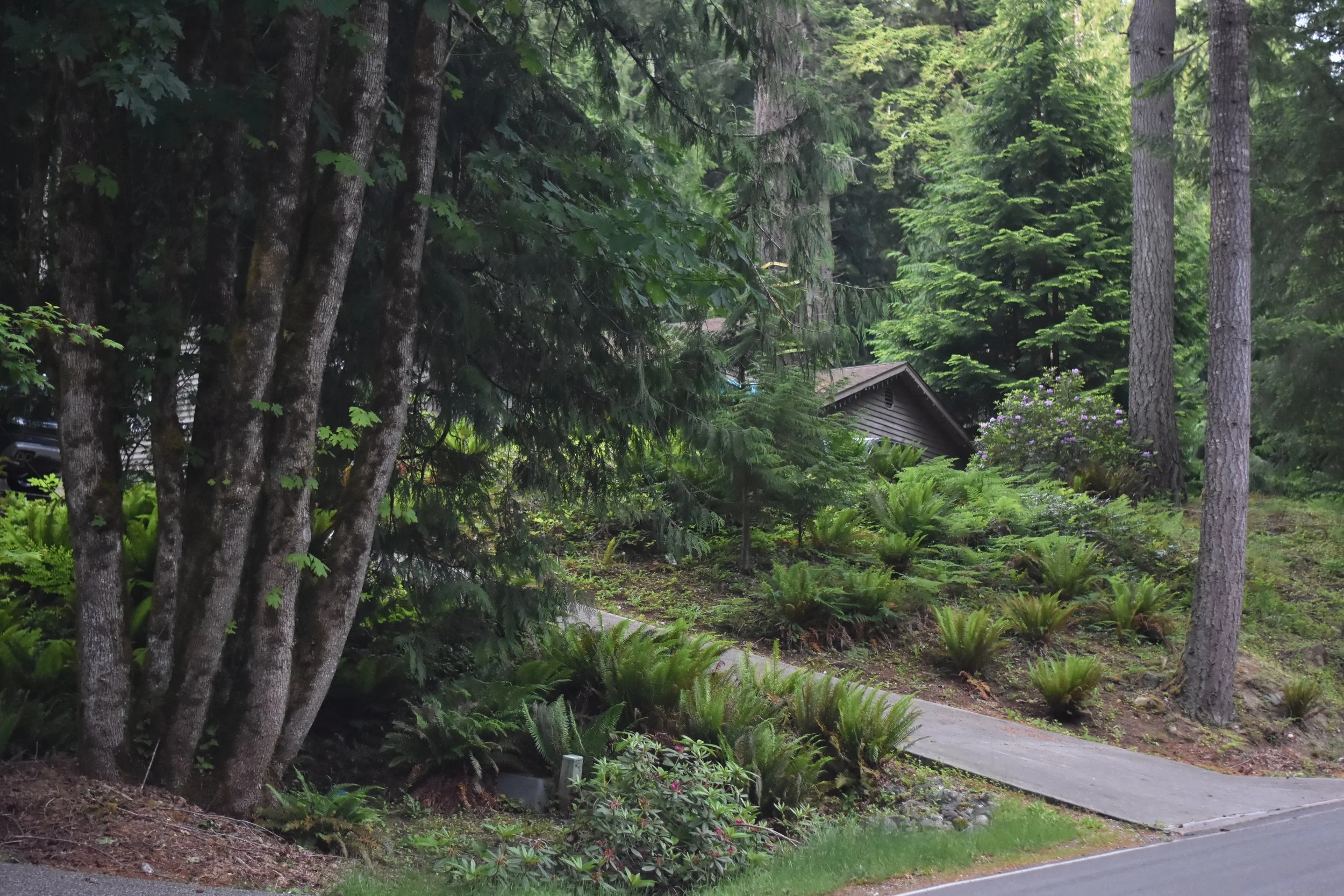
Native Landscapes within a Sudden Valley neighborhood. // Photo by James Pitts
Story by Olivia Smith // Photos by James Pitts & Owen Begley-Collier
June 19, 2026
When community members suddenly turn their back on a perfectly manicured lawn, their neighbors might call their sanity into question. But for some local homeowners, abandoning traditional suburban decorum is part of a broader vision.
Communities around Bellingham are ditching the traditional turf lawn for native forested landscapes, transforming their neighborhoods into a scene out of a woodland fairytale, all in an effort to restore the environment and protect the city’s water quality.
Lawn-centric landscaping has been ingrained in American history since the 1870s. It started as a prominent way to convey economic status and wealth, and later expanded into a form of social obligation and conformity among suburban areas. Mowing the grass every week, spending hundreds of dollars on lawn care and driving up water bills to achieve that immaculate shade of green are all things that homeowners have been well aware of for decades.
Keeping up the lawn became more of a requirement to maintain a visually aesthetic neighborhood and community. However, these traditional ways came with large consequences for the environment.
“I think it was really seen as a status symbol to have this clean, organized lawn,” Aneka Sweeney, education and outreach programs manager for Whatcom Conservation District, said. “But what we’re finding is there are huge decreases in pollinators, in wildlife habitat and impacts on our lakes, streams and rivers with the runoff that’s coming off of these impermeable surfaces.”
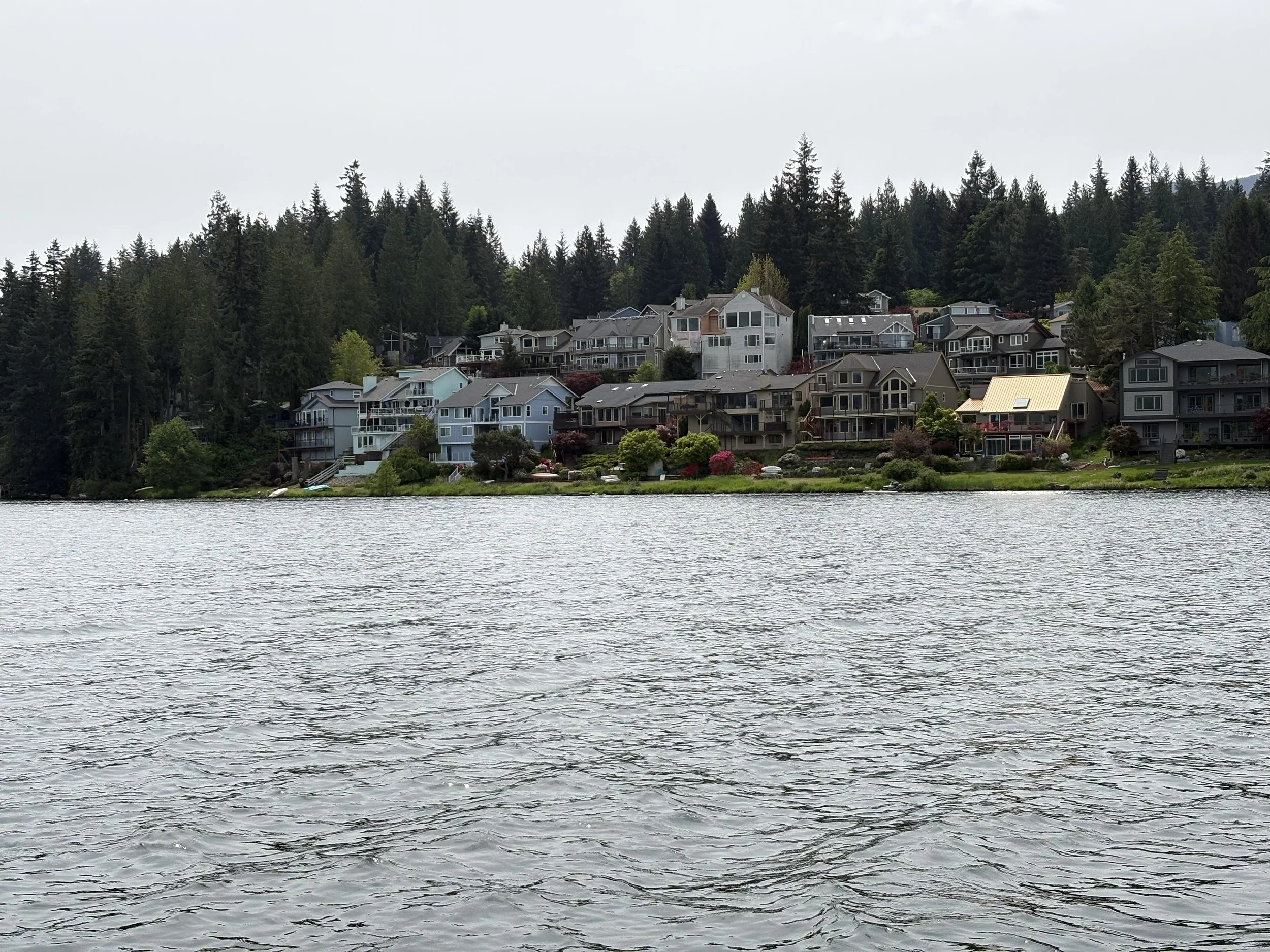
Homes along the edge of Lake Whatcom. // Photo by Owen Begley-Collier
The roots of most turf grasses are extremely shallow, making it difficult for water to absorb deep into the soil. When it rains, nutrients and contaminants from fertilizers, pesticides and pet waste run off into bodies of water instead of being filtered out naturally in the ground.
This influx of nutrients can cause significant problems for aquatic plants and organisms. Harmful algae blooms develop in bodies of water as a result, blocking sunlight from plants lower in the water column. Bacteria feed on the algae as they decompose, consuming dissolved oxygen at the same time. This depletes oxygen concentrations essential for the survival of fish and other aquatic life.
For Lake Whatcom, low oxygen is a concern with increasing development in the watershed. A buildup of algae is harmful to local aquatic species, but it can also clog the filters used to clean drinking water. This can make water treatment extremely expensive and release chemicals during the process, threatening public health and water quality.
These issues are only growing in importance as climate change increases the frequency and severity of drought seasons.
“When you get rainfall following a dry spell, that first flush of rain carries high concentrations of contaminants into streams, then into the lake,” Luke Fincher, a research assistant for Western Washington University’s Institute of Watershed Studies, said.
In Birch Bay, excess nutrients from agricultural waste, sewage and stormwater introduce high levels of fecal coliform bacteria that threaten water quality. Fecal coliform can indicate the presence of pathogens, posing risks for the health of humans and aquatic life.
“Birch Bay is a very big shellfish harvesting area, so one of our main drivers is to make sure the water quality is healthy enough in order to harvest shellfish and recreate there,” Holly Faulstich, a natural resource specialist for Whatcom County, said.
The declining health of these critical watersheds sparked a wave of action among local organizations and communities eager to restore the natural habitat.
Whatcom County and Whatcom Conservation District teamed up to develop programs aimed to help homeowners living around Lake Whatcom and Birch Bay transform their lawns into landscapes filled with native plants. One program is the Neighborhood Native Landscaping Program, which launched in 2022 to provide the tools necessary for promoting native terrains.
“As we build out into the environment, green infrastructure will be a necessity if we’re going to have healthy rivers, abundant salmon populations and thriving coastal communities. There's no option at this point,” Sweeney said. “We know these native species have been here for millennia: Why not use them as a tool to adapt to our changing climate?”
Abe Lloyd, an ethnobotanist and professor at Western, highlighted that native plants are adapted to thrive in the conditions of the region. They don’t require any fertilizing, long-term watering, or lawn mowing to care for them.
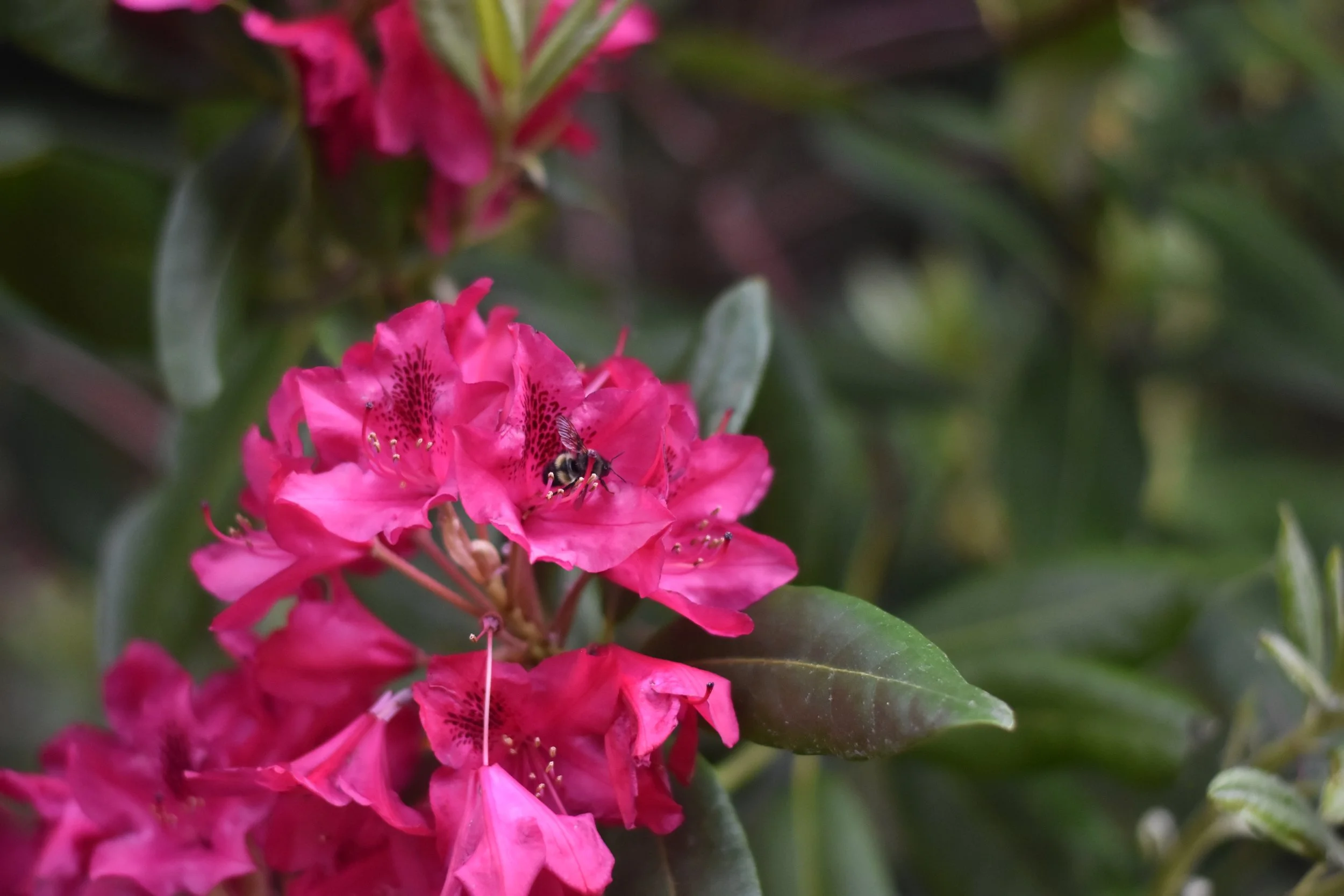
Bumblebee nestled on a Rhododendron, an herbaceous plant native to the PNW. // Photo by James Pitts
Most native plants in Washington state have long root bases that anchor the substrate around them, preventing soil erosion in critical watersheds. Their roots can also absorb more water than non-native species, increasing their ability to filter stormwater runoff.
“They are providing pollinator habitat, increasing canopy to alleviate temperature fluctuations and they’re drought resistant,” Sweeney said. “All of the different climatic characteristics, challenges and stressors that we’re having, these native plants fulfill.”
Homes selected for the program are typically chosen in clusters to maximize the area of the native landscapes.
“We build out the base map, what the project area will be, determine the light characteristics, the soil quality and we make a planting plan for each individual… We come in and kill all the grass, mulch it and order all the plants,” Sweeney described. “Then, with the community, we have this planting party, and that’s the fun part.”
Faulstich explained how 1,000 plants can get planted in one day because of help from the homeowners, staff and conservation core crew working together. By the end of 2026, Faulstich and her team estimate to have approximately 180,000 square feet of native landscaping on 80 properties constructed.
Both Faulstich and Sweeney shared how neighbors formed friendships that otherwise may never have happened without these programs. Often, they overhear plans of potlucks and barbecues directly after planting.
“Some of them have never talked to each other before,” Sweeney said. “Community bonding just doesn’t happen as much anymore, so it does feel very fulfilling for our staff.”
The benefits move beyond a reduction in water bills and maintenance. As homeowners are learning to work in harmony with their environment, they are forming relationships and building a community along the way, practices that Indigenous peoples have been engaging in here since time immemorial.
Sophia Stevenson, a member of the Tlingit Tribe of Southeast Alaska and student at Western, explained how native plants are a way to communicate with the land and create traditional food, crafts and regalia.
“There were people living here since the beginning of time. Living within everything that was near, being in a relationship with the place that they were in,” Stevenson said. “And then when the land got acquired in the 1850s, it just went silent.”
Bellingham may be gaining a new understanding of what it means to have a traditional yard, as well as what it means to be a part of a community with each other and with the developing environment.
“With individuals each doing their part on their individual parcel, we’ll start to reclaim what was, traditionally, a huge forested landscape here,” Sweeney said. “It's part of a movement that is going beyond what is so self-serving and being able to see the bigger picture.”