
The Cost of The Cloud
In rural Washington, the promise of tech-driven prosperity is running dry, one data center at a time
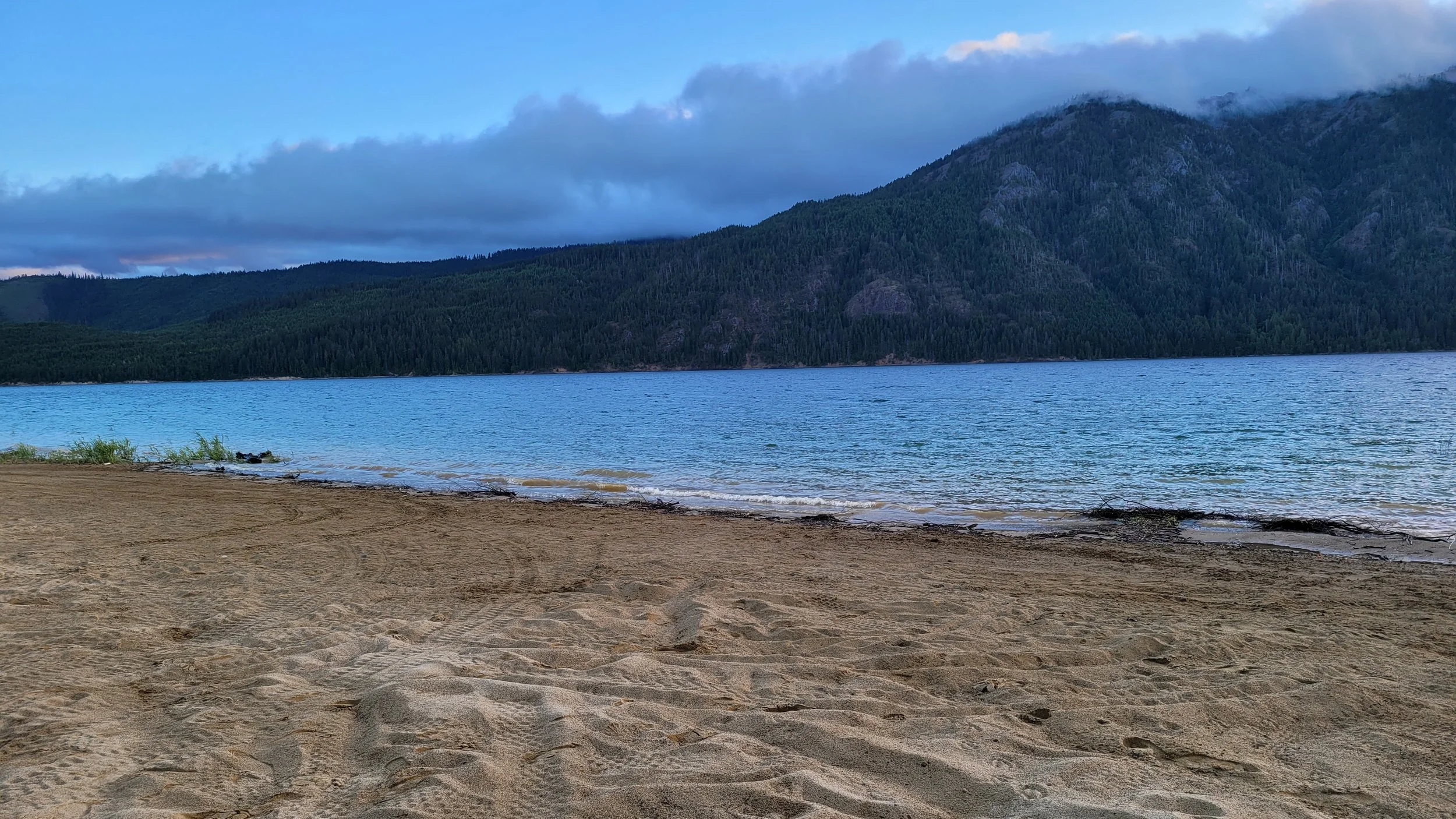
Farmland near proposed data center in Walla Walla, Wash., in 2024. // Photo by Derek Noone
Story & Photos by Derek Noone
June 19, 2026
On a quiet stretch of highway outside Quincy, Washington, the landscape shifts without warning. Sage and basalt give way to the angular silhouettes of massive warehouse-like buildings, their cooling towers exhaling white plumes into an otherwise unbroken sky.
There are no signs advertising what they are. No workforce streaming in or out at shift change. Just the low, constant hum of servers processing the world's data, around the clock, every day of the year.
Most people driving past would not recognize them. But those data centers are what’s putting a strain on Grant County’s electrical grid and dumping wastewater into the Columbia River at unmanageable levels.
The Columbia Basin was supposed to be the salvation of eastern Washington's agricultural economy. Cheap hydropower, vast land and cool, dry air drew a different kind of settler in the 2000s, 2010s and 2020s. Not farmers, or even humans, but the invisible machinery of the internet.
Server racks replaced wheat fields, and the hum of cooling fans drowned out the wind rolling off the Cascades. Local officials welcomed data centers with open arms and, more importantly, open tax ledgers.
Two decades later, the ledger does not balance.
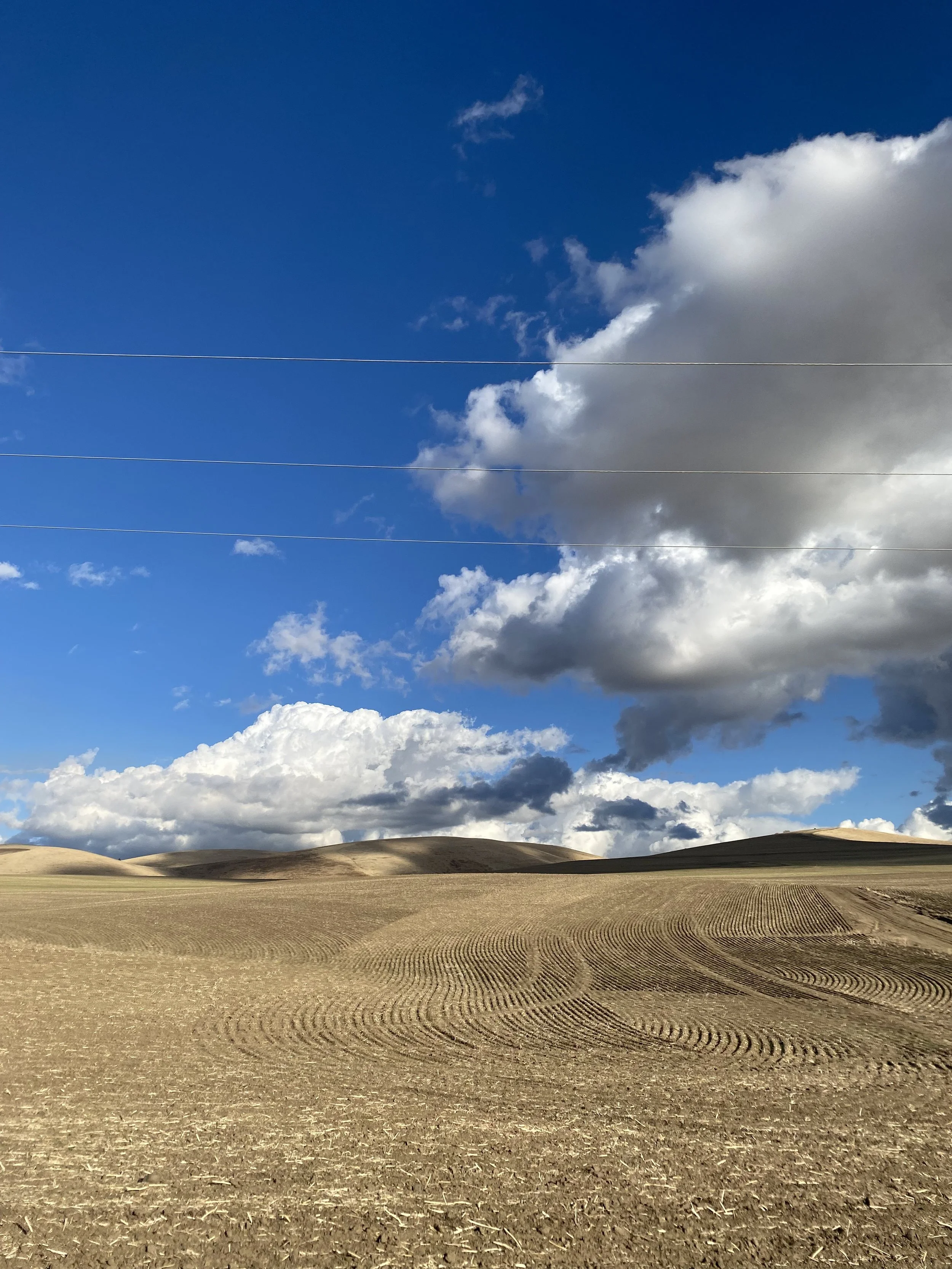
Farmland near proposed data center in Walla Walla, Wash., in 2024. // Photo by Derek Noone
Data centers are the physical backbone of cloud computing, streaming services and artificial intelligence. In Washington State alone, they have attracted billions in corporate investment while costing taxpayers more than $300 million in forgone tax revenue. This strains the state's clean energy grid and consumes water at a scale that rivals entire municipalities, all while creating far fewer jobs than promised.
Data centers in Grant County now account for nearly 40% of the county's total electricity demand, enough to power nearly 190,000 households. Washington's hydropower, once considered essentially boundless for local purposes, is reaching its practical limits.
To fill the gap, utilities have been forced to purchase "unspecified" power from the open market, a category that includes natural gas and other carbon-emitting sources.
The result is a painful irony: a state with some of the cleanest electricity generation in the nation is quietly importing dirty power to keep its servers online, even as it pursues binding targets under the Climate Commitment Act, a 2021 law requiring Washington to reduce emissions to 95% below 1990 levels by 2050.
Jeremy Fisher, Principal Advisor for Climate and Energy at the Sierra Club, sees Washington's legal framework as a meaningful safeguard, but cautioned that the pace of construction is outrunning it.
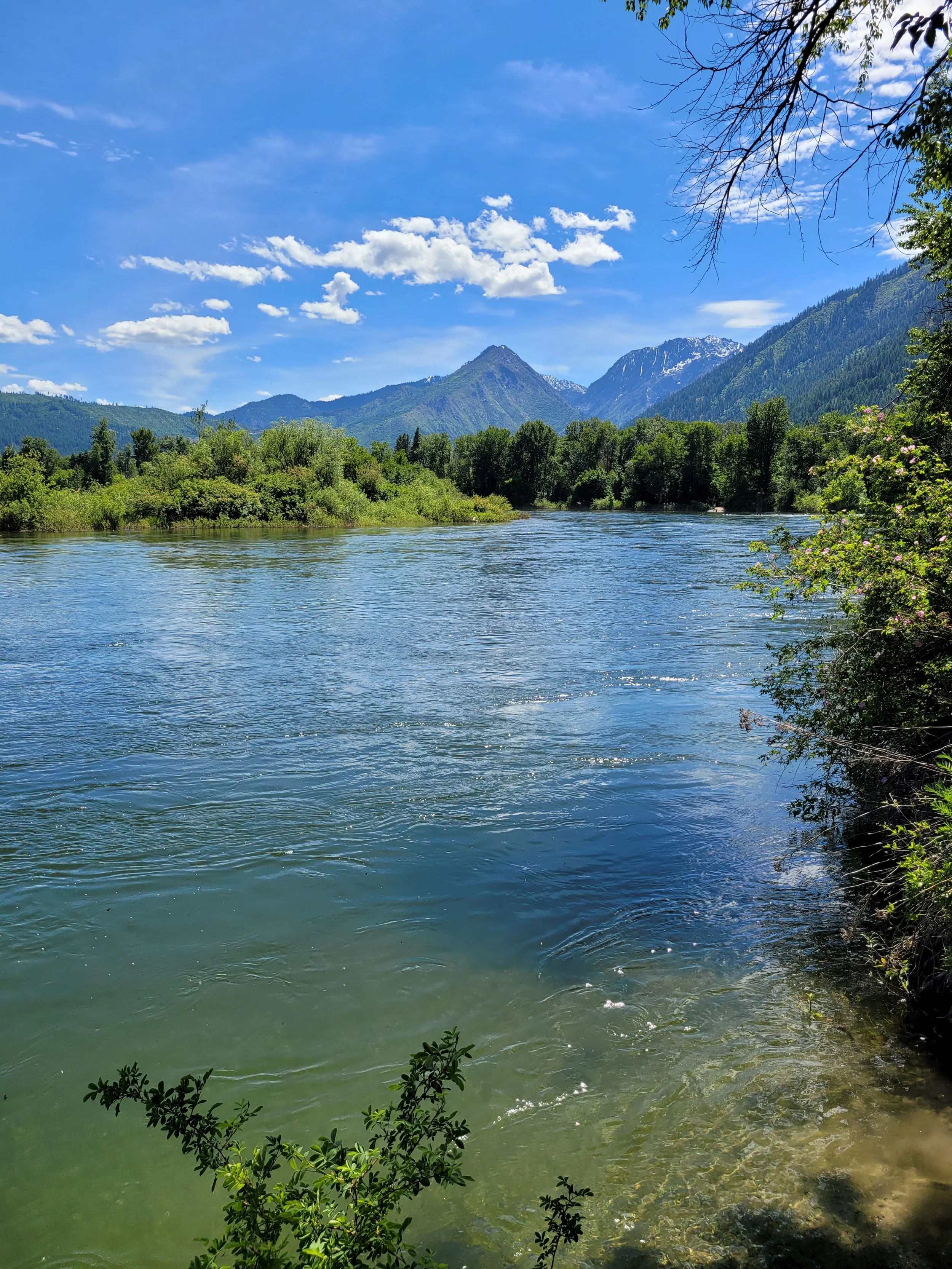
The Wenatchee River in Dryden, Wash. near a proposed Data Center in 2024. // Photo by Derek Noone
"Many of these data centers are coming online so fast that we're stressing the grid," Fisher said. "We don't have the resources to be able to serve them as quickly as they want to be served."
Energy is only half the equation. Data centers generate an astronomical amount of heat as a byproduct of computation, and cooling that heat demands staggering quantities of water.
A medium-sized facility can use roughly 110 million gallons annually, equivalent to the water use of 1,000 households. Larger facilities consume up to 5 million gallons per day, the equivalent of a town of 50,000 people.
Approximately 80% of that water evaporates through cooling towers and is permanently removed from local water cycles. The remaining 20% is discharged as warm wastewater in volumes that can overwhelm municipal treatment systems.
In Washington, as in most states, there is no mandatory public reporting requirement, and fewer than one-third of data center operators tracked their water consumption as of 2016, a figure advocates say has improved only marginally since.
Washington has spent more than $300 million in tax revenue on data centers since extending incentives to them in the early 2000s. In return, the facilities have created relatively few permanent local jobs. The positions they do generate are typically low-wage, contracted and lacking benefits: security guards and janitors, not engineers.
Molly Kleinman, a researcher affiliated with the University of Michigan's Ford School of Public Policy, said the disconnect between corporate promises and community reality is a pattern she has observed across the country.
"There's a lot of concern that I think has caught lawmakers by surprise," Kleinman said.
She described the backlash as a rare bipartisan issue. She also flagged what researchers call the stranded asset problem. If AI-driven demand slows, communities are left with drained aquifers and no industry to show for it.
"I think there's very likely to be a contraction in the industry as technology improves and we discover the real market value of the products that are emerging," Fisher said.
His advice to rural communities considering new data center proposals was direct: negotiate upfront concessions, guarantee local labor and protect water resources before breaking ground.
"Make sure that those are negotiated upfront, but then gotta hedge your bets,” Fisher said.