
Ignition at Ferndale Gas Terminal Over Permits
Local coalition demands accountability after one company allegedly oversteps permits
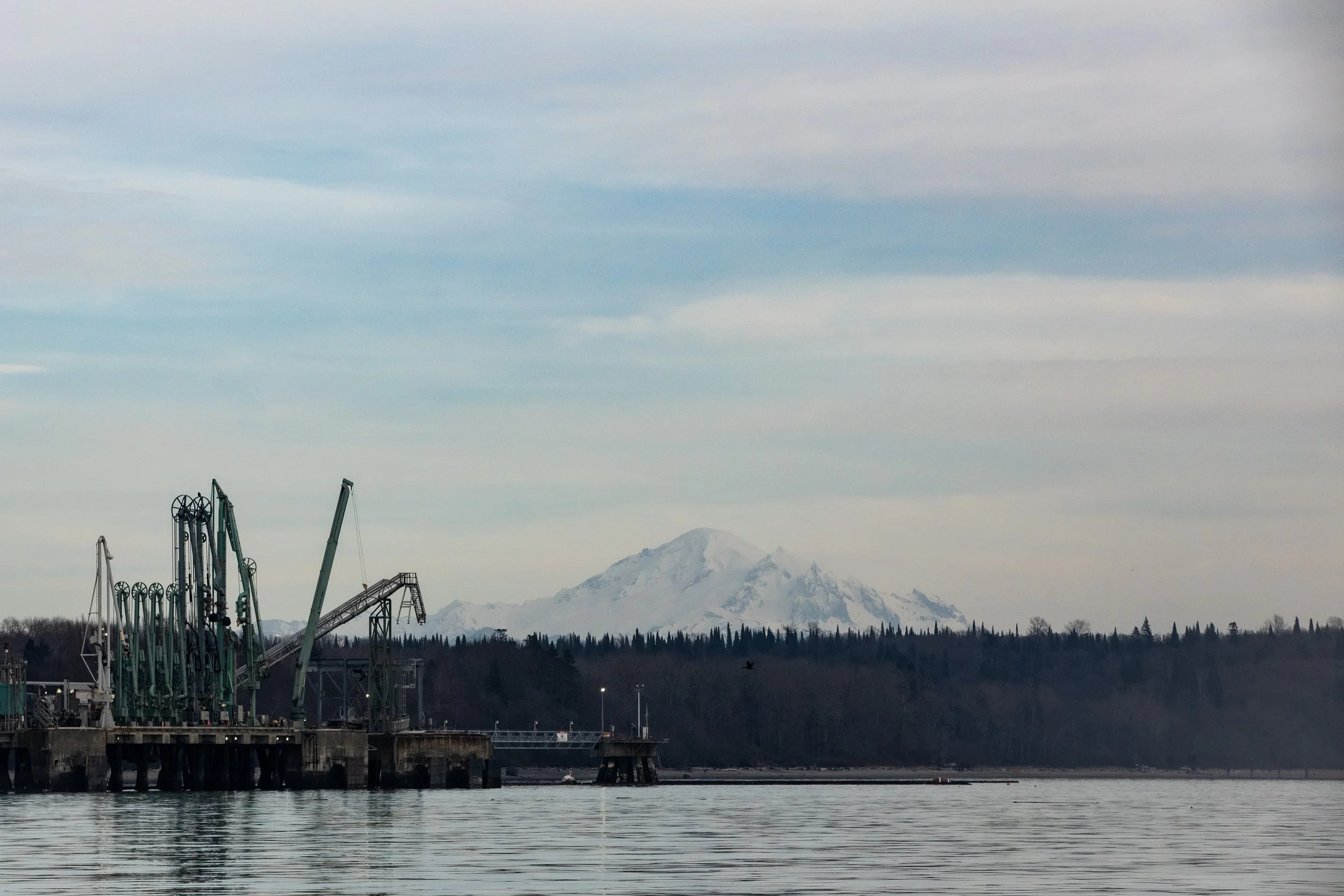
Mount Baker looms behind the docks of the Cherry Point Oil Refinery in Whatcom County, Wash., on Feb. 6, 2026. // Photo by Liam Britt
Story by Josephine Stevenson // Photos by Liam Britt
March 30, 2026
UPDATE: On March 31, 2026, the Whatcom County Hearing Examiner ruled that the Whatcom County Planning Department did not properly oversee the permitting process to expand the terminal. This ruling blocks two new permits and halts permits for the past 31 improperly permitted projects at the terminal until Whatcom County redoes the environmental impact analysis of the projects.
Morning sunlight filters in through the blue-green shades of the Whatcom County Council Chambers, reminiscent of the waves that ships pass through on their way to the Ferndale Energy Terminal. Jan Hasselman, senior attorney for the environmental non-profit Earthjustice, settles into the spotlight at the front of the room.
Hasselman is representing six local environmental groups in a case against Canadian oil and gas company Altagas that is under internal county review until further notice. The groups assert that AltaGas has increased their export capacity at the Ferndale Terminal by carrying out 31 unpermitted projects, which have allegedly resulted in higher ship and rail traffic, and increased the risk of pollution and injury. According to Hasselman, these projects endanger humans and animals in the area and support the continued growth of the fossil fuel industry.
“There's no discussion about shutting this terminal down, but there should be a conversation about whether the terminal can expand this much without really considering the risks,” Hasselman said.
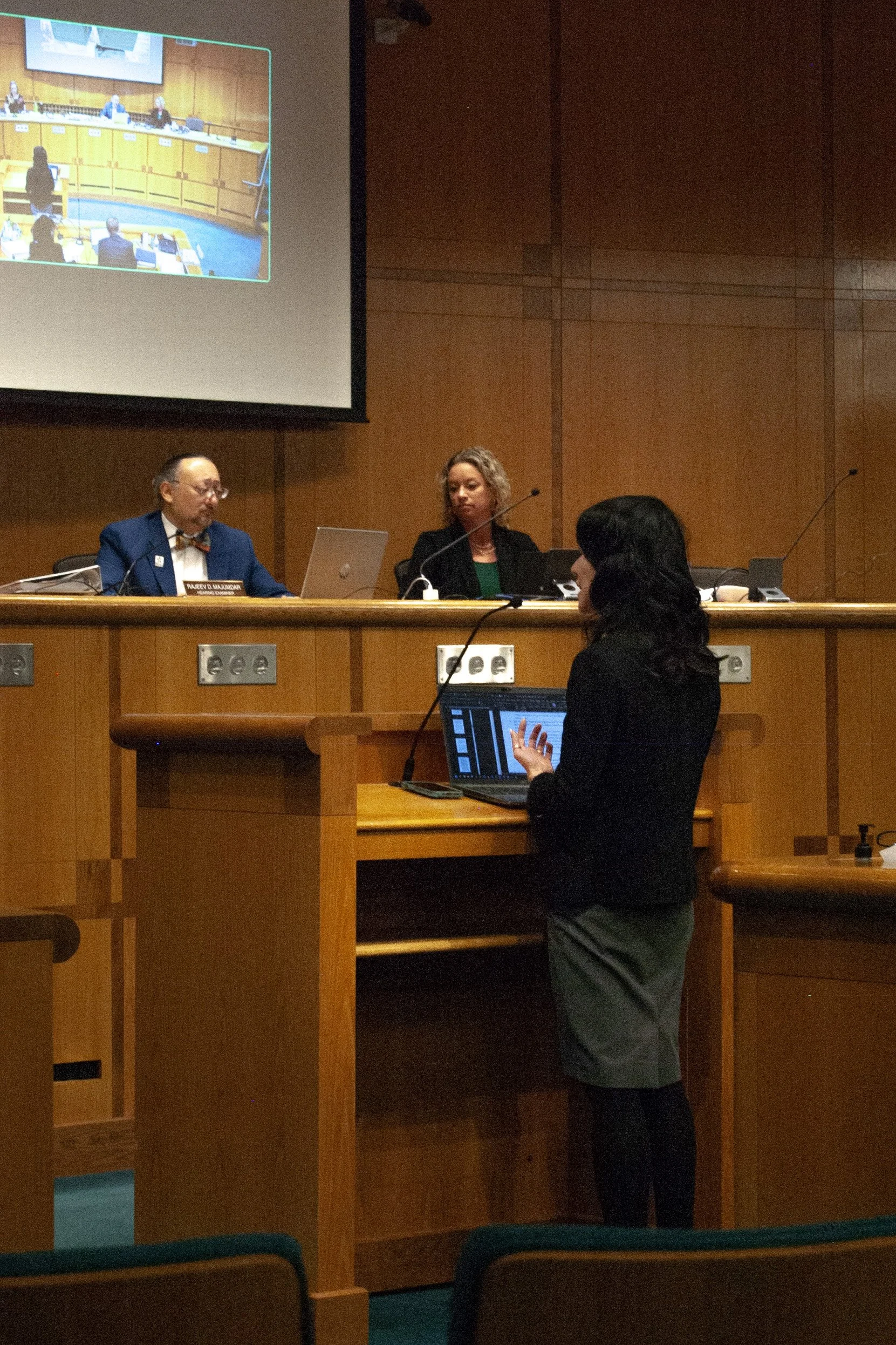
Clara Park, a lawyer representing AltaGas, speaks at a hearing at Whatcom County District Courthouse in Bellingham, Wash., on Jan. 29, 2026. // Photo by Liam Britt
In September of 2025, Whatcom County reviewed the 31 unpermitted projects — most of which took place between 2016 and 2021, during a five-year pause on all fossil fuel transportation permits. Whatcom County declared these projects to have no significant environmental impact as long as AltaGas continues to follow “proper mitigation.”
While some of these projects were relatively small changes, others completely altered the terminal’s capacity to export gas, Hasselman explained.
The six environmental groups formed a coalition to file an appeal of this decision, citing concerns that Whatcom County’s initial review is incomplete without an environmental impact statement.
The Washington State Department of Ecology defines an environmental impact statement as a tool used to evaluate the environmental significance that a proposed action or project would have. This could include the development of federal infrastructure or projects by local agencies, the latter of which is the case here. Then, actions that would mitigate this significance are determined and added to the proposal.
“Once we understand the full scope of the impacts, we can have a conversation about whether those risks and impacts are worth it,” Hasselman said.
From the Ferndale Terminal, AltaGas ships liquified petroleum gas, largely composed of butane and propane, to overseas markets. In the process, harmful pollutants like waste gases are released, and often disposed of through open flare burning.
These open flares, however, can also release hazardous gases and unburned hydrocarbons, both of which have a larger warming potential per molecule than CO2 and are more harmful to breathe in.
Hence, AltaGas’s newest permit request: construction of an enclosed ground flare. This flare would burn the facility’s waste gases into CO2 and water, reducing pollutant emissions and increasing worker safety.
The permit request also includes a second project, which AltaGas has termed “waste gas recycling,” often referred to as exhaust gas recycling. This process converts remaining waste gases from flaring into fuel for the facility, further lowering emissions.
Members of the public are split on this issue. Many people are confused as to why 31 unpermitted projects were carried out without an environmental impact statement in the first place, and are concerned about the effects of these projects, while others state the importance of the Terminal to the local economy.
To the environmental coalition, made up of Friends of the San Juans, RE Sources, Evergreen Islands, the Sierra Club, Washington Conservation Action, and Whatcom Environmental Council, conducting an environmental impact statement is particularly important because both human and non-human health and safety are at risk.
“Orcas are a species at the razor’s edge of extinction. There are only a handful of breeding females left, and the loss of even a single reproductive female orca could be the difference between survival and extinction,” Hasselman said.
Multiple aspects of the Ferndale Terminal put endangered orcas at risk. One major factor is that orcas are key predators in the Salish Sea that communicate and hunt using echolocation.
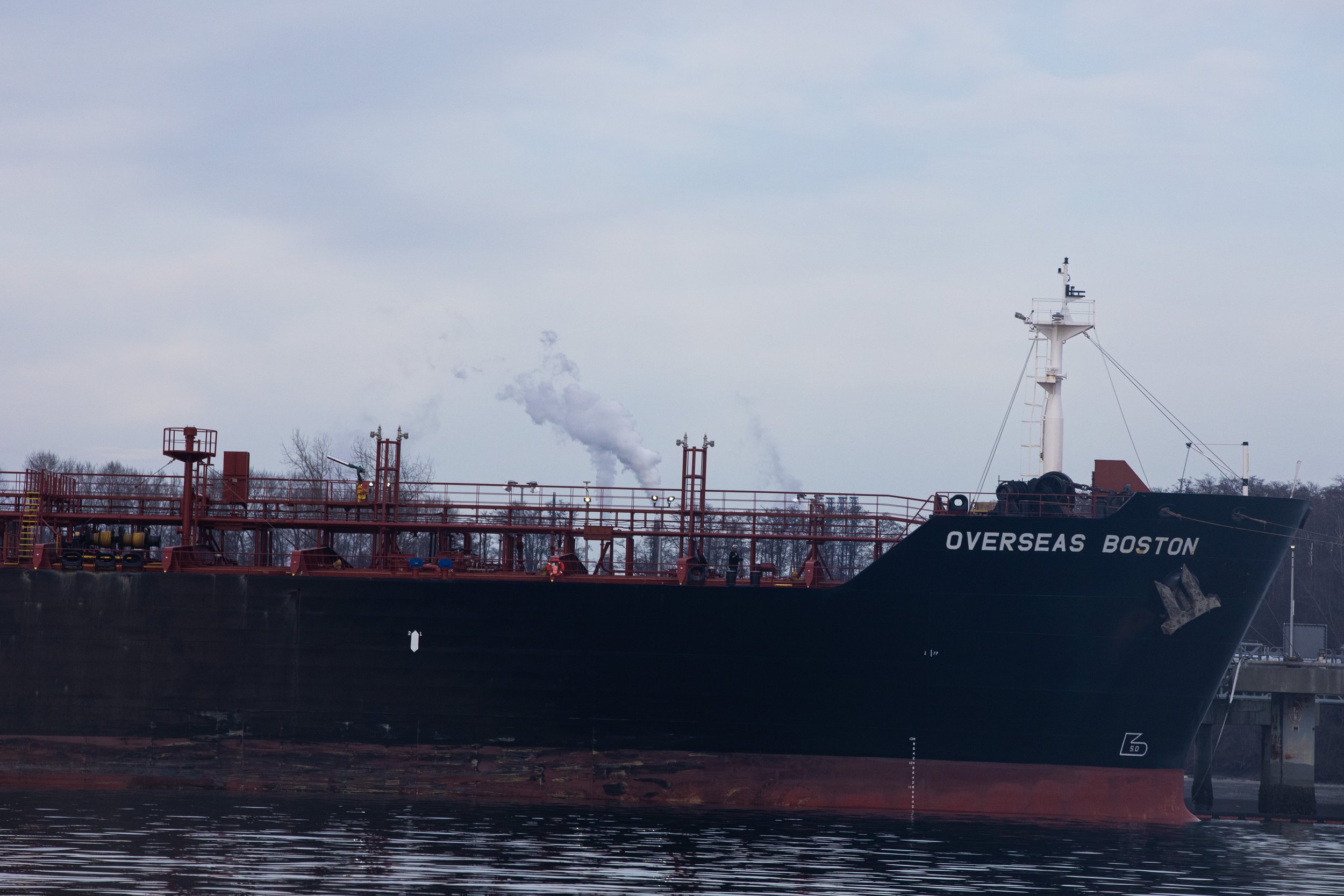
An oil tanker sits in front of the Cherry Point Oil Refinery in Whatcom County, Wash., on Feb. 6, 2026. // Photo by Liam Britt
“Underwater noise inhibits Southern Resident killer whales’ ability to communicate and to find and capture scarce prey, and the presence of the vessels can interrupt their foraging behavior,” Lovel Pratt, the marine protection and policy director for Friends of the San Juans, said.
Any increase in vessel traffic to and from the Ferndale Terminal would increase interference with orca feeding, communication and navigation. Documentation by AltaGas shows an increase in their annual vessel traffic, from 17 ships in 2016 to 32 ships in 2025.
“There have been no significant adverse impacts,” AltaGas media representatives said of the unpermitted projects in an email.
Petrogas, the company that owned the Ferndale Energy Terminal before AltaGas, faced a similar case of environmental negligence in a 2021 lawsuit.
According to the Northwest Clean Air Agency, Petrogas completed a series of unpermitted projects at the Terminal that resulted in an increase in emissions. At the time of the lawsuit, Petrogas had not conducted an Environmental Policy Act review of any kind since 2016.
The suit resulted in Petrogas paying a $4 million fine and being directed to carry out a full environmental impact statement. Petrogas paid the fine, sold the company to AltaGas and never conducted the environmental impact statement.
AltaGas declined to comment on the Petrogas suit.
For Darrin Magee, Western Washington University’s director of the Institute for Energy Studies, AltaGas needs to do more. He commends their initiative in taking on environmentally beneficial projects like waste gas recycling, but there is still a need for the transparency that an environmental impact statement on the terminal would provide, he said.
Hasselman has a similar perspective.
“There's a lot at stake here, and AltaGas has grown to become a colossus without ever triggering the kind of permitting and review that facilities of this size should get,” he said.
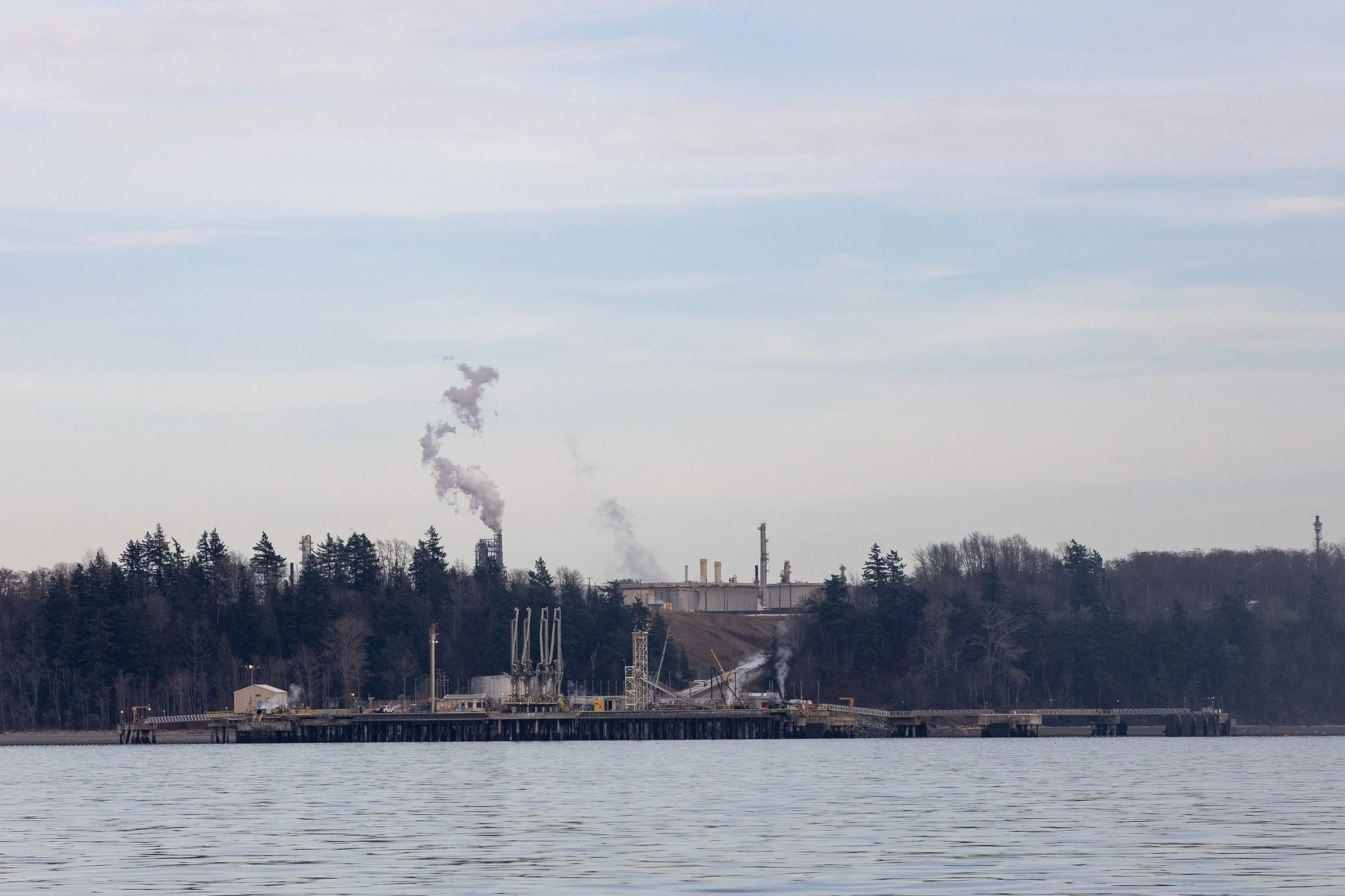
The Phillips 66 Oil Refinery borders the Lummi Nation in Whatcom County, Wash., on Feb. 6, 2026. // Photo by Liam Britt