
Pitching In for Pintos
Bringing an iconic sea snail back from the brink
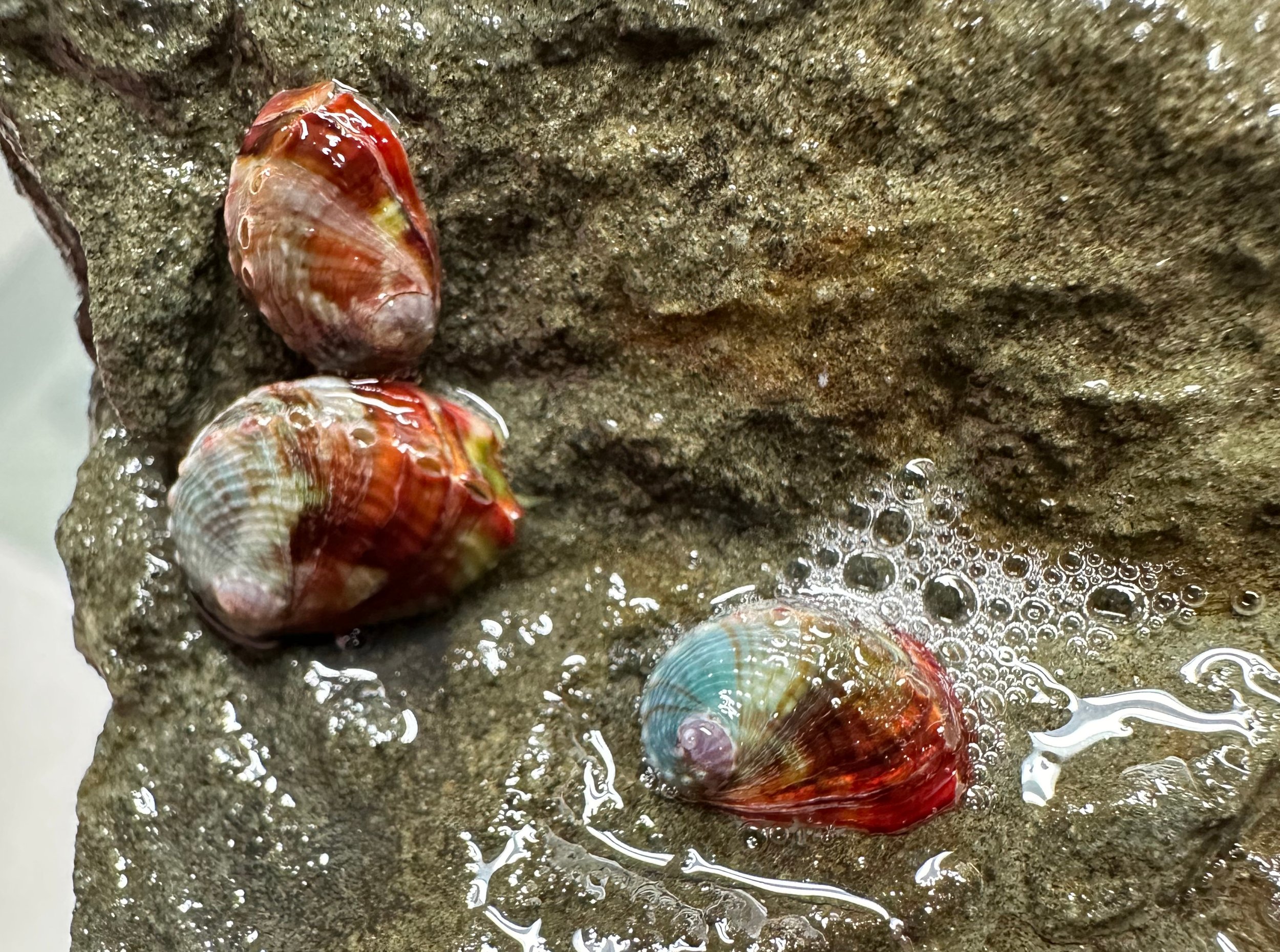
A few young pintos on a rock. The color of their shells is dictated by the type of algae they eat. // Photo by Brooklyn “Bug” Santee
Story & Photos by Brooklyn “Bug” Santee
March 30, 2026
The classic adage “there’s plenty of fish in the sea” is generally true . . . unless you are a pinto abalone.
The pinto abalone are sea snails that live in rocky reef habitats from Alaska to Baja California. They don’t look like your average snail, with their flat shells in watercolor hues of red, green and grey. What sets abalone apart from other snails is their pores, small holes along the top of the shell that they use to breathe, even when they’re stuck fast to rocks.
Once, these delicious gastropods were plentiful enough to make it to Washington dinner tables. Now, after decades of decline, environmentalists and state regulators are trying to ensure a future for these lonely creatures.
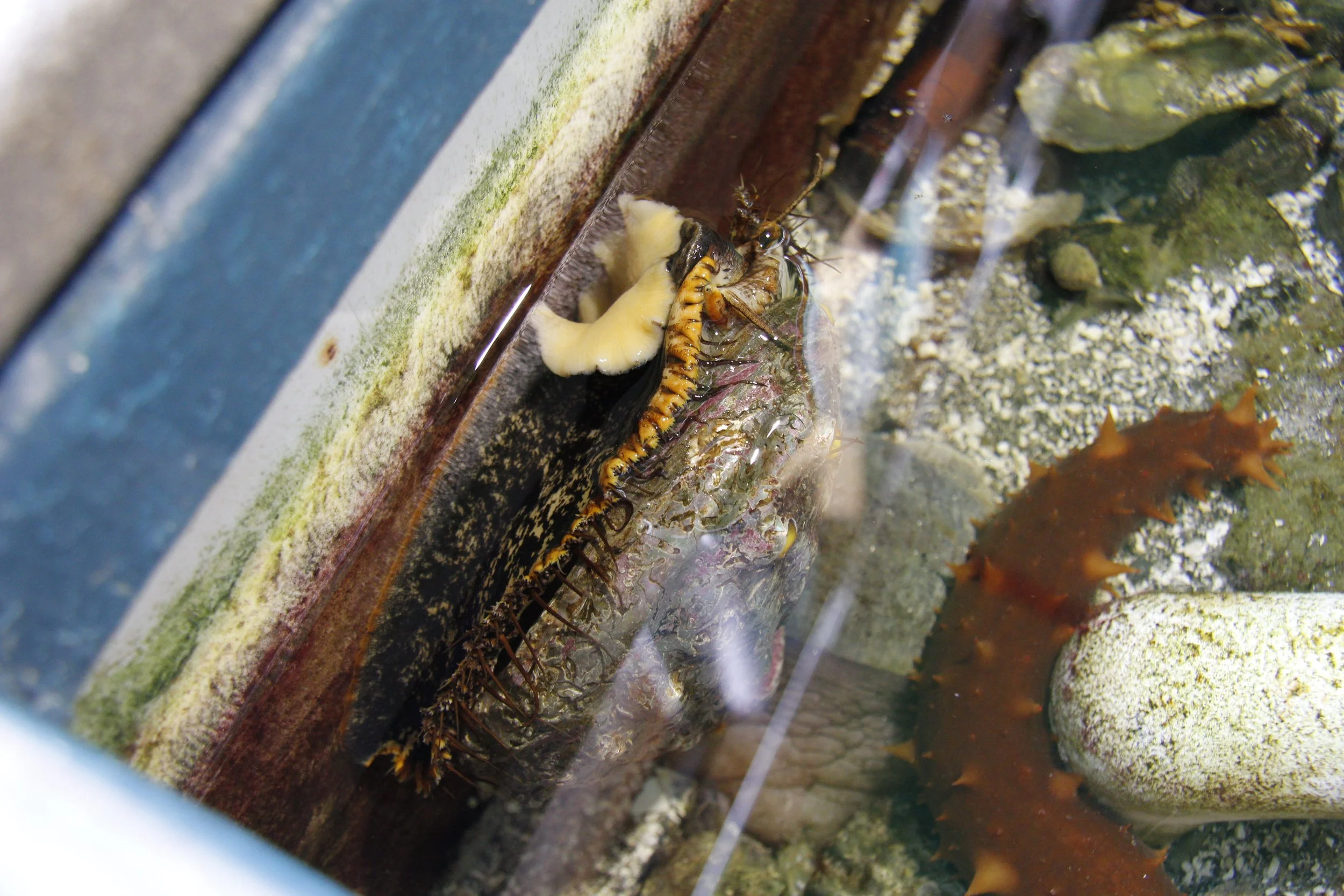
An adult abalone at the Marine Life Center, showing the spotted foot which gives them the name “pinto”. " // Photo by Brooklyn “Bug” Santee
In 1959, the state of Washington first recognized a recreational pinto abalone fishery in the Salish Sea. These snails used to be very populous, but sport fishing resulted in a serious reduction in their numbers. The popularity of the pinto outpaced their reproduction rate, and dive surveys found that between 1992 and 2013, their populations dropped by 92%.
The Washington Department of Fish and Wildlife closed the fishery in 1994, but the pinto population hasn’t bounced back. This has spurred an urgent bid for restoration.
Because the species is doing well in California and British Columbia, regulators denied requests to place the pinto on the federal endangered species list. However, in 2019, Washington officially listed the pintos as a state endangered species.
“They're delicious and they have amazing, beautiful shells,” Katie Sowul, the subtidal shellfish expert for Washington Department of Fish & Wildlife, said. “My favorite thing about the species is that abalone and humans have shared a really, really close relationship for thousands of years.”
In the Channel Islands of California, evidence of abalone use goes back 12,000 years. They’ve been used as food, trade goods and decoration all along the West Coast. In Haida Gwaii, British Columbia, the collection and processing of abalone was a family event, with everyone working together in pursuit of a delicious meal.
All along the West Coast and even inland, the pinto has been spiritually linked to a variety of themes — creation, death, coming of age and beyond. The pearlescent shells were highly regarded, and they were traded inland as far as the Great Basin and the Southwest.
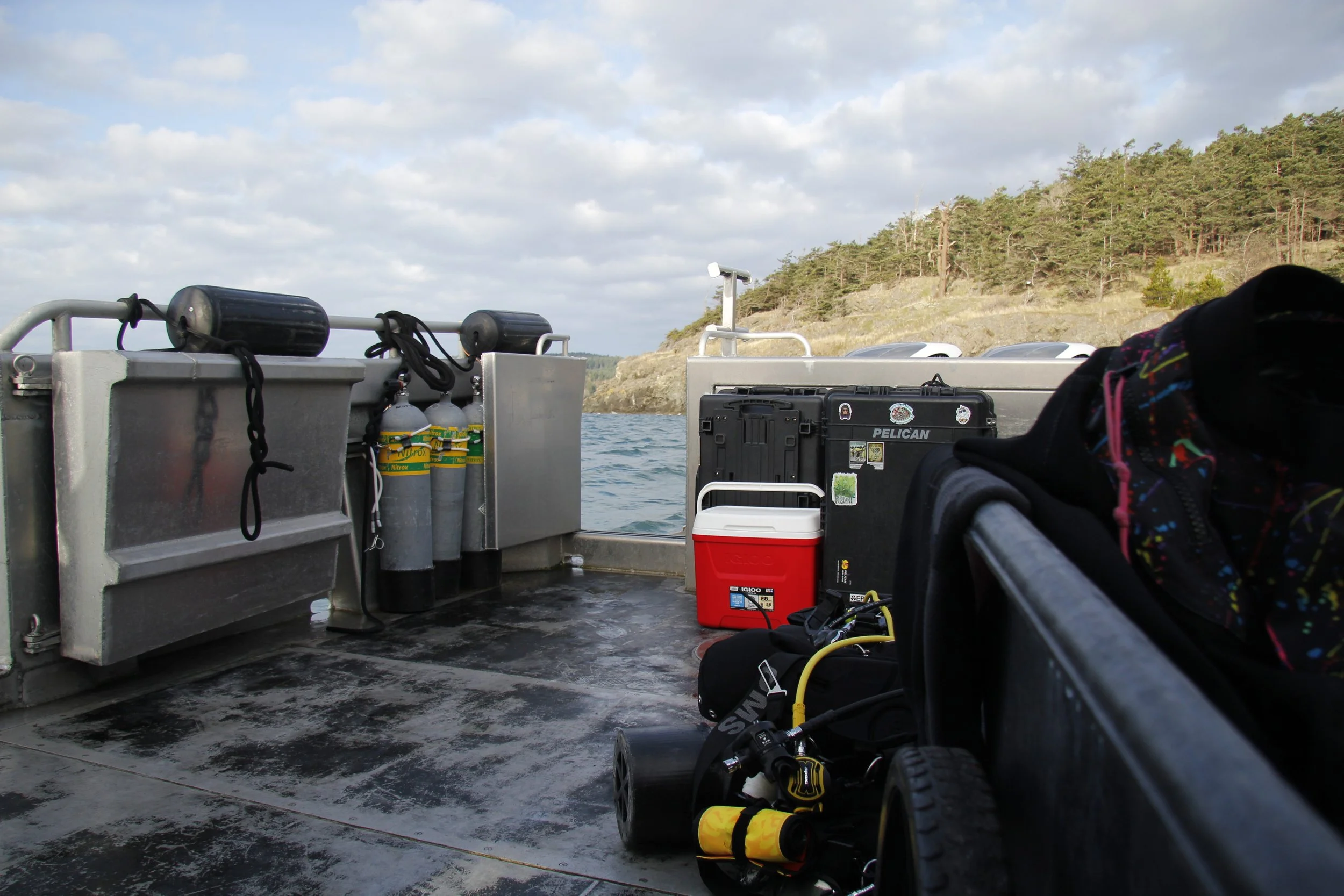
A view of James Island from the deck of “Caliper,” WDFW’s boat used for dives to release and survey for abalone. // Photo by Brooklyn “Bug” Santee
Pintos fill an important role as ecosystem engineers in their rocky reef habitats. They are grazers, spending each day eating algae off of rocks. Once they grow big enough, they start fishing for drift kelp, raising their foot and snatching it as best they can when it floats by. This frees up space for new vegetation growth and recycles nutrients from kelp, cleaning up the reef. Pintos also provide food for starfish and sea otters, species of concern for conservationists.
These pintos are living lonely lives. They are broadcast spawners, which means they release their sperm and eggs right into the water, hoping for them to meet while floating through the blue. This strategy was effective when snails were abundant, but now, not so much. Part of the issue preventing this species from recovering is that they’re simply too far apart to breed successfully.
Puget Sound Restoration Fund has been leading pinto breeding efforts since 2003. With the help of many organizations, universities and other groups from around the Puget Sound, the very first batch of lab-raised pintos was released in 2009.
Pinto are bred and raised at the Kenneth K. Chew Center for Shellfish Research and Restoration in Manchester, Washington, as well as the Seattle Aquarium. They start out as tiny larvae that are invisible to the naked eye. Over the course of a year, they’ll grow to the size of a pencil eraser on a diet of fresh-served algae. Then, they’re ready to graduate to the wide-open Salish Sea.
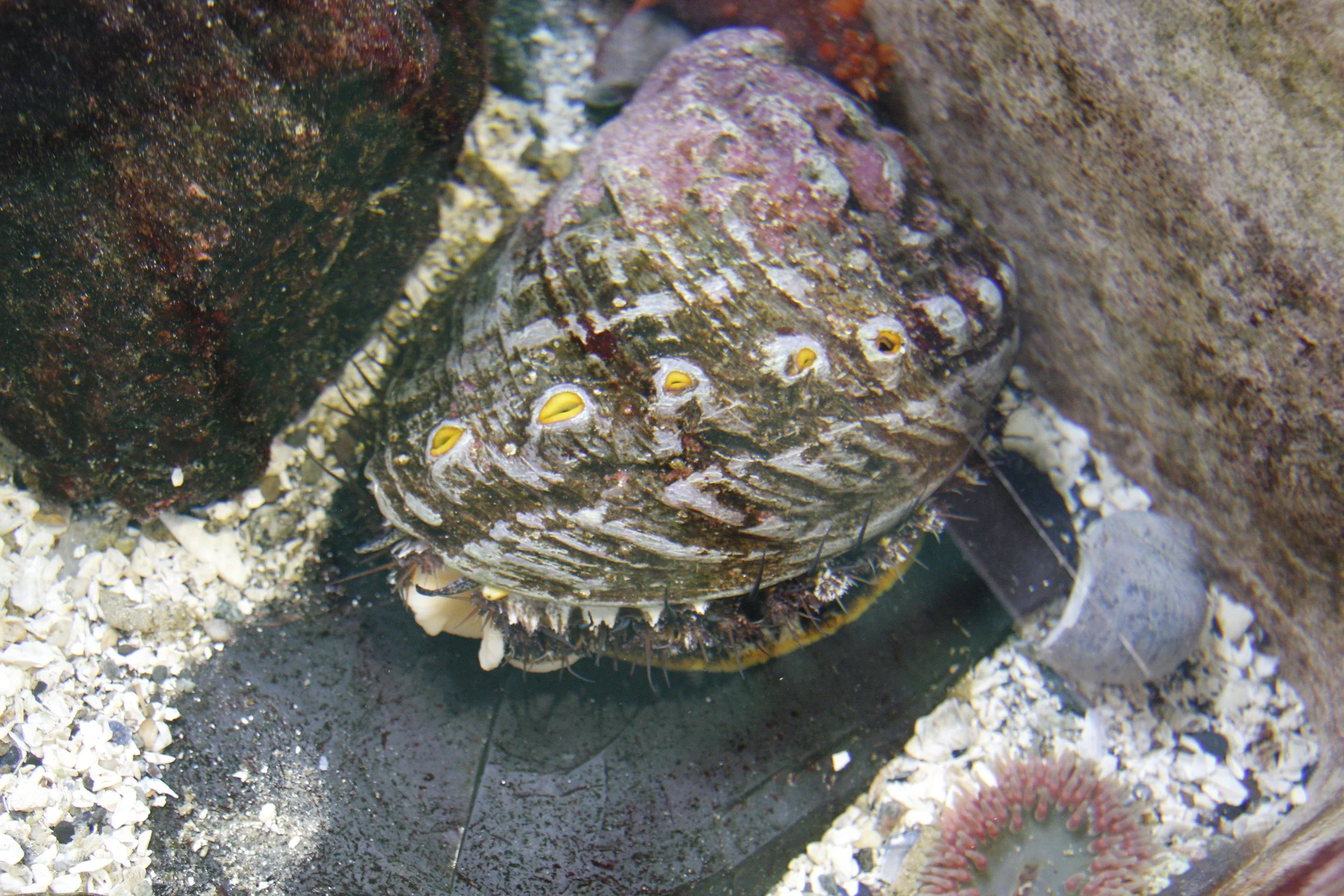
An adult pinto abalone. // Photo by Brooklyn “Bug” Santee
Biologists move the little snails by hand into PVC tubes, about 80 snails to a tube. From a boat, divers place the tubes in strategic locations, nestled into the rocks where the young snails disperse into the wild — a technique called outplanting. Many of the best spots are in the San Juan Islands.
Raising and releasing pintos over the years has taken time, effort and collaboration. Washington State tribes like the Samish, Makah and Lummi take part in studying and releasing pintos, as do other organizations and labs.
“We've progressed from the experimental phase and we're now just in a full blown restoration. We know it works. We do still run tangential experiments because we're always trying to optimize,” Sowul said. “It's working. We have legislative support.”
As of 2025, Sowul and other partners working on pinto restoration have released over 60,000 juvenile abalone across the Salish Sea. Once pintos start to return in numbers, they’ll need continued support to reestablish reign over their rocky kingdoms.
The Puget Sound Restoration Fund and their partners are still working to expand knowledge about pinto survival. Climate change is a concern, as ocean acidification can prevent the juveniles from building their shells properly, causing high mortality.
“This is a cautionary tale of the outsized impacts that we can have,” Arielle Kohl, a graduate student in Western Washington University’s biology department, said. Kohl has been studying abalone resilience in climate change conditions.
The story of pintos in the Salish Sea shows how fine the balance between fishing endeavors and stable shellfish populations can be. The British Columbia populations have seen similar collapses due to fishing pressure in the past, but have been able to recover, showing that a return is possible with a dogged effort.
“I don't know if we'll ever get back to a fishery, to tell you the truth … we undid thousands of years of local evolution in a couple decades,” Deborah Donovan, a Western biology professor and abalone researcher, said.
Though the positive feedback is appearing at a snail’s pace, it is certainly in motion. Divers are beginning to see young abalone in the wild, meaning that the abalone that are being released are breeding successfully. Overall survey numbers are increasing too, which means that outplanting is making a difference, filling in the gaps in their fragmented populations.
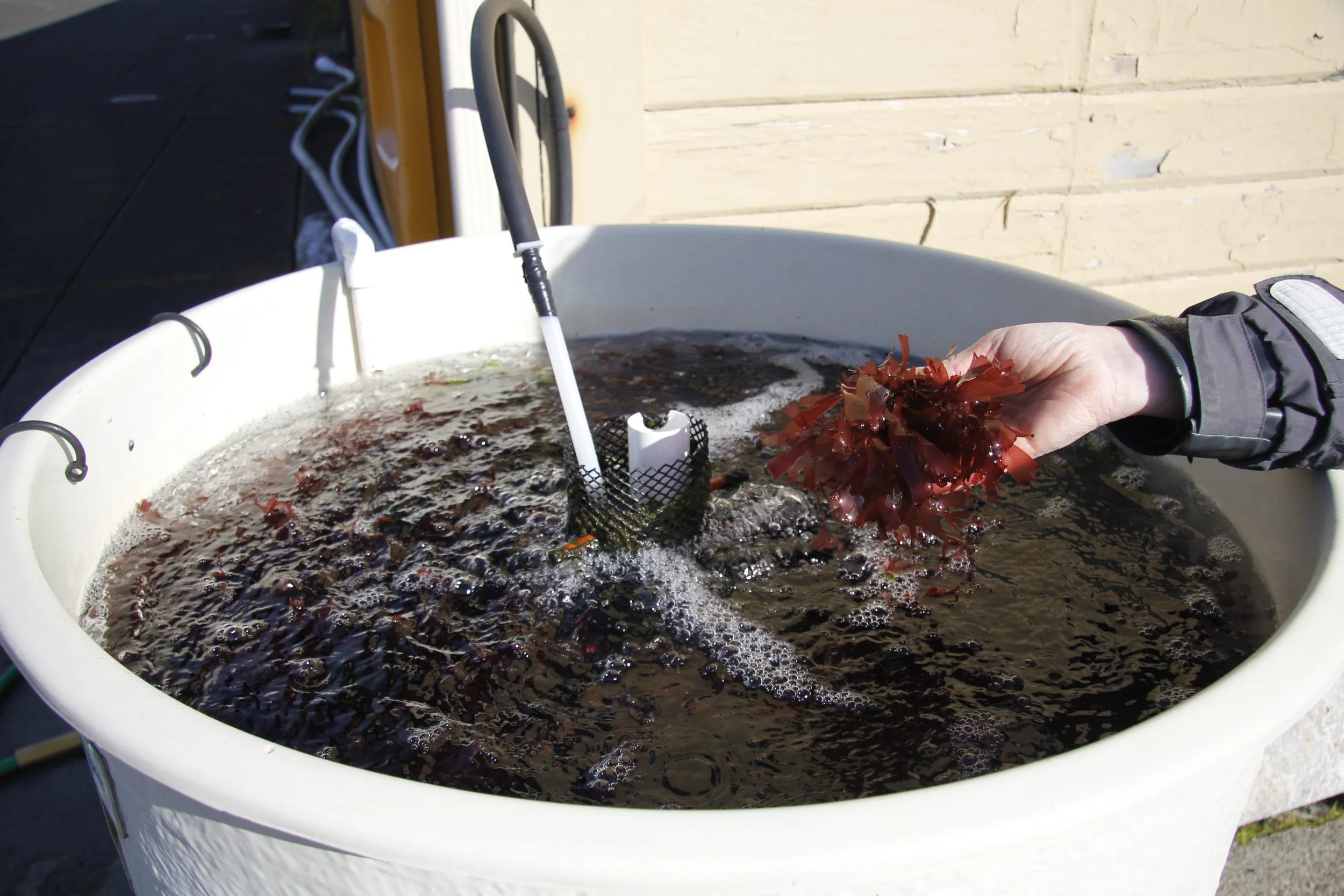
Dulse seaweed, another favorite food of abalone, being grown in a water tumbler at the Port Townsend Marine Science Center. // Photo by Brooklyn “Bug” Santee
Western is working for the good of snailkind, too. Under the guidance of Donovan, several graduate students have studied abalone biology and published their findings. Additionally, the Shannon Point Marine Center, Western’s marine science lab in Anacortes, will join the other satellite labs to start raising abalone.
“They've supported our species for [thousands of years] ... we've used them as a food source and as currency, especially First Nations and native people … that relationship was broken in the last few decades,” Sowul said. “It's nice that we can now have a chance to repay the favor and have our species be supporting theirs for a change.”
Between the Puget Sound Restoration Fund and all of their partners making this work possible, the pinto abalones of the Salish Sea have quite a few fans cheering them on. As the results of their work begin to appear in earnest, we may eventually see abalone on our shores again — elusive gems appearing at the lowest tides.