
Nature Meets Nurture
Emerging early education opportunities get kids engaged with the environment
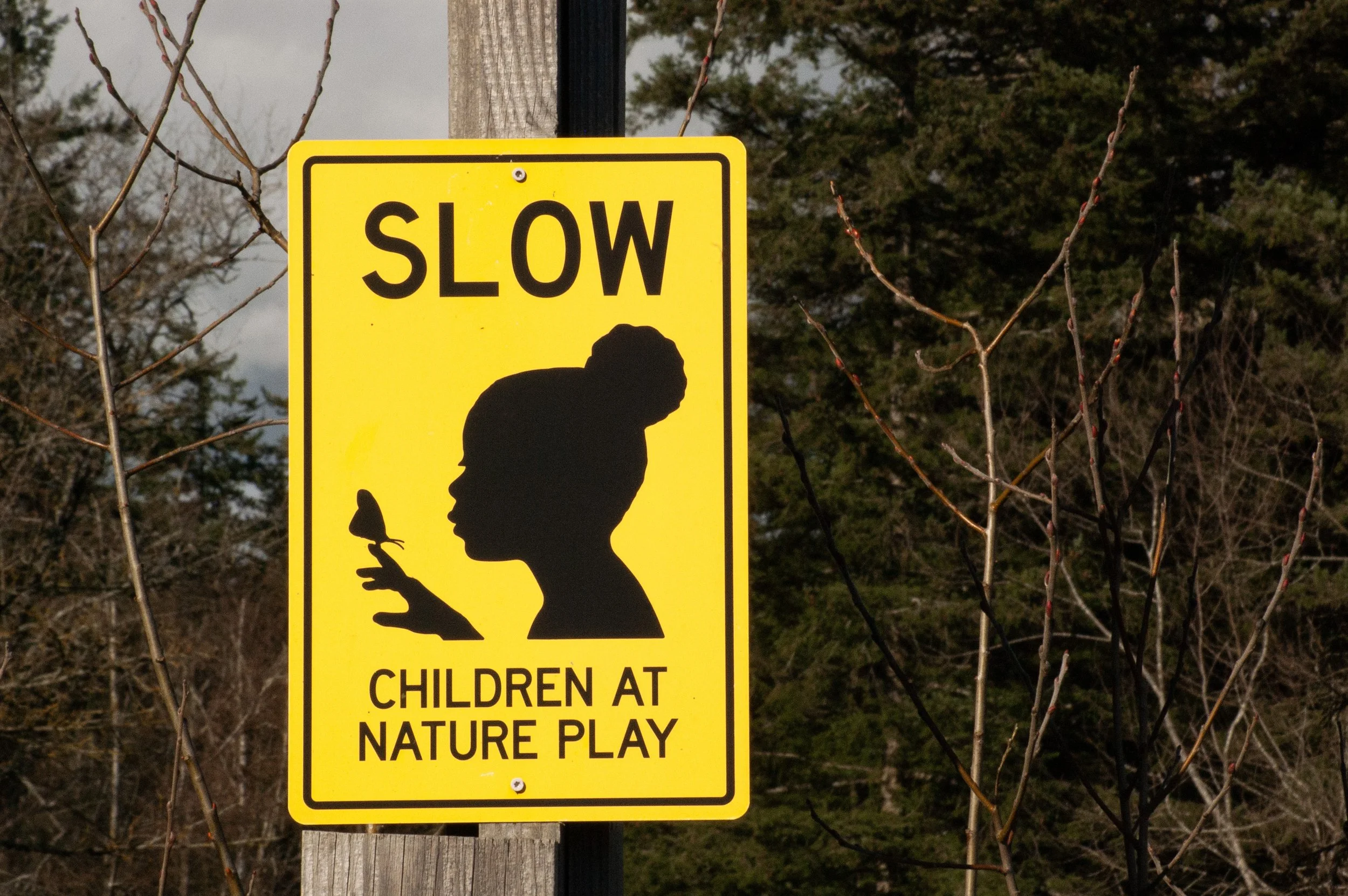
A caution sign warning of ‘children at nature play’ sits in front of East of Eden Nature Preschool in Whatcom County, Wash., on March 5, 2026. // Photo by Liam Britt
Story by Kyah Trotter // Photos by Liam Britt
March 30, 2026
Children are bundled up for a day of exploration; raincoats and mittens in the midst of a Washington winter are a must. They have excitement in their eyes and wonder guiding their footsteps.
These children, ages between three and five, attend Barefeet Farm School, one of the state’s many nature-based preschools. They've just been dropped off at Barefeet’s Welcome Center, where their day began with tea and the usual morning song.
Their next stop is Barefeet’s forest classroom, just a little walk away. This “classroom” is not the typical indoor setting with a desk and chair — sunlight peeks through the mossy canopy overhead, and the floor is lush with ferns.
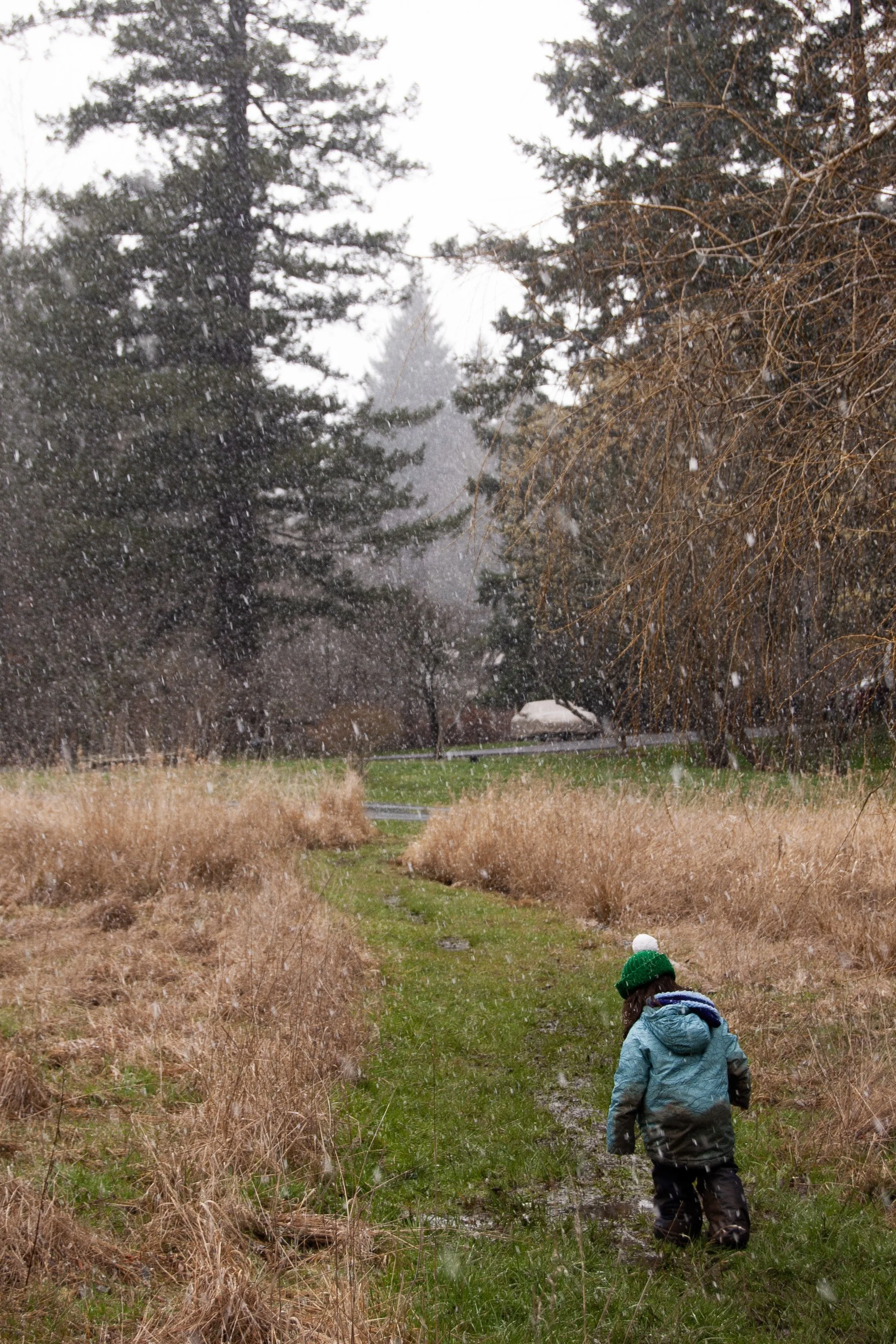
A boy walks along a path at Barefeet Farm School in Whatcom County, Wash., on Feb. 18, 2026. // Photo by Liam Britt
There are few restrictions on what the children can do. Climbing trees, picking up sticks and puttering around in the mud are all encouraged rather than prohibited.
Barefeet follows an emergent curriculum, based on children’s particular interests after observation. Teachers take notice of these interests and incorporate them into structured activities, meeting them where they are and challenging them in ways that foster growth and encourage curiosity.
This curriculum also draws on both Mount Baker and Bellingham School Districts’ guidelines for math, science and reading to incorporate academic skills needed for grade school.
Erin Majeske, director and owner of Barefeet, began the school in 2020 as a summer daycare. Majeske invited local children to her mom’s property, quickly realizing how much the kids flourished outside compared to the children she worked with inside at her preschool job.
“They learn so much more when they're learning with their whole bodies, in a variety of different areas all at the same time,” Majeske said.
In 2021, Barefeet’s first full school year was in session.
For kids at this age, access to the outdoors is one of the most important ways to build social and emotional regulation skills. The cognitive development of a child's brain in the first five years of their life happens the fastest, and learning outside has been proven to facilitate this development by lowering children’s stress levels.
By introducing these skills in a reduced-stress environment, children can focus more of their imagination on creating toys out of whatever they may find.
Inside a classroom, however, toys and activities often have a singular, specific purpose, and these imaginative processes are limited. This can lead to a gap in social-emotional development, and a disconnect between children and teachers.
“I see a lot fewer behavior [problems] in our outside classroom versus my indoor classroom,” Majeske said. “And I think a lot of our kids, even kids who are here right now, would not thrive in an indoor classroom.”
Victoria Remer, lead and assistant teacher at Natural Start Preschool in Bellevue, Washington, has observed a similar pattern.
“When we go outside, the walls are gone. We have a lot of space, and many students that struggle inside flourish outside,” Remer said. “It's the freedom, the opportunity for exploration and creativity.”
For many families, however, sending their children to a nature-based preschool is simply too expensive. Childcare alone can cost upwards of a thousand dollars a month, while transportation and outdoor gear present additional challenges and costs. These problems are especially apparent for communities with lower average incomes.
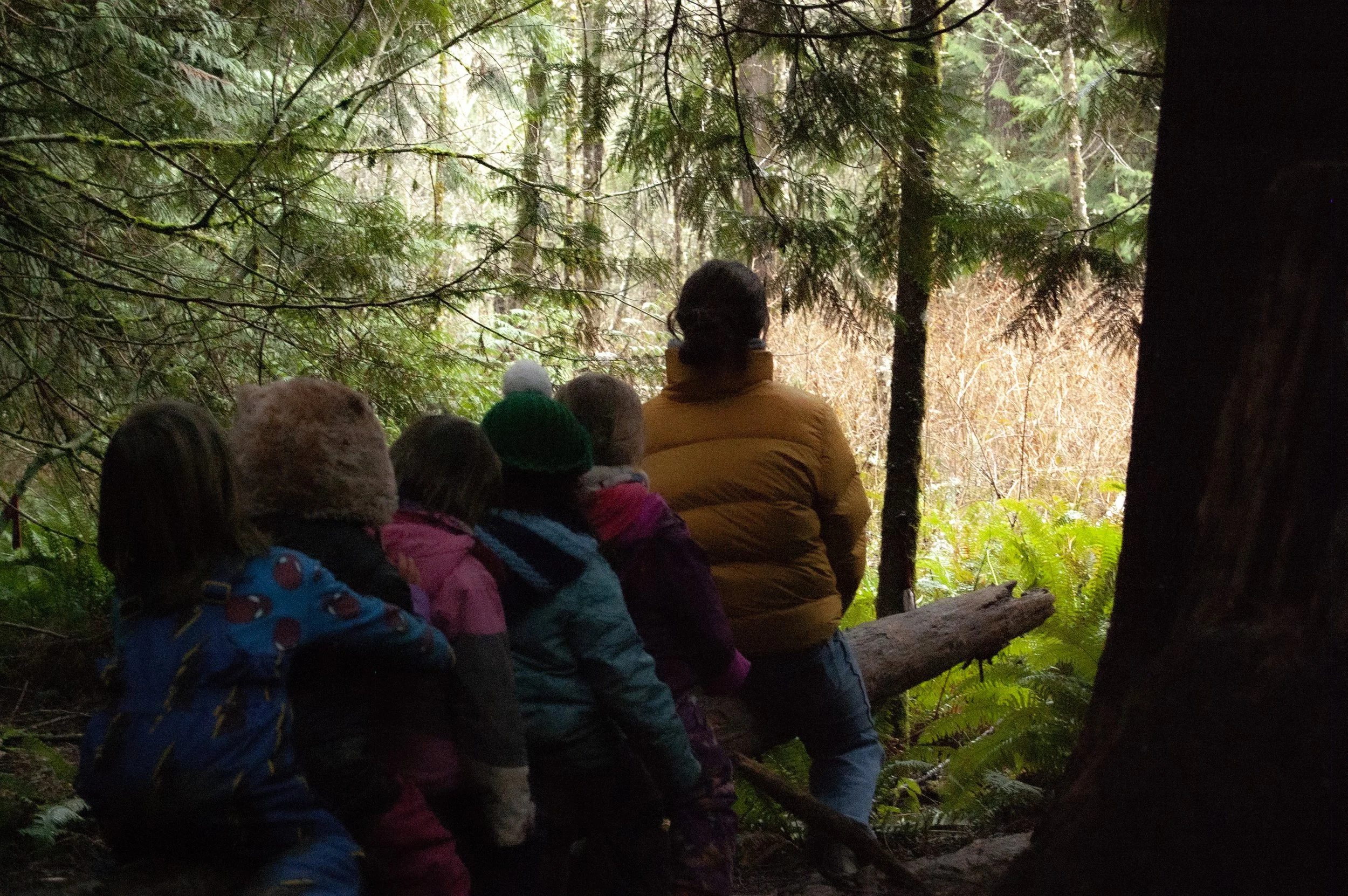
The kids sit with Kyah Trotter on a walk at Barefeet Farm School, in Whatcom County, Wash., on Feb. 18, 2026. // Photo by Liam Britt
To combat these disparities, Washington’s Department of Children, Youth and Families offers the Working Connections Child Care program — a federal subsidy that grants families in lower income brackets affordable childcare by discounting the cost of tuition.
If a household’s income is less than 60% of the state median income amount, they qualify for the child care program. Without this subsidy, a family of four making between $2,322 and $4,179 would have to pay upwards of $1000 a month, but with the subsidy, this cost is reduced to a $65 dollar monthly copay.
Through programs like this, nature-based schools in Washington have tried to make their programs as accessible as possible, but many barriers remain.
“We got a grant to have a Spanish-speaking teacher to support accessibility… because up to 20% of families in Whatcom County speak Spanish,” Majeske said. “We don't have any kids who speak Spanish, but if we did, we would be able to support them.”
Barefeet’s lack of non-English-speaking students demonstrates a larger problem within outdoor education: many members of marginalized communities don’t realize that these programs exist in the first place.
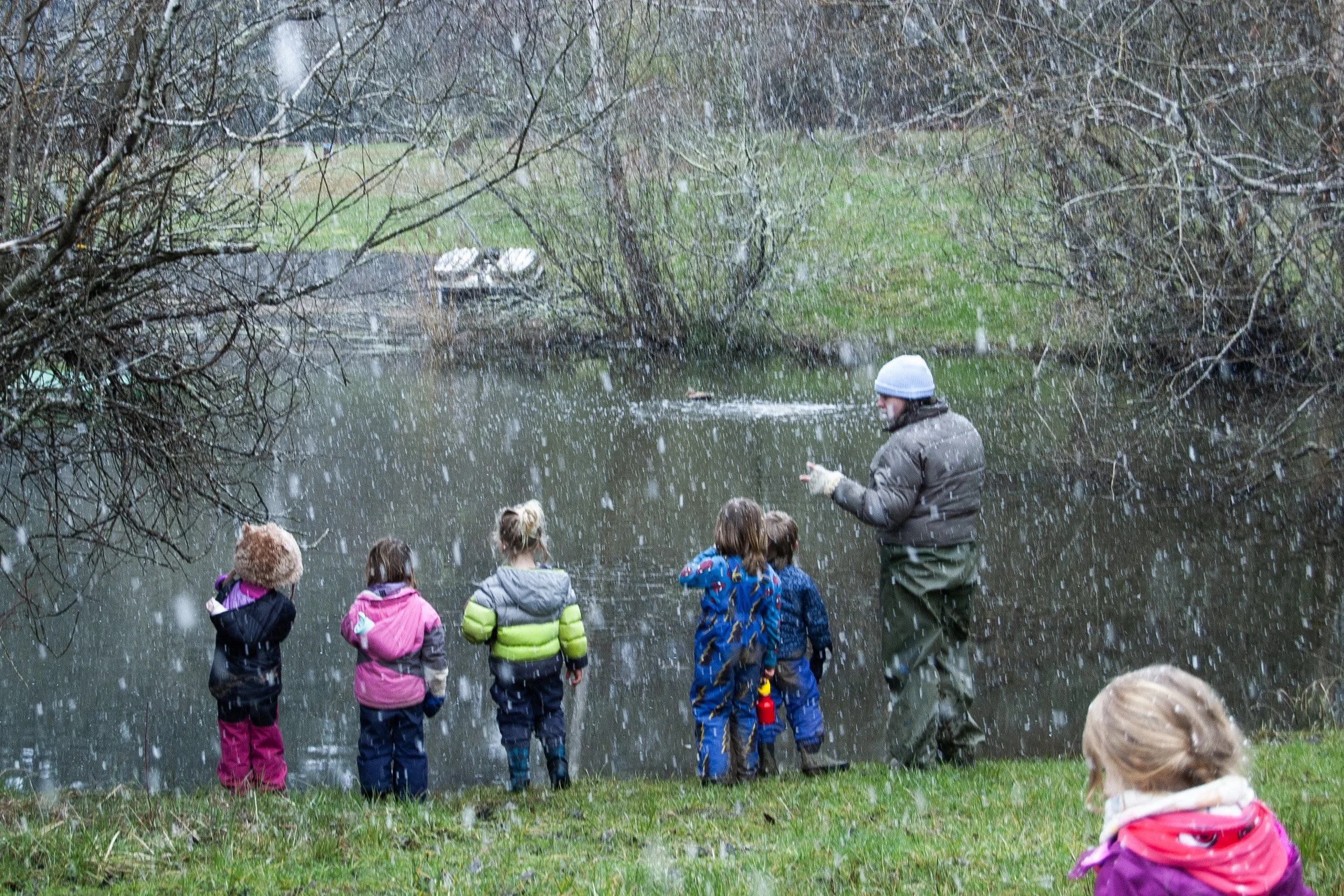
A lesson is taught by a pond at Barefeet Farm School, outside of Bellingham, Wash., on Feb. 18, 2026. // Photo by Liam Britt
This is why programs like Vamos Outdoors Project exist. Vamos is a nonprofit organization operating out of Whatcom and Skagit counties, working directly with Latin, migrant and multilingual families in order to expand their outdoor connection and foster positive childhood experiences.
Vamos offers cost-free programs for each season, with a wide range of activities including snowboarding, climbing and backpacking. These increase children and families' connections to natural spaces while removing obstacles like transportation, gear and recreational fees.
During the winter, a single-day trip to Mount Baker would ordinarily cost around $150-200, between gear rentals and a lift ticket. Through Vamos, kids are able to snowboard up to four times a season, completely for free.
For those who don’t want to snowboard, Vamos also partners with local climbing gyms to teach foundational climbing skills. VITAL climbing gym in Bellingham provides free entry and free gear rentals once a month.
Introducing kids to climbing in these controlled environments allows them to build their confidence and expand their skills. With these skills, kids can then pursue a more challenging approach to climbing in an outdoor setting.
Vamos makes one to three annual trips to Mount Erie, where groups of up to thirteen can climb longer routes along the mountain, fully equipped with ropes and harnesses.
Through creating outdoor experiences like this for children, Vamos provides a safe place for them to make friends and grow their social-emotional skills.
Walter Topete, a member of the development team at Vamos, believes not only in teaching kids outdoor skills and getting them involved, but in helping them make positive memories, whether it's climbing, snowboarding or any other outdoor activity.
“I think that's what sets Vamos apart from other environmental ed and outdoor ed places,” Topete said. “We have the privilege of being able to do both. We're gonna teach them something, [and] we're gonna make sure that they're having a really good time.”
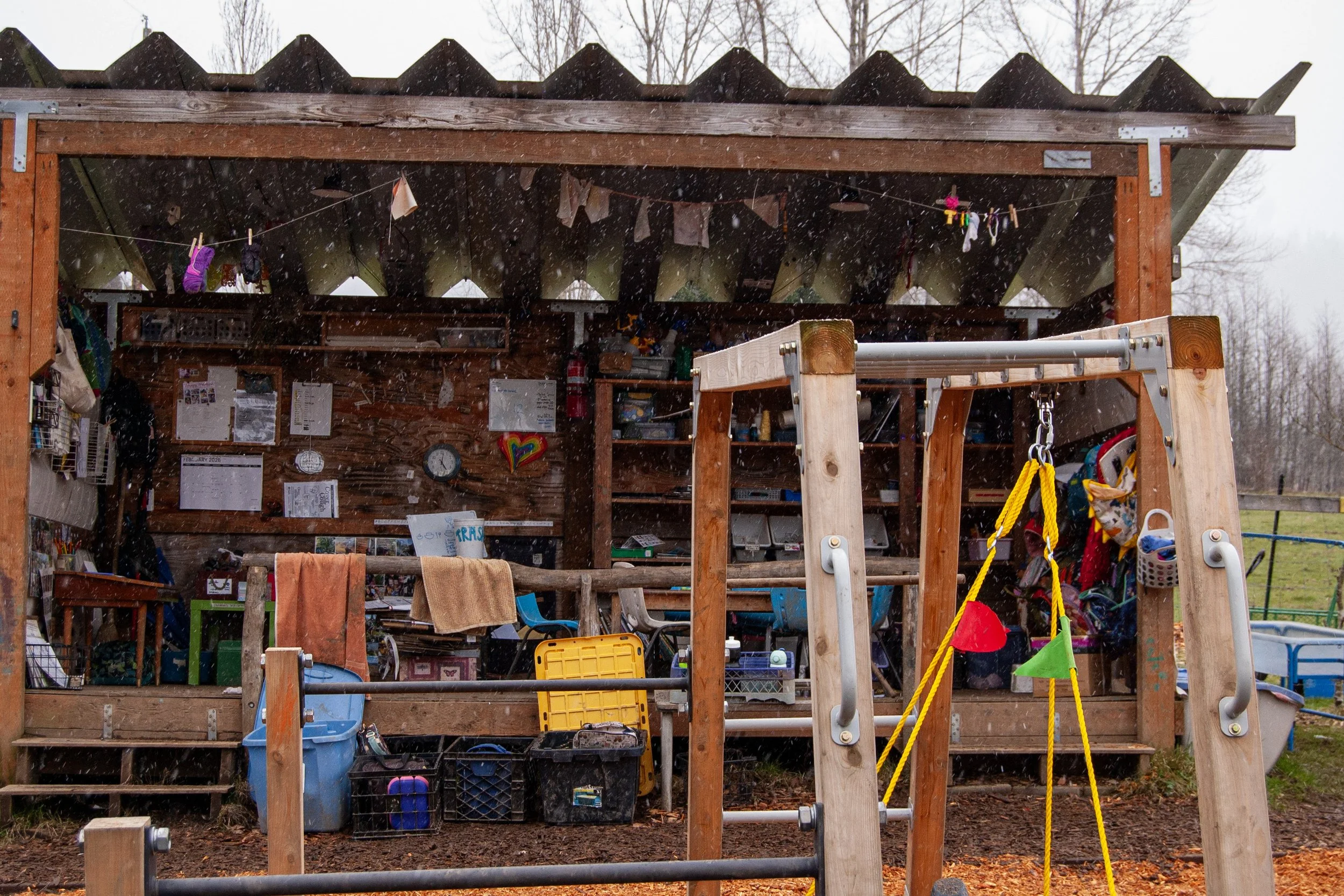
Snow falls outside of a classroom at Barefeet Farm School in Whatcom County, Wash., on Feb. 18, 2026. // Photo by Liam Britt