
Pesky Pinnipeds
Controversial cullings at Bonneville Dam pit two threatened species against each other
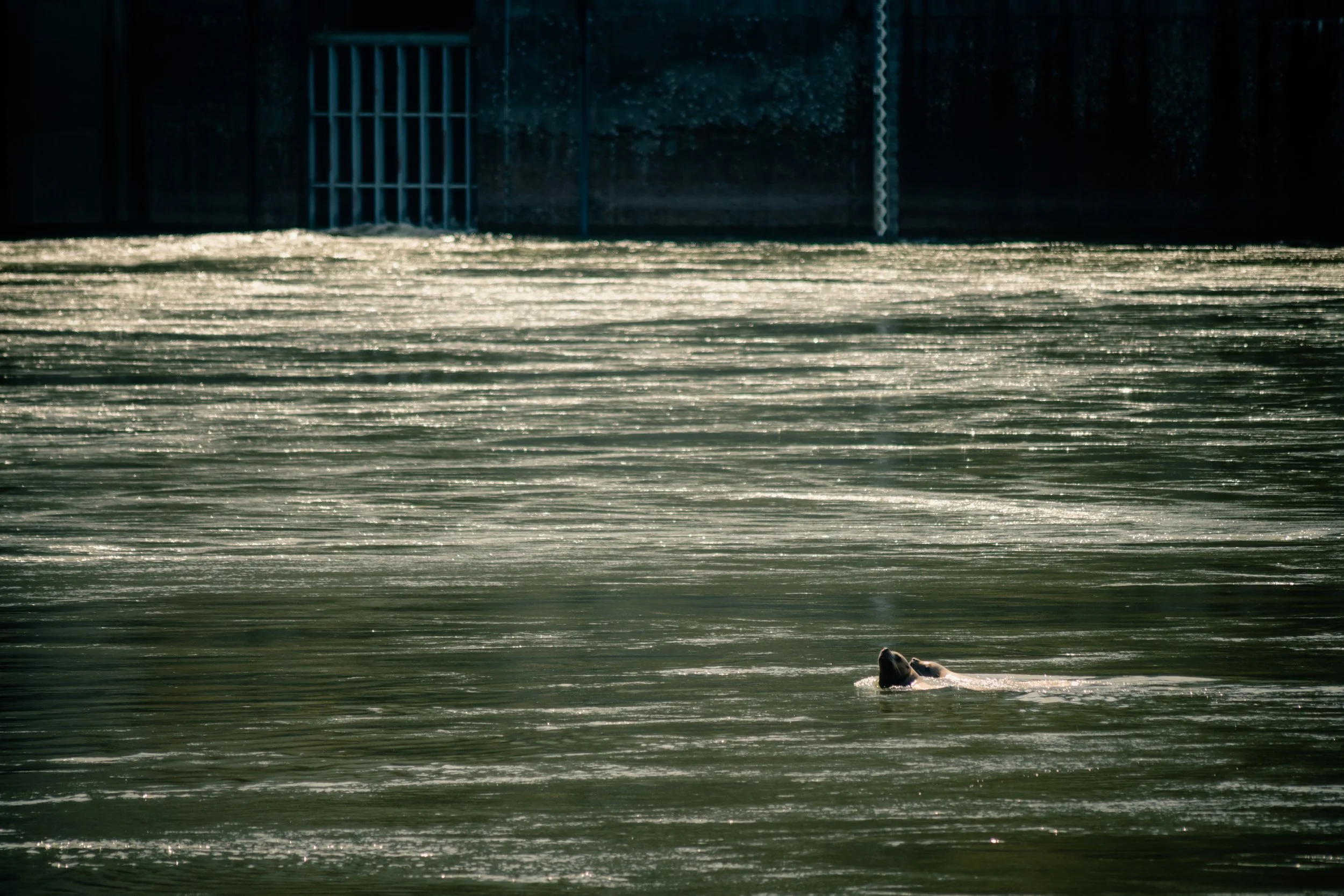
Pinnipeds look for fish in front of the Bonneville dam in North Bonneville, Wash., on April 18, 2026. // Photo by Avery Robertson
Story by Katie Stafford // Photos by Avery Robertson
March 30, 2026
A predator swims in the cold Pacific waters, chasing a small, slippery prey in hopes of a meal. He’s a good hunter, but a single fish against a single predator leads to a winding game of cat and mouse. It is 1972. This predator and other members of his species are dwindling in number, so every catch matters.
Now, in 2026, the fish pile up in a writhing crowd, confined at the base of a towering wall. The predator dives down and simply closes his mouth around his prey, gorging himself with ease.
“They know where to hunt and how to hunt, so they don’t just hunt anymore. They massacre,” Jeff Wilson, Washington state senator for the 19th district, said.
Today is a much better day to be a sea lion. These determined predators swim nearly the distance from Seattle to Vancouver, Canada via the Columbia River to reach this bounty at Bonneville Dam. The returning spring Chinook salmon crowd the base of the dam for days as they search for a way up the fish ladder, providing ample opportunity for a low-effort meal for two recovered species of sea lions.
In the four decades since they began arriving in large numbers at the dam, growing research shows that sea lions have played a significant role in the decline of this local population of salmon.
The Chinook species, in particular, is a valuable fish, both commercially and culturally. Its long journey up the Columbia River in the spring creates a fatty, muscular fish that consumers love for its taste. However, the salmon’s timing leads it straight to the predators’ maw, as its migration corresponds with the foraging season for sea lions.
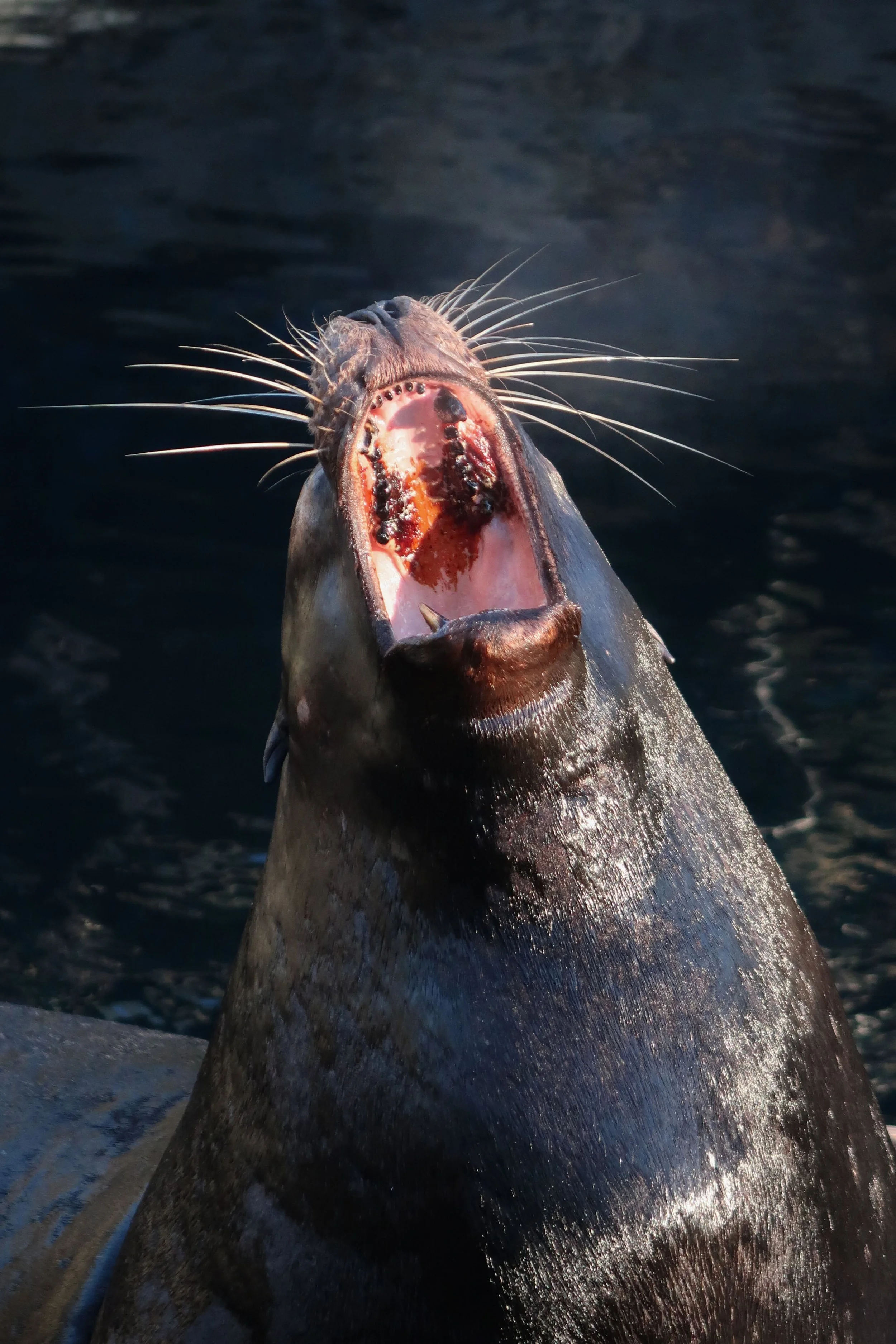
Rescued sea lion at the Vancouver Aquarium yawning, December 2024. // Photo by Avery Robertson
Regulators amended the protections, granting state agencies and local tribes the ability to lethally remove these problematic individuals. This past August, Congress extended the most recent and flexible culling permit until 2030
The Marine Mammal Protection Act of 1972 created protections, which returned both populations of sea lions to carrying capacity after dipping to vulnerably low numbers.
Increased sea lion predation on salmon has become a growing problem in the Pacific Northwest, prompting researchers to keep a close eye on Bonneville Dam.
One factor making the situation complex is that it pits one threatened species against another that has only recently recovered.
“Who do you prioritize and how?” Casey Clark, lead marine mammal researcher for the Washington Department of Fish and Wildlife, said.
The Columbia River is not historically the sea lions' hunting grounds, with only a few being spotted for the first time at the dam back in the 1980s and numbers rising rapidly to the hundreds within a few decades.
California sea lions, the original visitors to the dam, were the only sea lions allowed to be removed until recent years. Their counterparts, Steller sea lions, were unable to be removed until they were delisted from the Endangered Species Act much later.
Pinnipeds, a name grouping for California sea lions, Steller sea lions and harbor seals, are estimated to be a leading cause of salmon deaths annually in the lower Columbia River, as shown in a six-year study published in the Canadian Journal of Fisheries and Aquatic Sciences.
The U.S. Army Corps of Engineers first started monitoring and gathering data on sea lion predation in 2002 to understand how to approach the growing issue with extremely limited management options.
“The only thing we could do in terms of management — if you call it management — was non-lethal persuasion,” Doug Hatch, deputy manager of the Fishery Science Department of the Columbia Inter-Tribal Fish Commission, said. The commission is composed of four tribes: Yakama, Nez Perce, Warm Springs and Umatilla.
The tribes’ primary role in managing the sea lions up until 2020 was carrying out non-lethal hazing.
“With non-lethal hazing, you’d use a boat [in] pursuit of animals,” Hatch said. “You’re able to move them downstream, but then as soon as you quit the pursuit, then they just return right back to these same spots.”
The Marine Mammal Protection Act restricts any harassment, capture, or killing of marine mammals, leaving the agencies and tribes with their hands tied.
Research suggests that a social transmission of knowledge is what leads these sea lions to come back year after year, bringing more to the dam’s blood bath. The goal at Bonneville is to remove knowledgeable sea lions in hopes of preventing further occupation.
“The best way to manage is prevention. For example, keeping them in the estuary where there’s a mixed bag of prey items for them,” Michelle Rub, a fisheries biologist with the National Oceanic and Atmospheric Association, said. Offering a wider array of diet for these sea lions helps prevent a single population of fish from facing severe predation.
The agencies acquired their first permit for lethal removals in 2008, and with it came a stringent set of criteria and a small cap for only California sea lions. An individual sea lion had to be observed at the dam at least five times after eating a salmon, then non-lethal measures had to be proven ineffective, before it was branded for removal.
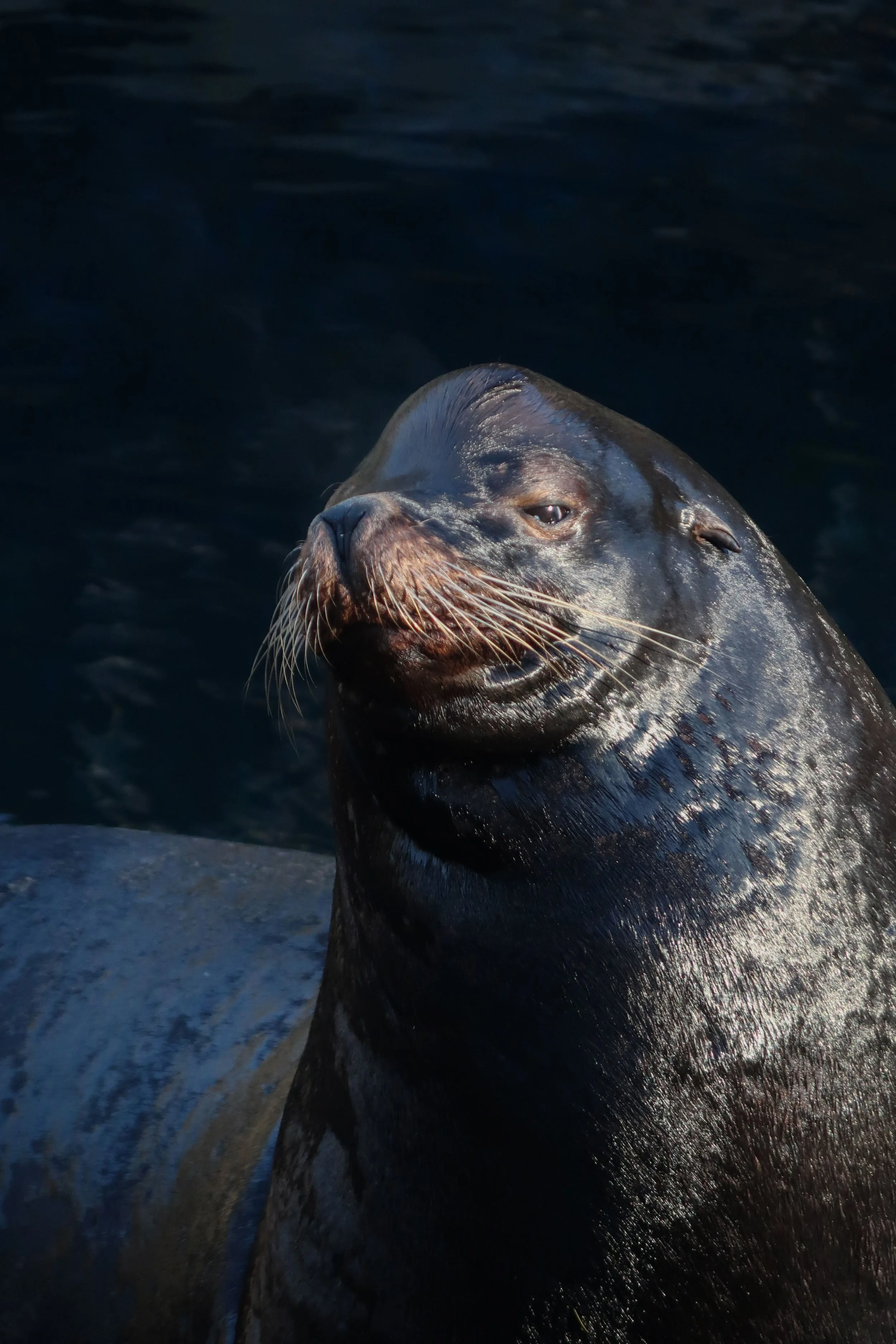
Rescued sea lion at the Vancouver Aquarium basking in the warm sun, December 2024. // Photo by Avery Robertson
A decade later, a task force revisited this permit, and with 20 years of evidence showing lackluster results from hazing, a section of the Marine Mammal Protection Act was revised, allowing for a new permit that came into effect in 2020.
“The process of accumulating data to inform decisions and form wisdom takes time. It took [more] time than most managers and the general public wanted. It took 20 years for us to understand,” Kyle Tidwell, fish biologist with the U.S. Army Corps of Engineers at Bonneville Dam, said.
The new permit allows agencies and, for the first time, tribes, to lethally remove problematic sea lions found within a range of the dam and lower tributaries, rather than lone individuals. This permit allows for a maximum of 700 sea lions to be removed.
“That is a maximum; it’s a cap. It’s not a target,” Clark said. “The goal is to save fish, not to remove as many sea lions as possible.”
Within five years of the permit’s revision, NOAA released a report conservatively estimating around 50,000 salmon had been saved.
The permits for lethal removal caused outrage from the very beginning, with the Humane Society of the United States locking Washington, Oregon and Idaho into a multi-year legal battle, delaying removal efforts as states had to keep reapplying for permits.
“They removed a few of them, and then litigation, injunction, litigation ensued, and it derailed the state’s efforts to be able to legally implement their management authority to remove individuals for a couple years,” Tidwell said.
Protests surrounding the lethal removals were prevalent in the early days of the program. Police were on site due to concerns about the safety of the people involved.
Many environmental and conservation groups have spoken out about the cullings at Bonneville, with arguments surrounding the misplacement of blame.
“What is challenging salmon populations is Homo sapiens and no other species,” Ken Bouley, executive director at Turtle Island Restoration Network, said. “It seems, to us, really misdirected.”
In comparison to 17 years ago, when individual cullings first started, and even six years ago, when the criteria were expanded, the overall perception has shifted from public outcry to reluctant acceptance.
“This is a very targeted thing that’s going on, and it's giving some relief to the salmon,” Hatch said.
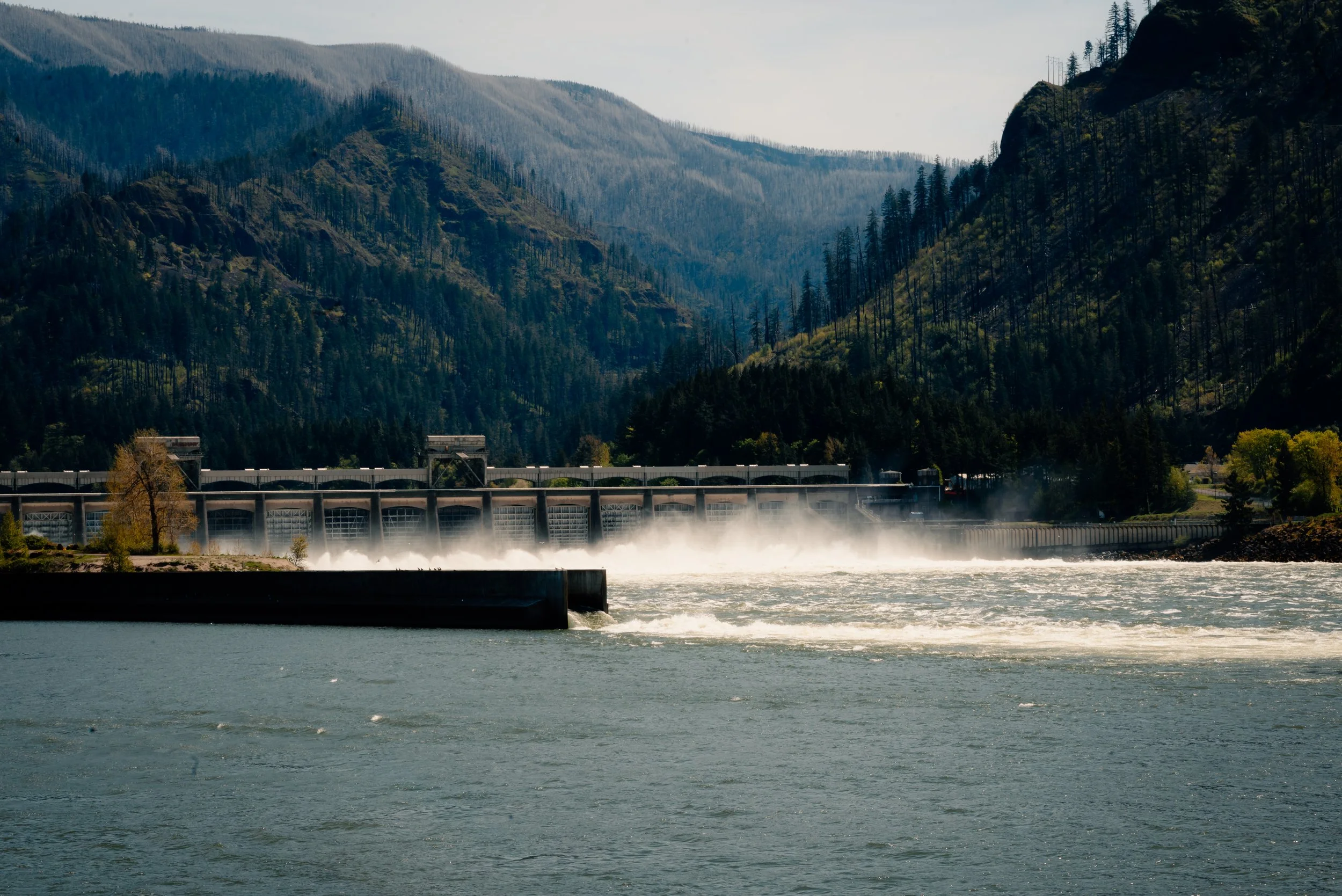
Water from the Columbia River spills through Bonneville Dam in North Bonneville, Wash., on April 18, 2026. // Photo by Avery Robertson