
The Beauty of Biochar
Local communities are using new tactics to fight carbon pollution
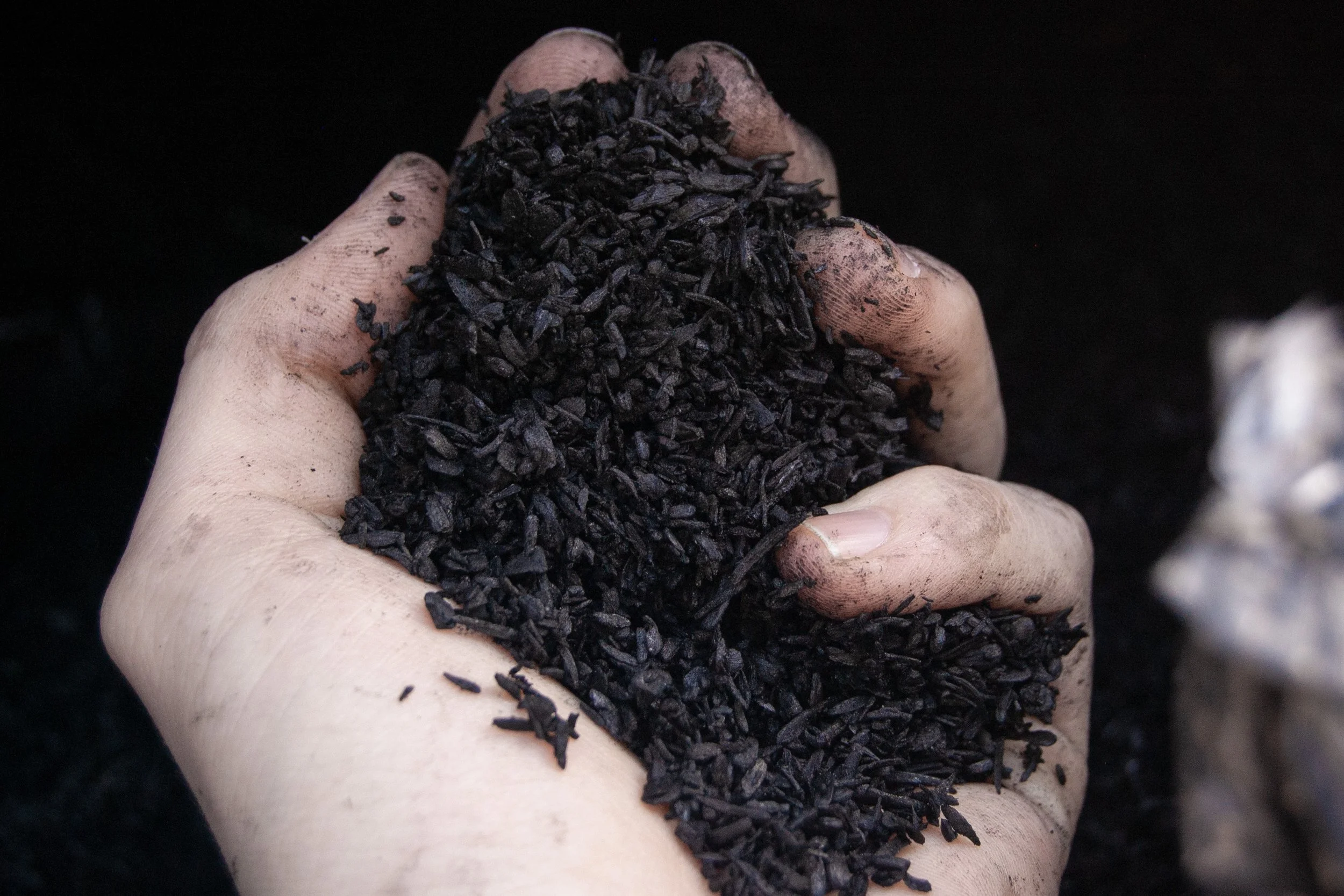
A handful of biochar. // Photo by Liam Britt
Photo Essay by Liam Britt
March 30, 2026
It’s a crisp winter morning on Lopez Island. Fire pours from the top of a rusty kiln, and branches are fed into the blaze like a dissolving game of Jenga. Beneath the flames, a powdery charcoal known as biochar is gathering at the bottom of the kiln.
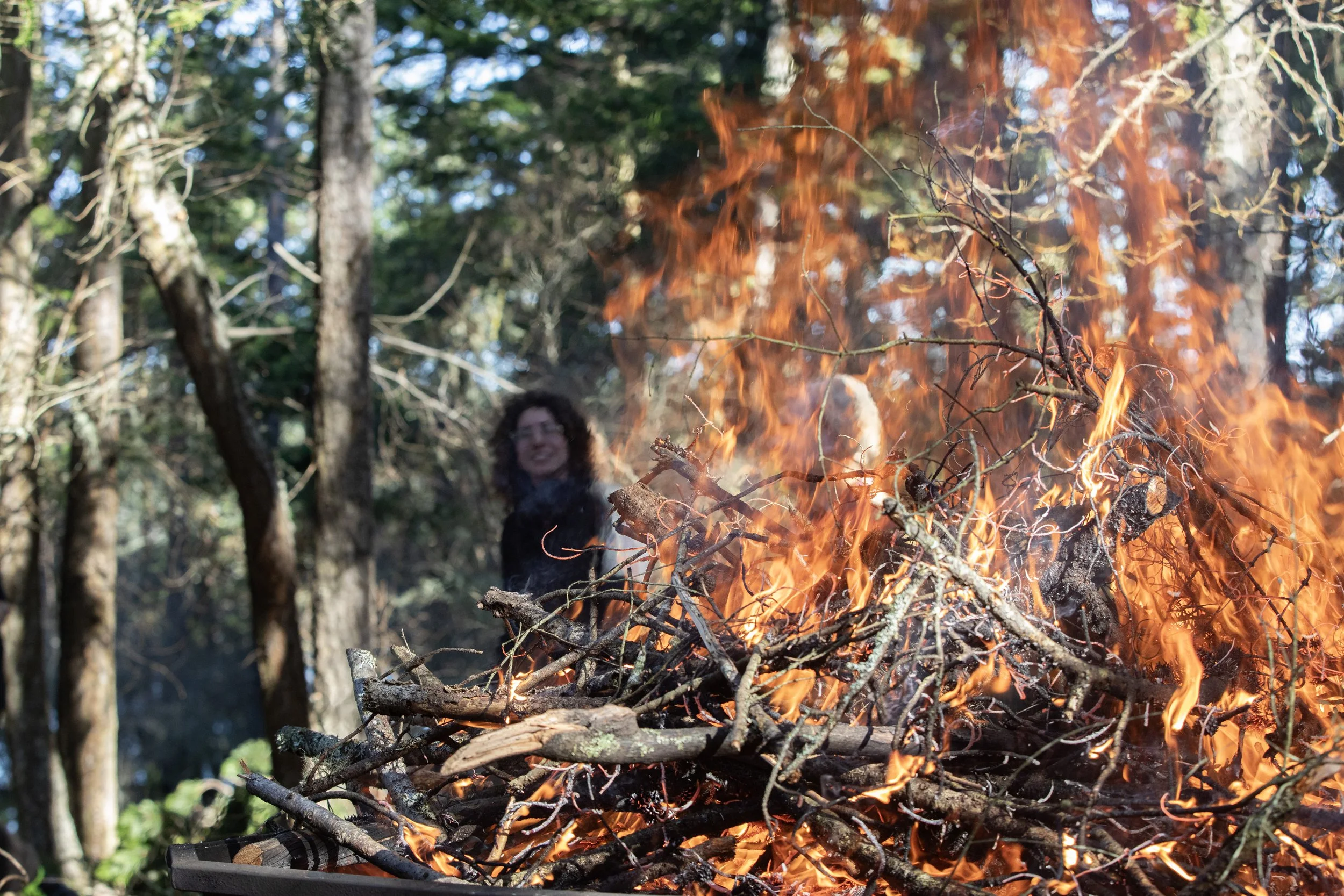
Max O’Conner smiles at the camera while a flame-top biochar kiln burns on Lopez Island, on Feb. 10, 2026. These burns last anywhere from 4-8 hours, requiring care to efficiently produce biochar. // Photo by Liam Britt
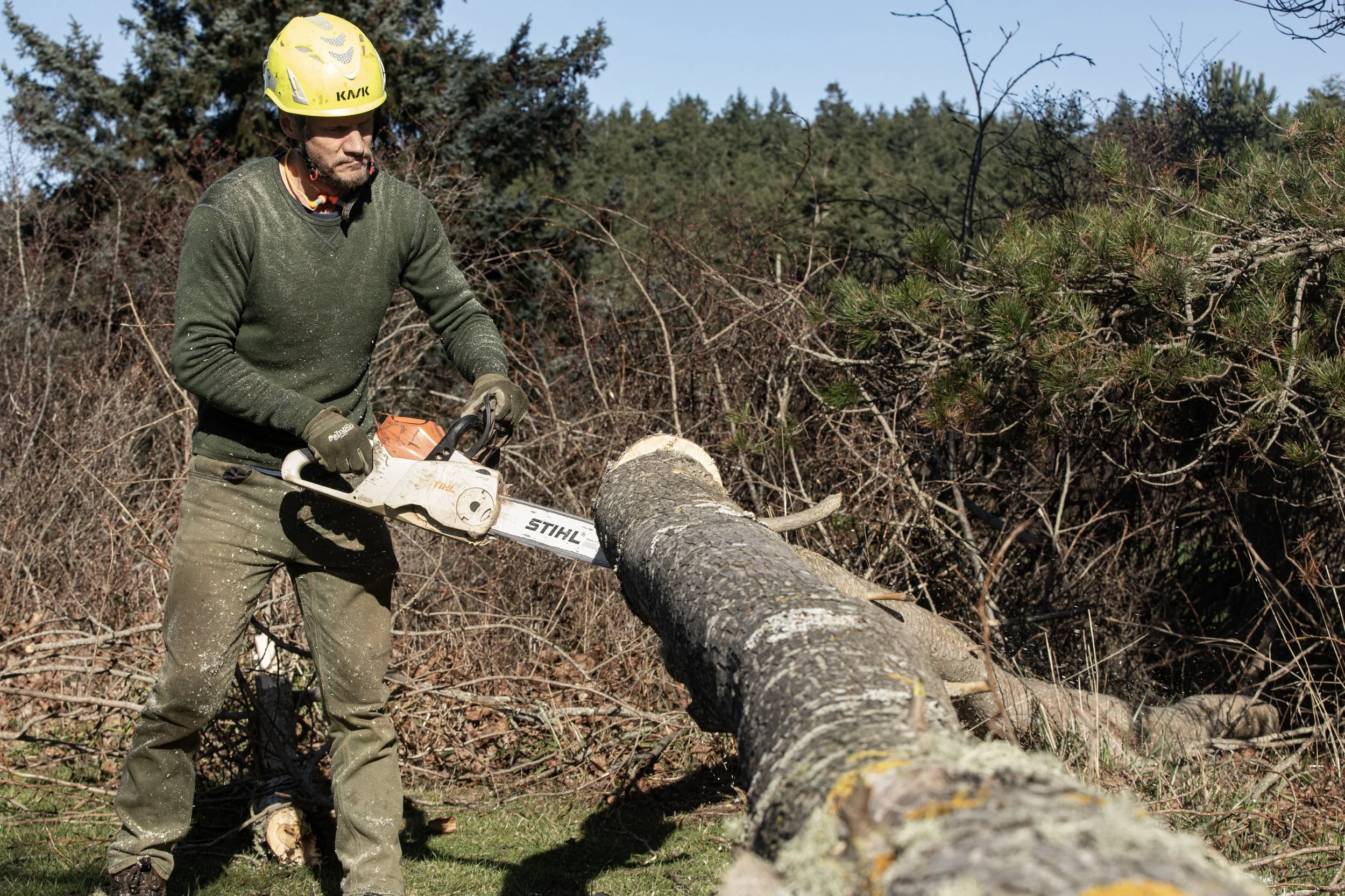
Jelte Wilde cuts a large branch into pieces on Lopez Island, Wash., on Feb. 10, 2026. Often, he'll be working on multiple job sites across Lopez Island at a time. // Photo by Liam Britt
Jelte Wilde, an arborist and forester, works with biochar through his business, Wilde Steading. With his small crew, he trims and maintains forests throughout the San Juan Islands. They turn the piles of organic debris into biochar, scattering it on the forest floor.
In 2021, Wilde started spreading the powder around his five-acre backyard. Half a decade later, the area is thriving.
“The most noticeable thing was the mycelium diversity,” Wilde said, noting the variety of mushrooms that have started to sprout up in the past five years. “I have seen white chanterelle on some of the other islands, but never on Lopez.”
Now, they’re in his backyard.
Piles of organic matter are normally left to decompose, releasing harmful greenhouse gases into the environment. But biochar offers a better solution, sequestering carbon before it can be released into the atmosphere.
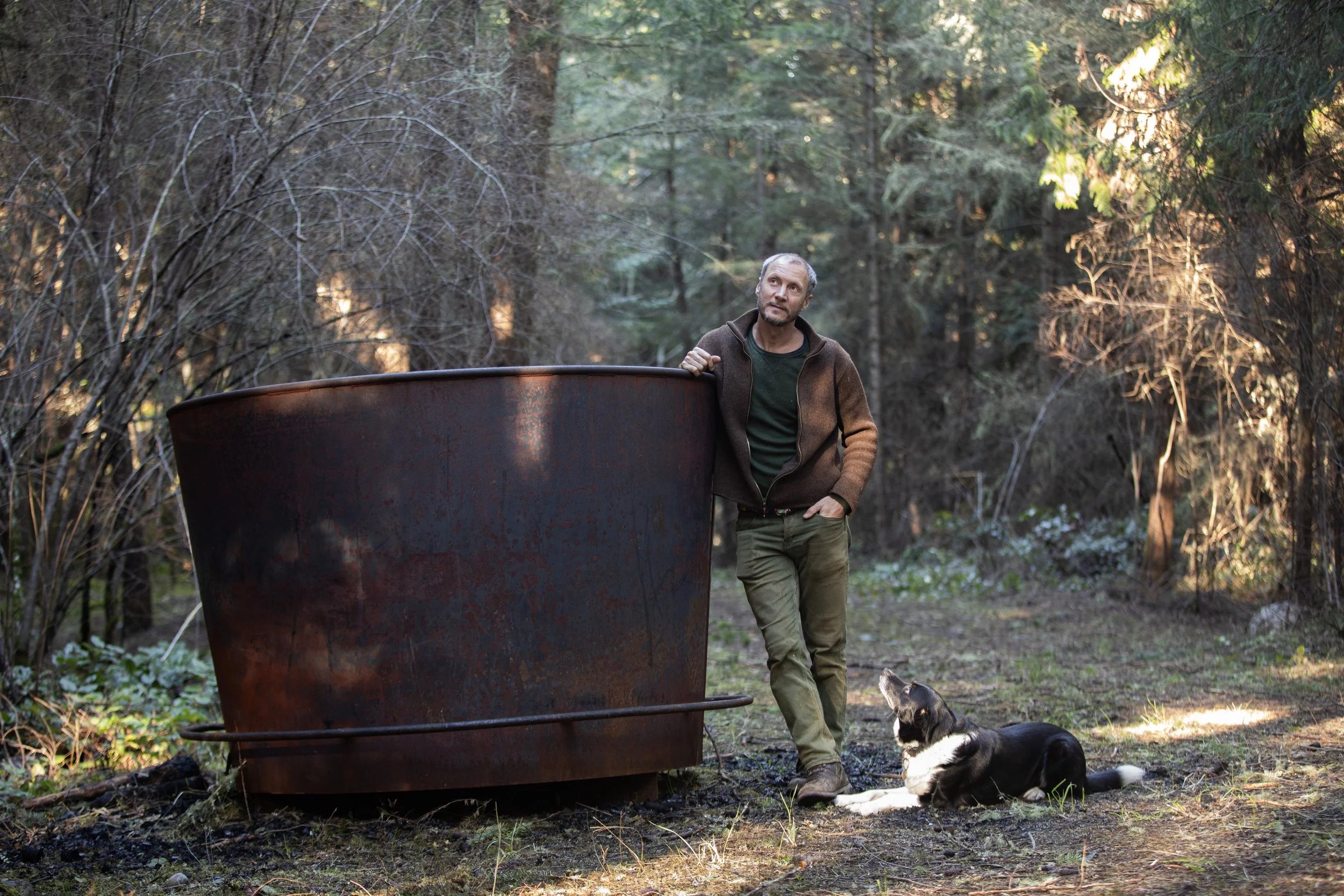
Jelte Wilde leans against the largest of his three flame-cap biochar kilns, posing with his dog, Tesla, at a job site on Lopez Island on Feb., 10, 2026. He's designed his kilns to be portable, though many kilns require machinery to move from site to site. // Photo by Liam Britt
Biochar is created through pyrolysis, a process that burns organic waste at a high heat and low oxygen inside of a large kiln. As the organic matter breaks down, the flames trap much of the carbon. The condensed carbon acts like a sponge, capturing water, nutrients and microbes, all of which play a huge role in fostering plant growth. After the burn, the kiln is flooded and the biochar is quenched to prevent it from becoming ash.
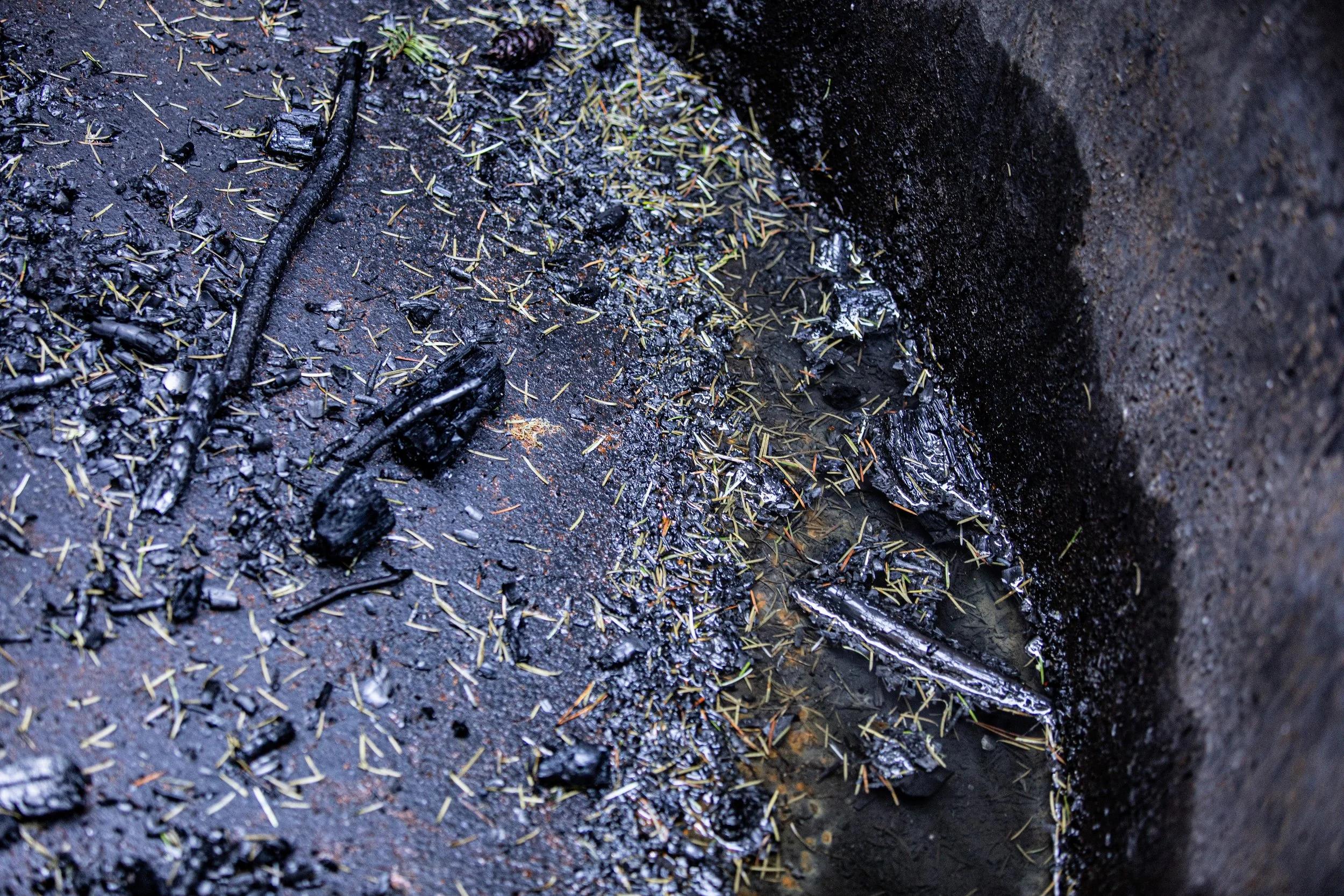
Leftover biochar sits at the bottom of a kiln after being spread throughout a forest on Lopez Island, Wash., on Feb. 10, 2026. A cubic yard of biochar can cost upwards of $100 if you're buying it from a distributor, leading many to make their own. // Photo by Liam Britt
Kulshan Carbon Trust, a nonprofit in Northwest Washington working on climate change solutions, has worked with farms to test out kilns and apply biochar on their crops. Despite high prices, subsidies and grants are keeping it affordable for local businesses.
“We've shifted from seeing biochar as a first solution to really our primary solution,” Gabriel Travis, director of operations at Kulshan Carbon Trust, said.
In 2024, the carbon trust partnered with Skagit Soils, a composter in Mount Vernon that produces biochar-enhanced soil. Though it’s only a small part of their operation, Tevon Lautenbach, the General Manager of Skagit Soils, wishes he could integrate it into all of his compost.
“If an operation like ours were able to produce biochar on site ... we could put biochar in all of our compost instead of just select batches,” Lautenbach said. “It just creates a way better product.”
Skagit Soils worked with Kulshan Carbon Trust, designing an all-around compost for both residential and commercial farming. Farms that have worked with Skagit Soils’ biochar-enhanced blend have seen a difference in their crops, and are happy to continue using it despite the price tag, according to Lautenbach.
“It’s like a condo for microorganisms,” Lautenbach said.
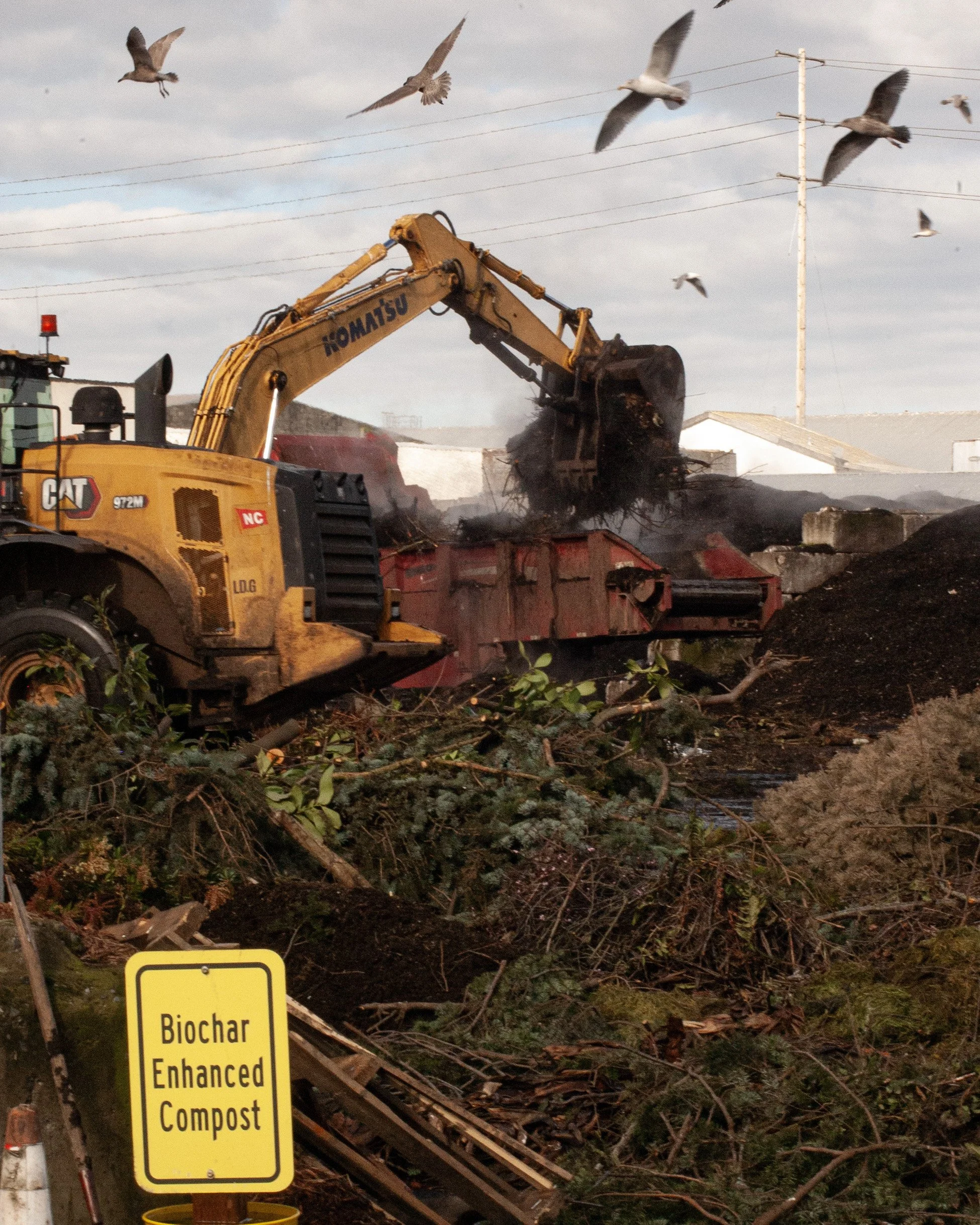
LEFT: A wheel loader fills a machine to turn tree branches into mulch at Skagit Soils Inc., in Mount Vernon, Wash., on Feb. 19, 2026. These scraps are used solely for mulch, but would be a great source for biochar if Skagit Soils was able to produce it on-site. // Photo by Liam Britt
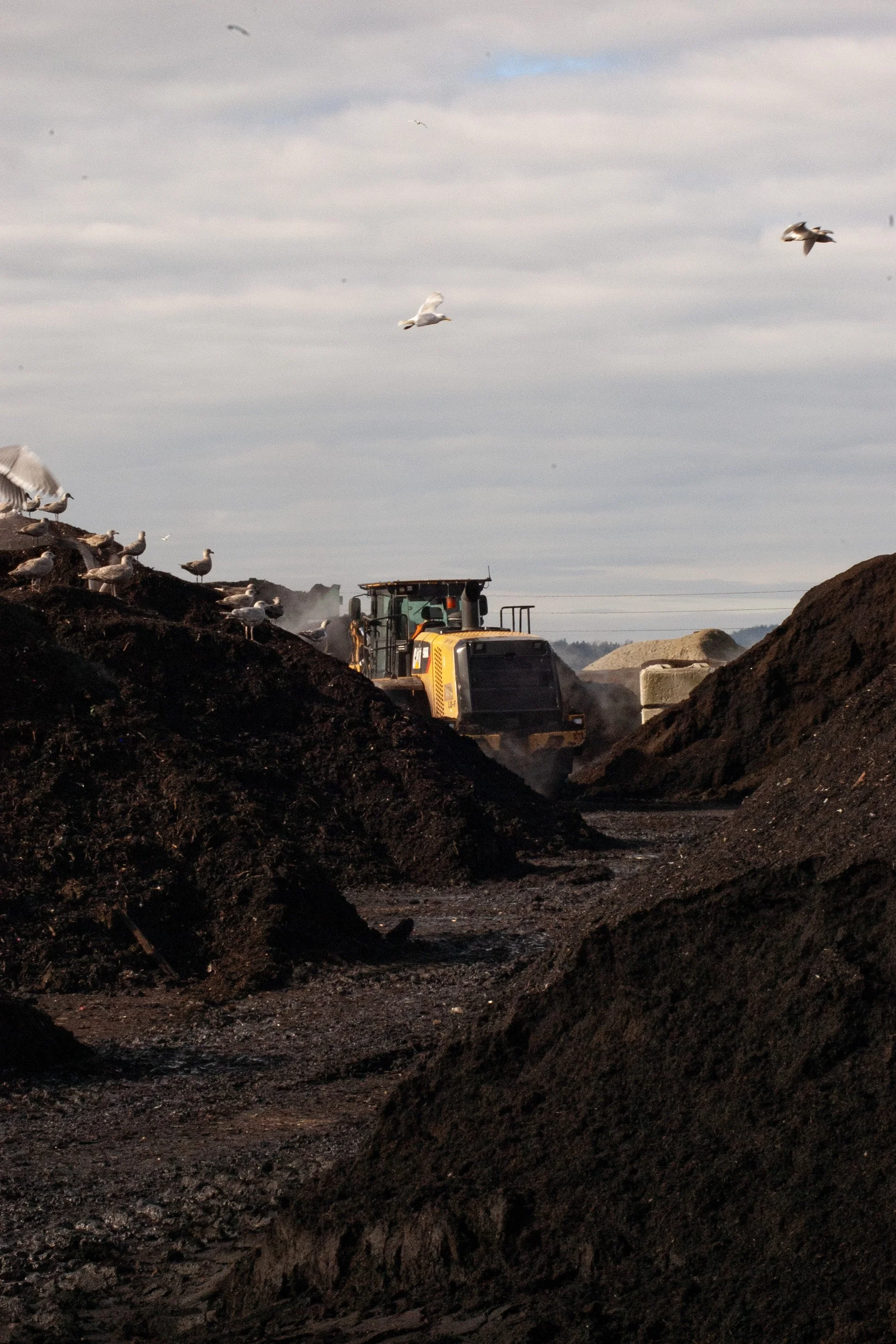
RIGHT: Birds sit atop rows of compost while a wheel loader passes at Skagit Soils Inc., in Mount Vernon, Wash., on Feb. 19, 2026. Though a popular product, biochar-enhanced compost only makes up a small portion of their stock. // Photo by Liam Britt
Many smaller farms are finding inexpensive ways to integrate biochar. East of Eden Farm, a community-based farm north of Bellingham, has been at the forefront of this exploration.
In June of 2025, East of Eden Farm connected with MYNO Carbon, a for-profit organization focused on large-scale biochar production. Thanks to a grant from the Department of Commerce, they were able to source the farm 30 yards of biochar. That’s far more than the farm needs, according to Samuel Janis, co-founder of East of Eden Farm.
“As a little guy looking for a few yards, there were plenty of companies looking to sell me biochar, but just not enough of a market,” Janis said. “The fact that I got 30 yards for free is sick, though.”
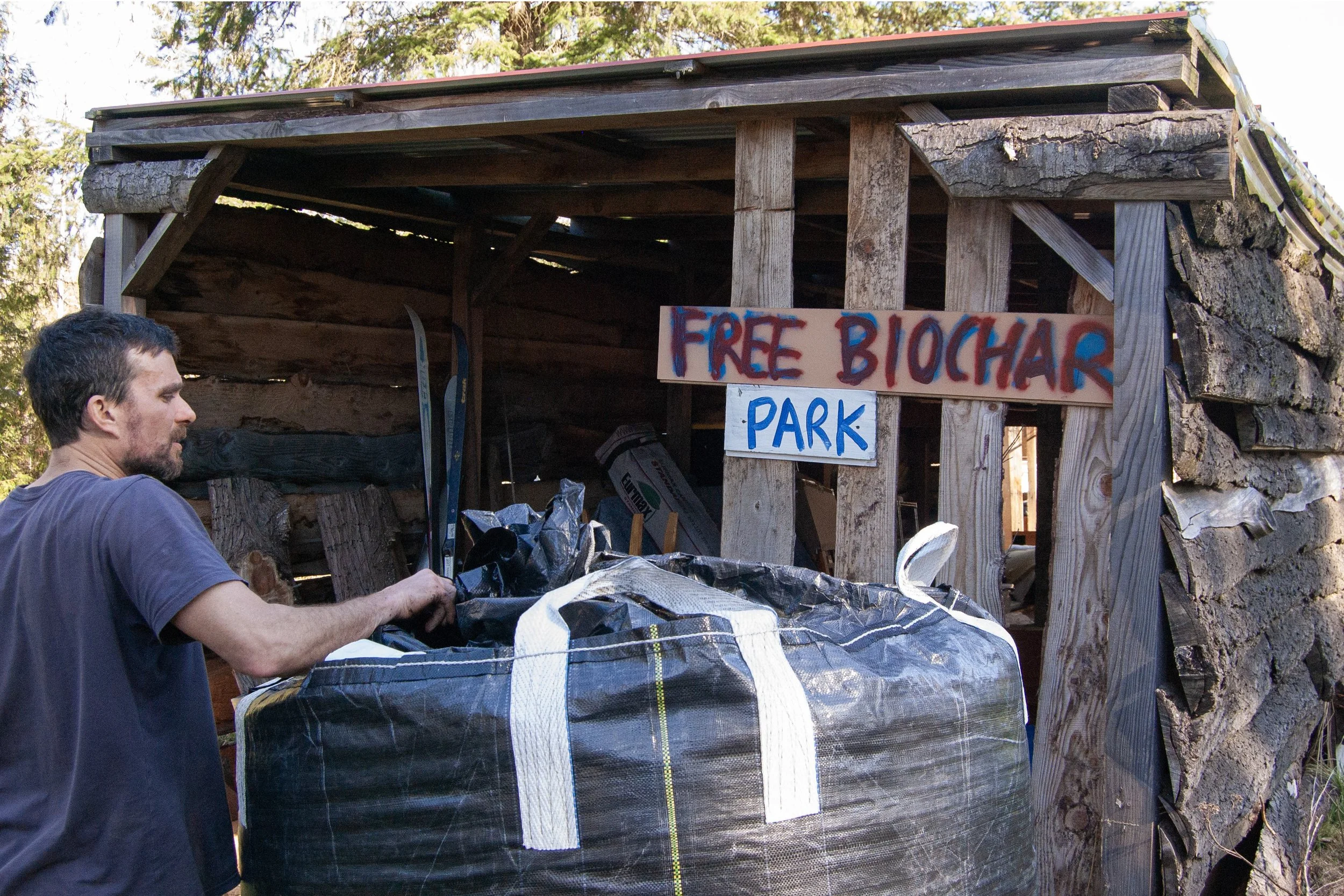
Sam Janis opens a 2 yard sack of biochar on East of Eden Farm in Whatcom County, Wash., on March 1, 2026. Though MYNO Carbon gave the farm 15 sacks, the farm has managed to use or give away all but seven. // Photo by Liam Britt
With such an abundance of biochar, Janis decided to make their excess stock available to anyone in need. It can be difficult to get your hands on inexpensive biochar if you’re not connected to biochar-friendly organizations, but East of Eden Farm made it as easy as stopping by with a bucket and filling up.
Although it’s still being introduced to a wider market, the impact that biochar could have is clear. There’s no reason that farmers shouldn’t use it in soil — it’s easy and environmentally beneficial to produce, and industries are finding innovative ways to incorporate the powdery charcoal.
“It's reducing the amount of fertilizer that we need to use. It's reducing the irrigation needs. If we're starting to see that there's a lot of supply of biochar, you can start adding it to building materials like concrete and asphalt,” Travis said. “The net impact is even more significant than just the biochar carbon sequestration itself.”
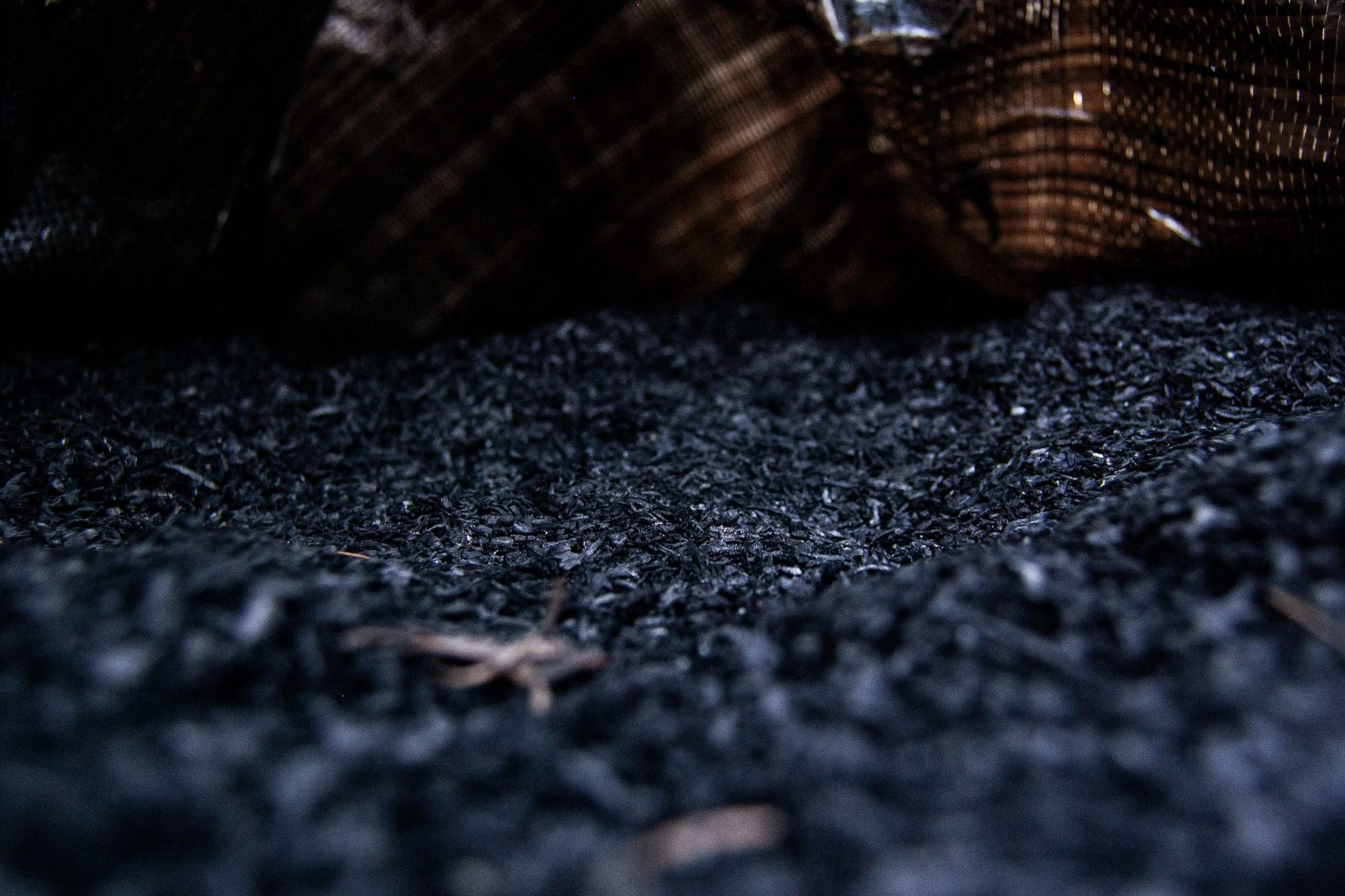
Biochar in a large sack at East of Eden Farm in Whatcom County, Wash., on March 5, 2026. Its ability to sequester carbon has made biochar a useful tool towards fighting the climate crisis. // Photo by Liam Britt